Journal: US Corporations Growing Outside US, No Jobs In US

03 Economy, 07 Other Atrocities, 11 Society, Civil Society, Commerce, Corruption, Cultural Intelligence, Government
Chuck Spinney Recommends...

I received this email from a close friend, a Republican of the old school:

“When 50+ years ago Engine Charlie Wilson said what's good for General Motors is good for America, he was mostly right. Now corporations have turned that aphorism on its head.”

Tuesday, Dec 28, 2010 08:03 ET

Where are the jobs? Overseas, of course

American consumers have little to do with the big profits many top American corporations are now racking up

By PALLAVI GOGOI, Associated Press

Corporate profits are up. Stock prices are up. So why isn't anyone hiring?

Actually, many American companies are — just maybe not in your town. They're hiring overseas, where sales are surging and the pipeline of orders is fat.

EXTRACT: Harvard Business School Dean Nitin Nohria worries that the trend could be dangerous. In an article in the November issue of the Harvard Business Review, he says that if U.S. businesses keep prospering while Americans are struggling, business leaders will lose legitimacy in society. He exhorted business leaders to find a way to link growth with job creation at home.

Other economists, like Columbia University's Sachs, say multinational corporations have no choice, especially now that the quality of the global work force has improved. Sachs points out that the U.S. is falling in most global rankings for higher education while others are rising.

“We are not fulfilling the educational needs of our young people,” says Sachs. “In a globalized world, there are serious consequences to that.”

Read complete article at Salon.com….

See Also:

Reference: 2011 Brave New Dystopia

Search: US fraud tri-fecta

Assessment of the Position of Director of National Intelligence

Corruption, Government, InfoOps (IO), Intelligence (government), Law Enforcement, Military, Officers Call, Policies, Threats
Richard Wright

The National Commission on Terrorist Attacks Upon the United States (9/11 Commission) was created to examine how the terrorist attacks of September 2001 could have occurred and what could be done to prevent future attacks.  Among other things the Commission recommended that there should be a National Intelligence Director who would have “two main areas of responsibility” namely:

1) to oversee intelligence centers on specific subjects affecting national security; and

2) to oversee the national intelligence program and the agencies that contribute to it.

In effect the Commission wished to have a single authority that could that could task and co-ordinate the processes and operations of the U.S. Intelligence Community (IC). The U.S. Congress was more or less forced to act on this specific recommendation because of public pressure. Thus the position of Director of National Intelligence (DNI) was created by the Intelligence Reform and Terrorism Prevention Act of 2004.

In April 2005, Ambassador John D. Negroponte, former Ambassador to Iraq, was sworn in as the first DNI.  Negroponte was chosen because no qualified candidate from the so-called IC was willing to take the job. In truth, the DNI was forced on the Federal Government by outside forces and began with no support either in the Congress, the Executive Branch, or the so-called IC. Indeed President Bush made it clear that he considered the DNI unnecessary. The position of DNI had responsibility for, but no authority over the IC, had no ready made constituency within the government, and was considered an unnecessary intrusion on intelligence operations by the principal members of the IC.

Continue reading “Assessment of the Position of Director of National Intelligence”

Journal: USA Economic Decline by Elite Choice

03 Economy, Civil Society, Commerce, Commercial Intelligence, Corruption, Cultural Intelligence, Government
Chuck Spinney Recommends...

Published on Thursday, December 23, 2010 by In These Times

The ‘Repo-Demo’ Party’s Three Phase Austerity Plan for America

Get ready for more of the same failed “job creation” policies, enacted by an increasingly unified political eilte

by Jack Rasmus

The Bush tax cuts are now extended. What cost $3.4 trillion over the past decade, 80% of which accrued to the wealthiest households and U.S. corporations, will now cost another $802 billion over the next two years and a projected $4 trillion over the coming decade.

But the Bush tax cut extension just passed by a political elite increasingly united on economic policy—a ‘Repo-Demo’ Party dominated by corporate interests—is only the first of three phases in a new policy offensive designed to protect the incomes of the wealthy and corporate America for another decade, to be paid for directly by middle- and working-class America. Together, the three phases represent the emerging U.S. variant of a general austerity strategy, similar in objective but different in content to other austerity programs now emerging as well in the Eurozone, Japan and elsewhere.

Phase two: draconian spending cuts

Phase three: revising tax code to help the wealthy

Same wine in same bottles, with new label

The key question: Will any jobs be created?

Obama’s 2011 ‘Stimulus 2’ will thus prove no more effective than his 2009 ‘Stimulus 1.’ The past decade has produced repeated tax-cut heavy policies targeting the rich and corporations: Bush II and a Republican Congress 2001-06. Bush II and a Democratic Congress 2006-08. Obama and a Democratic Congress 2008-10. And now Obama and a de facto Republican Congress.

The recent Bush tax cut extensions show the corporate-dominated political elite of both parties are now closing ranks as the economic crisis continues with no resolution for all but the wealthy and corporations. The ‘Repo-Demo’ Party, newly aligned around the same old failed policies, has just begun to do its work. Get ready for more of the same.

Jack Rasmus is the author of Epic Recession: Prelude to Global Depression, published in May 2010 by Pluto Press, Palgrave-Macmillan.

Read entire article….

Phi Beta Iota: In the 1990's Tim Hendrickson, at the time one of the best and the brightest at the National Ground Intelligence Center (NGIC) conceptualized GRAND VIEW, a program to look at each couintry in holistic terms to determine a) what direction their science & technology was going in; and b) what their economy could afford in the way of military spending.  This was before NGIC was caught fabricating the threat to justify the purchase of weapons and mobility systems that were unaffordable and not needed.  We wonder what GRAND VIEW would say about the USA's future, and we wonder if the restoration of integrity within US intelligence might not have an immediate positive effect on personnel, training, concepts & doctrine, and acquisition.

See Also:

Journal: Can the US Economy Recover?

Search: US fraud tri-fecta

Journal: Covert War in Pakistan–Lessons Not Learned

04 Inter-State Conflict, 05 Civil War, 07 Other Atrocities, 08 Wild Cards, 10 Security, 11 Society, Cultural Intelligence, Government, IO Multinational, IO Sense-Making, Military
Thomas Leo Briggs

Something caught my eye while reading a Slate item written by Tom Scocca and posted on December 20, 2010, “Two Ways of Looking at Our Covert War in Pakistan.”

Mr. Scocca wrote:

“There are diplomatic tensions because we are fighting a full-on undeclared war on the territory of a country with which we are an ally, using covert agents as the commanding officers”.

So what’s new?  Didn’t we fight a full-on undeclared war on the territory of Laos from about 1961 to 1973?  Wasn’t Laos an ally while trying to maintain the fig-leaf of neutrality?  Wasn’t the United States government using ‘covert agents as commanding officers’?

Moreover the New York Times published an article by Mark Mazzetti and Dexter Filkins the same day titled “U.S. Military Seeks to Expand Raids in Pakistan”.

In particular I noticed the following that Mazzetti and Filkins attributed to senior military commanders in Afghanistan.

Continue reading “Journal: Covert War in Pakistan–Lessons Not Learned”

Reference: Anthony Cordesman On Intelligence

07 Other Atrocities, Blog Wisdom, Government, InfoOps (IO), Intelligence (government), Methods & Process, Officers Call, Policies, Real Time
Richard Wright

QUESTION: Did Cordesman address intelligence in SALVAGING AMERICAN DEFENSE–The Challenge of Strategic Overstretch?

ANSWER: Actually he did under “Challenge Seven” on inter-agency co-operation. In general his observations on inter-agency co-operation complement what you have often noted over the years. In this chapter he also has a scathing section called “The Impact of  New Intelligence Hierarchy” in which he notes “serious limitations” of the DNI, but more interestingly argues that what really need to be reformed are intelligence processes and culture. He also dislikes the phrase ‘information sharing' because it implies that information is proprietary to specific agencies rather than belonging to the government as a whole. He also notes that the Intellgience Community  “sometimes seem to have never learned that the Cold War is over.”

Finally he notes that what is really needed in the IC is “real time sharing and fusion of information of all kinds at all levels” rather than mindless protection of information that is of short term value.

It strikes me as very strange that someone like Cordesman who has been Mr. Inside for thirty years would come to roughly the same conclusions as Robert Steele, himself one of the most independent (and perceptive)  thinkers on intellgience and information operations issues that I know.

I read Cordsman's treatment of Intellgience issues as evidence that the so-called IC  is pretty close to becoming entirely irrelevant.

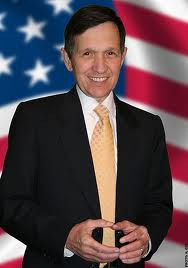
Journal: Dennis Kucinich Introduces Monetary Reform

03 Economy, 07 Other Atrocities, 11 Society, Budgets & Funding, Civil Society, Collective Intelligence, Commerce, Commercial Intelligence, Corporations, Counter-Oppression/Counter-Dictatorship Practices, Cultural Intelligence, Government, InfoOps (IO), Methods & Process, Money, Banks & Concentrated Wealth, Power Behind-the-Scenes/Special Interests, Strategy
Dennis Kucinich

Dear Friends of the American Monetary Institute,

IMPORTANT MONETARY NEWS ALERT:   MAJOR, HISTORIC PROGRESS BEING MADE

On Friday December 17th Congressman Dennis Kucinich (D,Ohio, 10th District) took a crucial and heroic step to resolve our growing financial crisis and achieve a just and sustainable money system for our nation by introducing the National Emergency Employment Defense Act of 2010, abbreviated NEED. The bill number is  HR6550.

While the bill focuses on our unemployment crisis, the remedy proposed contains all the essential monetary measures being proposed by the American Monetary Institute in the American Monetary Act. These are what decades of research and centuries of experience have shown to be necessary to end the economic crisis in a just and sustainable way, and place the U.S. money system under our constitutional checks and balances. Yes it can be done!

We expect this bill will also be re-introduced next year in the 112th Congress. By putting it in now Congressman Kucinich accomplishes these important things:

* First, the seriousness of intent is underscored;

* Second, it gives our nation the opportunity to view, discuss and understand the necessary provisions, giving the chance to make improvements for re-introduction;

* Third it serves as a beacon to our beleaguered people, cutting through the error, vested interest and disinformation that has blocked monetary reform understanding and action in the past.

The American Monetary Institute has activated its blog to discuss and review any questions about this act. Just click on the blog link at our homepage.

To participate in this process, please sign up at the bottom of our home page at . Then, after reading the proposed legislation feel free to make comments or put questions on the blog, including thoughtful suggestions on how it might be improved.

You can read a copy of the legislation here.

Warm regards to all,
Stephen Zarlenga
AMI

See Also:

Dennis Kucinich on the Proposed Monetary Reform

New Economy Network

Dennis Kucinich, Vice President for the Commonwealth–and Some Details

Journal: Jim Clapper in Untenable Position

Government, InfoOps (IO), Intelligence (government), Officers Call
Richard Wright

General Clapper is extremely qualified to be Director of National Intelligence (DNI) in terms of intelligence experience and management skills. Far too many senior management staff at CIA have proven incompetent time servers and selection of the DNI from the upper ranks of CIA would have to be done with extreme care.

The fact is however that no matter who is DNI, it is an untenable job. Although General Clapper supposedly received authority over 80 per cent of the intelligence budget my guess is that DOD and its friends in congress will make sure that he will be unable to exercise any real control over spending. Further no DNI appears to have had the full confidence of either President Bush or President Obama. With Leon Panetta as Director of CIA, that agency will continue to operate pretty much independent of the DNI. Finally the simple fact is that President Obama has apparently placed his full confidence in John Brennan and Brennan apparently thinks nothing of undercutting any intelligence official who might undermine his role as the Intelligence Authority for the President. If General Clapper would have asked me I would have told him to forget the DNI position and get himself a cushy job in private industry.

See Also:

Journal: Brennan Sandbags Clapper? The London 12

Harnessing Collective Intelligence to Save Democracy

Journal: Can’t Get No Satisfaction from US Intelligence Community…

noble gold