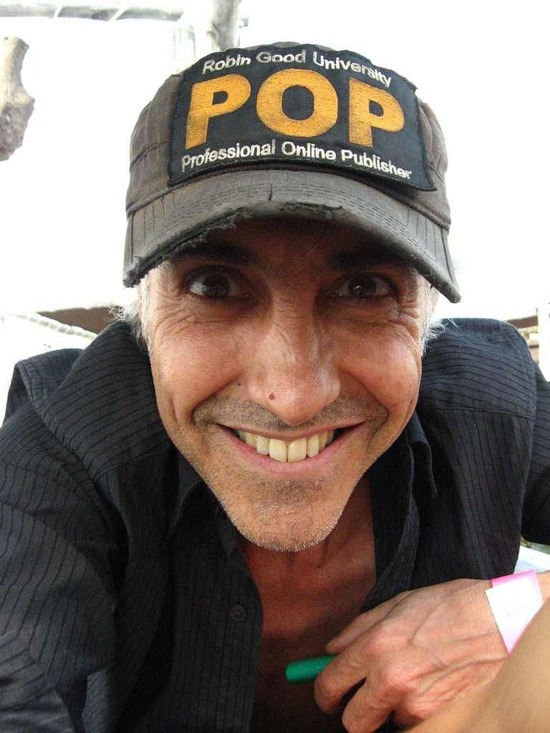
Robin Good: Six Key Content Curation Insights Emerging from the Leaked NY Times Executive Summary

Advanced Cyber/IO, Media
Robin Good
Robin Good

Six Key Content Curation Insights Emerging from the Leaked NY Times Executive Summary

The leaked New York Times memo of less than a week ago is making the round on the Internet, as it touches upon many of the key issues and opportunities any news journalism operation is facing today.

From my personal viewpoint the most interesting aspect of this lengthy 97-page memo is how much curation, news and content curation specifically, are part of the future view being described in it.

Since, even trying read the in-depth curated version of the leaked NY report done by the excellent Nieman Lab it may take you in excess of 30 minutes, I have extracted and highlighted here below only the points that are specifically relevant to curators and to anyone researching the future of content curation within the context of news and journalism.

Here, six key points to pay strong attention to:

  1. …resurfacing archival content. The report cites this passage: ““We can be both a daily newsletter and a library — offering news every day, as well as providing context, relevance and timeless works of journalism.”
  2. …restructuring arts and culture stories that remain relevant long after they are initially published into guides for readers.
  3. …consider tools to make it easier for journalists, and maybe even readers, to create collections and repackage the content.
  4. allow readers to easily follow certain topics or columnists.
  5. better tagging of the info and content being published.
  6. focus on the less glamorous work of creating tools, templates and permanent fixes that cumulatively can have a bigger impact by saving our digital journalists time and elevating the whole report.

Nieman Lab curated report of the NY leaked Executive Summary document:

Original leaked copy of NY report: 97-pages

Penguin: Obama and Vets — Neglect & Hyposcricy

07 Health, 07 Other Atrocities, 11 Society, Corruption, Cultural Intelligence, Government, Ineptitude, Officers Call
Who, Me?
Who, Me?

Politics at its worst — zero credibility.

Obama: ‘I Will Not Stand For' Misconduct At Veterans Affairs Hospitals

Phi Beta Iota: There is no lack of substantive information about what needs to be done, nor is there a lack of integrity among those who actually believe our veterans should receive the best of which America the Beautiful is capable. What we lack in Washington is the integrity to spend on behalf of the humans in our system instead of the financial system commoditizing and disrespecting our humans.

Republicans for Obama Memorandum to the Campaign (August 2008)

Soldiers: Back in the Day (1980's)

Berto Jongman: CSIS on Rebuilding Trust in Intelligence — Really….

Corruption, Government, Idiocy, Military
Berto Jongman
Berto Jongman

CSIS Statement of Principles for Rebuilding Trust in Intelligence Activities

By
Monday, May 19, 2014 at 5:55 PM

A group convened by the Center for Strategic and International Studies has issued a Statement of Principles for rebuilding trust in intelligence activities. It is signed by the following people:

Read list.

Continue reading “Berto Jongman: CSIS on Rebuilding Trust in Intelligence — Really….”

SchwartzReport: Matt Taibbi on the Legal Divide — Two Justice Systems — Criminalization of Poverty Among the 99%, Impunity for the 1%

01 Poverty, 03 Economy, 07 Other Atrocities, 09 Justice, 10 Transnational Crime, 11 Society, Corruption, Cultural Intelligence, Government
Stephan A. Schwartz
Stephan A. Schwartz

This is a very good interview with Matt Taibbi discussing what has happened to the American justice system. One of our myths is that we have the fairest justice system in the world but, like our fantasy that we have the world's freest press, it is a delusion. As with the press we aren't e! ven in the top 25. It is very hard to maintain a healthy democracy if both the government and the people insist upon lying to themselves.

‘It’s Total Moral Surrender”: Matt Taibbi Unloads on Wall Street, Inequality and our Broken Justice System
ELIAS ISQUITH, Assistant Editor – Salon

EXTRACT

Morally, it doesn’t work anymore. You just cannot have a society where people instinctively know that certain people are above the law, because it will create total disrespect for authority among everybody else. And that’s completely corrosive. You need to have people believing in the system to some degree – even if it’s just an illusion, you need to have them believing. And that was … another thing I was trying to get to in this book, the difference between what happened in the Bush years, with the scandals with Adelphi and Enron and Tyco, and what happened now, [when] they just stopped seeing the necessity of keeping up appearances. They didn’t even make a few symbolic prosecutions, and so it leaves the entire public with this glaring statistic that there were no prosecutions and there was massive crime. How does that make anybody else feel? How does it make you feel when you pay a speeding ticket, you can’t write that off, but HSBC can write off its $1.9 b! illion fine for drug trafficking? People start to think about these things, and they start losing their faith in the system and it doesn’t work anymore. It’s funny, because when they talk about income inequality on the campaign trail and in these elections … They always talk about it in this unthreatening, antiseptic way, and it’s just so much more extreme than that. It’s much broader and more disgusting problem than the way they typically present it in our political debate. So that was another thing I was trying to do, was to try to bring out the grotesque nature of the whole thing.

Wayne Madsen: NSA Spies on US Allies — With Direct Witting Assistance of AT&T, EDS, Qwest, H-P, Motorola, Cisco, Qualcomm, Oracle, Intel, IBM, Microsoft, and Verizon

07 Other Atrocities, 10 Transnational Crime, Corruption, Idiocy, IO Deeds of War, Military, Officers Call
Wayne Madsen
Wayne Madsen

Washington Spies on NATO; Other Allies

Wayne MADSEN

Strategic Culture.org | 18.05.2014

EXTRACT

Implants are inserted by NSA into targeted computer systems and network devices through what the NSA calls «supply-chain interdiction». Equipment is intercepted between the manufacturer and the end-user. At a secret facility called a «load station», devices called «beacons» are inserted clandestinely into a device’s hardware. These pre-positioned access points permit later access by NSA into «hard target» networks around the world.

NSA names its strategic partners in its «collect-it-all», codenamed ASPHALT operations, around the world. These are AT&T, EDS, Qwest, H-P, Motorola, Cisco, Qualcomm, Oracle, Intel, IBM, Microsoft, and Verizon. In all, over 80 «major global corporations» support NSA’s worldwide collection efforts. With corporate cooperation, NSA captures Internet data from seven «international choke point» access sites in the continental United States. Their cover names are Breckenridge, Tahoe, and Sun Valley on the U.S. West Coast; Whistler in the South; and Killington, Coppermountain, and Maverick on the East Coast.

Read full article.

Continue reading “Wayne Madsen: NSA Spies on US Allies — With Direct Witting Assistance of AT&T, EDS, Qwest, H-P, Motorola, Cisco, Qualcomm, Oracle, Intel, IBM, Microsoft, and Verizon”

SchwartzReport: Insurance Companies Begin Acknowledging Climate Change, Break with Energy Industry Denials of Climate Change

03 Economy, 03 Environmental Degradation, Commerce, Cultural Intelligence, Earth Intelligence, Ethics
Stephan A. Schwartz
Stephan A. Schwartz

If you have been reading SR for some time you know I predicted this in the late 90s. Eventually a wide range of industries are going to be opposed to the carbon energy interests. This is an important trend, and one to watch closely.

Rift Widening Between Energy And Insurance Industries Over Climate Change
KEN SILVERSTEIN – Forbes

Being a big business, the insurance industry is a strong backer of free enterprise and its laissez-faire leaders. But a rift could be developing now that some major carriers are staking claims in the climate change cause while many of their congressional backers have remained skeptical of the science.

For insurers, it’s not about the political machinations but rather, it’s about the potential economic losses. If even part of the predictions hold – the ones released by the Intergovernmental Panel On Climate Change that ascribe temperature change to humans with 95 percent certainty – then the rate of extreme weather events will only increase and the effects would be more severe. That, in turn, would lead to greater damages and more payouts.

Read full article.

Continue reading “SchwartzReport: Insurance Companies Begin Acknowledging Climate Change, Break with Energy Industry Denials of Climate Change”

Berto Jongman: South Sudan Crisis at Tipping Point — But Donors Still in Grid-Lock with Ancient Protocols

01 Poverty, 07 Other Atrocities, 11 Society, Government, Non-Governmental
Berto Jongman
Berto Jongman

South Sudan crisis: famine and genocide threaten to engulf nation

Aid agencies say South Sudan at ‘tipping point' as ethnic violence puts millions of people at risk of starvation and disease

It is happening again. Twenty years after the genocide in Rwanda, 30 years after the famine in Ethiopia, Africa‘s twin scourges are back. This time it is a single country facing a double disaster. South Sudan, the world's newest nation, not yet three years old, is on the brink of catastrophe.

Here in Melut, on the banks of the Nile, close to the oilfields and the border with Sudan, the signs of impending disaster are impossible to miss. This week the world's richest nations will have one last chance to make good their promises of help.

Nearly 20,000 people have fled to the refugee camps in Melut since fighting between rival government factions broke out last December. In total, more than a million people have fled from their homes and, with the rainy season starting, more than a third of the population – 3.7 million people – are already facing emergency and crisis levels of hunger.

“There is no food here,” a man tells me as we sit in the dust beneath an acacia tree in one of Melut's makeshift camps. “No food. We eat leaves from the trees and the women go out to collect firewood. But when the rain comes, it will be still worse. We will starve – and then we will die.”

Relief agencies are fighting a desperate battle to alert the outside world to the scale of the impending disaster. Last week Oxfam warned that the crisis has reached a “now or never moment” to avoid catastrophic levels of hunger and suffering. Chief executive Mark Goldring said: “The crisis is at a tipping point. We either act now or millions will pay the price. We need a massive and rapid global surge in aid … We cannot afford to wait, and we cannot afford to fail.”

Read full article.

Continue reading “Berto Jongman: South Sudan Crisis at Tipping Point — But Donors Still in Grid-Lock with Ancient Protocols”

noble gold