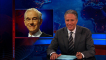
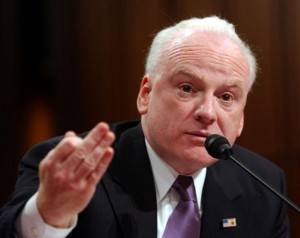
Jon Stewart skewers the media, and especially the right-wing media, for obviously and deliberately refusing to name Ron Paul or mention his various victories.
Even when the media does remember Ron Paul, it's only to reassure themselves that there's no need to remember Ron Paul.
Phi Beta Iota: The corruption of the media, including CNN and Bloomberg, is despicable. They dishonor the public from whom they derive their public commissions to do business.
Delivery of first-class mail is falling at a staggering rate. Facing insolvency, can the USPS reinvent itself like European services have—or will it implode?
Koko Signs: In debt, taxpayer subsidizing junk mail, zero innovation. A superb seven screen article, an in-depth look at a side of the US Government that is representative of the bloat, waste, and myopia of the rest of government.
Despite budget woes, the military is preparing for a conflict with our biggest rival — and we should be worried
This summer, despite America’s continuing financial crisis, the Pentagon is effectively considering trading two military quagmires for the possibility of a third. Reducing its commitments in Iraq and Afghanistan as it refocuses on Asia, Washington is not so much withdrawing forces from the Persian Gulf as it is redeploying them for a prospective war with its largest creditor, China.
. . . . .
AirSea Battle, developed in the early 1990s and most recently codified in a 2009 Navy-Air Force classified memo, is a vehicle for conforming U.S. military power to address asymmetrical threats in the Western Pacific and the Persian Gulf — code for China and Iran. (This alone raises a crucial point: If the U.S. has had nothing but trouble with asymmetrical warfare for the last 45 years, why should a war with China, or Iran for that matter, be any different?) It complements the 1992 Defense Planning Guidance, a government white paper that precluded the rise of any “peer competitor” that might challenge U.S. dominance worldwide.
. . . . . . .
For the first time since the end of the Cold War, the U.S. government has encountered the practical limits of the 1992 Defense Planning Guidance.
. . . . . .
Here is a noble appeal for Washington to match its commitments with the resources needed to sustain them, the absence of which has fueled the debt crisis that nearly reduced the United States to a mendicant state. Such are the crippling costs of a defense policy that makes global hegemony a mindless imperative.
The Tsunami or the Earthquake Preceding the Tsunami?????
Below is another pathbreaking report in Counterpunch on the Fukushima question. Fukushima may be off the front pages, but the catastrophe is still generating serious questions with profound ramifications. In a few days, I will forward another blaster will showing how the some of these ramifications this catastrophe reaching into the good ole USA. In the meantime, I urge you to read this report.
Chuck Spinney
Nice, France
The Fukushima Daiichi Reactors Were in Meltdown After the Earthquake, But Before the Tsnumami Hit
It is one of the mysteries of Japan’s ongoing nuclear crisis: How much damage did the March 11 earthquake do to the Fukushima Daiichi reactors before the tsunami hit? The stakes are high: If the quake structurally compromised the plant and the safety of its nuclear fuel, then every other similar reactor in Japan will have to be reviewed and possibly shut down. With virtually all of Japan’s 54 reactors either offline (35) or scheduled for shutdown by next April, the issue of structural safety looms over the decision to restart every one in the months and years after.
. . . . . .
Problems with the fractured, deteriorating, poorly repaired pipes and the cooling system had been pointed out for years. In 2002, whistleblower allegations that TEPCO had deliberately falsified safety records came to light and the company was forced to shut down all of its reactors and inspect them, including the Fukushima Daiichi Power Plant. Sugaoka Kei, a General Electric on-site inspector first notified Japan’s nuclear watchdog, Nuclear Industrial Safety Agency (NISA) in June of 2000. The government of Japan took two years to address the problem, then colluded in covering it up — and gave the name of the whistleblower to TEPCO.
In a new documentary, former national-security aide Richard Clarke suggests the CIA tried to recruit 9/11 hijackers—then covered it up. Philip Shenon on George Tenet’s denial.
With the 10th anniversary of the 9/11 attacks only a month away, former CIA Director George Tenet and two former top aides are fighting back hard against allegations that they engaged in a massive cover-up in 2000 and 2001 to hide intelligence from the White House and the FBI that might have prevented the attacks.
The source of the explosive, unproved allegations is a man who once considered Tenet a close friend: former White House counterterrorism czar Richard Clarke, who makes the charges against Tenet and the CIA in an interview for a radio documentary timed to the 10th anniversary next month. Portions of the Clarke interview were made available to The Daily Beast by the producers of the documentary.
The story continues to develop. This “house arrest” thing popped up when the US was beating on the Talibs to hand him over in Kandahar in 2001, then some faux intel from Brad Thor about Mullah Omar being under “house arrest” in Karachi and then now this. Sounds very familiar. Two fiction authors in the intel field being played for reasons unknown. My jury is out on how much I want to believe Raelynn. There are some holes you can drive a truck through in flaws in logic but some ideas could be untangled to pick up a few new truths. Kinda like the blind man and the elephant.
Forget the cover story of waterboarding-leads-to-courier-leads-to bin Laden (not to deny the effectiveness of waterboarding, but it’s just not applicable in this case.) Sources in the intelligence community tell me that after years of trying and one bureaucratically insane near-miss in Yemen, the US government killed OBL because a Pakistani intelligence officer came forward to collect the approximately $25 million reward from the State Department's Rewards for Justice program.
The informant was a walk-in. The ISI officer came forward to claim the substantial reward and to broker US citizenship for his family.
The real story of how the US found bin Laden raises some key questions, namely:
Why did the Saudis pay the Pakistanis to keep bin Laden?
Why did the Pakistani's cooperate?
Did the ISI run the safe house itself or did it use a third party?
How permeable was the safe house?
A key to understanding why Saudi Arabia would finance bin Laden's hideout is clarifying what the Saudis were actually paying for. Bin Laden was esentially being kept under house arrest.
Great article. Starts with Citigroup's Plutonomy report (the report has been ruthlessly removed from the Web by Citi's lawyers) — wherein they show that, in the US, the middle class doesn't really exist. In reality, there are only two groups, a small percentage of rich households (that drive all consumption and investment) and the rest (that live hand to mouth). The last time this happened (in the 1920s) a global depression was the inevitable result
The Great Recession has accelerated the hollowing-out of the American middle class. And it has illuminated the widening divide between most of America and the super-rich. Both developments herald grave consequences. Here is how we can bridge the gap between us.