The US military began work on the Falcon back in 2003 in hopes of creating an aircraft that could be anywhere internationally within an hour. Of course, why the military would need to be anywhere, in the sky, that quickly, could be considered catastrophic for all of mankind, but a completed Falcon free of glitches and bugs won’t be ready any time soon. Meanwhile, the US military has dubbed that ability to be anywhere, anytime a “Conventional Prompt Global Strike,” or CPGS.
So far over $300 million has gone into the aircraft, which is expected to be ready for production in 2025.
Documents obtained by the Danger Room blog on Wired.com revealed important conflicts of interest regarding DARPA contractors and DARPA Chief Regina Dugan, who it turns out, is part owner and is owed money by a contractor.
Phi Beta Iota: This is a sadly classic example of funded idiocy. This program should be cut immediately, and the DARPA chief investigated and then if appropriate fired while also losing her clearances. The US Government generally, but the Pentagon and DHS most specifically, are out of control and pulling the USA down with them.
The Science of Spying. NBC show narrated by John Chancellor donated to the US government. Purchased from the US National Archives via Amazon. Also can be downloaded free.
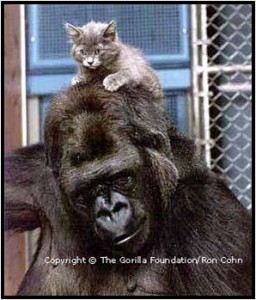
Koko: See the comments for insights on how the attentive public is reacting to this film.
Phi Beta Iota: The reason we emphasize integrity on this website is because it has been so visibly lacking in the US Government, and especially so in relations between the secret intelligence world and the White House. It is now clear that a series of Presidents have abused their power when directors of central or national intelligence have been willing to prostitute themselves; while at the same time, and mostly during the Allen Dulles era, but also under others, the secret world has lied–has committed treason–to the President and his senior advisors. We continue to be skeptical of the alleged assassination and disposal of Bin Laden. More generally, the secret world today is largely worthless to the public or the public interest, and exists primarily to channel taxpayer resources to beltway bandits who fund corrupt members of Congress (in fairness to the beltway bandits, it is the corrupt Representatives doing the shaking down). “Intelligence” today is grotesquely immature and ill-suited to the complexities and nuances of the age.
That's a good question. Here's a partial answer that challenges conventional wisdom: most crowds that stampede, crushing people, do so when entering a venue. Why? One reason is that people are more likely to surge forward when they think they are about to be excluded from something. The other more important reason is that most venues aren't designed for rapid entry. Venue owners erect artificial barriers to entry for commercial reasons. In contrast, most venues are designed to enable fast exits and offer multiple ways to leave (per the fire code, etc.).
The lesson here is that people charged with controlling the crowd (for commercial or “security reasons”) are actually the reason most people die during crowd “stampedes.”
Amazon Page
Do People Panic/Riot/Rampage During Disasters?
The conventional wisdom is that people panic during disasters. Worse, it's assumed that many people immediately become feral looters when disasters hit. Widespread panic has become the government's worst nightmare. The boogey man that is trotted out to explain why governments need to lie (in order to keep people from panicking) or why military intervention/curfews are necessary.
However, as with stampeding crowds, the conventional wisdom on this is wrong. Rebecca shows in her book, A Paradise Built in Hell, that people don't typically panic when they find themselves at the ground zero of a disaster (after the immediate danger is over). Through the use of detailed research on a number of extreme disasters, she shows that in most cases people are very practical when confronting disaster. Better yet, they are often more courteous and much more likely to help each other when things fall apart than they are normally. They come together to survive.
In contrast to the people on the ground, she shows that the only people that actually do panic during disasters are the elites — from those with wealth to those running the government's response (I'm not talking about the first responders actually on the ground doing good work). They panic over the loss of control a disaster brings. This often results in extreme actions that only serve to make things worse: from martial law authorized to use deadly force against looters (often just people trying to survive the situation) to arbitrarily hearding people into locations that aren't able to support large groups of people.
What This Means
The lesson here is that during an extreme disaster, the people you may most need to fear are those in charge, particularly if their motives are focused on protecting elite interests put at risk by the disaster. Rebecca has a caution for governments that don't align their actions with those of the people: history shows that disasters can serve as the trigger for revolutions if handled with bad intent.
Phi Beta Iota: On the last remark, that is called a precipitant of revolution, as opposed to the preconditions that already exist, as we have been saying for some time, across the USA.
I got hold of a few truths, and could not help remembering the Phi Beta Iota quote:
Fedor Dostoevsky:A man who lies to himself, and believes his own lies, becomes unable to recognize truth, either in himself or in anyone else.
Here are some facts:
1) Saydabad is one of the worst districts in Wardak
2) Chinook loss should be attributed to American hubris.
3) July reporting shows US patrols increasingly timid.
4) Current rate for Afghan Army defectors is 30,000 rupees, around US$650, which appears to include their bringing over their weapon and other gear.
5) Crash killed 38, including 22 members of the elite SEAL Team 6 and their support element. Seven were Afghans so we are at 29, there was a crew of three. So, did we send in 22 SEALS and a crew of three, plus the Afghans to rescue six Rangers? The numbers on the Chinook do not add up. There is something seriously fishy about the government story.
6) Sure feels like Viet-Nam deja vu, where the public could not trust the government or the media to report accurately on anything having to do with our presence therer.
The government's relentless pursuit of people suspected of mishandling or leaking classified information underscores the need to combat the misuse of classification authority, wrote J. William Leonard, the former director of the Information Security Oversight Office (ISOO), in an op-ed in the Los Angeles Times today.
“The Obama administration, which has criminally prosecuted more leakers of purportedly classified information than all previous administrations combined, needs to stop and assess the way the government classifies information in the first place.”
“Classifying information that should not be kept secret can be just as harmful to the national interest as unauthorized disclosures of appropriately classified information,” he wrote. See “When Secrecy Gets Out of Hand” by J. William Leonard, Los Angeles Times, August 10.
Mr. Leonard recentlyfiled a complaint with the new ISOO director, John Fitzpatrick, based on his assessment that a document that served as a basis for criminal prosecution in the case of Thomas Drake should never have been classified at all.
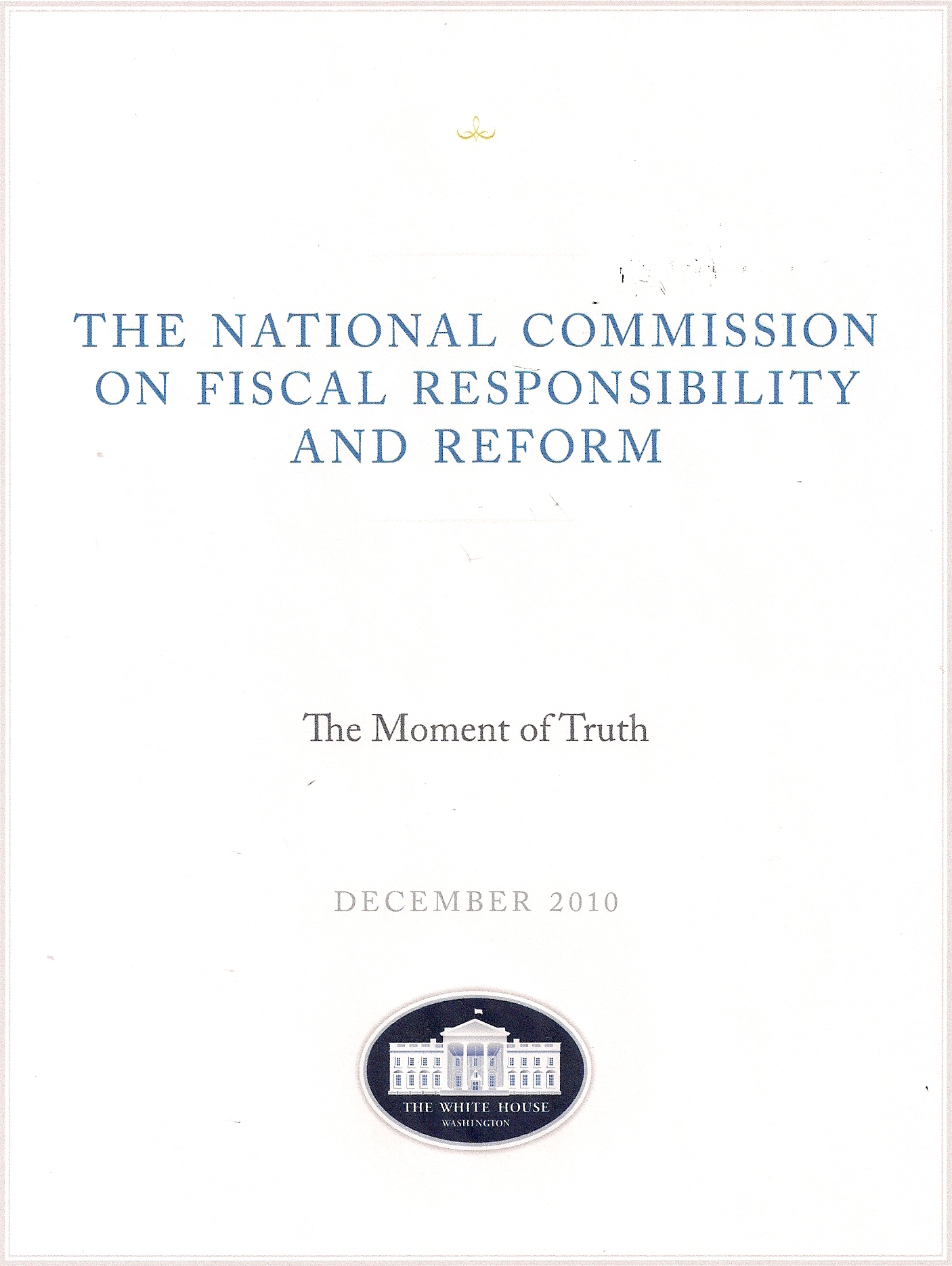
Phi Beta Iota: This report, while responsible (unlike the current food fight a year later), does not go far enough. It allows the borrowing of one trillion a year to continue, while observing that interest on the debt could reach one trillion a year by 2020. The principle recommendations, all sound but insufficient, are listed in the Overview section.
Washington: The Pentagon's top intelligence official has ordered the Air Force to set up a new intelligence unit to analyze the behavior of foreign-based commercial aircraft and integrate intelligence from the combatant commanders as the planes move through American airspace.
Undersecretary of Defense for Intelligence Mike Vickers has tasked Air Force Secretary Michael Donley to hand pick a chief for the new intelligence cell.
While USD(I) will be the “focal point in DoD for intelligence on foreign civil aviation-related entities associated with illicit activities or posing a threat to the United States, its allies or its interests,” the Air Force will handle day-to-day operations through the Civil Aviation Intelligence Analysis Center, according to a July 29 memo from Vickers.