 The White House
Office of the Press Secretary
For Immediate Release
September 16, 2014
FACT SHEET: U.S. Response to the Ebola Epidemic in West Africa

The truth at any cost lowers all other costs — curated by former US spy Robert David Steele.
The White House
Office of the Press Secretary
For Immediate Release
September 16, 2014
FACT SHEET: U.S. Response to the Ebola Epidemic in West Africa
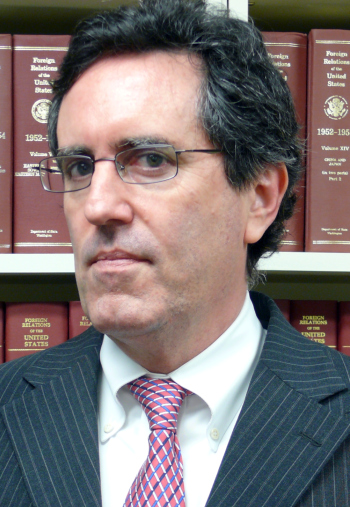
COURT REQUIRES IN CAMERA REVIEW OF STATE SECRETS DOCUMENTS
Over the objections of government attorneys, a federal judge said yesterday that he would require in camera review of documents that the government says are protected by the state secrets privilege. The issue arose in the case of Gulet Mohamed v. Eric Holder, challenging the constitutionality of the “no fly” list.
The government had argued that it is “inappropriate” for a court to review such records to verify that they are validly privileged, and that instead the court should grant dismissal of case on the basis of official declarations. (Gov’t Resists Court Review of State Secrets, Secrecy News, August 27). The government moved for reconsideration of an August 6 order to produce the records for in camera review.
Yesterday, Judge Anthony J. Trenga of the Eastern District of Virginia granted the government's motion for reconsideration, but he said that having reconsidered the matter, he determined that he had been right the first time around.
“Upon reconsideration of its Order, however, the Court finds that none of [the] objections justifies vacating the Order, as the defendants request. The Court therefore affirms its Order.”
“This case involves complex and unsettled issues pertaining to the respective roles of the legislative, executive and judicial branches,” Judge Trenga wrote. “One central issue is the extent to which the War on Terrorism may expand the ability of the executive branch to act in ways that cannot otherwise be justified.”
Continue reading “Steve Aftergood: Court Requires In Camera Review of State Secrets Documents”

The Washington Times launches U.S. Constitution app for smartphones, tablets
The Washington Times on Wednesday launched a smartphone and tablet app celebrating the U.S. Constitution and other important founding documents as part of a nationwide project to empower schools, parents and community leaders to teach constitutional literacy to the newest generation of Americans.
The Washington Times’ Pocket Constitution App, developed in partnership with the nonprofit Essentials in Education, is debuting on the 10th anniversary of Constitution Day, a national holiday created through the efforts of Sen. Robert C. Byrd, West Virginia Democrat, and signed into law by President George W. Bush.
See Especially:
Review: Liberty Defined–50 Essential Issues That Affect Our Freedom
Review: The Thirteen American Arguments–Enduring Debates That Define and Inspire Our Country
See Also:
Astonished, we are.
Lessons outlined in below video:
01 Don't always take the bait.
02 Don't overestimate the enemy
03 Remember politics (over there).
Phi Beta Iota: It is worth noting that none of the regional countries including Jordan is ready to provide ground troops. They are all — without exception — sucking the USA in to be the target. On a positive note, for the first time in 50 years, there is a break in the ranks of the “insiders.” This is a very positive development. Any and all US activity — from mediocre intelligence support to repressive regimes to air strikes to boots on the ground — should be forbidden by the public — sadly, big money wants this war and is paying to make the public stupid in time for the 2014 elections. We are reminded of Martin Luther King, John F. Kennedy, John Lennon, the Dixie Chicks. All right and all righteous in their time. All were also assassinated or marginalized for daring to confront the national security state that is formed and operated by traitors the FBI dares not go after. Can the Director of the FBI reconnect with his oath of office and his integrity and start making some inroads against traitors? We are not holding our breath.
See Also:

-This 3rd video is following the same script and format as the previous two
-Again it was first reported by SITE Intelligence
-Again the actual beheading is not shown
-The result of the beheading is shown in a still
-This video is specifically directed at the allies of the US, the UK in particular
-Again this video ends with the warning that another ISIS hostage will be beheaded in the next video
 This Man Wrote Hundreds of Letters Warning Politicians Not to Lie. It Worked.
Political scientist Brendan Nyhan explains why fact-checking keeps candidates honest…sometimes.
Nyhan hasn't just been studying the fact-check movement; he was there at its origins. In the early 2000s, he coauthored a site called Spinsanity.com, a nonpartisan fact-checking outlet. It was the beginning of a wave: In 2003, the Annenberg Public Policy Center at the University of Pennsylvania launched FactCheck.org. But the real fact-checking movement kicked into gear in the late 2000s, with the launch of PolitiFact, by far the most widely known of these outlets, as well as the 2007 launch of the Washington Post fact-checker column, now written by Glenn Kessler.
. . . . . .
So what does the evidence show about this endeavor?
First the good news: Overall, the fact-checkers have reinforced the idea that reality exists, and journalists are capable of discerning what it is.
. . . . . .
A far tougher issue, though, is whether minds change when fact-checkers make their pronouncements. On the level of individual psychology, repeated studies by Nyhan and others have shown that it is very hard to correct a misperception once it is out there in the media ether.

The Indispensable Librarian [57 Slides]
Mary Ellen Bates
Sep 11, 2014
What's the value of priceless? Special libraries return $5.43 for every $1 invested.
See Also:
Mary Ellen Bates @ Phi Beta Iota
Cliff Notes Below the Fold
Continue reading “Mary Ellen Bates: The Indispensable Librarian”
