Hal Berghel: OUT OF BAND – STEM, Revisted — Bogus Crisis?

Advanced Cyber/IO
Hal Berghel
Hal Berghel

STEM, Revisited

Are we really facing a STEM crisis? Or is this crisis as bogus as the missile gap that started the space race over 50 years ago? It's time to cut through the hyperbole and take a hard look.

EXTRACT

In our desire to heighten technical skills and achieve scientific hegemony, we lost sight of the incredible value of a well-rounded education. And this loss has had a debilitating effect on society today.

Read full article online.

Hal Berghel is currently Professor of Computer Science at the University of Nevada, Las Vegas where he has previously served as Director of the School of Computer Science and Associate Dean of the College of Engineering. He is also the founding Director of the Identity Theft and Financial Fraud Research and Operations Center. His research interests are wide-ranging within the binary and digital ecosystem, ranging from logic programming and expert systems, relational database design, algorithms for non-resolution based inferencing, approximate string matching, digital watermarking and steganography, and digital security (including both computer and network forensics).


Jean Lievens: Stephen Downes on Mass Collaboration

Advanced Cyber/IO
Jean Lievens
Jean Lievens

Workshop on Mass Collaboration – Day One

Introduction to the Workshop – Ulrike Cress

Why a workshop in mass collaboration? Recent mass phenomena: Wikipedia, tagging, blogging, Scratch, massive open online courses and connectivism, citizen science, maker-space

Who is creating these? Nature article on massively collaborative mathematics (see the wiki PolyMath).

How do we describe these phenomena? Is it just aggregation? What role does coordination play? Is it a mass phenomena? Is it an emergent phenomena? Is it collective intelligence? And what are the processes behind this?

Stephen Downes
Stephen Downes

In science we need new methods for this. Previously, we would passively observe – but now we want people interacting. We have to try and find what these methods can do.

Can we design mass collaboration? Is it just something that self-starts, or can we create this?

CSCL 2013, we brought together people to talk about this. This led to the larger workshop we are hosting today.

Learn more.

Continue reading “Jean Lievens: Stephen Downes on Mass Collaboration”

Robin Good: Six Key Content Curation Insights Emerging from the Leaked NY Times Executive Summary

Advanced Cyber/IO, Media
Robin Good
Robin Good

Six Key Content Curation Insights Emerging from the Leaked NY Times Executive Summary

The leaked New York Times memo of less than a week ago is making the round on the Internet, as it touches upon many of the key issues and opportunities any news journalism operation is facing today.

From my personal viewpoint the most interesting aspect of this lengthy 97-page memo is how much curation, news and content curation specifically, are part of the future view being described in it.

Since, even trying read the in-depth curated version of the leaked NY report done by the excellent Nieman Lab it may take you in excess of 30 minutes, I have extracted and highlighted here below only the points that are specifically relevant to curators and to anyone researching the future of content curation within the context of news and journalism.

Here, six key points to pay strong attention to:

  1. …resurfacing archival content. The report cites this passage: ““We can be both a daily newsletter and a library — offering news every day, as well as providing context, relevance and timeless works of journalism.”
  2. …restructuring arts and culture stories that remain relevant long after they are initially published into guides for readers.
  3. …consider tools to make it easier for journalists, and maybe even readers, to create collections and repackage the content.
  4. allow readers to easily follow certain topics or columnists.
  5. better tagging of the info and content being published.
  6. focus on the less glamorous work of creating tools, templates and permanent fixes that cumulatively can have a bigger impact by saving our digital journalists time and elevating the whole report.

Nieman Lab curated report of the NY leaked Executive Summary document:

Original leaked copy of NY report: 97-pages

Berto Jongman: CYBER – 10 Ways to Kill the Internet — and Information-Sharing Analysis Centers (ISAC)

Advanced Cyber/IO, IO Deeds of War, IO Impotency
Berto Jongman
Berto Jongman

The bad with the good.

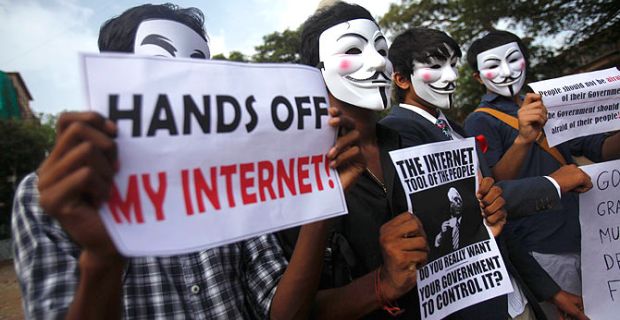
The Plan to Kill the Internet Uncovered

10 ways web freedom is being butchered worldwide.

LIST ONLY:

Click on Image to Enlarge

1) The Death of Net Neutrality
2) Intelligence Agencies are Manipulating the Internet With Deliberate Disinformation
3) Governments are Paying Trolls to Sway Public Opinion
4) Mainstream News Websites are Killing Comment Sections
5) The Obama Administration’s “Cognitive Infiltration” of the Internet
6) False Flag Cybersecurity Attacks as a Pretext to Increase Web Regulation
7) Fairness Doctrine for the Internet
8) Homeland Security’s Internet Kill Switch
9) New Taxes and Regulations Set to Stifle Communication & Sales on the Web
10) SOPA, CISPA & The FBI’s Internet Backdoor

Read full article with elaboration and links.

ISACs: Let the Sharing Begin

A while back, I wrote about the value of information sharing, and the role of ISACs (Information Sharing and Analysis Centers) – see “The Bad Guys Are Winning: Information Sharing And Asymmetric Advantage.” I’m a huge fan of this model for sharing information about cyber threats.

A shining example of an effective ISAC is the Financial Services ISAC (FS-ISAC), but one of the lurking questions about their work is whether they are violating any anti-trust regulations in the US. Having worked with them, it was my opinion that they weren’t doing anything that felt like anti-trust, but I’m not a legal expert.  By the way – the ICS-ISAC, which deals with Industrial Control Systems, recently showed its value in an attack on the US Utility Control System infrastructure.


Read full article.

2014 Robert Steele Open Letter to Vice President of the United States of America Joe Biden, The White House

Advanced Cyber/IO, Congressional Research Service, Correspondence, Director of National Intelligence et al (IC), Ethics, General Accountability Office, Government, Memoranda, Office of Management and Budget, Officers Call, Strategy, White Papers

Open Letter to Joe Biden


Continue reading “2014 Robert Steele Open Letter to Vice President of the United States of America Joe Biden, The White House”

Marcus Aurelius: CYBER School Modeled on RANGER School? But What Is Cyber?

Advanced Cyber/IO
Marcus Aurelius
Marcus Aurelius

Interesting concept, although I'm not sure how practical it is.

Towards a Cyber Leader Course Modeled on Army Ranger School
By Gregory Conti, Michael Weigand, Ed Skoudis, David Raymond, Thomas Cook and Todd Arnold

Small Wars Journal  | Apr 18 2014 – 11:31am

Since 1950, the U.S. Army Ranger School has garnered a well-earned reputation as one of the most demanding military schools in the world. Graduates have served with distinction in special operations units including the Ranger Regiment and Special Operations Command as well as line units throughout the Army. With the emergence of cyberspace as an operational domain and the critical shortage of technically and operationally competent cyber[i] leaders, the time has come to create a U.S. Army Cyber Leader Course of equal intensity, reputation, and similar duration,[ii] but focused on cyber operations (see Figure 1). This article presents a model for the creation of such a school, one that goes far beyond just a tough classroom experience by using tactical close-access missions as a core component. What we propose is unique, demanding, immersive, and fills a necessary gap in Army cyber leader development. This article is a condensed form of a more detailed analysis and description of the proposed Army Cyber Leader Course.

PDF (14 Pages): Army Cyber Leader Course Concept SWJ

Continue reading “Marcus Aurelius: CYBER School Modeled on RANGER School? But What Is Cyber?”

Jean Lievens: Could decentralized networks help save democracy?

Advanced Cyber/IO, Cultural Intelligence
Jean Lievens
Jean Lievens

Could decentralized networks help save democracy?

Democratic movements can flourish online, but just as easily get censored. A group of researchers is developing solutions to the vulnerabilities and privacy problems with using big social media platforms like Facebook and Twitter.

Turkish President Recep Tayyip Erdogan disrupted communications between his opponents when he shut down Twitter during the run-up to the country's recent election. But in doing so, he provided yet more proof of how flawed social web activism can be. Whether the lessons in Turkey are heeded could have serious consequences for democracy.

Social networks such as Twitter and Facebook have enabled unprecedented levels of communication and have even received credit for at least one major democratic revolution. There's just one problem: because of their monolithic nature, these centralized networks expose users to snooping and interference of the kind Erdogan caused, says Sonja Buchegger, Associate Professor of Computer Science at KTH Royal Institute of Technology.

A single, large-scale platform provides an easier target for anyone who wants to interfere with online political activity, says Buchegger. “But, if Twitter were decentralized, and you had users cooperating and communicating directly, that wouldn't have been possible to disrupt.

“Decentralization allows for greater freedom of expression.

The good news is that there could be a computer science answer to the problem. Buchegger is leading a group of scientists at KTH who are creating building blocks that developers could use to launch decentralized, distributed networks, which would not only be difficult to interfere with, but would also protect people from government snooping.

Read full article.

noble gold