NIGHTWATCH: CIA Kills Peace in Pakistan, Saudi Goes Nuclear [with Chinese Help?]

02 China, 04 Inter-State Conflict, 07 Other Atrocities, 08 Proliferation, 08 Wild Cards, 10 Security, 11 Society, Cultural Intelligence, Government, Idiocy, IO Deeds of War, Officers Call, Peace Intelligence, Strategy

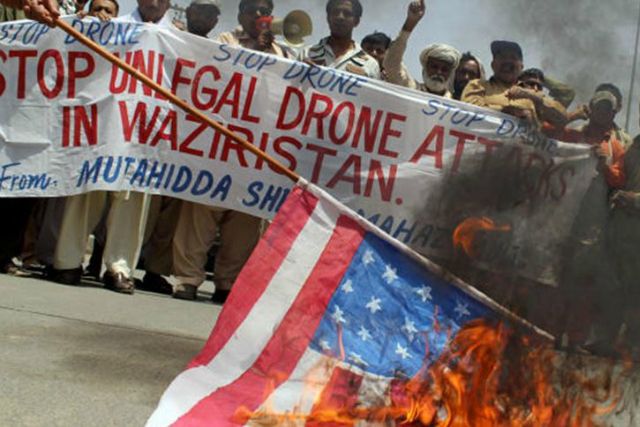
Pakistan-Pakistani Taliban: The Pakistani Taliban rejected peace talks with the government on Thursday after electing hardline militant Mullah Fazlullah as their new leader.

Earlier this month militant sources said that the consultative Shura council of the Tehrik-i-Taliban Pakistan (TTP) chose Khan Said Mehsud known as Sajna as the new leader. But the election of Sajna, who leads the Pakistani Taliban in South Waziristan, reportedly was opposed by Taliban's other groups. Fazlullah was reported to have strongly objected to the choice of Sajna.

Shahidullah Shahid, the main spokesman for the TTP said talks with the government were a “waste of time” and the new chief Maulana Fazlullah was against them. “Holding of peace talks is not even an issue to discuss — this government has no authority, it is not a sovereign government, it is a slave, a slave of America. Holding peace talks is a waste of time.”

Fazlullah's men shot and wounded Malala Yousafzai last year, instantly turning Malala into a global hero for the education of girls.

Comment: Fazlullah's election does not necessarily mean that negotiations will never occur. Hardline leaders often are the only ones capable of negotiating with credibility. But that is for the future. Meanwhile, no peace talks are likely in the near term. Pakistani Pashtun savagery against Pashtun women will increase, including murder attempts against Malala in the UK.

Fazlullah's election signifies rejection of Prime Minister Sharif's peace overture. It also highlights a degenerative leadership pattern resulting from the US program of leadership decapitation. First, there is always someone waiting for the chance to be leader. Second, the new leaders are less experienced and wise than the men they replace. Third, the new generation of leaders is more extreme and theologically rigid than its predecessors. Finally, the new leaders tend to be unknown to intelligence relative to their predecessors. Decapitation is not a permanent solution to an insurgency or an uprising.

Continue reading “NIGHTWATCH: CIA Kills Peace in Pakistan, Saudi Goes Nuclear [with Chinese Help?]”

Michael Shank: Why the White House Won’t Win the Afghanistan War…

04 Inter-State Conflict, 05 Civil War, 08 Wild Cards, Civil Society, Director of National Intelligence et al (IC), DoD, Government, Ineptitude, IO Deeds of War, Military, Officers Call, Peace Intelligence, Strategy
Michael Shank

Why the White House won't win the Afghanistan war

Washington Times, Wednesday, November 6, 2013 –

Cause, Conflict, Conclusion by Michael Shank, Ph.D.

WASHINGTON, November 7, 2013 — U.S. Secretary of State John Kerry desperately needs a win on the Afghanistan war. Unfortunately, however, it appears increasingly unlikely he will get one.

Click on Image to Enlarge

Despite repeated visits and discussions, Kerry has so far failed to secure a clean Bilateral Security Agreement with Afghan President Hamid Karzai. Without an agreement, all U.S. and NATO forces – including the approximately 10,000 that the Pentagon wants to keep in country – would have to leave the country next year.

The immediate sticking point is on whether U.S. troops will receive immunity for misdeeds during the deployment, but the larger issue centers on respect, sovereignty and judicial non-interference.

Local populations are overwhelmingly against immunity for U.S. troops. In Afghanistan, most cases currently slide without reprimand or justice. This includes countless stories of abuse accompanying night raids, which Karzai has repeatedly attempted to ban. As is the case in Iraq, the Philippines and elsewhere, local populations want accountability within their own courts for U.S. troops who commit abuses in their countries. Americans would assuredly want the same treatment for foreign troops on U.S. soil.

After 12 years at war with Afghanistan, we continue to miss the mark on four fronts: strategy, cost, accountability and perception.

Continue reading “Michael Shank: Why the White House Won't Win the Afghanistan War…”

Steven Aftergood: US Intelligence Challenged by Foreign Technological Innovation [and Everything Else…]

Government, Ineptitude, IO Impotency
Steven Aftergood
Steven Aftergood

US Intelligence Challenged by Foreign Technological Innovation

“The increasing pace and adoption of global scientific and technological discovery heighten the risk of strategic or tactical surprise and, over time, reduce the advantages of our intelligence capabilities,” according to a new report on U.S. intelligence research and development programs prepared by a congressionally-mandated Commission.

“Foreign countries’ growing expertise and proficiency in a number of emerging or potentially disruptive technologies and industries–gained either by improving their own capabilities, by using surreptitious methods, or by taking advantage of an erosion of U.S. capabilities and U.S. control over critical supply chains–have the potential to cause great harm to the national security of the United States and its allies,” the report said.

In order to adapt, the report said, the US intelligence community will need to place renewed emphasis on scientific and technical intelligence; improve coordination and management of competing collection and analysis programs; and accelerate the production of actionable intelligence, among other recommended steps.

See the Report of the National Commission for the Review of the Research and Development Programs of the United States Intelligence Community, Unclassified Version, released November 2013 (NYT, WP).

The Commission also produced a White Paper on The IC’s Role Within U.S. Cyber R&D.

Tom Atlee: Public Way Deeper Than Public Opinion

Advanced Cyber/IO, Cultural Intelligence
Tom Atlee
Tom Atlee

What this message is about: A good description of “the public” as a collective entity potentially able to think and respond as a whole.

“The Public” is way deeper than “public opinion”

Dear friends,

This remarkable description of systemic problems in the quasi-democracy of the US, and of the proper conception of “the public” and its role are very resonant with my own perspective. It comes from David King of Grassroots Democracy Incorporated in British Columbia, Canada. His note appeared in a discussion forum of the National Coalition for Dialogue and Deliberation. David gave me permission to share it with you.

Coheartedly,
Tom

One of the realities that bedevils voting is that, in an adversarial and two-party system, partisan messages and media comments suggest very limited (bi-polar) choices. People who see nuances, or prefer collaboration, or are seeking a ‘third way', or reject confrontation are actively discouraged from voting. In an adversarial and two-party system, the only (apparently) valid reasons for voting are: (1) to elect the good guy; or, (2) to make sure the bad guy doesn't win. Anything else is described as a wasted vote or worse, an undermining of the ‘strategic' (blocking) vote.

In terms of citizen engagement, we have a problem in that the sense of “the public” is very weak and is being undermined, constantly. The public is not merely an aggregation of individuals, not is it a temporary or specific or instrumental phenomenon, nor is it detached from its surroundings, nor is it a contractual relationship. The public is greater than the sum of its parts. Something transcendent transforms an aggregation of individuals into “the public” in a time and place. The public is enduring, organic, and embedded in its ecology. The public is relational: it is covenantal (for better or for worse, through sickness and in health, until death do us part).

Continue reading “Tom Atlee: Public Way Deeper Than Public Opinion”

Berto Jongman: Bits, Bytes, & Stuff

Cultural Intelligence, IO Impotency
Berto Jongman
Berto Jongman

BOOK REVIEW: Implosion: The End of Russia and What It Means for America

BOOK REVIEW: Intelligence and Surprise Attack – New Lessons on What Works, What Does Not

CIA Cash Behind Westgate Mall (Kenya) Massacre?

CIA Will Keep Running the Drone War

Cloud-Based Storage Without the Cloud (Transporter Sync)

Cyber Pearl Harbor (Winn Schwartau Thought of This First, in 1988)

Cyberwar Escalated by Edward Snowden?

DOCUMENTARY: Tahrir Square and Egypt's Revolution

NSA and the Fall of the US Empire (John Galtung)

NSA Sweeps Must Continue (Never Mind the Lack of Processing or Effect)

Thorium-Fueled Automobile Engine Needs Refueling Once a Century

WHITE PAPER: Anticipating Rare Events (DoD)

Stephen E. Arnold: Google Banner Ads Displace Search Results

Commerce, Corruption, IO Impotency
Stephen E. Arnold
Stephen E. Arnold

Google Banner Ads Take Over Results Pages

Google is always striving to improve their flagship search engine. Well, improve its profitability, anyway. Ars Technica reports that “New Banner Ads Push Actual Google Results to Bottom 12% of the Screen.” These new adds do not unobtrusively hug the top of the page; for thirty companies lucky enough to be part of this “experiment,” their ads can dominate the results page. Reporter Casey Johnston reminds us this is a tactic Google pledged eight years ago never to employ. Have dollar signs have weakened the company’s resolve? The article observes:

“The rollout of banner ads comes only days after Google’s most recent earnings call, where financial results showed that Google is struggling with falling mobile ad sales prices. As The New York Times reported, Google sells mobile ads for half to two-thirds as much as desktop ads, but the mobile ads are only a third to a quarter as effective. It bears mentioning that before scrolling, real search results on mobile don’t get much real estate, either.

“Google will not publicly address any aspect of the banner ad experiment beyond saying that it is a ‘very limited, US-only test, in which advertisers can include an image as part of the search ads that show in response to certain branded queries.’”

It is worth noting that last bit—”. . . in response to certain branded queries.” In other words, if you search for “Southwest Airlines,” you might get a really big ad about Southwest Airlines. That’s much more reasonable than getting such advertising if you just searched for “airplanes” or “air travel.” (I would not put that evolution past them, though. Stay tuned.) Still, the tactic is bound to rub many searchers the wrong way. Johnston delves into specifics, augmenting her analysis with several screenshots. She concludes with a prediction—she will not be surprised if this experiment turns into a fixture. Neither will I.

Cynthia Murrell, November 06, 2013

Sponsored by ArnoldIT.com, developer of Augmentext

Continue reading “Stephen E. Arnold: Google Banner Ads Displace Search Results”

John Steiner: NSA Files Decoded

07 Other Atrocities, 09 Justice, 11 Society, Corruption, Cultural Intelligence, Director of National Intelligence et al (IC), DoD, Government, Idiocy, IO Deeds of War, IO Impotency, Military, Officers Call
John Steiner
John Steiner

From: Kevin Kelley <kwk@thehomegalaxy.com>
Date: Sat, 2 Nov 2013 10:31:11 -0700
Subject: NSA Files: Decoded – Truly Stunning!  &  ESSENTIAL!   (From The Guardian)

This is truly stunning in many ways!  Not in order:

It's stunningly beautiful as a graphic piece and typography
It's a stunning cutting edge of digital reporting converging interactive media
It stunning in it's brilliant and cogent making of it's case
It's stunning in the story it tells and conveys and in it's impact.

It is absolutely essential

NSA FILES: DECODED

What the revelations mean for you

A collection of videos, text snap-shots, and images, across many authoritative personalities. This is a MAJOR contribution to the public dialog about mass surveillance and out of control government agencies.

Baker, Stewart (former NSA general counsel)
Drake, Thomas (former senior executive, NSA)
Greenwald, Glenn (Journalist)
Jaffer, Jameel (Deputy legal director, ACLU)
Levison, Ladar (Founder of Lavabit)
Lofgren, Zoe (US congresswoman)
Scalhill, Jeremy (National security journalist)
Soghoian, Chris (Principal technologies, ACLU)
Stepanovich, Amie (Lawyer, Electronic Privacy Information Center)
Wyden, Ron (US senator)

noble gold