Join Author Johnny Punish on an Irreverent Adventure as He Searches for the Perp-Pe-Traitor of the Political Rear Naked Choke Hold on Secretary of State John Kerry’s Campaign for World Peace
This week we bore witness to another smack down of a major U.S. leader by the global force that is “it”
This time, like so many before him, U.S. Secretary of State John Kerry was the target du jour; publicly tarred and feathered by this ominous dark sided menace.
At a closed meeting of the Trilateral Commission, the group that secretly runs the shadow government, Kerry said Israel could become an “apartheid” nation if it does not reach a peace deal to create a separate Palestinian state. And just before his warm viperian breath vapor ran cold, “it” had their attack squads scrambled into action like U.S. Taxpayer funded F-15s paid for as part of the billions upon billions of misappropriated monies and strong arm defense contracts that continue to fund the ethnic cleansing of an indigenous people in favor of whatever “it” wants.
Analyst One is a site created by and for analysts Our Mission: Serve analysts working hard problems. Our Goal: Provide content designed to help analysts improve their ability to understand. Topics Covered by Analyst One include: Analytics, Use Cases, Tech and Lessons Learned.
Topics Covered by Analyst One include:
Analytics: the use of advanced tools and methodologies to extract meaning from data.
Sensemaking: advanced concepts to help organizations create knowledge in systemic ways.
Megatrends in the Analytical Community: The major forces in the analytical community that will impact us all.
Technologies: Tools that can improve analytical outcomes, especially user-focused applications.
Architectural constructs: For enterprise support to the analyst.
Analytical challenges and use cases: The hard problems that need more community focused thought, and repeatable solutions that should be broadly shared.
Engage With Us: We would love your input and interaction by any path convenient to you. Find us on Facebook at AnalystOne. Find us on Twitter at:@analystreport. Get us direct feedback and submit topics or article submissions here.
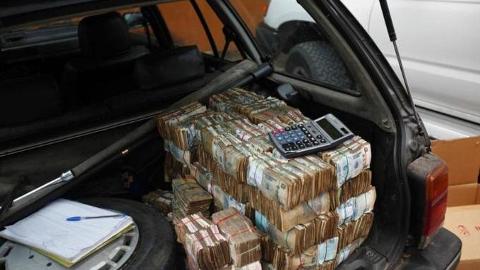
Almost $2 trillion has left Africa illicitly since 1970, thwarting poverty reduction and economic growth.
This is far more than the external aid the continent received over the same period, and almost five times its current external debt. According to researchers, the continent also loses at least $100bn a year in this financial haemorrhage.
Click on Image to Enlarge
African leaders convened this week in the Ethiopian city of Bahar Dar to discuss illicit financial flows and what can be done to staunch them. A study commissioned by the Tana High Level Forum on African Security, which organised the conference, found that illicit flows from Africa grew at an average rate of 12.1 percent per year since 1970, and that capital flight from West and Central African countries accounted for most of the illicit flows from sub-Saharan Africa.
Illicit financial flows consist of money earned illegally and then transferred for use elsewhere. The money is usually generated from criminal activities, corruption, tax evasion, bribes and smuggling. Yet the numbers tell only part of the story – a story that exposes how these highly complex and deeply entrenched practises have flourished, with a devastating impact on Africans' efforts to extricate themselves from grinding poverty.
You probably haven’t heard of Helen Slottje, or, for that matter, of her husband, David. But in the past few years, the former corporate lawyers have become arguably two of the most powerful opponents of fracking in New York – not to mention the most successful. As the (sort of) public face of the duo’s efforts, Helen Slottje on Monday was honored with the Goldman Prize, the world’s largest environmental prize.
Like most fracktivists, the Slottjes became embroiled in the issue when they moved to an area targeted by drilling companies – in their case, upstate New York, which sits atop the gas-rich Marcellus Shale, and where Gov. Andrew Cuomo has repeatedly put off making a decision about whether to lift the state’s five-year moratorium on hydraulic hydrofracking. Lacking confidence in the power of the picket sign or citizen engagement on oil-funded big government, they instead decided to approach the program at the most basic level. Their weapon of choice is a principle known as home rule: If individual communities decide that these industries pose a significant risk to common resources like air and water, then those communities can decide to keep those industries out, regardless of what state and federal laws say.
One by one, the Slottjes have helped small towns in New York enact such bans, to the point at which, even if New York’s moratorium were to be lifted tomorrow, the oil and gas industry would find itself effectively barred from drilling in 172 communities. After being decided in the towns’ favors at all of the state’s lower courts, two of those cases, in Dryden and Middlefield, are now up before the Court of Appeals. A decision, which will determine whether towns have the right to override state law, is expected this fall, and its anticipated impact can’t be overstated. As Thomas West, a lawyer for the energy company seeking to have the ban overturned, told the New York Times last year, ‘It’s going to decide the future of the oil and gas industry in the state of New York.” (The Slottjes, it should be noted, weren’t even mentioned in the piece.)