As I was working through updates to the search vendor profiles on Xenky.com, I ran across a reference to Cybertap LLC. The company’s name rang a bell. I recalled an interview one of the goslings conducted with its founder in 2012. The point that caught my attention last week was a reference to a US patent document (8,406,141 B1) that seemed to explain some of the capabilities of “enhanced search.” The title of the patent is “Network Search Methods and Systems.”
If you are not familiar with patent documents, these are available without charge from the US Patent and Trademark Office at www.uspto.gov. The syntax required for the antiquated system is tricky. Please, check the USPTO site for the explanation of how the system processes queries.
The abstract for the invention filed a number of years ago states:
Here’s a chart any Google historians should take a look at. MakeUseOf presents “The Story of Google: Algorithm + Functionality Updates,” in which they share a graphic plotting Google’s changes and milestones since its launch in 1998. Jackson Chung writes:
“It’s been fifteen years since Google made its debut in 1998, and it has gone on to be the most prominent search engine in history. Google released its very first algorithm update sixteen months after it went live, which was mostly undocumented. Most webmasters will tell you that Google algorithm updates are a big deal, so let’s take at how many the search engine behemoth has released over the years.”
I notice that the “First Known Update” doesn’t come for a couple of years, in 2000. That is also when the site reached the 1 Billion Pages Indexed mark. It is no surprise that the closer we get to today, the more changes per year we see. Navigate to the post for more Googley curiosities.
The graphic was created by digital branding firm, Tamar, as the first graphic in their #digitalhistory series (the second is The Story of Facebook). Not a bad approach; we can appreciate the share-something-for-free marketing model.
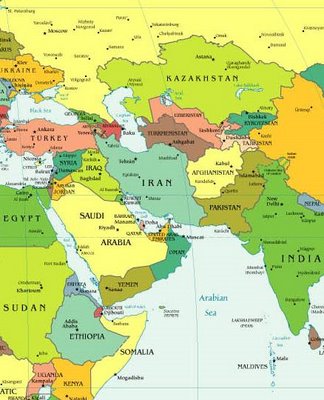
Pakistan – Saudi Arabia: The initial features of a bilateral strategic security and defense agreement between Pakistan and Saudi Arabia have been agreed upon, according to unconfirmed sources.
Under the agreement, Pakistan reportedly will provide all possible support to the Saudi army for defense of Saudi soil in any case of foreign aggression. Rumors in Pakistan report that two Pakistan Army divisions will be designated for deployment to Saudi Arabia on short notice.
As to arms sales, Saudi Arabia is interested in purchasing from Pakistan 50 JF-Thunder 17 and 20 other modern aircraft and 80 Al Khalid tanks – all built in Pakistan. Saudi Arabia also has expressed interest in purchasing light tactical weapons and missile technology.
Saudi Arabia reportedly will invest in Pakistan's defense industries and will use its influence to facilitate the sale of Pakistani defense products, tools, equipment and technical skills in the markets of the Middle East.
Saudi Arabia reportedly intends to seek technical assistance from China and Pakistan for establishing a modern aviation industry in Saudi Arabia. Pakistani aeronautical engineers, technicians and other staff will work jointly with Saudis and Chinese technicians and advisors.
Comment: No officials have confirmed the agreement, but the Pakistani defense media have been buzzing for weeks about it. If the reports of a strategic defense agreement are even partly accurate, then Iran now must represent a close second to India as the “enemy” in Pakistani strategic military planning. That might be good news for stability in South Asia, at least.
The famed American whistle-blower discusses US national security, and those who expose its overreach.
Sadie Luetmer
Al Jazeera, 24 February 2014
Huntingdon, United States – In 1971, US military analyst Daniel Ellsberg leaked thousands of pages of a top-secret study on the Vietnam War to the American press. The Pentagon Papers, as the leak would come to be called, revealed previously shrouded layers of deception on the part of the US executive branch regarding decades of military involvement in Indochina.
The famed whistle-blower has since remained active politically, and is a vocal supporter of WikiLeaks and other government challengers such as Chelsea (formerly Bradley) Manning and Edward Snowden. US Army Private Manning leaked classified documents to WikiLeaks in 2010, and was convicted in 2013 of violating the Espionage Act.
Daniel Ellsberg
Snowden, a former National Security Agency contractor, released classified documents to journalists Glenn Greenwald and Laura Poitras in 2013, and is currently residing in Russia.
Citing a wide array of historical and contemporary American intelligence programmes and policies, Ellsberg advocates critical consideration of the privacy needs of a free press and an active citizenry.
Nearing 83 years old, Ellsberg's political energy shows no sign of atrophy. He spoke to Al Jazeera after giving a speech at Juniata College in Huntingdon, Pennsylvania.
Al Jazeera: For a lot of Americans it seems obvious that national security requires secrecy, but you have described some of the dangers of “secrecy culture”. Why is secrecy culture problematic?
Daniel Ellsberg: “Well I certainly don't take the point of view that no secrecy is justified, or that national security never required secrecy. For example, in the Second World War, the time and place of the Normandy invasion was a very well kept secret, and moreover secured by lies as well as secrecy. It's an interesting example, by the way – which people often bring up – because, of course, the necessary secrecy for that date and place expired rather rapidly in the course of June 1944. And yet, my guess is that there still are thousands of pages, perhaps more, tens or hundreds of thousands, that are still classified from that period. I could be wrong, by this time maybe it's all been declassified; but it could have all been declassified certainly by 1946-47, and was not until many years later, if ever.
“Most of the documentation still called classified by this country, and I'm talking now about billions and billions of pages, most of that has long ago lost any justification for being held secret from the American people. The need is generally measured more in weeks, months, or a year or two, and yet it remains classified indefinitely. Why?
“Really, if you want to know the answer to that, my best guess as someone who worked inside the system, is that they never know what part of that may become embarrassing at some point in the future. What prediction will turn out to look absurd? Not merely wrong, but discreditable. What action may appear as part of the programme that all in all is unconstitutional, or illegal? What policy will appear to have been not only unsuccessful, but undertaken for unjustifiable,self-interested motives? It's very hard to predict that, so simply keep it all secret, if possible, forever.”
“Since 15 of the 19 alleged suicide terrorist were from Saudi Arabia and none were from Iraq, would it not have made more sense to have invaded Saudi Arabia instead of Iraq?”
Veterans Today, 23 February 2014
It has now become clear that a major cover-up has been imposed on the Saudi connection to the Israeli/CIA “false flag” attack of 9/11, where the Saudis put up the patsies.
There were traitors inside the US Air Force at NORAD who assisted the Neo-Cons in the Department of Defense and the CIA in the execution of the atrocities of 9/11.
Militarism has made us less safe, and continues to do so. It is not a useful tool for protection. So, what is?
Studies over the past century have found that nonviolent tools are more effective in resisting tyranny and oppression and resolving conflicts and achieving security than violence is.
Wealthy militarist nations like the United States think of their militaries as global police, protecting the world. The world disagrees. By a large margin people all over the world consider the United States the greatest threat to peace.
The United States could easily make itself the most beloved nation on earth with much less expense and effort, by ceasing its “military aid” and providing a bit of non-military aid instead.
The momentum of the military-industrial complex works through the hammer-nail effect (if all you have is a hammer, every problem looks like a nail). What’s needed is a combination of disarmament and investment in alternatives — alternatives like diplomacy, arbitration, international law enforcement, cultural exchange, and cooperation with other countries and people.
The most heavily armed nations can help disarmament in three ways. First, disarm — partially or fully. Second, stop selling weapons to so many other countries that don’t manufacture them themselves. During the Iran-Iraq war in the 1980s, at least 50 corporations supplied weapons, at least 20 of them to both sides. Third, negotiate disarmament agreements with other countries and arrange for inspections that will verify disarmament by all parties.
The first step in handling crises is to stop creating them in the first place. Threats and sanctions and false accusations over a period of years can build momentum for war that is triggered by a relatively small act, even an accident. By taking steps to avoid provoking crises, much effort can be saved.
When conflicts inevitably do arise, they can be better addressed if investments have been made in diplomacy and arbitration.