SchwartzReport: US Census Findings on Languages in the USA

Cultural Intelligence

schwartzreport new14 Language Facts from the U.S. Census Bureau

ARIKA OKRENT – Mental Floss Language is both intimately yours, and part of what links you to a group. The U.S. has always been a melting pot but, I think, we don't fully realize the true dimensions of this reality. This report will help give you a sense of our diversity.

Since 1890, the U.S. Census has asked various questions about the languages people speak. Until 1980, the questions were sometimes confusing and they were directed only to those who didn’t speak any English or were born in a foreign country. With the 1980 census, a three-part question was adopted that applied to everyone, giving a more complete picture of language in the U.S. The first part of the question asks if a person speaks a language other than English at home. If the answer to the first part is yes, the second part asks what the other language is. The third part asks how well the person speaks English: ‘very well,” ‘well,” ‘not well,” or ‘not at all.”

The language questions are now asked every year on the American Community Survey. This month, the Census Bureau released its report on the 2011 survey. Here are 14 interesting facts about language in the U.S.

1. Over 300 languages are spoken in the U.S. For purposes of analysis they are categorized into 39 groups (e.g., Slavic languages besides Russian, Polish, and Serbo-Croatian are under ‘Other Slavic Languages.” Indian languages besides Hindi, Gujarati, and Urdu are under ‘Other Indic Languages.”)

Continue reading “SchwartzReport: US Census Findings on Languages in the USA”
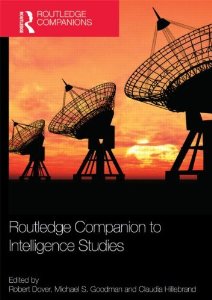
Worth a Look: Routledge Companion to Intelligence Studies — Shipped Today, Pre-Order for 29 August 2013 Fulfillment from Amazon

Advanced Cyber/IO, Collaboration Zones, Worth A Look
Amazon Page
Amazon Page

The publisher shipped this book today, it will be released at Amazon from 29 August, but can be pre-ordered from today.

The Routledge Companion to Intelligence Studies provides a broad overview of the growing field of intelligence studies.

Part I: The Evolution of Intelligence Studies

1. The Development of the Field of Intelligence Studies, Loch Johnson

Part II: Abstract Approaches to Intelligence

2. Theories of Intelligence, Michael Warner
3. Cultures of Intelligence, Mark Phythian
4. Philosophy, theory and Intelligence, Jennifer Sims
5. Strategists and Intelligence, Gerald Hughes
6. The Cycle of Intelligence, David Omand
7. The Evolving Craft of Intelligence, Robert David Steele

Part III: Historical Approaches to Intelligence

Continue reading “Worth a Look: Routledge Companion to Intelligence Studies — Shipped Today, Pre-Order for 29 August 2013 Fulfillment from Amazon”

Anthony Judge: Sensing Epiterrestrial Intelligence (SETI)

Extraterrestial Intelligence
Anthony Judge
Anthony Judge

Sensing Epiterrestrial Intelligence (SETI)

Embedding of “extraterrestrials” in episystemic dynamics?

Introduction
Indicative prefixes: contrasting “epi” with “extra”
Searching otherwise for “epiterrestrials”
Potential implications of category theory
Implications of category theory for social networking and interrelationships
Dynamic insensitivity of the natural sciences
Phenomenological implications of “fundierung” for “epi-thinking”
Clues to the nature of “epiterrestrials” from usage of the “epi” prefix?
Comparison of “epi” with other potentially indicative prefixes
Potential insights from an “episystemic” perspective
Re-cognizing “supernatural”: superstition as superposition?
Embodiment of extended intelligent identity in time
Correspondences: “epi”, Euler identity, and sexual dynamics?
Re-cognizing “human” in an “epiterrestrial” context
References

NATO CIMIC: The Role of Iran in Afghanistan’s Reconstruction & Development

NATO Civ-Mil Ctr
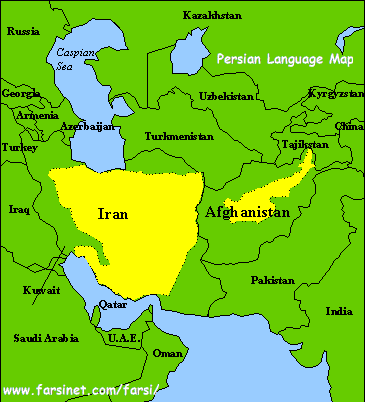
Farsi Language Zones
Farsi / Dari Language Zones

PDF (10 Pages):  20130816 NATO CIMIC Iran_Reconstruction_Afghanistan

This report provides a broad overview of the contribution of the Islamic Republic of Iran to reconstruction and development in Afghanistan since the fall of the Taliban. It complements previous CFC reports discussing the role of China, India and Pakistan in Afghanistan’s reconstruction, development and exploitation of natural resources. Related information is available at www.cimicweb.org.

Iran has been an active player in Afghanistan‟s reconstruction and development since the fall of the Taliban in 2001, with the Afghan government frequently lauding Iran for its assistance to the country. For instance, in June 2013, Afghan Foreign Ministry spokesman Janan Mosazai praised Iran as “a very good neighbour”, while stressing a need for expansion of ties and cooperation between the two countries. Similarly, in February 2013, Afghan Foreign Minister Zalmai Rassoul hailed Iran‟s positive role in the reconstruction of Afghanistan.  While this report primarily focuses on reconstruction and development – related projects, it is useful to situate these within a broader context of Iran‟s regional economic objectives and its foreign policy toward Afghanistan.  As noted by Ellen Laipson of the Stimson Center, Iran would prefer to see Afghanistan
emerge from decades of conflict as “a more reliable trading partner, transit route, and competent state that can [reduce] the flow of drugs and refugees across its border, [as well as ] prevent non-state actors from operating on its territory”.   These factors, among others, have guided Iran‟s reconstruction and development efforts in the country.

Berto Jongman: CIA Closes Declassification of History Unit

Corruption, Government, Idiocy
Berto Jongman
Berto Jongman

CIA closes office that declassifies historical materials

The Historical Collections Division is the latest casualty of sequester cuts. The office handling Freedom of Information Act requests will take over the work.

WASHINGTON — The budget ax has fallen on a CIA office that focused on declassifying historical materials, a move scholars say will mean fewer public disclosures about long-buried intelligence secrets and scandals.

The Historical Collections Division, which has declassified documents on top Soviet spies, a secret CIA airline in the Vietnam War, the Cuban missile crisis and other major operations, has been disbanded. The office that handles Freedom of Information Act requests will take over the work.

Read full article.

Berto Jongman: UMD Tool Predicts Terrorist Leadership Backfill

IO Tools
Berto Jongman
Berto Jongman

UMD Tool Predicts Leadership of Terrorist Networks

Contacts: Lee Tune 301-405-4679

COLLEGE PARK, Md. – The loss of a terrorist or criminal network's leader—whether through imprisonment, change of allegiance or death—can create a vacuum in which subordinates jockey for position or splinter into factions.

Rather than wait to see how these scenarios play out, U.S. intelligence analysts could soon have a new tool to help predict who might rise to the top of a terrorist or criminal network, and whether the redefined organization has an increased ability to carry out its activities.

A University of Maryland research team developed this analytics tool, known as STONE (Shaping Terrorist Organizational Network Efficacy), “to minimize the impact of these organizations,” says V.S. Subrahmanian, a professor of computer science who is leading the UMD effort.

The UMD team has used open-source data to hypothetically test the software platform on four known terrorist organizations: al-Qaeda, Hamas, Hezbollah and Lashkar-e-Taiba, perpetrators of the November 2008 attack on Mumbai, India.

Continue reading “Berto Jongman: UMD Tool Predicts Terrorist Leadership Backfill”

Berto Jongman: Cyber-Risk

IO Impotency
Berto Jongman
Berto Jongman

Key Metrics for Risk-Based Security Management

Tripwire has released the results of an extensive study focused on the state of risk-based security management with the Ponemon Institute.

The study examined the key risk-based security metrics IT security managers used most frequently to gauge the effectiveness of their organizations’ overall security efforts.

Top Metrics included: time taken to patch, policy violations, uninfected endpoints, data breaches, reduction in the cost of security, end users training, and reduction in unplanned system downtime.

The survey respondents included 749 US and 571 UK professionals in the following areas: IT security, IT operations, IT risk management, business operations, compliance/internal audit and enterprise risk management.

In the compliance arena, leading metrics included mean time-to-patch (49 percent), policy violations (33 percent), and reduction in audit findings and repeat findings (27 percent).

The study also found that only 19 percent of respondents viewed the number of records or files detected as compliance infractions, and only 16 percent identified reduction in expired certificates — including SSL and SSH keys — as an effective metric.

Read full article.

See Also:

Cyber Security Ranked Third in Lloyd’s of London Risk Index

noble gold