David Swanson: CIA – An Idea Whose Time Has Gone with Comment from Robert Steele

Ethics, Government
David Swanson
David Swanson

CIA: An Idea Whose Time Has Gone

By David Swanson

There's a contradiction built into every campaign promise about transparent government beyond the failure to keep the promises.  Our government is, in significant portion, made up of secret operations, operations that include warmaking, kidnapping, torture, assassination, and infiltrating and overthrowing governments.  A growing movement is ready to see that end.

The Central Intelligence Agency is central to our foreign policy, but there is nothing intelligent about it, and there is no good news to be found regarding it.  Its drone wars are humanitarian and strategic disasters.  The piles of cash it keeps delivering to Hamid Karzai fuel corruption, not democracy.  Whose idea was it that secret piles of cash could create democracy? (Nobody's, of course, democracy being the furthest thing from U.S. goals.)  Lavishing money on potential Russian spies and getting caught helps no one, and not getting caught would have helped no one.  Even scandals that avoid mentioning the CIA, like Benghazigate, are CIA blowback and worse than we're being told.

We've moved from the war on Iraq, about which the CIA lied, and its accompanying atrocities serving as the primary recruiting tool for anti-U.S. terrorists, to the drone wars filling that role.  We've moved from kidnapping and torture to kidnapping and torture under a president who, we like to fantasize, doesn't really mean it.  But the slave-owners who founded this country knew very well what virtually anyone would do if you gave them power, and framed the Constitution so as not to give presidents powers like these.

There are shelves full in your local bookstore of books pointing out the CIA's outrageous incompetence.  The brilliant idea to give Iran plans for a nuclear bomb in order to prevent Iran from ever developing a nuclear bomb is one of my favorites.

Continue reading “David Swanson: CIA – An Idea Whose Time Has Gone with Comment from Robert Steele”

Sepp Hasslberger: Turn Water Into Fuel

12 Water
Sepp Hasslberger
Sepp Hasslberger

Stanley Meyer died an untimely death just after he had secured a $ 5m investment to start commercial production of his super efficient water splitting technology.Edward Mitchell continued in Meyer's footsteps and is ready to develop a kit. He does need funds to do that. This is his crowdfunding campaign.

Turn Water Into Fuel

By True Green Solutions

New Energy Funding

Click on Image to Enlarge

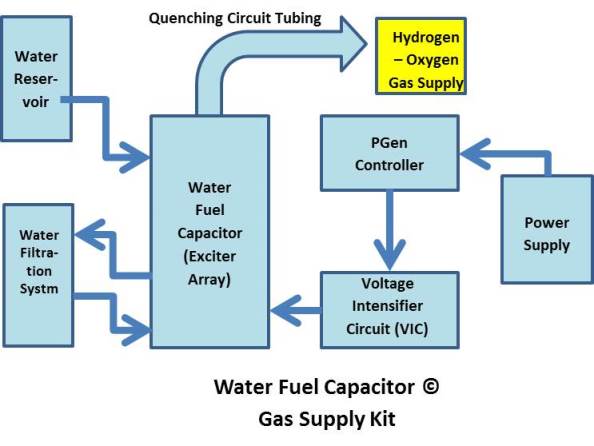
The Water Capacitor turns water into a hydrogen-oxygen gas mixture that can then be used as a fuel for heating, cooking, welding, fixed generators, and powering internal combustion engines.

The Water Capacitor will then be incorporated into a kit offered from True Green solutions to individual consumers.

The Proof of Principle was demonstrated in Stanley Meyer's original water splitting devices as hydrogen fuel was extracted from water with his Electrical Polarization invention that was documented in his patents through the mode of operability.

Edward Mitchell has already built a working prototype and is now refining the design to be incorporated into a complete Exciter Array (Water Fuel Capacitor(C)) Kit.

Two videos, photos, diagram.


SchwartzReport: Scientists Fighting Corporate Subversion or “The War on Science”

01 Poverty, 02 Infectious Disease, 03 Economy, 03 Environmental Degradation, 05 Energy, 07 Health, 07 Other Atrocities, 09 Justice, 11 Society, Academia, Commerce, Earth Intelligence, Ethics, IO Impotency

schwartz reportThe attack on science by the Theocratic Right and the corporate interests destroying the earth have done great damage, but finally science is pushing back. We'll see.

Corporations Are Manufacturing Uncertainty About Scientific Findings. Now Scientists Are Fighting Back.
BILL MOYERS & COMPANY – The Raw Story

Neal Rauhauser: Confusion & Disinformation

Advanced Cyber/IO, Architecture, Design, Knowledge, Software
Neal Rauhauser
Neal Rauhauser

Confusion & Disinformation

I published What 2013 Has In Store 166 days ago and summed up my discoveries in Professionalism & Propaganda a week ago. This 1,800+ word piece with descriptive links to over thirty posts covers everything from my network of now over 3,000 Facebook Anonymous supporters through the CIA’s application of mindfulness to the analysis process, a direction taken in response to network threats.

During that time I completed a social network analysis class offered by Coursera and I curated nineteen related documents in my SNA Class collection. Humans exhibit a variety of interconnected ways of making decisions, information itself has a network of precursors and successors, and the flow of information through human networks can often be modeled as a spreading contagion.

There are a variety of problems that professional analysts face which have been studied in-depth by the Central Intelligence Agency‘s internal think tank, the Center for the Study of Intelligence. A distributed, grassroots network shares some characteristics with a professional cadre of analysts, but organizing, motivating, and assessing their progress is dramatically different from that of a hierarchical organization.

Here is an overview of the universe for the next stage in my inquiries. This Maltego graph displays five major components. The large group with the most diverse colors is representative of my place in the scheme of things – people who engage me in a bi-drectional fashion and organizations to which I subscribe. The cluster of people(lavender) and Twitter accounts(green) at the lower left represents e-International Relations, which is open and academic in nature. The similar looking cluster at the upper right are the Twitter users among the 156 analysts for Wikistrat. A larger graph of their complete network is seen in the next image. The cluster at the lower right is the LinkedIn-centric International Security Observers, an open, web based think tank.

. . . . . . . . .

If I had to distill what I am trying to get at here in one paragraph, it would be this:

Groups of analysts need a shared context that can store and display information in chronological order, recognizing entities in the field ranging from states to naval vessels to individuals. The system needs to be able to store documents, images, URLs, and other internet accessible content. The system need not perform link analysis, but it must be amenable to doing so with its content using a tool like Maltego or Gephi, and then making the analysis available as an integral part of the overall offering.

Read full post with many links and graphics.

Continue reading “Neal Rauhauser: Confusion & Disinformation”

Eagle: Charles Hugh Smith on Degrowth, Anti-Consumerism and Peak Consumption

03 Economy, Civil Society, Commerce, Cultural Intelligence, Earth Intelligence
300 Million Talons...
300 Million Talons…

Degrowth, Anti-Consumerism and Peak Consumption

Degrowth embraces the ongoing devolution of paid work and wealth that cannot be reversed.The anti-consumerism Degrowth movement is gaining visibility and adherents in Europe. Degrowth (French: décroissance, Spanish: decrecimiento, Italian: decrescita) recognizes that the mindless expansion of mindless consumption fueled by credit and financialization is qualitatively and quantitatively different from positive growth.

Degrowth is based on a number of principles:

1. Consumerism is psychological/spiritual junk food (French: malbouffe) that actively reduces well-being (bien-etre) rather than increases it.

2. Better rather than more: well-being is increased by everything that cannot be commoditized by a market economy or financialized by a cartel-state financial machine– friendship, family, community, self-cultivation–rather than by acquiring more. The goal of economic and social growth should be better, not more. On a national scale, the cancerous-growth measured by gross domestic product (GDP) should be replaced with gross domestic happiness/ gross nation happiness (GNH).

3. A recognition that resources are not infinite, despite claims to the contrary. Even if fossil fuels were infinite and low-cost (cheerleaders never mention costs of extraction and refining or the external costs), fisheries, soil and fresh water are not. For one example of many: China Is Plundering the Planet's Seas (The Atlantic). Indeed, all the evidence suggests that access to cheap energy only speeds up the depletion and despoliation of every other resource.

4. The unsustainability of consumerist consumption dependent on resource depletion and financialization (i.e. the endless expansion of credit and phantom collateral).

Read full article with video.

Stephen E. Arnold: Google: An Island or a Digital Monaco?

Commerce, IO Impotency
Stephen E. Arnold
Stephen E. Arnold

Google: An Island or a Digital Monaco?

May 19, 2013

After several days of rehash about search, I am running out of energy for topics related to information retrieval. Hello, hello, search today is not much better than it was five years ago. In fact, when it comes to locating high value information, I think we are now regressing.  I took a moment to read “Welcome to Google Island.” It’s a Condé Nate thing. I am okay with trendy writing, but at age 69 I think a trend is a Silent 700 terminal with a fresh roll of thermal paper. There you go, young folks.  The main point of the write up is that Wired found the Google conference in mid May 2013 sort of disconnected from the mainland. I ignored the utopia stuff and I shudder when me too companies do the innovation thing.

Here’s a passage which I marked with my trust yellow highlighter:

“Governments are too focused on democracy and rule of law. On Google Island, we’ve found those things to be distractions. If democracy worked so well, if a majority public opinion made something right, we would still have Jim Crow laws and Google Reader. We believe we can fix the world’s problems with better math. We can tear down the old and rebuild it with the new. Imagine Minecraft. Now imagine it photorealistic, and now imagine yourself living there, or at least, your Google Being living there. We already have the information. All we need is an invitation. This is the inevitable and logical end point of Google Island: a new Google Earth.”  And I realized I believed him. I believed in him, even. Sure, he’s a weird guy living in his own world. But what vision! And I wanted Google to make my world look like its own. And I wanted to give it all my information, about everything in my life, even my most private shameful thoughts. I put the glasses back on, and took off my pants. We stood, naked, before each other with no secrets, no rules, and no shame. And I knew I never wanted to leave Google Island. Even if I could.

I assume that the write up is Swiftian, but with Condé Nast one never really knows.

Several thoughts:

First, we are returning to the walled garden view of technology. Sure, there’s lots of talk about open, but big companies are gunning for lock in.

Second, when outfits operate with sweeping visions, some of the faithful may not follow along. Even cults experience some attrition.

Third, Google is embroiled in a dispute with England over taxes. The fix may be to set up a summit between England’s prime minister and Google’s chairman.

Net net: Google is not an island. Google may be operating more in the Luxembourg or Monaco mode. The prince, I believe, is a strong advocate of the blue fin tuna. And Luxembourg is really into money.

I am not sure the island metaphor is the right one.

Stephen E Arnold, May 19, 2013

Stephen E. Arnold: Connecting the Dots is the Wrong Mind-Set for Intelligence

Advanced Cyber/IO

Stephen E. Arnold
Stephen E. Arnold

Connecting the Dots Yields Spotty Results

Posted: 10 May 2013 05:30 AM PDT

In the aftermath of the Boston bombing, many have discussed whether or not the FBI should have had the capabilities to “connect the dots” to identify and prevent the bomber from following through. Boing Boing reiterates the point that Bruce Schneier made in a recent CNN op-ed in their post, “Why ‘Connecting the Dots’ is the Wrong Way to Think about Stopping Terrorism.”

It goes back to the old adage: hindsight is 20/20. It takes a future perspective to look at an event and create a narrative amongst dots of data. The concept of the “narrative fallacy” is what makes a past event seem like a neat story where the dots to be connected should have been obviously illuminated the entire time.

The article tells us:

“Rather than thinking of intelligence as a simple connect-the-dots picture, think of it as a million unnumbered pictures superimposed on top of each other. Or a random-dot stereogram. Is it a sailboat, a puppy, two guys with pressure-cooker bombs or just an unintelligible mess of dots? You try to figure it out. It’s not a matter of not enough data, either. Piling more data onto the mix makes it harder, not easier. The best way to think of it is a needle-in-a-haystack problem; the last thing you want to do is increase the amount of hay you have to search through.”

No one can deny that connecting dots is an important way to increase knowledge. However, as good of a technique — and phrase — that it is, spotty results are invariable.

Megan Feil, May 19, 2013

Sponsored by ArnoldIT.com, developer of Beyond Search

noble gold