Tom Atlee: State Banks, Debt Renunciation, Other Populist Cures

03 Economy, 09 Justice, 11 Society
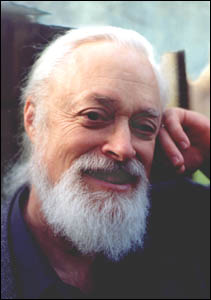
Tom Atlee
Tom Atlee

Dear friends,

Below is an excellent summary of a very high leverage economic system change opportunity – state banks.  A single example already exists in the U.S:  the little-known but revolutionary state-owned Bank of North Dakota.

State banks simultaneously address the problems of unemployment, lack of financial resources for state and local governments (including rising government debt), and the economic inequity generated by Wall Street's colonization of our economy.

The essay below also alerts us to the dangerous erosion of democracy represented by the Trans-Pacific Partnership (TPP) trade agreement currently being negotiated behind closed doors.

State banks are no long term cure-all for the economic disruptions likely from climate change, resource depletion (especially peak oil), and various technological developments.*  But they constitute a powerful sea change in our current economic business-as-usual, reducing dangerous concentrations of social power and buying us time to co-create more sustainable economics, politics and governance.

The article below features the work of Ellen Brown, who is showing up more and more in economic innovation circles, especially in efforts to revolutionize our financial systems.  I've recently seen two other remarkable articles by her:

Continue reading “Tom Atlee: State Banks, Debt Renunciation, Other Populist Cures”

Reflections on Information Pathologies & Organizational Intelligence — Why Predictive Analytics on Industrial Era Data is Fraud, Waste, & Abuse

All Reflections & Story Boards, IO Impotency
Got Crowd? BE the Force!

Coherent, the Force is….

Restrictive Control and Information Pathologies in Organizations

Wolfgang Scholl* Humboldt-University, Berlin

Although the relation of power to knowledge is an often discussed theme, a psychological and sociological scrutiny of the issue is lacking. A new conceptual and theoretical approach to this issue is presented here that distingushes between restrictive and promotive control. Restrictive control is a form of power exertion in which one actor pushes his wishes through against the interests of another actor. In contrast, if an actor influences the other in line with his or her interests, this is called promotive control. Information pathologies, i.e., avoidable failures of distributed information processing, are introduced as an inverse measure for the quality and quantity of knowledge production. It is hypothesized that restrictive control has negative consequences for the production of new or better knowledge, because it induces information pathologies that in turn lower the effectiveness of joint action. These two hypotheses are tested in a study on 21 successful and 21 unsuccessful innovations with a dual qualitative and quantitative approach. The interpretive analysis of interviews with the main actors of each innovation case as well as the statistical analysis of questionnaire responses by the same actors strongly corroborate both hypotheses. Methodological problems, theoretical perspectives, and practical consequences are discussed. The second half of this century has seen the transition from industrial to informational societies.

The coming century will see communication and information processing becoming even more important for the handling of any issue in politics, in the economy, or in private affairs. The amount of information produced is I want to thank Irene H. Frieze and the anonymous reviewers for their many helpful comments as well as Iain S. Glen for improving my German English.

*Correspondence concerning this article should be addressed to Wolfgang Scholl, Institute of Psychology, Humboldt-University, Oranienburger Str. 18, D-10178 Berlin, Germany [e-mail: wscholl@psychologie.hu-berlin.de].

PDF Full Article (101-118)

Continue reading “Reflections on Information Pathologies & Organizational Intelligence — Why Predictive Analytics on Industrial Era Data is Fraud, Waste, & Abuse”

Nick Eftimiades: New Course Intellience & National Security in the Undiscovered County

Academia, Ethics, Government
Professor Nick Eftimiades

New King’s College Course on Intelligence and National Security

Posted by neftimiades on March 31, 2013

This is a new graduate course I will be teaching for King’s College War Studies Department beginning autumn, 2013.  The course is called Intelligence & National Security in the Undiscovered Country .  It will be a 20 credit Master’s Degree course on the future of intelligence and national security.  The course description is DRAFT.

Module Description:

Consider for a moment the words of William Shakespeare who characterized our fear of the future in Hamlet. “The undiscovered country, from whose bourn no traveler returns, puzzles the will, and makes us rather bear those ills we have than fly to others that we know not of” Hamlet tells us that it is better to suffer the ills of the day than to travel to the Undiscovered Country.  What will the future bring for intelligence and national security and are we prepared for it?

The concept of a nation state is changing.  Globalization, regional alliances, global and regional environmental and economic issues, telecommunications, changing demographics, and integrating social value systems are altering the nation state.  The idea of what it means to “defend ourselves” decades from now will be dramatically different from what it is today.  New constructs for national security necessitate new intelligence and military capabilities.  Defending a nation may become an exercise in cyber warfare, global policing functions, nation building and support, small unit combat operations, and exerting diplomatic, political, and economic influence.  As the emphasis in national security capabilities changes so too will the intelligence functions supporting them.

Continue reading “Nick Eftimiades: New Course Intellience & National Security in the Undiscovered County”

TED Exposed as Over-Controlling Cult

Civil Society, Corruption, Idiocy

Published on Mar 5, 2013

TED Fellow Eddie Huang was kicked out of the organization for refusing to follow its cult-like orders. WARNING – explicit language.

“I just went through a whole week of people telling me what to do, where to be, and it was like being at a fucking scientology summer camp,” he said. “It was horrible.”

Includes mandated 40-year old roommates, ban on all outside activities including girlfriends, low-rent accommodations.  Not allowed to pay for your own private room.

Taken from the Joe Rogan Experience podcast – http://joerogan.net/

Phi Beta Iota: The comments at the YouTube page are well worth the time to peruse.

Mongoose: Papa Bush, CIA, Oil, LBJ, and the Assassination of JFK — Best Summary with Links

07 Other Atrocities, 09 Justice, 11 Society, Corruption, Director of National Intelligence et al (IC), DoD, Government, IO Deeds of War, Military, Officers Call
Mongoose
Mongoose

I don't read much but this has a very strong feeling of authenticity — certainly enough to warrant a Truth & Reconciation Commission before Papa Bush dies.    The photos and graphics in this account, two included below, are best I have seen.

Did George H.W. Bush Coordinate a JFK Hit Team?

by Richard Hooke (with Jim Fetzer)

Veterans Today, 30 March 2013

This is not the first time and surely will not be the last that George H.W. Bush, former Director of the CIA and the 41st President of the United States, has been implicated in the death of John Fitzgerald Kennedy, our 35th president.  In an earlier study, for example, “Was George H.W. Bush involved in the assassination of JFK?”, John Hankey and I both address this question, where he provides a great deal of evidence supporting a role for GHWB in the Dealey Plaza turkey shoot. In this new study, Richard Hooke substantiates that claim and advances additional proof of his own.  I believe that they are right.

Continue reading “Mongoose: Papa Bush, CIA, Oil, LBJ, and the Assassination of JFK — Best Summary with Links”

Koko: Biological Computer Created at Stanford

Advanced Cyber/IO, Hacking
Koko
Koko

Biological computer created at Stanford

In the foreseeable future, humans might carry microscopic natural computers inside their cells that could guard against disease and warn of toxic threats based on a Stanford research achievement.

A team of engineers there has invented genetic transistors, completing a simple computer within a living cell, a major step forward in the emerging field of synthetic biology.

The startling achievement, to be unveiled in Friday's issue of the journal Science, presages the day when “living computers' inside the human body could screen for cancer, detect toxic chemicals or even turn cell reproduction on and off.

“We're going to be able to put computers inside any living cell you want,' said lead researcher Drew Endy of Stanford's School of Engineering.

The computers could deliver true-false answers to virtually any biological question that might be posed within a cell. For instance: Is toxic mercury present? It could detect it.

Also: They can count. This would be a useful tool when treating diseases like cancer, where cells divide uncontrollably. Suppose a liver cell carries a counter that records how many times it divides. Once the counter hits 500, for instance, the cell could be programmed to die.

Endy's work “clearly demonstrates the power of synthetic biology and could revolutionize how we compute in the future,' said UC Berkeley biochemical engineer Jay Keasling. He is director of the Synthetic Biology Engineering Research Center that helped support research at Stanford.

Read full article.

Mini-Me: Peeling the Syrian Onion

Cultural Intelligence, IO Deeds of War, Media, Peace Intelligence
Who?  Mini-Me?
Who? Mini-Me?

Huh?

Tip of the hat to PhD student Junichi Hiramatsu at linked in for the leads.

2013-03-30  WARNING: “Final” Psy-Op Vs. Syria Begins

Out of time, out of legitimacy, and out of options, the West is attempting once again to prop up its faltering terrorist proxies with another psychological operation aimed at breaking the will of the Syrian people, despite the West’s multiplying tactical and political shortcomings.

2013-03-29  Russian President orders Surprise Black Sea Naval Exercise as Diplomatic Ties to West keep Deteriorating

The only thing that could be added to Lukyanov´s statement is, that the Russian Bear probably would be sleeping peacefully in his den if it was not for the fact, that “someone” keeps financing backward Wahhabi mercenary forces, waging a war by proxy, violating all main tenets of international law, and dancing other fatal dances in what the bear perceives as his den.

2013-03-30  International Media and Governments, including Russia, Cover-Up True Reasons for Korea Crisis

Rather than adopting the Chinese model, the DPRK is working on emulating the Vietnamese model for developing a modern market economy and in close cooperation with German advisers. In his new years speech, Kim Yong-Un explained, that the DPRK would open its economy for Asian as well as European partners, including South Korea, Japan and Germany.

2013-03-21  Ben Affleck could be hanged for war crimes: US intelligence expert

In a radio interview Tuesday on the Kevin Barrett Show, Honegger stated that filmmaker Ben Affleck might one day be hanged for war crimes and treason – not only for Argo, which she said is designed to pave the road to war on Iran, but also for his role in the 2001 film Pearl Harbor, an earlier intelligence operation designed to pave the road to the 9/11 “New Pearl Harbor.” According to Honegger, Affleck – like his character in Argo – appears to be a covert operator posing as a filmmaker.

Continue reading “Mini-Me: Peeling the Syrian Onion”

noble gold