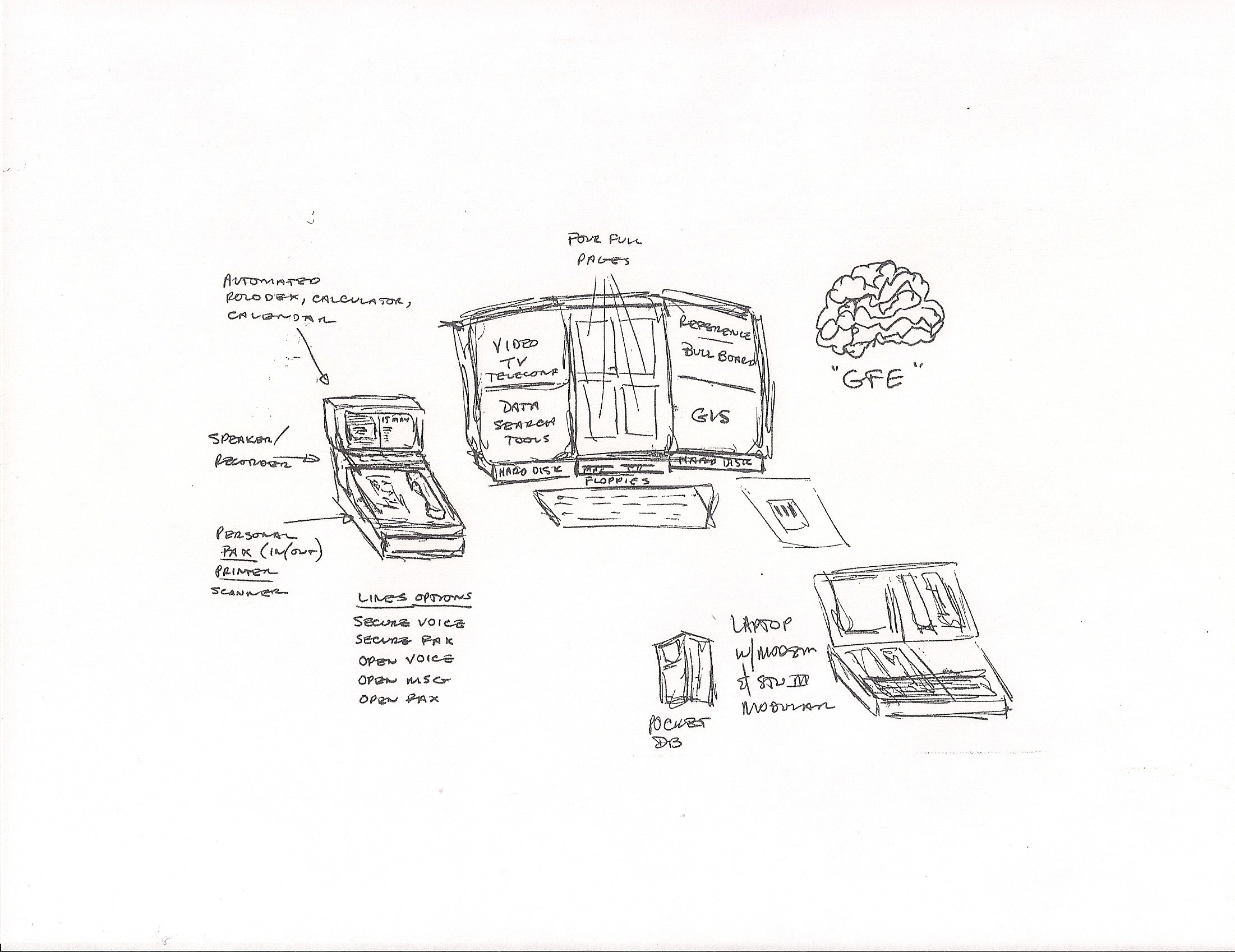
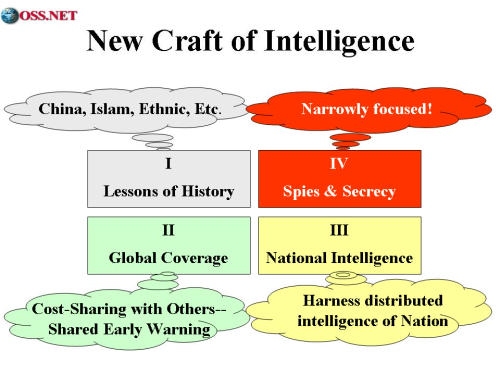
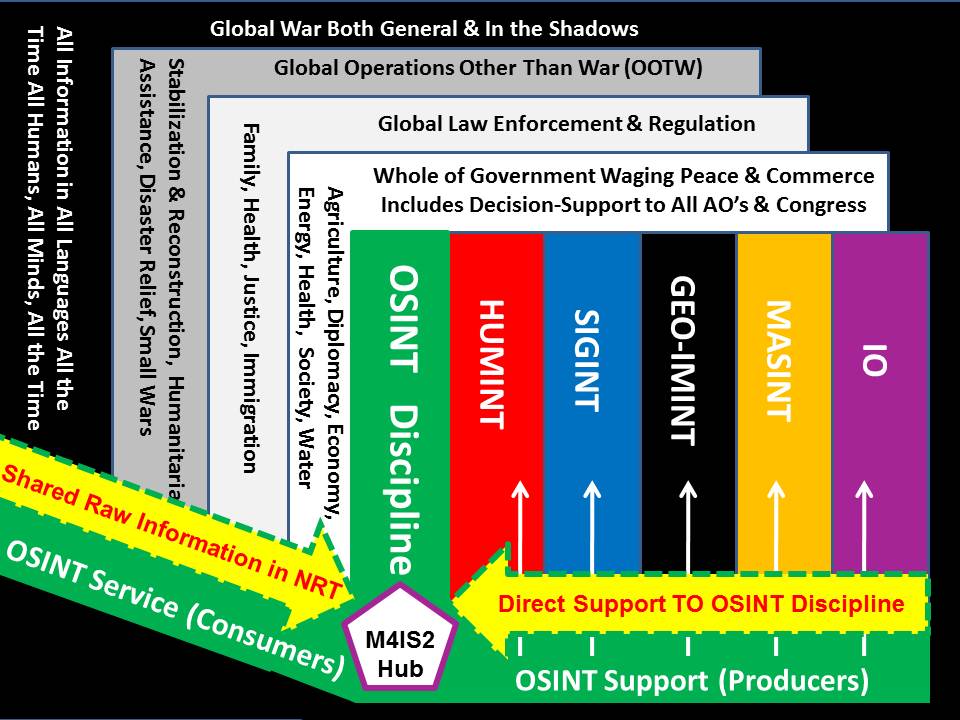
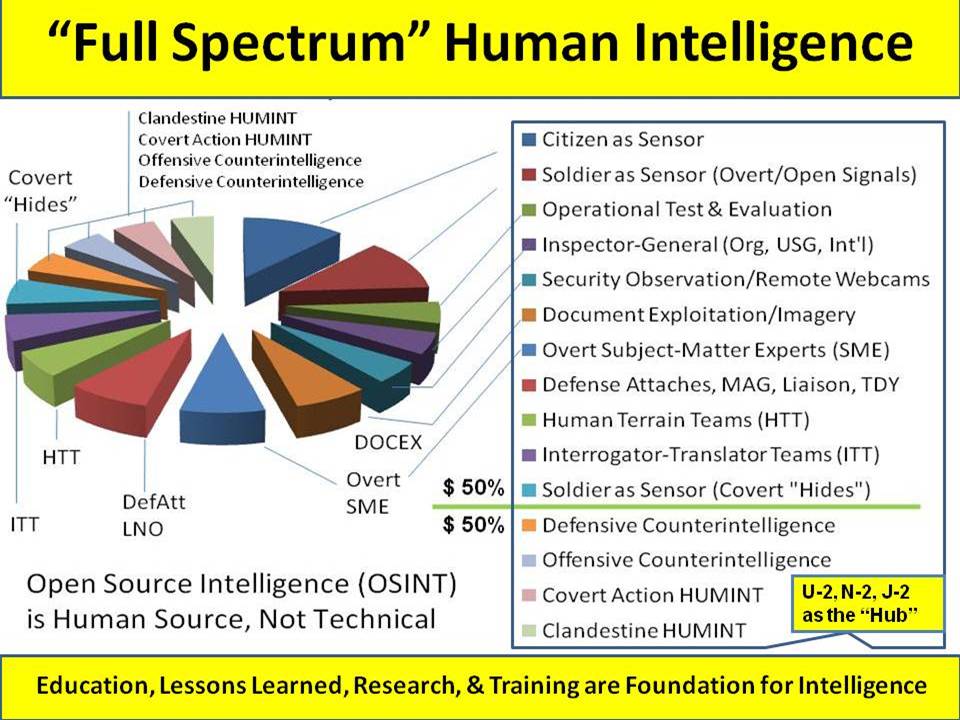
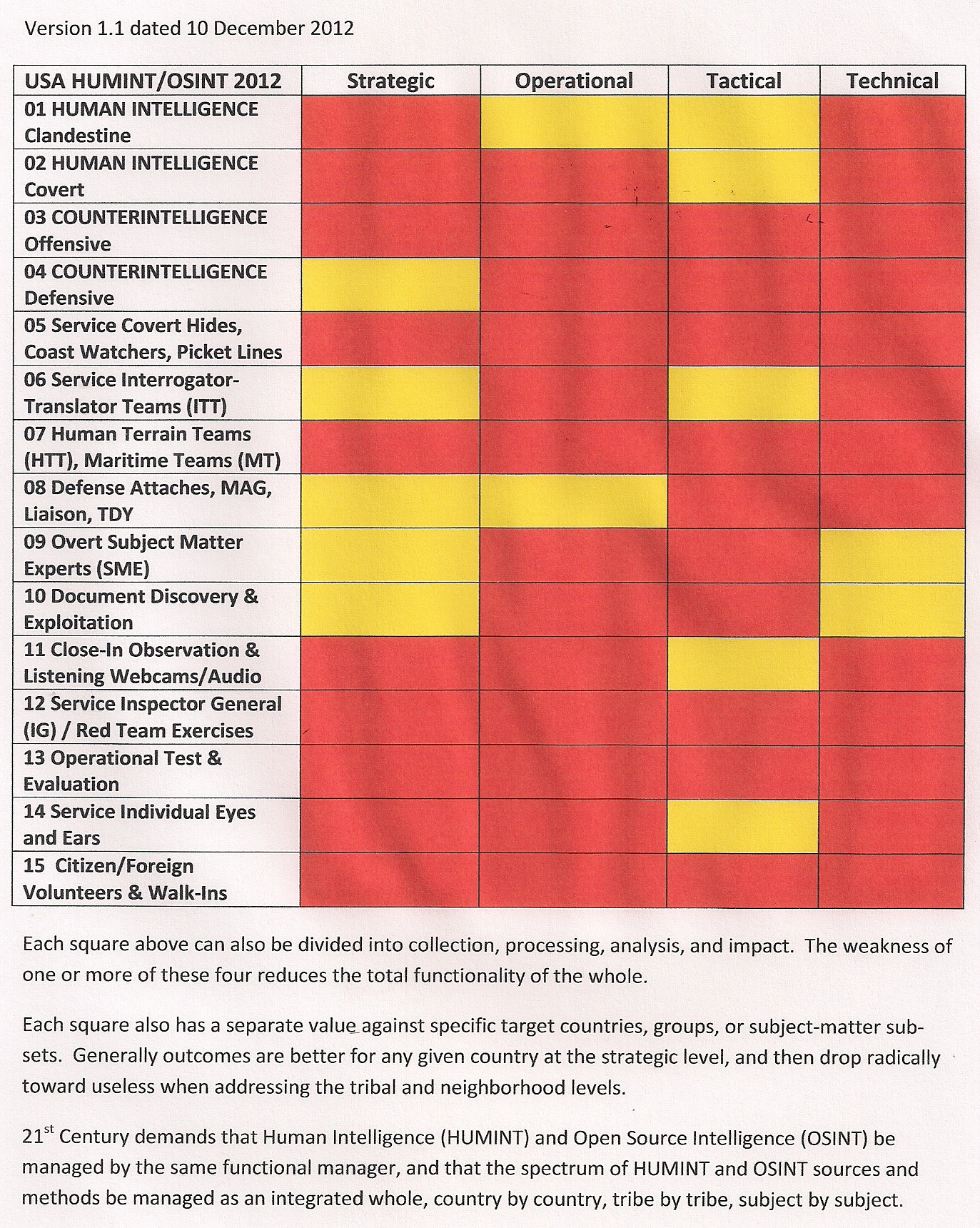
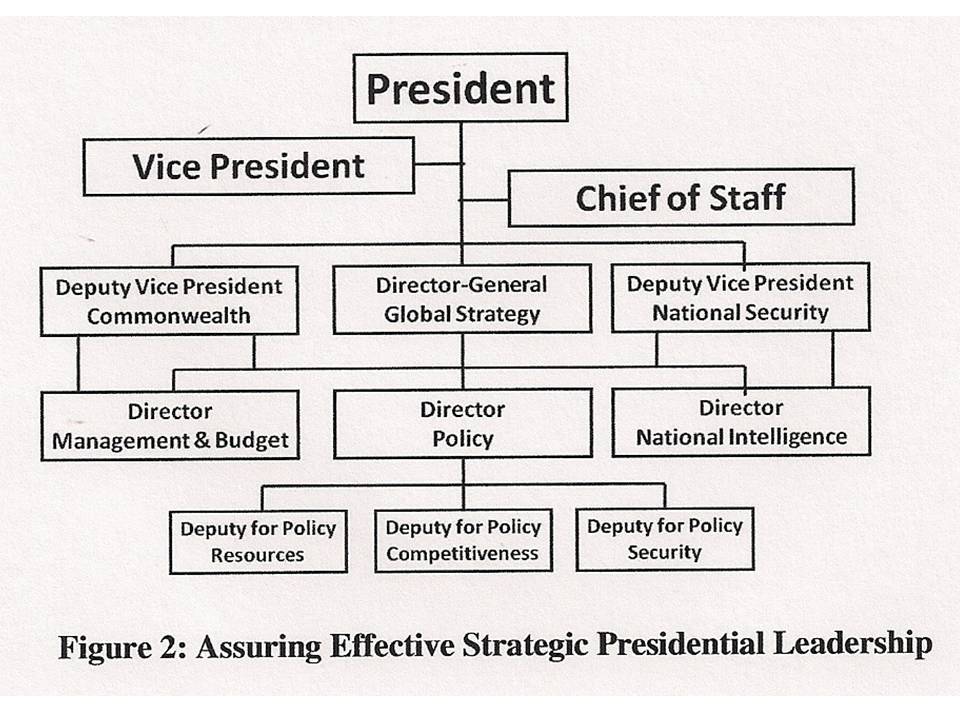
NOTE: USMC submission won the JNIDS IV competition but that win was over-turned by an Admiral without integrity whose words were quoted (too late to go to CMC and CNO) “We are a Navy shop, we will do a Navy problem.” It is precisely this kind of amoral attention to duty, persistent across the flag ranks — and the staffs that let them get away with it — that undermines national security and national competitiveness.
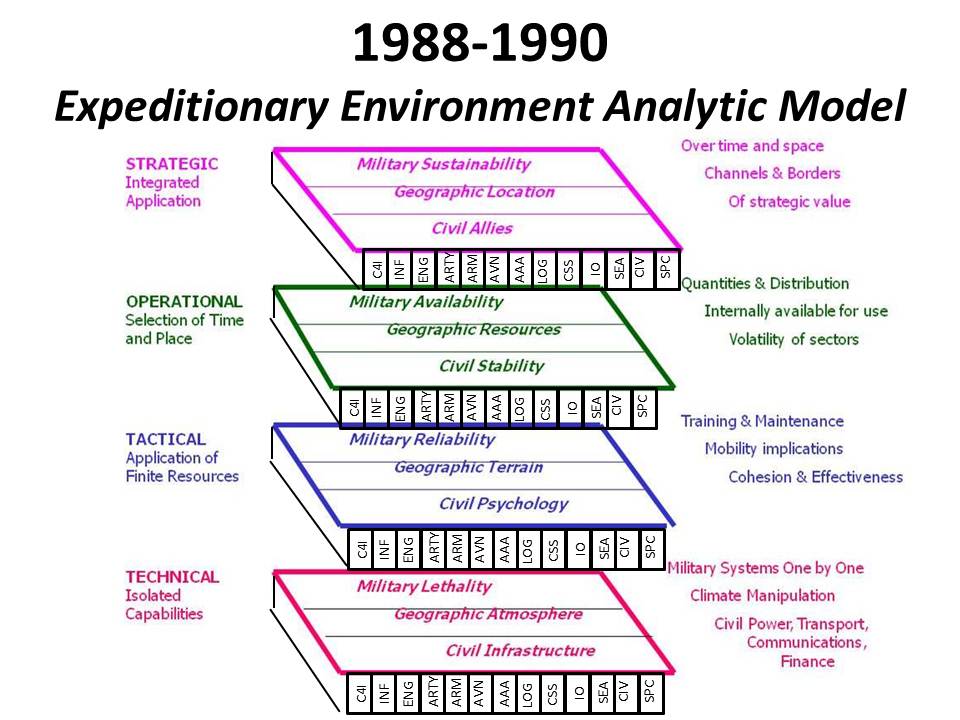
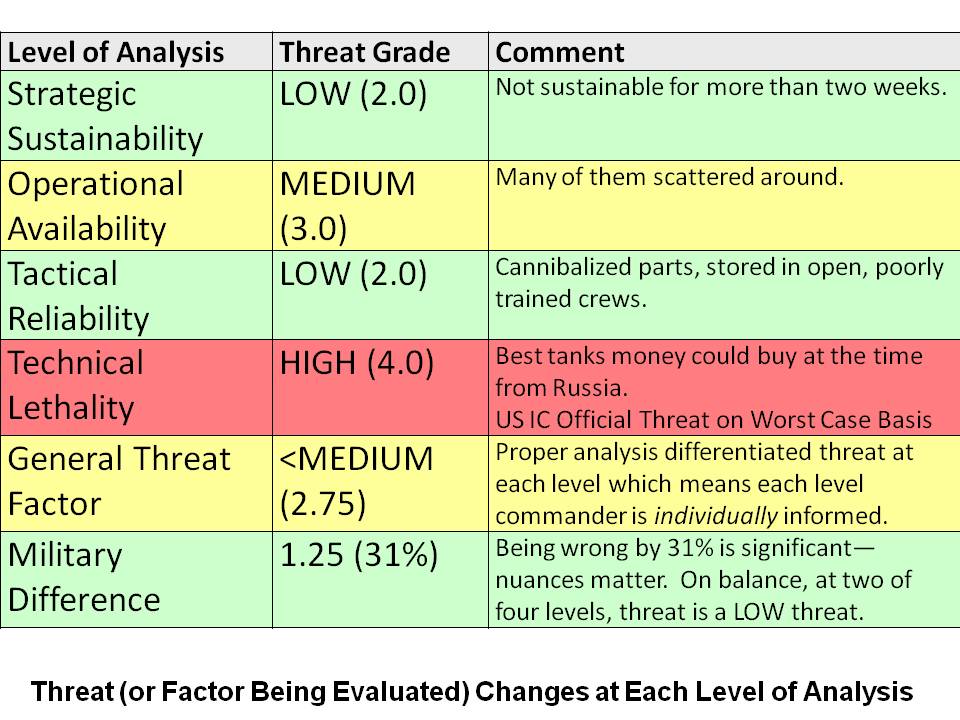
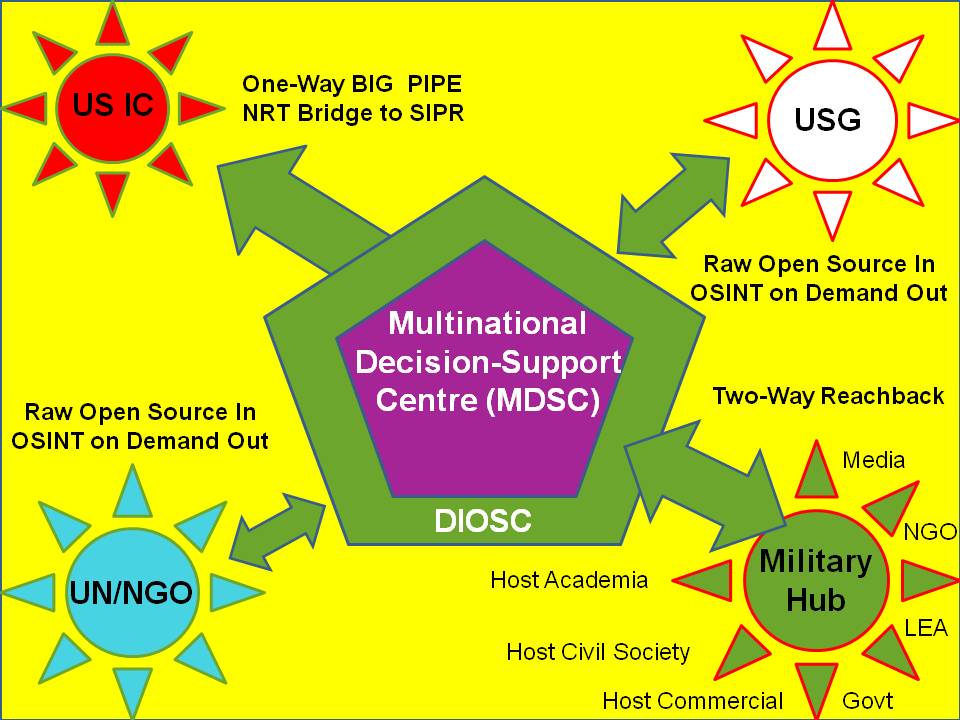
1988-1992 EXPEDITIONARY ANALYTIC MODEL
Click on Image to EnlargeClick on Image to Enlarge
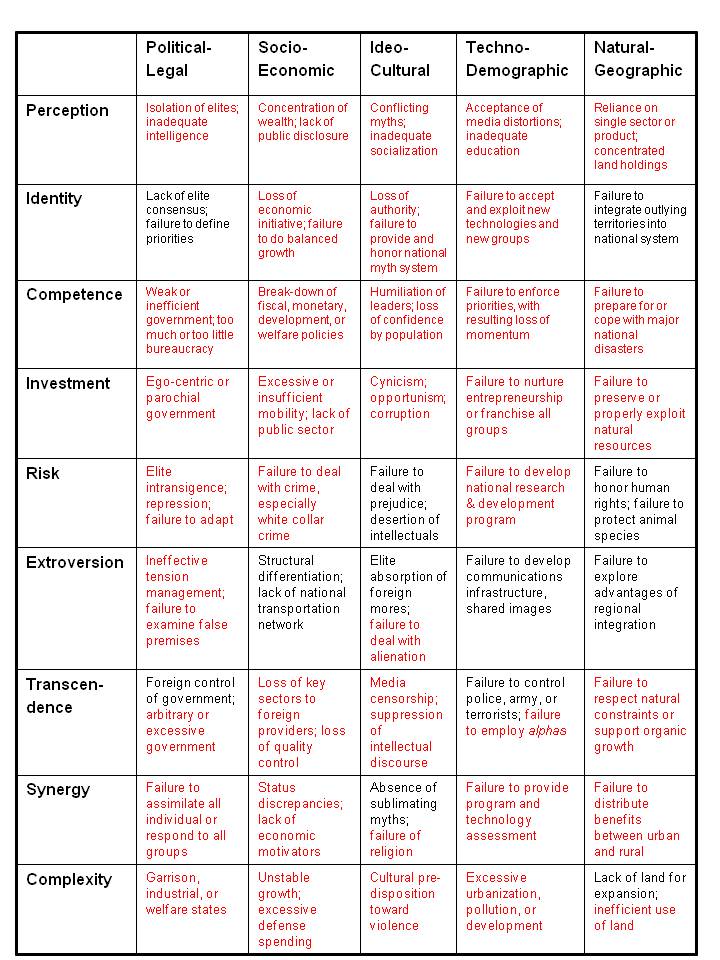
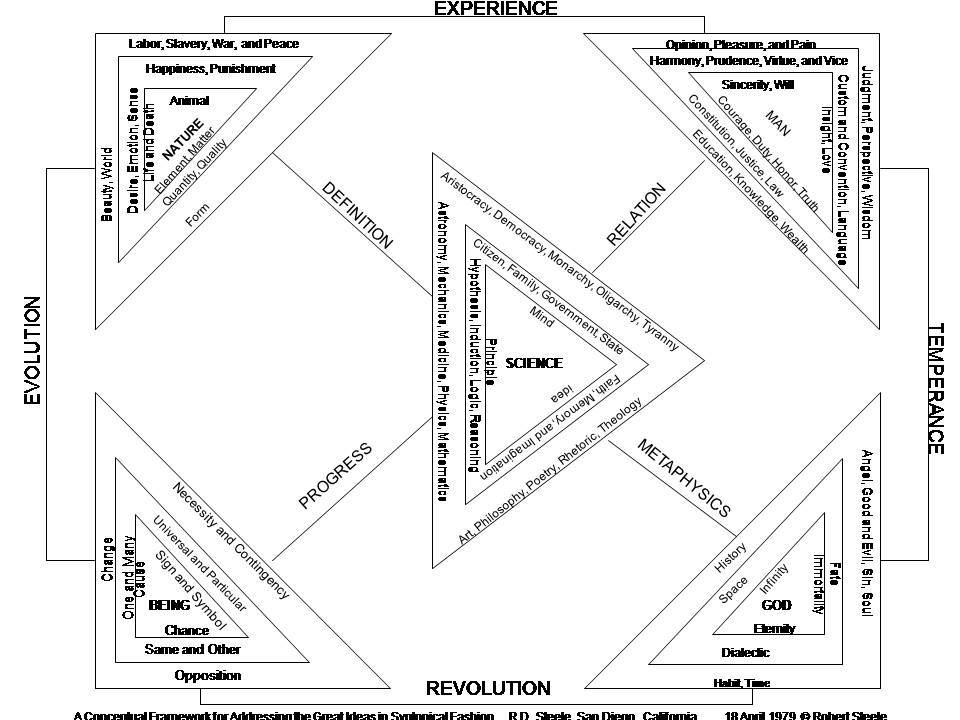
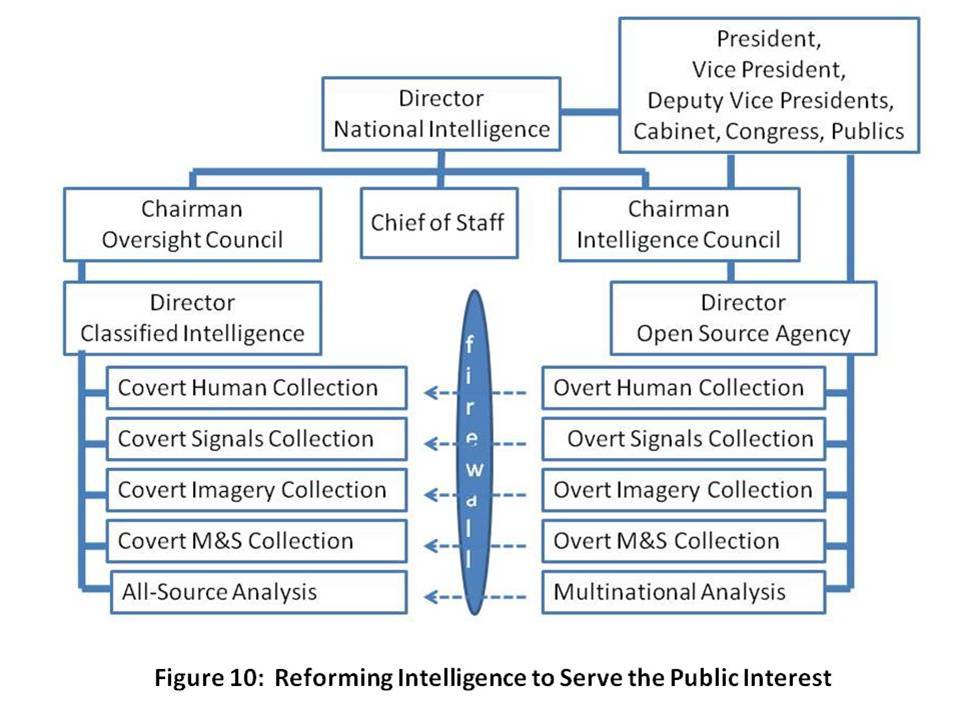
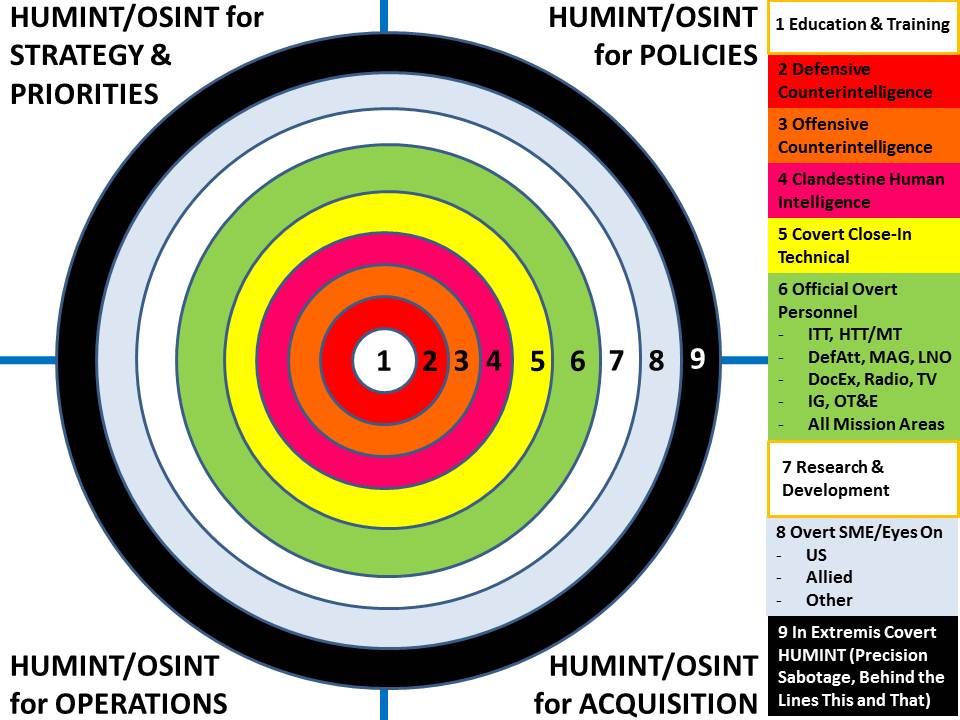
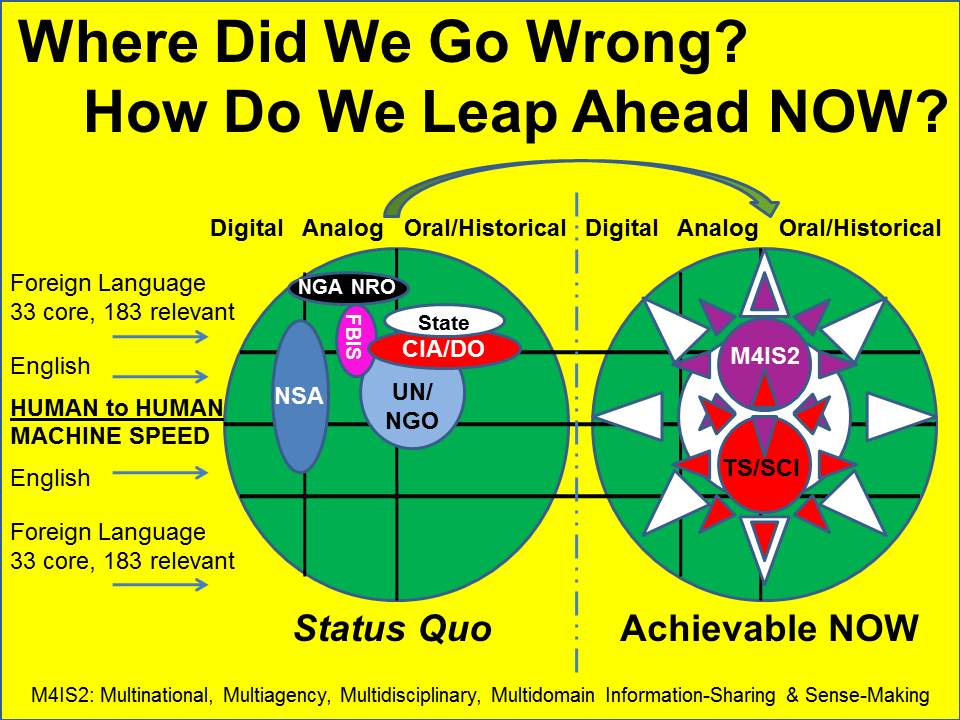
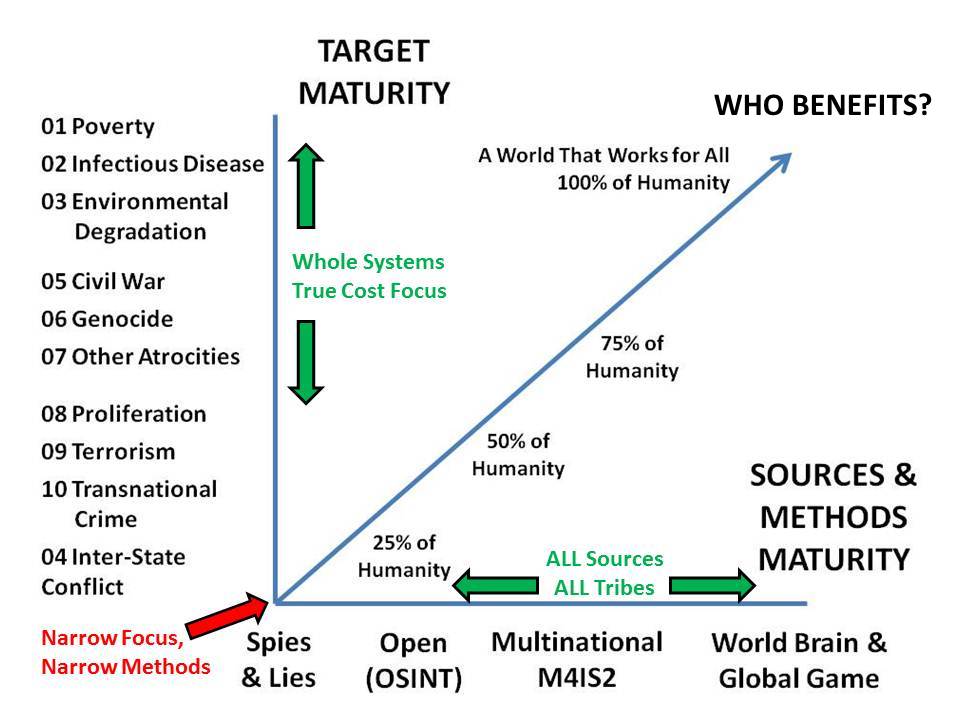
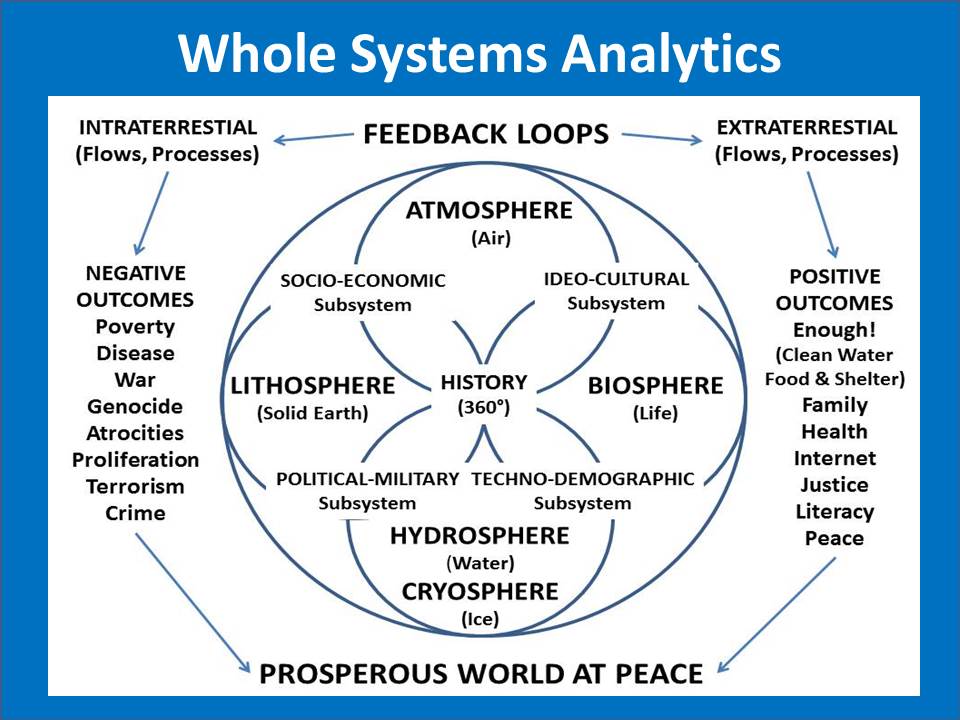
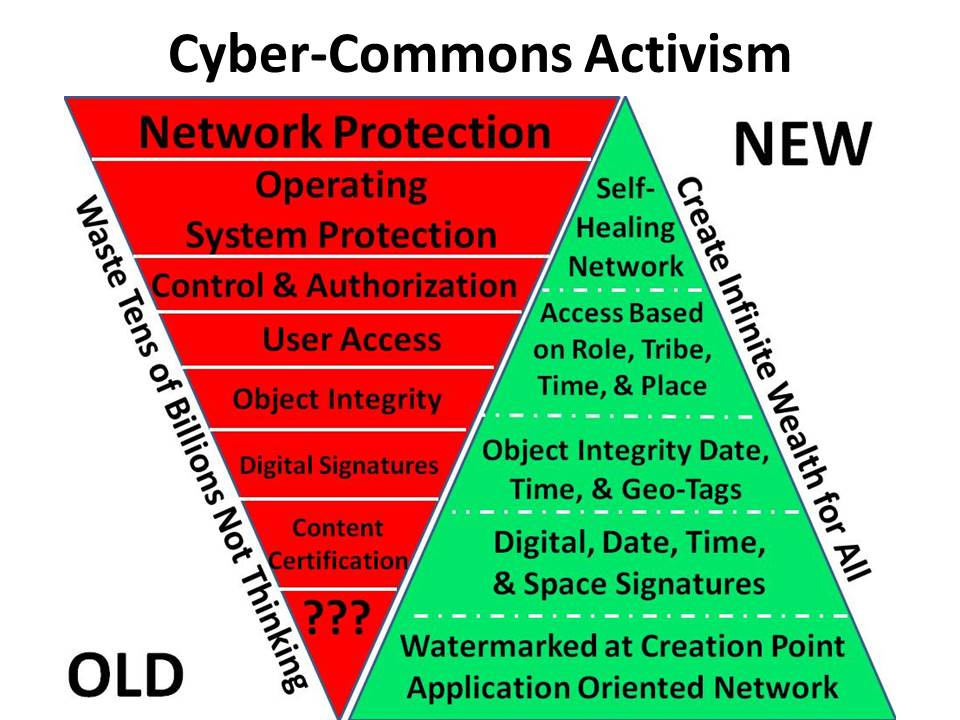
1995 – 2013 + SMART NATIONS, M4IS2, WORLD BRAIN, GLOBAL GAME
Click on Image to EnlargeClick on Image to EnlargeClick on Image to EnlargeClick on Image to EnlargeClick on Image to EnlargeClick on Image to EnlargeClick on Image to EnlargeClick on Image to EnlargeClick on Image to Enlarge
Click on Image to EnlargeCLick on Image to EnlargeClick on Image to EnlargeClick to EnlargeClick on Image to EnlargeClick on Image to EnlargeClick on Image to Enlarge
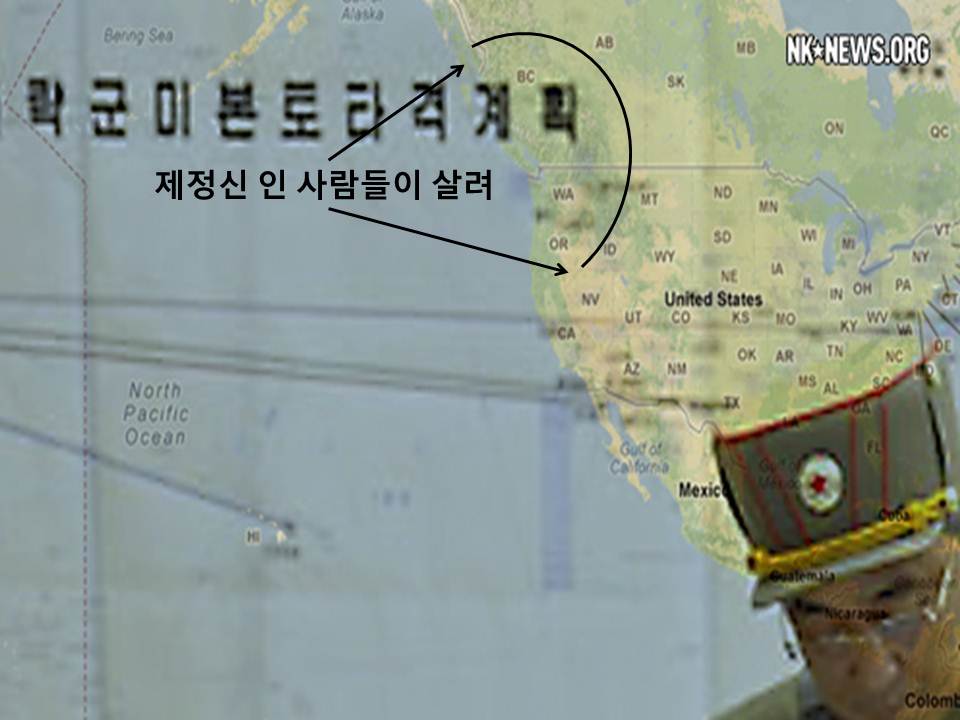
TAMPA–The emblem of the U.S. Special Operations Command pointedly illustrates its mission: It shows the tip of a spear. Now SOCOM is expanding this arsenal to create a global network that can project power even as America's armies withdraw from the battlefields of the last decade.
Adm. William McRaven, the SOCOM commander, has been developing this ambitious new role at his headquarters at MacDill Air Force Base here. McRaven is among the nation’s most celebrated warriors. He planned the operation that killed Osama bin Laden in May 2011; in his office is a small sculpture tagged “Bull Frog,” honoring him as the longest-serving Navy SEAL in uniform.
McRaven’s plan to create a “global SOF network” was endorsed in February by the Pentagon, which gave McRaven direct control over special operations forces around the world. The move appears to have support from other top military commanders, even though it would potentially diminish their authority. But there has been little public discussion of the policy, despite its significant changes. The White House appears to like the concept but has not signed off on final details.
With banks opening on Cyprus, many entrepreneurs realized they had been wrecked overnight by their government’s dishonesty. The so-called bank bailout was in reality a death sentence for many small businesses, who saw their operating capital confiscated to save the government’s face. This move will create an inevitable uncertainty throughout the Eurozone: who will dare put their operating capital in a bank in a troubled country, when politicians keep saying everything is fine – until one day, the money is just gone?
Click on Image to Enlarge
In a post this morning in the Bitcoin forums, user zeroday complains that 700,000 Euros were robbed by the European Commission. They’re not some Russian oligarch, the user writes, but a typical medium-size European IT business, and the result of this is that the entire Cypriot workforce will have to be laid off. The screenshot from the bank speaks a thousand words:
Thousands of other companies based in Cyprus are in the same situation, zeroday writes. This is not just problematic, but catastrophic on so many levels.
First, the ability for a troubled government to just go in and take money wherever it damn well pleases goes counter to pretty much every crucial principle of law – that laws need to be predictable, equal, proportional, and its rules known in advance. In this case, neither applied.
Second, the problem here isn’t so much that somebody who invests in a troubled bank goes bust with the bank. That wouldn’t be a problem in itself. The problem is that this happens despite governmental guarantees to the contrary. If governments published bank data openly so every small business in the Eurozone would be able to judge the solvency of their banking partner and make proper risk assessments, this would be proper, and it would be tough but just if a bank went insolvent and its accounts were closed to cover the losses.
I take this to be very good news. Despite the well-financed disinformation campaign designed and paid for by carbon energy interests, and the craven failure of the U.S. Congress to address the issue, personal experience, and conversations with friends and neighbors appears to have overcome the miasma of false information to produce a growing national consensus that climate change, extreme weather, and sea rise are real.
Now if we can just elect replacements for the Congressional buffoons, perhaps something meaningful can finally be done to prepare us for what is coming.
In my view geoengineering is a lot like Fracking. The companies who support and practice these technologies think they know what they are doing but, in fact, their understanding is simplistic and partial at best. As a result there are always unintended consequences that they did not anticipate or understand. In this case the result could be catastrophic.
Clive Hamilton professor of public ethics at Charles Sturt University in Canberra and the author of Earthmasters: The dawn of the age of climate engineering, just published by Yale University Press.