For the Record: Chavez Dies, China Admits Cancer Villages

Cultural Intelligence, Earth Intelligence
Hugo Chavez (RIP)
Hugo Chavez (RIP)

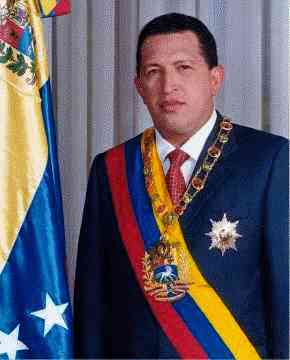
President Hugo Chávez of Venezuela Dies at Age 58

CARACAS, Venezuela — President Hugo Chávez of Venezuela died Tuesday afternoon after a long battle with cancer, the government announced, leaving behind a bitterly divided nation in the grip of a political crisis that grew more acute as he languished for weeks, silent and out of sight in hospitals in Havana and Caracas.

His departure from a country he dominated for 14 years casts into doubt the future of his socialist revolution. It alters the political balance in Venezuela, the fourth-largest foreign oil supplier to the United States, and in Latin America, where Mr. Chávez led a group of nations intent on reducing American influence in the region.

Mr. Chávez changed Venezuela in fundamental ways, empowering and energizing millions of poor people who had felt marginalized and excluded.
Read full article.

China River of Cancer

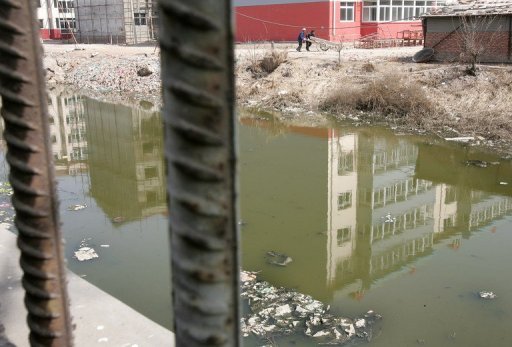
China admits pollution-linked ‘cancer villages'

China's environment ministry has acknowledged the existence of “cancer villages”, several years after widespread speculation first began that polluted areas were seeing a higher incidence of the disease.

The use of the term in an official report, thought to be unprecedented, comes as authorities face growing discontent over industrial waste, hazardous smog and other environmental and health consequences after years of rapid development.

“Poisonous and harmful chemical materials have brought about many water and atmosphere emergencies… certain places are even seeing ‘cancer villages',” said a five-year plan that was highlighted this week.

Read full article.

Reference: The Seven Sins of American Foreign Policy

02 Diplomacy, Articles & Chapters

The Seven Sins of American Foreign Policy

Loch Johnson and Kiki Caruson

PSOnlone (January 2003)

PDF 6 Pages (slow loading)

1.  Ignorance.

2.  Lack of Empathy

3.  Isolationalism

4.  Unilateralism

5.  Precipitate Military Action

6.  Presidential Imperialism

7.  Arrogance

Phi Beta Iota:  The above are resorted and expanded in Loch Johnson (2006), Seven Sins of American Foreign Policy, Pearson.

Berto Jongman: Peace on Earth? The Future of Armed Conflict

Civil Society, Commerce, Corruption, Ethics, Government, Military, Peace Intelligence
Berto Jongman
Berto Jongman

Peace on Earth? The future of internal armed conflict

Warfare seems endemic to mankind. Nations around the world are driven by conflict. But is the impetus to war decreasing? Håvard Hegre finds statistical grounds for hope.

In my view, perhaps the most evident shortcoming is that our predictions ignore the importance of political systems – the institutions that regulate how leaders are recruited and how they make decisions. We leave this out since we have no credible forecasts for changes to political systems over the next 40 years, but it is evident that many internal armed conflicts are fought over the nature of the political system, in particular in non-democratic middle-income countries.

Read full article (PDF 5 Pages)

Continue reading “Berto Jongman: Peace on Earth? The Future of Armed Conflict”

Theophillis Goodyear: Documentary on Dick Cheney’s World

Cultural Intelligence
Theophillis Goodyear

Howard Fineman describes R.J. Cutler's documentary as “disturbing.” He says it was a hit at the Sundance Film Festival earlier this year, and it will be shown on CBS's Showtime, March 15 at 9:00 p.m. I checked amazon and they don't have a listing for it, so it may not have come out on DVD yet.

Article:  We Are Living in the World Dick Cheney Made

The portrait is riveting because we know what Cheney's ascent led to: our seemingly irrevocable, full-blown security state, with all the attendant risks of constitutional and civil liberties abuses; wholesale destruction and civilian deaths in swaths of Afghanistan and Iraq; more than 6,500 dead and more than 50,000 wounded U.S. soldiers; the rise of remote-control warfare, now embodied by drones; and a relationship with the Arab and Muslim worlds arguably more antagonistic than ever before. The film has the dreadful fascination of a road trip you know ends in a car wreck.

Movie Trailer:  Showtime – The World According to Dick Cheney


SmartPlanet: US High-Speed Rail Conceptualization

03 Economy, 11 Society, Commerce, Government

smartplanet logoThe future of high-speed rail in the U.S. remains anything but certain, but in the meantime one person has taken it upon himself to show us what it should look like.

Activist and artist Alfred Twu began working on the map in 2009, in response to President Obama’s plan for high-speed rail. The map has gone viral on Facebook, and a petition Twu created to ask the White House to fund a system like the one he proposed has already received 52,389 signatures.

Click on Image to Enlarge

In designing the map’s routes, Twu relied on studies from government agencies and advocacy groups. He said such a system could be built out like the Interstate Highway System.

“Some artistic license was applied to make it more elegant and have it be a series of distinct lines like a subway map,” he said. “Colors were selected to convey the idea of the U.S. being made up of several interwoven regional cultures that come together at major cities — like an internal melting pot.”

According to Twu, a rail system like the one he’s designed would cost $1 – $2 trillion to build. “Sounds like a lot,” he said, “but divided over four decades, that is around $25-$50 billion a year or 80-160 dollars a year per person. That’s one tank’s worth of gas money.”

Readers, should the U.S. be investing in high-speed rail? Or, considering the country’s persistent economic hardships, is this an unnecessary diversion that would distract us from more important issues?

View a larger version of the map here.

Pierre Cloutier: Prof. Rodrigue Tremplay on Fed’s Monetary Policy of Zero Interest Rate — Combined with Inflation, Burying the US Economy

03 Economy, 07 Other Atrocities, 10 Transnational Crime, Commerce, Corruption, Government, Idiocy
Pierre Cloutier
Pierre Cloutier

The Fed’s Monetary Policy of Zero Interest Rates

“A More Than Questionable Bernanke Fed Monetary Policy.”

“If the American people ever allow private banks to control the issuance of their currency, first by inflation and then by deflation, the banks and corporations that will grow up around them will deprive the people of all their property until their children will wake up homeless on the continent their fathers conquered.” Thomas Jefferson (1743-1826), 3rd US President

“It is well enough that people … do not understand our banking and monetary system, for if they did, I believe there would be a revolution before tomorrow morning.” Henry Ford (1863-1947), American automobile industrialist

“When plunder becomes a way of life for a group of men living together in society, they create for themselves, in the course of time, a legal system that authorizes it and a moral code that glorifies it.” Frederic Bastiat (1801-1850), French economist

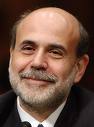
bernankeIt is becoming increasingly obvious that the Bernanke Fed’s monetary policy of fixing short-term interest rates at close to zero percent, and (with inflation at two percent or so) of forcing negative real interest rates, was primarily designed not to help the U.S. economy but to shore up the super large American banks that were on the verge of bankruptcy when the investment bank Lehman Brothers failed on September 15, 2008. Indeed, with this policy, the Bernanke Fed has transferred hundreds of billions to these super banks at a huge cost to the rest of the economy and to international holders of U.S. dollars.

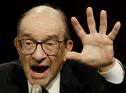
Just as the Greenspan Fed created the housing bubble and let the derivatives market explode, thus sowing the seeds of the 2007-2008 financial crisis, the Bernanke Fed, using faulty economic analysis, has embarked upon a policy of zero short-term interest rates for many years, —an open-ended QE3 policy of buying mortgages and other financial instruments with newly printed money, thus creating the largest bond bubble in U.S. history.

When the distortions it has created in the U.S. economy unfolds in the coming years, the true costs of this policy will become clearer. Indeed, when the Fed tries to unload the financial assets it has acquired from the near-insolvent super large American banks, in a not too distant future, bond prices will be in danger of collapsing and nominal interest rates could spike, with a very negative impact on financial markets and on the real economy.

Read full article.

Continue reading “Pierre Cloutier: Prof. Rodrigue Tremplay on Fed's Monetary Policy of Zero Interest Rate — Combined with Inflation, Burying the US Economy”

Berto Jongman: Devastating 6-Minute Video on Wealth Inequality in the USA

03 Economy, 07 Other Atrocities, 09 Justice, 10 Transnational Crime, 11 Society, Civil Society, Commerce, Commercial Intelligence, Corruption, Cultural Intelligence, Government, Idiocy, Ineptitude

Perception versus reality is truly frightening.  Reality is much, much worse than perception.  Average worker has to work for one month to earn what the average CEO earns in one hour.

Published on Nov 20, 2012

Infographics on the distribution of wealth in America, highlighting both the inequality and the difference between our perception of inequality and the actual numbers. The reality is often not what we think it is.

References:
http://www.motherjones.com/politics/2…
http://danariely.com/2010/09/30/wealt…
http://thinkprogress.org/economy/2011…
http://money.cnn.com/2012/04/19/news/…

noble gold