Berto Jongman: Article on Local Peace Committees

Articles & Chapters, Peace Intelligence
Berto Jongman
Berto Jongman

Paul van Tongeren (2013): Potential cornerstone of infrastructures for peace? How local peace committees can make a difference, Peacebuilding, 1:1, 39-60

Potential cornerstone of infrastructures for peace? How local peace committees can make a difference

Paul van Tongeren

Co-founder, International Civil Society Network on Infrastructures for Peace, Amsterdam, The Netherlands

(Received 9 October 2012; final version received 28 November 2012)

In many conflict-affected countries local peace committees (LPCs) have an impact on local communities by keeping the violence down, solving community problems and empowering local actors to become peacebuilders. Of course, committees like these are confronted with many challenges; the biggest challenge is that they are very dependent on the broader, political or conflict environment. If that environment becomes very polarised or violent, they will be gravely affected. LPCs are committees or structures formed at the level of a town or village with the aim to encourage and facilitate joint, inclusive peacemaking and peacebuilding processes within their own context. The article describes 10 examples of LPCs in countries such as the Democratic Republic of Congo, Colombia and Afghanistan. It is remarkable to see that in those countries hundreds of LPCs exist, with in most cases limited impact. The article describes as well a broader framework of infrastructures for peace, as it is implemented in several countries, such as Ghana and Kenya. This is a promising approach. The article concludes with some conclusions and proposals to enhance LPCs and infrastructures for peace nationally and internationally.

Keywords: local peace committees; local peace communities; infrastructures for peace; local peace building
Read full article.

Winslow Wheeler: DoD’s Own F-35 Test Report Contains Useful Truths

Corruption, Idiocy, Ineptitude, Military

Winslow Wheeler

When DOD's Director of Operational Test and Evaluation released its annual report to Congress on the performance of US weapons in operational (battlefield) testing, an object of some attention was the section on the F-35 Joint Strike Fighter.  The report itself (at http://www.dote.osd.mil/pub/reports/FY2012/) made difficult and cryptic reading, and the news reporting covered whatever highlights harried journalists could readily use in short articles.  Little of it probed, in technical terms or otherwise, the meaning and implications.

Lee Gaillard has been writing about aviation, weapons and national security for decades and took it upon himself to analize the F-35 using the DOT&E report as the starting point.  His analysis makes important and informative reading for anyone wishing to have more than a superficial understanding of the F-35 and its problems–rooted deeply in the DNA of the aircraft's insanely complex design and its disengenuous (bait and switch) acquisition plan.

This highly informative essay-length analysis is available at Counterpunch at  and below.

Continue reading “Winslow Wheeler: DoD's Own F-35 Test Report Contains Useful Truths”

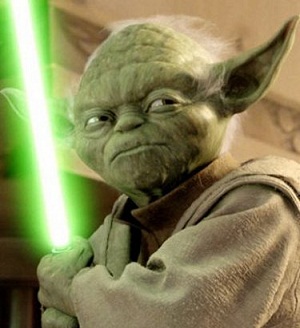
Yoda: Physicists Tie Fluid Into a Knot — Dolphins Key to Breaking Code

Earth Intelligence
Got Crowd? BE the Force!

Impossible, possible.

Physicists Tie Fluid Into a Knot

| 4 March 2013 4:29 pm
image

The vortex knot was first theorized a century ago, but only created in a lab this year.

Physicists at the University of Chicago have created a vortex knot in a lab environment, a feat which has been theorized for a century but had never been successfully attempted. Creating a vortex knot is, according to a University of Chicago press release, “akin to tying a smoke ring into a knot.” Physicists have been puzzled as to why a vortex knot isn't a stable phenomenon, in theory it should be, but in practice they stretch themselves out and break up. The stretching culminates in a reconnection event, where loops elongate, circulate in opposite directions, and then collide. As they collide, parts of the vortices annihilate other parts – unlinking and unknotting the vortex. All of this is sounds very complex, but in reality is a matter of forces smashing into each other and cancelling each other out. The researchers' findings in creating a knot are relevant to many fields, and could lead to advances in turbulence, plasma physics, ordinary fluids, and exotic superfluids – where knots likely appear, but are difficult or impossible to observe.

Continue reading “Yoda: Physicists Tie Fluid Into a Knot — Dolphins Key to Breaking Code”

John Taylor Gatto: The Ultimate History Lessons (1 Hour)

Collective Intelligence, Cultural Intelligence

Uploaded on Jan 1, 2012

http://www.TheUltimateHistoryLesson.com (notes, transcript, links, and more)
http://www.JohnTaylorGatto.com (all of John's books, and current projects)
http://www.PeaceRevolution.org (episodes 041-045 cover The Ultimate History Lesson + Analysis)
http://www.TragedyandHope.com (an online community which provides educational media by independent producers)

OUTLINE FOR HOUR 1:

Continue reading “John Taylor Gatto: The Ultimate History Lessons (1 Hour)”

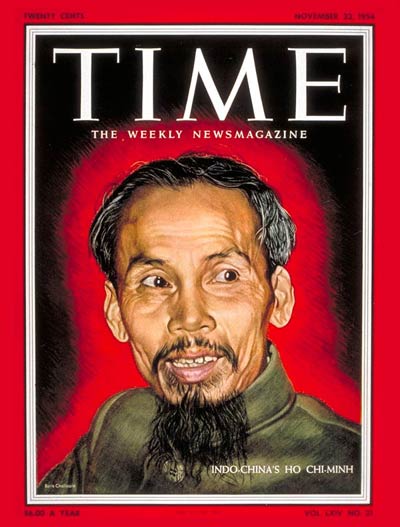
Ho Ho Ho: Unhappy Neighbors — South China Sea as Flash Point, Indonesia and Viet-Nam Seek Solutions — China’s U-Shaped Line and String of Pearls

02 China, 02 Diplomacy, 03 India, 04 Inter-State Conflict, 05 Energy, 08 Wild Cards, Government, Military
Ho Chi Minh
Ho Chi Minh

Unhappy Neighbors

Ngo Vinh Long

The Cairo Review of Foreign Affairs, February 10, 2013

Speaking to diplomats, businessmen and journalists at the British Foreign Office in November, President Susilo Bambang Yudhoyono of Indonesia emphasized the need for “norms and principles” in resolving disputes in the South China Sea. Why did President Yudhoyono, who was spending a week in London at the invitation of Queen Elizabeth II as the first leader to visit Britain during the year of her Diamond Jubilee, feel that he had to bring up the South China Sea disputes at such a time?

After a member of the audience asked what Indonesia, the leading nation in the Association of Southeast Asian Nations (ASEAN) could do if China did not share his views, President Yudhoyono recalled what he had said to Chinese Premier Wen Jiabao at a summit conference in Bali and again to Chinese President Hu Jintao at a meeting in Beijing: without forward movement on a Code of Conduct (CoC) for the South China Sea, the whole region could “easily become a flashpoint.” He added that the two Chinese leaders had concurred with his assessment.

President Yudhoyono added, however, that he had become quite concerned after ASEAN foreign ministers failed to reach a CoC agreement at a meeting in Cambodia in July 2012. He did not mention the role played by China in getting the Cambodian government to sabotage the pact. He only said that since then, Indonesia has done its utmost to bring about a consensus among ASEAN nations on the issue. He also did not mention the fact that at an international conference on “Peace and Stability in the South China Sea and the Asia Pacific Region” held in Jakarta in September, most of the participants expressed pessimism as long as China continued to exert military and economic power in area within the U-shape line demarcating its self-declared zone of sovereignty.

Continue reading “Ho Ho Ho: Unhappy Neighbors — South China Sea as Flash Point, Indonesia and Viet-Nam Seek Solutions — China's U-Shaped Line and String of Pearls”

Anthony Judge: Wholth as Sustaining Dynamic of Health and Wealth

Collective Intelligence, Cultural Intelligence, Earth Intelligence, P2P / Panarchy, Resilience
Anthony Judge
Anthony Judge

Wholth as Sustaining Dynamic of Health and Wealth

Cognitive dynamics sustaining the meta-pattern that connects

Introduction
Varieties of integrative thinking
Elusive nature of the pattern that connects
Experiential implications of wholth
Wholth: Theology vs. Mathematics?
Wholth through mathematical echoes of religious preoccupations
Wholth through religious echoes of mathematical preoccupations
Eliciting wholth through associating mathematics and theology
Engaging with mathaphors, isophors, analogies and correspondences
Wholth as essential to health
Contextualizing wealth as engendered by wholth
Whole and hole in the light of the stealth of wholth
References

Patrick Meier: PeaceTXT Kenya — Beginning of Peace IO?

IO Deeds of Peace
Patrick Meier
Patrick Meier

PeaceTXT Kenya: Since Wars Begin in Minds of Men

“Since wars begin in the minds of men, it is in the minds of men that the defenses of peace must be constructed.” – UNESCO Constitution, 1945

Today, in Kenya, PeaceTXT is building the defenses of peace out of text messages (SMS). As The New York Times explains, PeaceTXT is developing a “text messaging service that sends out blasts of pro-peace messages to specific areas when trouble is brewing.” Launched by PopTech in partnership with the Kenyan NGO Sisi ni Amani (We are Peace), the Kenyan implementation of PeaceTXT uses mobile advertising to market peace and change men’s behaviors.

Conflicts are often grounded in the stories and narratives that people tell them-selves and in the emotions that these stories evoke. Narratives shape identity and the social construct of reality—we interpret our lives through stories. These have the power to transform or infect relationships and communities. As US-based PeaceTXT partner CureViolence (formerly CeaseFire) has clearly shown, violence propagates in much the same way as infectious diseases do. The good news is that we already know how to treat the later: by blocking transmission and treating the infected. This is precisely the approach taken by CureViolence to successfully prevent violence on the streets of Chicago, Baghdad and elsewhere.

Read full post.

noble gold