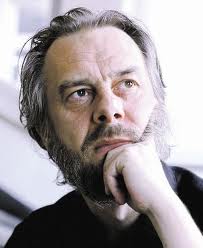
“Movement 99%: Through Exclusion to the Community” Slovenian Evaluation Society, Working paper 4/4(Nov. 2011), Bojan Radej
“Understanding and Self-Management of the Complex Society” Slovenian Evaluation Society, Working paper 2/4(2011), 30 pp.
Bojan Radej is a methodologist in social research from Ljubljana. Master degree in macroeconomics, University of Ljubljana – Faculty of Economics (1993). Professional Experience Record: Governmental Institute of Macroeconomic Analysis and Development (1987-04; under-secretary to the government), areas of work: sustainable development (1998-04), chief manager of the modelling department (1993-5); initiator and the first editor of Slovenian Economic Mirror (1995-8); Co-Editor of IB journal (2001-04). Chairman of Slovenian Evaluation Society (2008-).
Very inspiring talk, i listened in silence to him and that doesn’t happen often.
As an ex VN soldier i fully support the generals opinion.
Even after losing his own son in Afghanistan he still firmly believes in his ideals and knows how to express them on a way that is understandable and inspiring to allot of people, i can only say general van Uhm made me proud to be Dutch today, and proud i served in the Dutch armed forces.
Yesterday, December 16, 2011, 40 supporters of Bradley Manning saw him in person in the military courtroom at Fort Meade, Maryland and another 60 saw him on a video feed from the court, the first time Manning has been seen by the public in 19 months. Over 100 other supporters, including 50 from Occupy Wall Street who had bused down from New York City, were at the front gates of Fort Meade in solidarity with Manning.
. . . . .
The military’s treatment of Manning has reeked of intimidation and retaliation.
Until citizen activist protests six months ago in March, 2011, brought sufficient attention to the harsh conditions of his pre-trial confinement, the US military was treating him as if he were beyond the scrutiny of the law — as if he were an “enemy combatant” in Guantanamo or Abu Ghraib.
. . . . .
Despite the military’s mantra of having the best military legal system in the world, the past treatment of Manning—keeping him in solitary confinement, forcing him to stand naked while in pre-trial confinement and the lack of compliance with the norms of the military legal system of a “speedy” trial have added to the low points of Abu Gharib and Guantanamo in the history of military “justice.”
The federal courts have long established mechanism of dealing with classified information in national security cases.
The military’s contention that it took 19 months to figure out how to try him while protecting classified materials reeks of intimidation, retribution and retaliation.
About the Author: Ann Wright is a retired US Army Reserve Colonel and a former US diplomat who resigned in 2003 in opposition to the Iraq war. She is a member of Veterans for Peace and is on the Advisory Board of the Bradley Manning Support Network
A new program can find and compare relationships in complicated data without having to be asked specific queries
Are there subtle patterns lurking in data that can foretell of a coming financial-system crash? What can explain the variations in sports-star salaries? How about the complex relationship between genes and certain diseases? Scientists in various fields have been searching for better ways to analyze large piles of data for such patterns, but the difficulty has always been that they need to know what they're looking for in order to find. A new software program, described in the latest issue of Science, is designed to find the patterns in data that scientists don't know to look for.
David Reshef, one of the scientists behind MINE, as the program is called, explains, “Standard methods will see one pattern as signal and others as noise. There can potentially be a variety of different types of relationships in a given data set. What's exciting about our method is that it looks for any type of clear structure within the data, attempting to find all of them. … This ability to search for patterns in an equitable way offers tremendous exploratory potential in terms of searching for patterns without having to know ahead of time what to search for.” MINE compares different possible relationships (including linear, exponential, and periodic) and returns those that are strongest.
On MINE's website, the program is available for download.
Opus machine prints books in minutes at Politics and Prose
The new Opus machine at Politics and Prose bookstore on Connecticut Avenue in Washington can print and bind a book that is indistinguishable from one of the professionally mass-printed books on the shelves at the same store. Public domain works, out-of-print novels, electronic books supplied via publishing houses and personal books can all be printed in minutes while customers wait.
Phi Beta Iota: Price is always an issue. HOWEVER, now that “true cost” economics is converging with Occupy and the 99%, we anticipate that publishers and Amazon are in for an eye-opener. This will also empower authors who choose to by-pass the entire “system” and local book stores who can be liberated from inventory and publisher overhead.

 “Movement 99%: Through Exclusion to the Community”