Chuck Spinney: Break-Up of Iraq, History of Oil Invasions

02 Diplomacy, 04 Inter-State Conflict, 05 Civil War, 05 Iran, 07 Other Atrocities, 08 Wild Cards, 09 Justice, 10 Security, 11 Society, Blog Wisdom, Counter-Oppression/Counter-Dictatorship Practices, Cultural Intelligence, IO Deeds of War
Chuck Spinney

The below report by Patrick Cockburn, one of the best reporters now covering the Middle East, describes the growing tensions in Iraq over the question of sharing its oil wealth among its constituent regions.  Although his report is important in its own right, its contents become even more ominous when they viewed in a larger historical context:

The long view of history is likely to record the greatest ‘sins' of Iraq, Iran, and Libya prompting interventions by the West have been related to the control of oil — not nuclear weapons; not any communist leanings during the Cold War; not support of worldwide terrorism.

Each country committed the unforgivable sin of being governed at one time by nationalistic leaders who believed the oil under each country belonged to that country and should be controlled by the government of that country — therefore, these leaders had to be removed:

  • Iran – Mohammed Mosaddegh, a popularly elected Prime Minister of Iran and social reformer, removed by a CIA/MI6 coup in August 1953.
  • Iraq – Saddam Hussein, a murderous neo-Stalinist dictator and social reformer (e.g., major achievements in women's rights and education), removed by military force in 2003.
  • Libya – Muammar Qaddafy, a quirky tribal dictator and social reformer (e.g., major achievements in women's rights and education) removed by military force in 2011.
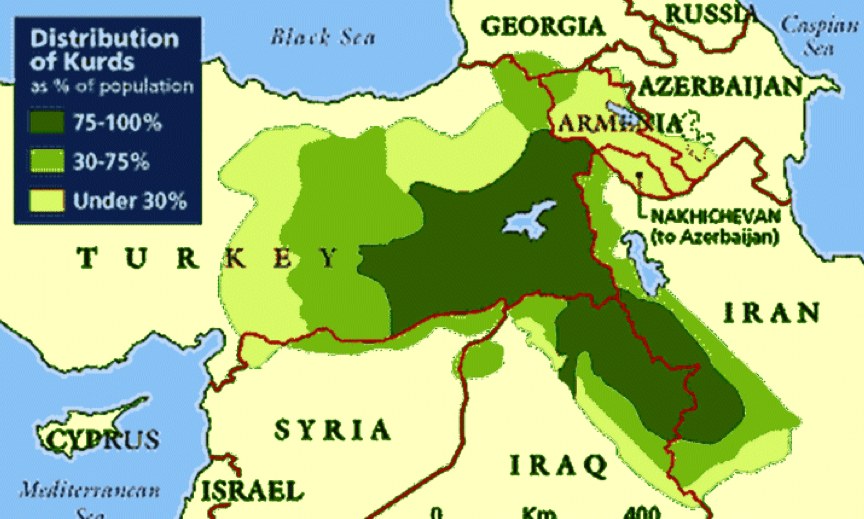
Click on Image to Enlarge

One short-term common denominator in these imposed regime changes was that the nationalist leader was replaced by a more compliant government that agreed to an opening of that country's oil fields to exploitation by privately owned western oil companies.

While history does not repeat itself, memories of the past condition events in the future.  Over the longer term, perceived wrongs are not forgotten, and such interventions can provoke blowbacks, which in turn provoke counteractions that enmesh the intervener in a welter of increasingly complicated conflicts.  In the case of Iran, for example, the 1953 coup eventually backfired in 1979, when  Reza Shah Pahlavi was overthrown by the Islamic revolution led by the Ayatollah Khomeini.  Khomeini then established a regime retook control of Iran's oil fields, among other things.  But the Iranian game is not over, and the historical pattern of move and countermove is in play, with the nationalist (Islamic) regime of Iran again in the West's crosshairs, allegedly because of its nuclear ambitions and support of international terror.  Nevertheless, the glittering temptations of re-privatizing Persian oilfields are lurking in the background, attracting the private oil capitalists of the West like flies to honey.

Finish long comment from Spinney, plus reference, plus See Also.

Continue reading “Chuck Spinney: Break-Up of Iraq, History of Oil Invasions”

Lynn Wheeler: Why Financial Systems Demand False Complexity and Ignorance…Corruption is Merely a Bonus

03 Economy, 07 Other Atrocities, 10 Transnational Crime, 11 Society, Blog Wisdom, Commerce, Commercial Intelligence, Misinformation & Propaganda, Money, Banks & Concentrated Wealth, Power Behind-the-Scenes/Special Interests
Lynn Wheeler

Financial Cryptography

Where the crypto rubber meets the Road of Finance…

December 11, 2011

Why (my, all) financial systems fail — information complexity

I spent over a decade building the snappiest financial system around. In that time I pursued one goal of efficiency: reduction of complexity. This wasn't only goodness in an angelic sense, it was a pragmatic goal to reduce my own costs in building systems.

The result was pretty spectacular: we were settling trades in seconds and doing so with every leg firmly fastened to the ground. That is, the whole thing was running with direct concrete ties to assets.

But, the big players weren't interested. Indeed they were more than uninterested, they were highly interested in making sure this would never ever happen. Time after time, the message was delivered: Never. Other companies received the same message, so after a few years, I started to take it seriously.

At the time I hypothesised that the reason for this was insider fraud, or at least profits capture. The complexities were endemic and there were very few people who could see the whole picture. So, I theorised that those who could understand the complexities were cashing in on their advantage; from the inside. And some very few who cashed in were also driving the information agenda, as their success made them both wealthy and influential:  more complexity.

Of course such a hypothesis is unlikely to find proof. By its very nature, how do you prove such a tendency towards chaos? Here comes an alternate perspective from ZeroHedge, citing two papers (1, 2):

And the punchline: “Liquidity requires symmetric information, which is easiest to achieve when everyone is ignorant. This determines the design of many securities, including the design of debt and securitization.” Reread the last statement as it explains perhaps better than anything, the true functioning of modern capital markets and why they are terminally broken: in order to preserve the system, the banking cartel need to make everything of virtually infinite complexity so that no one has a clear understanding of what is going on!

Read full posting.

Phi Beta Iota:  In brief, finance is fraud.  As William Greider documents in his book, The Soul of Capitalism, financial instruments (incomprehensible to their own vendors) appreciated seventeen times while real assets appreciated five times.  Twelve is the fraud-complexity-corruption delta.

See Also:

Mini-Me: European-US Banking–Tangled Web — Tell Me Again, Why Shouldn’t We Default and Let the Banks Fry? + Financial Terrorism RECAP

Mini-Me: European-US Banking–Tangled Web — Tell Me Again, Why Shouldn’t We Default and Let the Banks Fry? + Financial Terrorism RECAP

03 Economy, 07 Other Atrocities, 10 Transnational Crime, 11 Society, Budgets & Funding, Commerce, Commercial Intelligence, Corruption, Government, Money, Banks & Concentrated Wealth, Power Behind-the-Scenes/Special Interests
Who? Mini-Me?

The question has to be asked: “Why shouldn't we default and let the banks fry?”

What possible benefit it there to the people of a nation whose previous leaders “sold out” the entire country on the basis of lies from the banks, notably Goldman Sachs?

Why not default and focus on full employment and resilience at home?  Why rescue German banks?

If a new financial system is emerging, anchored by the BRICS [Brazil, Russia, India, China, South Africa], why not focus on being attractive that that new ethical financial system instead of giving up what is left in the way of seed corn to the old predatory unethical system?

Banks Sit in a Tangled Web

Many European Lenders Have Sold Sovereign-Default Protection to One Another

EXTRACT:

Of the total protection that European banks have written on government bonds in Europe's five most-stressed countries, nearly one-third originated from German banks.

See Also:

Continue reading “Mini-Me: European-US Banking–Tangled Web — Tell Me Again, Why Shouldn't We Default and Let the Banks Fry? + Financial Terrorism RECAP”

John Robb: Collapse of the Western Financial “System”

01 Poverty, 03 Economy, 07 Other Atrocities, 08 Wild Cards, 11 Society, Budgets & Funding, Commerce, Corruption, Cultural Intelligence, Ethics, Government, Misinformation & Propaganda, Money, Banks & Concentrated Wealth, Power Behind-the-Scenes/Special Interests
John Robb

Here's a scenario from William Buiter (the chief economist at Citi) on what could happen if the EU collapses:

Disorderly sovereign defaults and eurozone exits by all five periphery states would drag down not just the European banking system but also the north Atlantic financial system and the internationally exposed parts of the rest of the global banking system. The resulting financial crisis would trigger a global depression that would last for years, with GDP likely falling by more than 10 per cent and unemployment in the West reaching 20 per cent or more. Emerging markets would be dragged down too.

I have a couple of additions to William's scenario:

  • We are seeing crisis and depression scenarios like this with regularity now.  They are all presented as being on the cusp of occurring.  It should be very clear to everyone by now, that something fundamental is wrong with the global system and the crisis de jour is just its symptom.  Nobody “in charge” seems to be able to diagnose the real problems with our system.
  • The solutions being proposed are either a) more confidence (through bailouts) and b) more confidence (through more deficit spending).  In other words:  the problem is merely psychological and all you and I need to do is take some anti-depressants to eradicate any lingering pessimism (why worry, let's party!).  In short: there aren't any real solutions being offered.
  • None of the bad actors that profit from the behavior that led us into this crisis, either in government or in the financial sector, are held to account.  The moral hazard here is so vast, it can (and likely will) swallow the current economic system.

WIM:  What does it Mean?

It's very simple.  It is almost a certainty that a global economic depression is on its way and there is absolutely nothing you or I can do to stop it (a ballot box solution now would be as effective as replacing the Captain of the Titanic after the ship hit the iceberg).  So, what can you and I do?  We can take control of our environment.  Our objective is to build or buy access to a community that has the resilience to not only help us survive a global depression, but thrive during it.  A resilient community that:

  • Negates the impact of inevitable supply disruptions, rationing, and price spikes.
  • Protects you from the political violence that will erupt (mobs and police states).
  • Has a functional local economy that has the potential to network with other functional local economies.

John Robb: Open (Source) Protest in Moscow

06 Russia, Blog Wisdom, Cultural Intelligence
John Robb

Open (Source) Protest in Moscow

Posted: 10 Dec 2011 10:23 AM PST

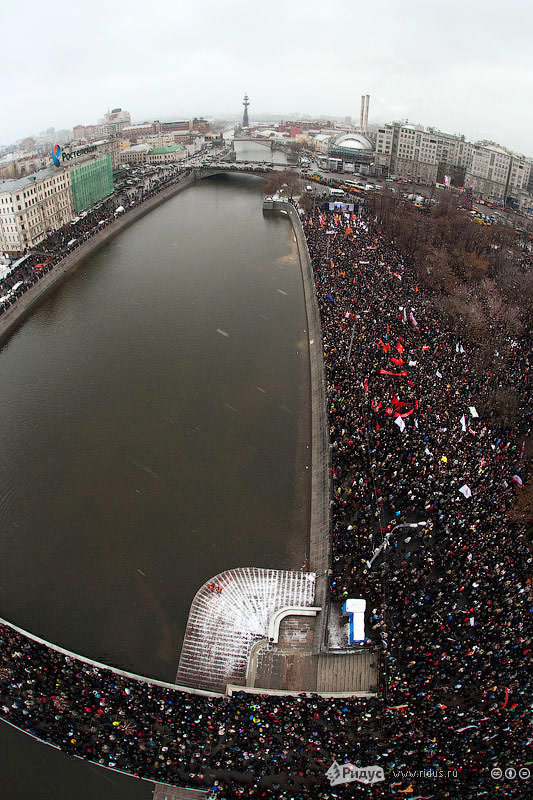
Open source protest, an organizational method that allows many, many small groups to come together to take on larger foes, has been spreading by leaps and bounds. It's now reached Moscow.  A picture from today:  The crowds on Moscow's Bolotnaya Square (and the spires of the Kremlin beyond).  Here are some nice aerial shots.

Click on Image to Enlarge

See Also:

My Talk With Tom Atlee: Primer on Citizen Intelligence

Review: The Power of the Powerless–Citizens Against the State in Central-Eastern Europe

Review: A Power Governments Cannot Suppress

Review: Pedagogy of the Oppressed

Review: The Empathetic Civilization–the Race to Global Consciousness in a World of Crisis

Review: Mapping the Moral Domain: A Contribution of Women’s Thinking to Psychological Theory and Education

Worth a Look: Books Reviews on Education for Freedom & Innovation

John Steiner: Corporate Capture of US Government

03 Economy, 07 Health, 07 Other Atrocities, 09 Justice, 10 Security, 11 Society, Blog Wisdom, Civil Society, Commerce, Corruption, Government, IO Deeds of War, Money, Banks & Concentrated Wealth, Officers Call, Power Behind-the-Scenes/Special Interests
John Steiner

Government Capture – Two Ways it Affects Us All

Capture. Corporate power over government. It may seem like a dour topic (it is) and it may be hard to put it into perspective in our lives. How does it affect you and me? Lobbying, political influence, money in politics all seem very far away from daily life and it’s hard to see just where these issues touch our lives. So, let’s talk about it.

In the past couple of decades our country has been deeply divided on a number of topics but two issues stand out in the arena of corporate power over government: Health Care Legislation & War with Iraq.

. . . . . . . Two Examples Discussed: Health Care and Iraq . . . . . . .

This isn’t government of the people, for the people, by the people. It’s profit maximization for key industries and contractors with interests in military operation and healthcare. This is the essence of capture: corporate power has hijacked the language and purpose of government for their own ends. Democrat or Republican – it no longer matters at the national level because corporate money in politics has bought both parties.

Read full article.

Seth Godin: Be the Biggest Noise – Or the Best Signal

Blog Wisdom
Seth Godin

The trap of social media noise

If we put a number on it, people will try to make the number go up.

Now that everyone is a marketer, many people are looking for a louder megaphone, a chance to talk about their work, their career, their product… and social media looks like the ideal soapbox, a free opportunity to shout to the masses.

But first, we're told to make that number go up. Increase the number of fans, friends and followers, so your shouts will be heard. The problem of course is that more noise is not better noise.

In Corey's words, the conventional, broken wisdom is:

Follow a ton of people to get people to follow back
Focus on the # of followers, not the interests of followers or your relationship with them.
Pump links through the social platform (take your pick, or do them all!)
Offer nothing of value, and no context. This is a megaphone, not a telephone.
Think you're winning, because you're playing video games (highest follower count wins!)

This looks like winning (the numbers are going up!), but it's actually a double-edged form of losing. First, you're polluting a powerful space, turning signals into noise and bringing down the level of discourse for everyone. And second, you're wasting your time when you could be building a tribe instead, could be earning permission, could be creating a channel where your voice is actually welcomed.

Leadership (even idea leadership) scares many people, because it requires you to own your words, to do work that matters. The alternative is to be a junk dealer.

The game theory pushes us into one of two directions: either be better at pump and dump than anyone else, get your numbers into the millions, outmass those that choose to use mass and always dance at the edge of spam (in which the number of those you offend or turn off forever keep increasing), or

Relentlessly focus. Prune your message and your list and build a reputation that's worth owning and an audience that cares.

Only one of these strategies builds an asset of value.

noble gold