
Central Texas World Future Society: Future of the Internet
Here’s a presentation I delivered to the Central Texas World Future Society, used as a framework for a discussion of scenarios for the network and for the application layer.

The truth at any cost lowers all other costs — curated by former US spy Robert David Steele.
Here’s a presentation I delivered to the Central Texas World Future Society, used as a framework for a discussion of scenarios for the network and for the application layer.

Message from the Director: Lessons from Khowst
Last December, our Agency family lost seven courageous and talented colleagues in a terrorist attack at Forward Operating Base Chapman in Khowst, Afghanistan. These dedicated men and women were assigned to CIA’s top priority—disrupting and dismantling al-Qa’ida and its militant allies. That work carries, by its very nature, significant risk. CIA is conducting the most aggressive counterterrorism operations in our history, a mission we are pursuing with a level of determination worthy of our fallen heroes. We will sustain that momentum and, whenever possible, intensify our pursuit. We will continue to fight for a safer America.
Earlier this year, I directed that a task force of seasoned Agency professionals conduct a review of the Khowst attack. The purpose was to examine what happened, what lessons were learned, and what steps should be taken to prevent such incidents in the future. In addition, I asked Ambassador Thomas Pickering and Charlie Allen, a highly accomplished former Agency officer, to conduct an independent study of the Khowst attack and to review the work of the task force. They concurred with its findings. One of CIA’s greatest strengths is our ability to learn from experience, refine our methods, and adapt to the shifting tactics of America’s enemies.
The review is now complete, and I would like to thank those who participated. They did our Agency a great service. It was, to be sure, a difficult task—especially since key insights perished with those we lost. Perfect visibility into all that contributed to the attack is therefore impossible. But based on an exhaustive examination of the available information, we have a firm understanding of what our Agency could have done better. In keeping with past practice, we will provide the Khowst report to the Office of Inspector General.
In highly sensitive, complex counterterrorism operations, our officers must often deal with dangerous people in situations involving a high degree of ambiguity and risk. The task force noted that the Khowst assailant fit the description of someone who could offer us access to some of our most vicious enemies. He had already provided information that was independently verified. The decision to meet him at the Khowst base—with the objective of gaining additional intelligence on high priority terrorist targets—was the product of consultations between Headquarters and the field. He had confirmed access within extremist circles, making a covert relationship with him—if he was acting in good faith—potentially very productive. But he had not rejected his terrorist roots. He was, in fact, a brutal murderer.
Mitigating the risk inherent in intelligence operations, especially the most sensitive ones, is essential to success. In this case, the task force determined that the Khowst assailant was not fully vetted and that sufficient security precautions were not taken. These missteps occurred because of shortcomings across several Agency components in areas including communications, documentation, and management oversight. Coupled with a powerful drive to disrupt al-Qa’ida, these factors contributed to the tragedy at Khowst. Each played an important role; none was more important than the others. Based on the findings of the task force and the independent review, responsibility cannot be assigned to any particular individual or group. Rather, it was the intense determination to accomplish the mission that influenced the judgments that were made.
There are no guarantees in the dangerous work of counterterrorism, but the task force identified six key areas that deserve greater focus as we carry out that vital mission. We will:
I have approved 23 specific actions recommended by the task force, some of which I ordered implemented months ago. They provide for organizational and resource changes, communications improvements, tightened security procedures, more focused training, and reinforced counterintelligence practices. These include:
We’ve now taken a hard look at what happened and what needed to be done after the tragedy at Khowst. While we cannot eliminate all of the risks involved in fighting a war, we can and will do a better job of protecting our officers. Drawing on the work of the task force and its insights, it’s time to move forward. Nothing in the report can relieve the pain of losing our seven fallen colleagues. By putting their lives on the line to pursue our nation’s terrorist enemies, they taught us what bravery is all about. It is that legacy that we will always remember in our hearts.
Leon E. Panetta
Posted: Oct 19, 2010 06:30 PM
Last Updated: Oct 19, 2010 06:30 PM
Last Reviewed: Oct 19, 2010 06:30 PM
Phi Beta Iota: Can't fix stupid.
Journal: The Truth on Khost Kathy
Journal: CIA Leads the “Walking Dead” in USA (With RECAP Links)
Reference: Fixing Intel–A Blueprint for Making Intelligence Relevant in Afghanistan
Reference: Retired CIA officer–Fix the Agency
Review: Beyond Repair: The Decline and Fall of the CIA
Review: The Human Factor–Inside the CIA’s Dysfunctional Intelligence Culture
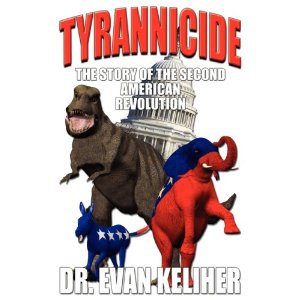
GIFT IDEA: Buy this book, read it, and then mail it in a plain brown envelope to your incumbent. This is our non-violent way of helping them understand just how pissed-off America is by the two-party corrupt tyranny. Act now before the book goes out of print. This is an “icon” book, faster, better, cheaper than buying bullets. Communicate!
U.S. Secretary of Defense Robert Gates is going through his own budget pain, now choosing which weapons to cut in an effort to save some $100 billion over the next five years. The Pentagon budget has doubled since 2001, rising an average of seven percent a year. This budget growth is expected to slow to only 1 percent in the near future, and even that may be unsupportable. Something's got to give. To preserve vital conventional military forces, the service chiefs will likely have to cut into the $54 billion spent each year on nuclear weapons-related programs.
Phi Beta Iota: DoD needs to fall back to $500 billion a year, and wean itself of contractors at the same time that it creates a long-haul Air Force, a 450-ship Navy, and a military-based multinational Peace Corps.
2010: Human Intelligence (HUMINT) Trilogy Updated
2010: OPINION–America’s Cyber Scam
2009 Perhaps We Should Have Shouted: A Twenty-Year Restrospective
2008 U.S. Naval Power in the 21st Century
2008 Rebalancing the Instruments of National Power–Army Strategy Conference of 2008 Notes, Summary, & Article
2001 Threats, Strategy, and Force Structure: An Alternative Paradigm for National Security
2000 Presidential Leadership and National Security Policy Making
1998 JFQ The Asymmetric Threat: Listening to the Debate
1997 Strategic Intelligence in the USA: Myth or Reality?
1997 USIP Conference on Virtual Diplomacy Virtual Intelligence: Conflict Avoidance and Resolution through Information Peacekeeping
1995 Re-Inventing Intelligence The Vision and the Strategy
1995 GIQ 13/2 Creating a Smart Nation: Strategy, Policy, Intelligence, and Information

From Intelligence Online:
Suspected by Congress of being linked to the Chinese army, Huawei is working in the U.S. in partnership with Amerilink, which is headed by a former U.S. Navy admiral.
Trusted third party – In a few weeks’ time the U.S. telecoms operator Sprint Nextel is due to award the $2 billion 7-year contract for the development of its 3G network in the United States. To strengthen its chances of winning the lucrative deal, China’s Huawei Technologies, which is regularly suspected of having links to the Chinese People’s Liberation
Army (IOL 619 ), has placed a joint bid with Amerilink, a small U.S. company founded in 2009. The company employs fewer than 20 engineers and is headed by William Owens, a former vice-chairman of the Joint Chiefs of Staff. Amerilink acts as the interface between Huawei and potential U.S. clients. If Huawei were to win the Sprint contract, Amerilink would handle the integration of Chinese equipment in the U.S. operator’s network.
Powerful support – U.S. parliamentarians have been Huawei’s most vociferous opponents: they prevented the Chinese group from buying the U.S. telephony company 3Com in 2008. To defend its partner in Congress, Amerilink recently added two Democrat personalities to its board of directors, the former World Bank president James Wolfenson and Richard Gephardt, president of the House of Representatives ’ Democratic group from 1989 to 2003.

froomkin@huffingtonpost.com | HuffPost Reporting
Nine Stories The Press Is Underreporting — Fraud, Fraud And More Fraud
If it wasn't already blindingly obvious that pervasive fraud was at the heart of the financial crisis and the ensuing foreclosure catastrophe, you would think that the latest news — that banks have routinely been lying their heads off in the rush to kick homeowners off the properties they fraudulently induced them to buy in the first place — would pretty much clinch it.
And yet the mainstream media still by and large hasn't connected the dots.
What we are seeing all around us are the continued effects of a vast criminal enterprise that has never been brought to account, employing a process that, as University of Texas economist James Galbraith explains, involved the equivalent of counterfeiting, laundering and fencing.
So the person with the right expertise to lead us here is a criminologist — in particular William K. Black, one of the few effective regulators in recent history (during the savings and loan crisis of the late 1980s), a notorious knocker of heads and currently professor at the University of Missouri-Kansas City and author of the book, “The Best Way to Rob a Bank Is to Own One”.
I first interviewed Black in April, and recently checked back in and asked him about this ongoing problem of the mainstream media's inability to properly cover this story. He responded with this breathless and breathtaking list of failings (slightly edited for publication):
WOW. BRUTAL TRUTHS NOT NOT NOT BEING COVERED BY THE CORPORATE MEDIA. Click to Read Original Nine. US Government passivity (one should say: collaboration in crime) is so deep as to be worthy of massive public outrage–if the story were known to the public….
CNCNews.com Tuesday, October 19, 2010
By Edwin Mora
(CNSNews.com) – The U.S. government does not have “effective control” of 1,081 miles of the 1,954-mile-long U.S.-Mexico border, according to U.S. Customs and Border Protection (CBP), the division of the Department of Homeland Security (DHS) responsible for securing the border.
– – – – – – –
The Border Patrol, a division of CBP, is responsible for securing a total of 8,607 miles of the U.S. border. This includes all 1,954 miles of the U.S.-Mexico border, approximately 4,000 miles of the U.S.-Canada border, plus sectors of coastline in the Gulf of Mexico, Puerto Rico, and the U.S. Virgin Islands.
As of Sept. 30 (the end of fiscal year 2010), the Border Patrol had established “effective control” over 1,107 miles of the 8,607 miles it is responsible for securing, a CPB spokesperson told CNSNews.com on Monday.
Tip of the Hat to Jay DeArrastia at LinkedIn.