Chuck Spinney: Fiascos of American Foreign Policy

02 Diplomacy, 03 Economy, 04 Inter-State Conflict, 07 Other Atrocities, 08 Wild Cards, 09 Terrorism, 10 Security, 11 Society, Corruption, DoD, Government, IO Deeds of War, Military, Peace Intelligence
Chuck Spinney

This is really good analysis.

Fiascos of American Foreign Policy

by Patrick Seale

Agence Global, 27 Sep 2011

U.S. President Barack Obama is piling up foreign policy disasters. In at least three areas, crucial for world peace and American interests — Arab-Israel, Afghanistan-Pakistan and Yemen-Somalia — he is pursuing a course which can only be described as foolhardy. The anger and hate towards the United States which he is generating could take a generation to dispel.

. . . . . . .

Is it not time to enquire whether U.S. policy has not created more terrorists than the CIA has managed to kill? Would it not be better if the United States were simply to declare victory in Afghanistan — and indeed in all the other places where its Special Forces operate — bring its troops home as soon as possible and turn its attention to tending the wounds in its own broken society?

Patrick Seale is a leading British writer on the Middle East. His latest book is The Struggle for Arab Independence: Riad el-Solh and the Makers of the Modern Middle East (Cambridge University Press).

Read full story.

Phi Beta Iota:  The assumption that US foreign policy is somehow focused on peace or prosperity is evidently not correct.  The people who make policy and give orders are not stupid–they are achieving the outcomes they desire.  What is different is that a much greater percentage of the public than ever before can now use public intelligence to determine that these policies are not in the public interest, and therefore, are much more likely to be associated with treason–high crimes and misdemeanors that yield personal profit and public pain.


Mini-Me: Obama Jobs Plan Cost $200,000 a Job?

03 Economy, Corruption, Government
Who? Mini-Me?

Geithner Says Even At $200,000 Per Job Obama’s Jobs Plan Is Still A Bargain…

(ABC News) — Treasury Secretary Timothy Geithner didn’t dispute a Harvard economist’s estimate that each job in the White House’s jobs plan would cost $200,000, but said the pricetag is the wrong way to measure the bill’s worth.

And he also pointed out, in an interview today with ABC News’ David Muir, that there is no other option on the table for getting the economy moving and putting more people back to work.

Read more.

$200,000 per job is a bargain only in ObamaWorld.

Fox Pushes Misleading Cost-Per-Jobs Math To Attack Jobs Bill

THE COST PER JOB IS TOO HIGH Martin Feldstein, the Harvard economist, recently combined private estimates that the president's plan would raise employment by about two million in 2012, with its cost of about $450 billion. His conclusion was startling: each job produced by the plan would cost about $200,000.

Ric Merrifield: When Metrics & Assumptions Are Wrong

03 Economy, Advanced Cyber/IO, Analysis, Commercial Intelligence, Cultural Intelligence
Ric Merrifield

Moneyball meets cater2.me and Marvin Windows

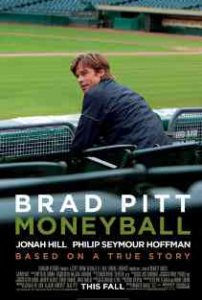
f you somehow missed it, they turned Michael Lewis’ book Moneyballinto a movie that premiered last weekend.  Given how much coverage it got, I was stunned to see it come in third place at the box office, behind the re-released Lion King of all things.

I have been aware of the book and Billy Beane since Beane turned the baseball world on its ear by proving that the old school measure of talent, batting average, was necessary but not sufficient to make the best decisions about hiring, and talent is everything in baseball – or to put it in Yogi Berra-oid terms – 90% of baseball is 50% talent.

Beane showed that things lke on base percentage, slugging percentage, even the number of walks a player gets can have greater statistical impact on the outcome of games – and of course winning is what matters in the end.  And for years, Beane was the only one managing a team this way, so he had the advantage and his team did better while spending less on their talent (because everyone was still so focused on batting averages).  Now everyone follows this model so the playing field is once again relatively level (albeit a new higher level).

Friday I was listening to NPR and they were talking about the book and the movie and why the book was such a huge hit and the person they were interviewing said it really well – he said the reason Moneyball was such an “important” book was because it rattled an entire industry by showing it the set-in-stone metrics that industry was using were not enough, and that sent ripples into other industies suggesting that they rethink their metrics as well.  In many respects, my book Rethink is a guide to helping organizations do just that.

After I heard that piece on NPR I saw two different articles in The New York Times talking about two very different companies who have followed the Moneyball/Rethink logic and offer some great examples of non-obvious changes.

Continue reading “Ric Merrifield: When Metrics & Assumptions Are Wrong”

Koko: One Simple Demand — Electoral Reform — Photographic Essay in Search of the Truth

03 Economy, 09 Justice, 11 Society, Advanced Cyber/IO, Civil Society, Cultural Intelligence, Ethics, Government
Koko

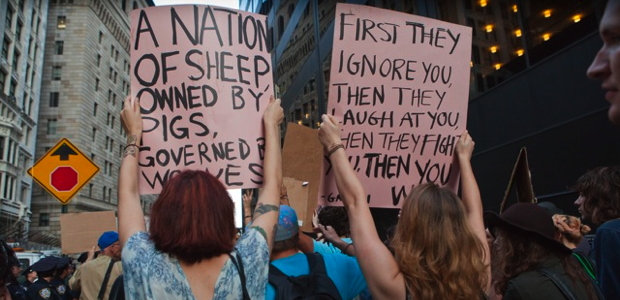
‘One Simple Demand': Scenes From the Wall Street Protests

Julie Dermansky – Julie Dermansky is a multimedia reporter and artist based in New Orleans. She is an affiliate scholar at Rutgers University's Center for the Study of Genocide and Human Rights. Visit her website at www.jsdart.com.

The Atlantic, 27 September 2011

They're calling it America's answer to the Arab Spring. In July, the anti-capitalist magazine Adbusters urged readers to “flood into lower Manhattan, set up tents, kitchens, peaceful barricades and occupy Wall Street for a few months. Once there,” it continued, “we shall incessantly repeat our one simple demand until Barack Obama capitulates.”

Click on Image to Enlarge

As planned, thousands began gathering on September 17, but 10 days into their demonstration, it's not entirely clear what that “one simple demand” might be. Many of the hand-scrawled signs lash out against corporations. But as the days go by, new issues emerge. The execution of Georgia prisoner Troy Davis four days into the protest made the death penalty into a central theme. And the NYPD has become a major target for rage, especially after Saturday's reports that a police officer (improbably named Anthony Bologna) had aimed pepper spray at a protester's face.

Photographer Julie Dermansky, who covered the protests in Tahrir Square, headed to New York after seeing videos of the Wall Street demonstrations on Facebook. These photos capture some of the scenes she encountered yesterday.

See full photographic essay.

See Also:

Continue reading “Koko: One Simple Demand — Electoral Reform — Photographic Essay in Search of the Truth”

AFIO: Bizarre System of Hiring Intelligence Contractors

03 Economy, 07 Other Atrocities, Commerce, Commercial Intelligence, Corporations, Corruption, DHS, Director of National Intelligence et al (IC), DoD, Government, Intelligence (government), Methods & Process, Secrecy & Politics of Secrecy

The Bizarre System of Hiring Intelligence Contractors

Joshua Foust – Joshua Foust is a fellow at the American Security Project and the author of Afghanistan Journal: Selections from Registan.net.

The Atlantic, 20 September 2011

This morning I testified at the Senate Committee on Homeland Security and Government Affairs' Subcommittee on Oversight of Government Management, the Federal Workforce, and the District of Columbia (a mouthful, I know) about how we can better manage and administer contractors within the intelligence community. I'm pasting a brief excerpt of my written testimony below, followed by a link to the full text of my remarks.

Every contract the government issues for a company to perform work is defined by the Statement of Work (SOW). This is a document that defines the parameters of the work the contractor will perform, including a description of the project, expected duties the contractor must fulfill, and the outputs and metrics by which performance will be measured. These are often poorly written, kept intentionally vague, and wind up not actually addressing the stated intent of the contracts.

As one example, every SOW I've had to either administer, edit, review, or write has stated as a basic metric of performance the number of employees the contractor should hire. That is, the basic means by which the government measures the contractor's performance is based first and foremost on the number of people hired to work on the contract. This has two serious consequences that affect the contracting environment: it removes the distinction between employees that would make work products better, and it confuses the number of employees with contract performance.

The frankly bizarre system of hiring intelligence contractors is born from several interdependent processes: getting a security clearance, getting hired, and getting “read on” to work at a government site. The system of getting a clearance is structured such that those with clearances are given preference above those without clearance, regardless of the relevant experience of either employee. In other words, if two candidates are competing for a job with a contractor, and one has deep relevant experience but no clearance, she will most likely lose to a candidate with less relevant experience but a current and active security clearance.

There is a great deal more to this, and I would suggest anyone interested in this topic to download both my own testimony (At SCRIBD, or PDF here), and checking out the Hearing page, which includes written remarks from Daniel Gordon from the Office of Management and Budget, DHS Chief of Intelligence Charles E. Allen, Scott Amey from the Project on Government Oversight, and Dr. Mark Lowenthal.

Chuck Spinney: Obama’s Shame — & Threat to USA

02 Diplomacy, 03 Economy, 04 Inter-State Conflict, 07 Other Atrocities, 08 Wild Cards, 09 Terrorism, 10 Security, 11 Society, Corruption, Cultural Intelligence, Government, IO Deeds of War
Chuck Spinney

President Obama's craven performance at the UN has both humiliated the United States and made a mockery of what little remains of America's pretensions to the principles of freedom, democracy, fair play, and simple human decency.  Like Colin Powell, he made the wrong turn at the “to be” or “to do” fork in the road; he  put career and short-term ambition ahead of common sense and personal honor; and ironically, he made the same faustian bargain publicly on the same world stage for all to see.   For a men of such great promise to stumble so miserably is not only a personal tragedy of Shakespearian proportions: their pusillanimity under pressure opens the door to unpredictable grand strategic* ramifications that menace the wellbeing of hundreds of millions of people at home and abroad.

Below is one thoughtful observer's exploration of some of these ramifications; there will be other assessments … and very few of them will be pretty.

At least LBJ, who tried to do some things, recognized when his time was over, and left gracefully.  But in the Hall of Mirrors that is Versailles on the Potomac at the dawn of the 21st Century, that won't happen again, and Mr. Obama's ultimate disgrace will be to prove that the easy being was far more important than the hard doing when engineering the moral and material decline of a nation.

________
* The criteria underpinning a sensible grand strategy are explained here.

Chuck Spinney
Port Vendres, France

The Third Intifada Targets Israel-America

by Rami G. Khouri

Agence Global, 26 Sep 2011

[CS Note: I reformatted this insightful essay to highlight important points, but did not change any text or the order of presentation]

BOSTON — It remains to be seen what actually changes on the ground in the months ahead following the Palestinian initiative to ask the United Nations to recognize a Palestinian state in the 1967 Israeli-occupied territories as a UN member or observer state. The move could be a substantive gain for the Palestinian people, a symbolic victory only, or a measurable setback if the United States and Israel translate their vindictive rhetoric into hard policies. While we wait for the impact of the UN move to become clearer, we should acknowledge nevertheless that this has been a historic week in several ways.

I.The most important new development that future historians will record is that this last week in September represented the moment when the Arab-Israeli conflict structurally transformed into the Arab-Israeli/American conflict, because of the profound and explicit manner in which the U.S. government has come down on the side of Israel. The United States historically has tried, without much success but with visible endeavor nevertheless, to express its support for Israel’s survival and security while also trying to mediate a resolution of the conflict that sees the birth of a Palestinian state in much of the 1967 occupied lands. That balancing act, unconvincing as it was, is formally dead for now — repeatedly shot in the heart by a firing squad of American politicians who have unleashed volleys of shotguns at the weak and doomed phenomenon that was once called “American mediation”.

Read more.

Koko: Poverty Rate Very High, Congress Oblivious

01 Poverty, 03 Economy, 11 Society
Koko

Koko Signs:  Poverty is the truth-teller in today's jungle.  The truth about the US Government is that it no longer works for the public.

U.S. poverty rate hits 15.1 percent, new Census data show

Census: U.S. poverty rate swells to nearly 1 in 6 (Updated)

Charities Struggle to Cope With Rising US Poverty

Poverty in America rising among blacks, Hispanics and growing children

Without a job, California woman forced to live a lie

See Also:

Graphic: Preconditions of Revolution in the USA Today

noble gold