Afghanistan Hashish, (not only opium) Declared World’s Largest Producer

01 Agriculture, 01 Poverty, 03 Economy, 04 Education, 09 Terrorism, 10 Security, 10 Transnational Crime, 11 Society, 12 Water, Threats
read the article
By VIVIENNE WALT

It's hardly news that Afghanistan's huge opium crops supply more than 90% of the world's heroin. But now U.N. officials say Afghanistan is also the world's biggest producer of another drug – hashish. In its first attempt to calculate how much cannabis is grown in the country, the U.N. Office of Drugs and Crime says in a report released in Kabul on Wednesday that Afghan farmers earned up to $94 million last year from selling between 1,500 and 3,500 tons of hash – the resin extracted from cannabis crops.

U.S. and NATO officials believe that at least part of this revenue goes to insurgent groups to finance their attacks against coalition forces in southern Afghanistan, where almost all of the 139 soldiers killed this year have died. The report found that farmers grow about 17,000 hectares (about 42,000 acres) of cannabis in half of the country's 34 provinces – largely in the south. That is where Afghanistan's most fertile land is, the report says, and its rich soil produces an “astonishing yield” of potent hashish of about 320 pounds per hectare – more than three times the yield from cannabis grown in Morocco, another big hash producer. “Afghanistan is using some of its best land to grow cannabis,” says Antonia Maria Costa, director of the U.N. drug office in Vienna. “If they grew wheat instead, insurgents would not have money to buy weapons and the international community would not have to spend hundreds of millions of dollars on food aid.” (See pictures of cannabis culture.)

  • Afghanistan Cannabis Survey (Full report) (pdf)
    Income from cannabis per ha (gross/net) US$ 3,900 / US$ 3,341
    Income from opium per ha (gross/net) US$ 3,600 / US$ 2,005
    Income from wheat per ha (gross/net) US$ 1,200 / US$ 960
Journal: Israel’s Government a Mutant Cancer

04 Inter-State Conflict, 09 Justice, 10 Security, 11 Society, 12 Water, Government, Military, Peace Intelligence
Chuck Spinney

If the peace settlement does not include relocation assistance (economic), the settlers who want to relocate will be left ruined–at the same time that the government has ruined them, it plans to once again ruin Lebanon.  Apart from economic equity for the relocatable settlers, a regional water management treaty that is fully transparent and enforceable through international sanctions against Israel as needed, are essential elements of any sustainable regional peace plan that integrates prosperity for all.

Israel Threatens Lebanon … Again

A New Middle East War?

By CONN HALLINAN, Counterpunch, 30 Mar 2010

When Israeli Minister without Portfolio Yossi Peled said recently that a war with Lebanon’s Hezbollah was “just a matter of time” and that such a conflict would include Syria, most observers dismissed the comment as little more than posturing by a right-wing former general. But Peled’s threat has been backed by Israeli military maneuvers near the Lebanese border, violations of Lebanese airspace, and the deployment of an anti-missile system on Israel’s northern border.

The Lebanese are certainly not treating it as Likud bombast.

“We hear a lot of Israeli threats day in and day out, and not only threats,” Lebanese Prime Minister Saad Hariri told the BBC. “We see what is happening on the ground and in our airspace…during the past two months—every day we have Israeli airplanes entering Lebanese airspace.” Hariri added that he considered the situation “really dangerous.”

By Tobias Buck in Karnei Shomron
Financial Times,March 30 2010 20:06

Benny Raz put up a “For Sale” sign outside his home last year, but he admits there is little hope of finding a buyer. The house itself is a three-bedroom property on a quiet street, with a garden and terrace offering views across rolling hills dotted with olive trees.

The problem is one of location: Mr Raz’s house sits on the outskirts of Karnei Shomron, a Jewish settlement built in the Israeli-occupied West Bank. He bought the house 15 years ago for $130,000 (€97,000, £87,000). Today, Mr Raz says, no buyer is willing to pay more than $70,000 for the property – not nearly enough for the family to afford another place inside Israel itself.

Like thousands of so-called “economic settlers”, the 57-year-old moved to the West Bank for the cheap housing, the tax breaks and the promise of a comfortable life. Now, many of them find they are stuck. “The government said: I will help you buy a house in Karnei Shomron, so I went with my family. I came for economic reasons, not ideological reasons. I came because I wanted a cheaper house,” says Mr Raz.

Phi Beta  Iota: There is nothing wrong with Israel, or the United States of America, that could not be fixed by restoring informed participatory democracy.  Right now both governments are out-of-control and totally corrupt monsters, both cancers encroaching on everything they touch.

Search: nato knowledge development handbook

08 Wild Cards, 10 Security, Collective Intelligence, Cultural Intelligence, Government, IO Mapping, IO Multinational, IO Sense-Making, Non-Governmental, Threats, Threats/Topical

What an interesting search, thank you.  Here are some links that came up in a broader search that we import to Phi Beta Iota with a tip of the hat to the anonymous searcher.

Cross-Domain Collaboration Takes Center Stage at NATO Network-Enabled Capability (NNEC) Conference (Intelligence and Knowledge Development, March 12, 2010)

IMPLEMENTATION OF NATO EBAO DOCTRINE AND ITS EFFECTS ON OPERATIONAL STAFFS’ STRUCTURE AND FUNCTIONS by Cristophe MIDAN  Strategic Impact (Impact Strategic), issue: 4 / 2009, pages: 3954, on www.ceeol.com.

MCC Northwood Effects Based Approach to the Operational Planning Process, CDR J.L. Geiger, USN    N521 (Bottom line: Knowledge Development is OSINT outside of the IC combined with rotten and thin secret intelligence from Member states).

Model NATO 2009/2010 Handbook

Cody Burke, Freeing knowledge, telling secrets: Open source intelligence and development (Centre for East-West Cultural and Economic Studies, CEWCES Research Papers, Bond University, 2007)

Journal: Pentagon Strategy & Policy Oxymoron Squared?

02 China, 03 India, 04 Inter-State Conflict, 05 Civil War, 06 Russia, 08 Wild Cards, 10 Security, Government, Military
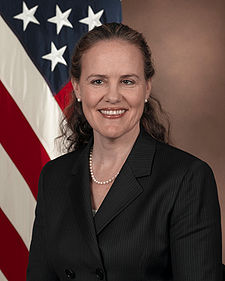
Michèle Flournoy

Phi Beta Iota: We don't make this stuff up.  The Pentagon has no strategy because the U.S. Government has no strategy.  The National Security Council is managed by a General who emphasized getting along with the Chief of Naval Operation, never-mind leaving Marines wounded on the battlefield for lack of Naval Gunfire Support (NFS).

Join us in savoring what passes for a strategist and nominal policy making savant with the below headlines.

Below item is full text to avoid inconvenience.  It is followed by several linked  headlines that make quite clear the shallowness of the Pentagon strategy-policy pool.

Executive Summary: The gentle lady has no idea what the ten high-level threats to humanity are, nor does she care.  She's a place-holder for the disappointed John Hamre, and a token female at the top who goes with the flow.  She has neither any grasp nor any conceptual framework for actually creating grand strategy, harmonizing Whole of Government policies nor even–this really did surprise us–how many failed states there are in the world.

PBS March 27, 2010

Interview With Michele Flournoy, Under Secretary Of Defense For Policy

Charlie Rose (PBS), 1:00 A.M.

CHARLIE ROSE: The United States military is engaged around the world. It is withdrawing combat troops from Iraq as it builds up troops in Afghanistan. It is partnering with Pakistan in an aggressive counterterrorism campaign including drone attacks in the tribal areas. It’s working with the Yemeni government to counter a resurgent al Qaeda there. And U.S. troops are still in Haiti for the humanitarian relief efforts.

But the military has to do more than respond to the conflicts of the day. It must prepare for future wars, adoptive enemies and a shifting security environment.

The person at the Pentagon who spends the most time working on these issues is Michèle Flournoy. She is under secretary of defense for policy and the highest ranking female official in the Defense Department. I am very pleased to have her with me in the night studio at the Newseum in Washington.

Tell me what it is that you do at the Pentagon, how do you define this responsibility?

Continue reading “Journal: Pentagon Strategy & Policy Oxymoron Squared?”

Journal: Legality of US Drones as Killing Machines . . .

08 Wild Cards, 09 Justice, 09 Terrorism, 10 Security, Government, Military

Death by Drone
Berto Jongman Recommends...

U.S. House of Representatives Subcommittee on National Security and Foreign Affairs Subcommittee Hearing:

“Rise of the Drones:

Unmanned Systems and the Future of War”

Tuesday, March 23, 2010, 2:00 pm 2154 Rayburn House Office Building Written Testimony Submitted By Kenneth Anderson March 18, 2010

Journal: Pentagon as VERY Slow Learner….

03 Economy, 04 Education, 10 Security, 11 Society, Government, Military

Time.com    March 18, 2010

To Battle Computer Hackers, The Pentagon Trains Its Own

By Mark Thompson, Washington

“More than 100 foreign intelligence organizations are trying to hack into U.S. systems,” Deputy Defense Secretary William Lynn warned last month. “Some governments already have the capacity to disrupt elements of the U.S. information infrastructure.” So the Pentagon recently modified its regulations to allow military computer experts to be trained in computer hacking, gaining designation as “certified ethical hackers.” They'll join more than 20,000 such good-guy hackers around the world who have earned that recognition since 2003 from the private International Council of E-Commerce Consultants (also known as the EC-Council).

Continue reading “Journal: Pentagon as VERY Slow Learner….”

noble gold