Karl W. Eikenberry: The Limits of Counterinsurgency Doctrine in Afghanistan — The Other Side of COIN

01 Poverty, 04 Inter-State Conflict, 05 Civil War, 07 Other Atrocities, 09 Terrorism, 10 Security, 11 Society, Government, Ineptitude, Military, Officers Call
Karl W. Eikenberry
Karl W. Eikenberry

 The Limits of Counterinsurgency Doctrine in Afghanistan

The Other Side of the COIN

Foreign Affairs, September-October 2013

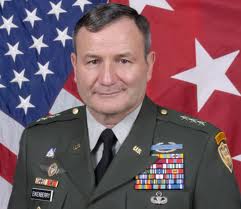
(General and Ambassador) Karl W. Eikenberry

Since 9/11, two consecutive U.S. administrations have labored mightily to help Afghanistan create a state inhospitable to terrorist organizations with transnational aspirations and capabilities. The goal has been clear enough, but its attainment has proved vexing. Officials have struggled to define the necessary attributes of a stable post-Taliban Afghan state and to agree on the best means for achieving them. This is not surprising. The U.S. intervention required improvisation in a distant, mountainous land with de jure, but not de facto, sovereignty; a traumatized and divided population; and staggering political, economic, and social problems. Achieving even minimal strategic objectives in such a context was never going to be quick, easy, or cheap.

Eikenberry, Obama, and General Stanley McChrystal in Afghanistan, March 2010. (Pete Souza / White House)

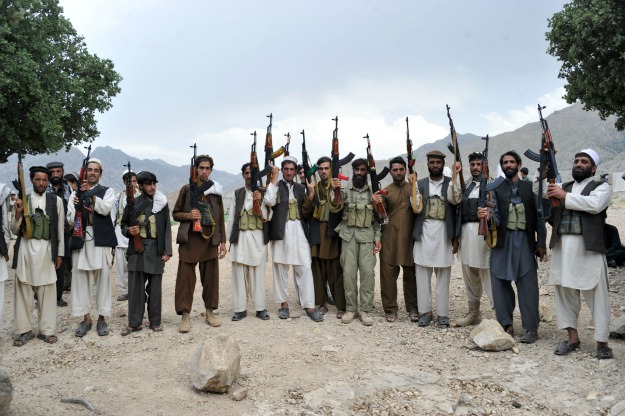
Of the various strategies that the United States has employed in Afghanistan over the past dozen years, the 2009 troop surge was by far the most ambitious and expensive. Counterinsurgency (COIN) doctrine was at the heart of the Afghan surge. Rediscovered by the U.S. military during the wars in Afghanistan and Iraq, counterinsurgency was updated and codified in 2006 in Field Manual 3-24, jointly published by the U.S. Army and the Marines. The revised doctrine placed high confidence in the infallibility of military leadership at all levels of engagement (from privates to generals) with the indigenous population throughout the conflict zone. Military doctrine provides guidelines that inform how armed forces contribute to campaigns, operations, and battles. Contingent on context, military doctrine is meant to be suggestive, not prescriptive.

Broadly stated, modern COIN doctrine stresses the need to protect civilian populations, eliminate insurgent leaders and infrastructure, and help establish a legitimate and accountable host-nation government able to deliver essential human services. Field Manual 3-24 also makes clear the extensive length and expense of COIN campaigns: “Insurgencies are protracted by nature. Thus, COIN operations always demand considerable expenditures of time and resources.”

The apparent validation of this doctrine during the 2007 troop surge in Iraq increased its standing. When the Obama administration conducted a comprehensive Afghanistan strategy review in 2009, some military leaders, reinforced by some civilian analysts in influential think tanks, confidently pointed to Field Manual 3-24 as the authoritative playbook for success. When the president ordered the deployment of an additional 30,000 troops into Afghanistan at the end of that year, the military was successful in ensuring that the major tenets of COIN doctrine were also incorporated into the revised operational plan. The stated aim was to secure the Afghan people by employing the method of “clear, hold, and build” — in other words, push the insurgents out, keep them out, and use the resulting space and time to establish a legitimate government, build capable security forces, and improve the Afghan economy. With persistent outside efforts, advocates of the COIN doctrine asserted, the capacity of the Afghan government would steadily grow, the levels of U.S. and international assistance would decline, and the insurgency would eventually be defeated.

Blindly following COIN doctrine led the U.S. military to fixate on defeating the insurgency while giving short shrift to Afghan politics.

Continue reading “Karl W. Eikenberry: The Limits of Counterinsurgency Doctrine in Afghanistan — The Other Side of COIN”

Jon Rapporport: Vaccine damage, hidden truth: not on the evening news

03 Economy, 07 Health, 09 Justice, 10 Security, Commerce, Corruption, Government, Idiocy, Ineptitude
Jon Rappoport
Jon Rappoport

Vaccine damage, hidden truth: not on the evening news

120,000 adverse effects from vaccines every year in the US? 1.2 million?

What??

Read on.

The reference here is “In the Wake of Vaccines,” by Barbara Loe Fisher, founder of the National Vaccine Information Center. Her article was published in the Sept./Oct. 2004 issue of Mothering Magazine.

Gathering information from several sources, Fisher makes a reasonable estimate of vaccine damage—actual figures are not available or carefully tracked or vetted. In other words, the system for reporting adverse effects is broken.

Continue reading “Jon Rapporport: Vaccine damage, hidden truth: not on the evening news”

Berto Jongman: NSA Whistleblower Thomas Drake Addresses European Parliament on the American Surveillance State + NSA Role in Global Assassination Program

03 Economy, 07 Other Atrocities, 09 Justice, 10 Security, 11 Society, Corruption, Cultural Intelligence, Idiocy, IO Deeds of War, IO Impotency, Military, Officers Call
Berto Jongman
Berto Jongman

NSA Whistleblower Thomas Drake Addresses European Parliament on the American Surveillance State

Earlier today, former National Security Agency (NSA) Senior Executive Thomas Drake addressed a special Civil Liberties Committee (LIBE) created by the European Parliament to investigate spying efforts by the United States and EU countries. Addressing specially-appointed Members of the European Parliament (MEPs), Drake spoke as a former NSA crypto-linguist who witnessed what he describes as a “persistent surveillance state” that was “born during the first few critical weeks and months following 9/11.”

TomD

Drake's testimony can be read and viewed here

Drake, a whistleblower, was the subject of a federal criminal leak investigation and faced a potential 35 years under a 10-felony count indictment, including five counts under the Espionage Act. In 2011, the federal government dropped all charges against Drake.

Continue reading “Berto Jongman: NSA Whistleblower Thomas Drake Addresses European Parliament on the American Surveillance State + NSA Role in Global Assassination Program”

Chuck Spinney: Bill Polk Primer on Syria & Chemical Weapons

03 Environmental Degradation, 04 Inter-State Conflict, 05 Civil War, 05 Iran, 06 Russia, 07 Other Atrocities, 08 Proliferation, 08 Wild Cards, 09 Terrorism, 10 Security, 10 Transnational Crime, 11 Society, Civil Society, Cultural Intelligence, Ethics, Extraterrestial Intelligence, Government, Military, Officers Call, Strategy
Chuck Spinney
Chuck Spinney

My friend Bill Polk, a well-known historian with extensive experience in the Middle East and Central Asia and author of many books on these areas, has written a backgrounder on how to make sense out of the Syrian chemical weapons issue.  He has given me permission to distribute it.  Herewith is his most interesting primer on the Syrian chemical weapons issue.

Chuck Spinney

Reflections on the Syrian Chemical Weapons Issue and Beyond

William R. Polk

September 15, 2013

1.The Variety of Weapons and Their characteristics
2 A Short History of Chemical Weapons
3 The Russian Intervention
4 Why the Syrians Have Accepted the Russian Proposal
5. The Prospects for Ridding The Area of Weapons of Mass Destruction
6 The Possibility of Ending the Civil War
7 Who Are the Insurgents and What do they Want?
8 Predictable Results of a Collapse of the Syrian State

Full essay below the line.

Continue reading “Chuck Spinney: Bill Polk Primer on Syria & Chemical Weapons”

Ioannis Koskinas & Kamal Alam: Reconciliation foolosophy: Fishing without bait

02 Diplomacy, 03 Economy, 04 Inter-State Conflict, 05 Civil War, 07 Other Atrocities, 08 Proliferation, 08 Wild Cards, 09 Justice, 09 Terrorism, 10 Security, 10 Transnational Crime, 11 Society, Civil Society, Cultural Intelligence, Ethics, Government, IO Deeds of Peace, Military, Officers Call, Peace Intelligence
Cianni Koskinas
Cianni Koskinas

使用谷歌翻译在下一列的顶部。

गूगल अगले स्तंभ के शीर्ष पर अनुवाद का प्रयोग करें.

Google sonraki sütunun üstünde Çevir kullanın.

Используйте Google Translate на вершине соседней колонке.

گوگل اگلے کالم میں سب سے اوپر ترجمہ کا استعمال کریں.

Kamal Aman
Kamal Alam

Reconciliation foolosophy: Fishing without bait

By Ioannis Koskinas, Kamal Alam

Foreign Policy, 14 June 2013

The United States, Afghan, Qatari, and Pakistani governments have all voiced their support for the opening of a Taliban office in Doha in order to promote peace negotiations.  Some consider transforming the Taliban from an armed insurgency into a legitimate political group to be the critical first step in the Afghan peace process. However, to date, reconciliation efforts have stalled and focus more on rhetoric rather than substance.

There is no concrete evidence that Taliban leadership is either worn down or desperate to reach a peace agreement.  Attempting to secure his legacy as a peacemaker, Afghan President Hamid Karzai wants to reach an agreement before the end of his term in April 2014. Because the Taliban have also cooperated somewhat with this principle of reconciliation, it is not immediately clear why the current approach has achieved nothing.

Viet-Nam Viet-Cong Redux

The answer is that the Doha peace process has been riddled with unrealistic expectations, and remains hopelessly inconsistent.  Such reconciliation efforts without strategy and clear objectives reflect a hook without bait – while encouraging, these talks are doomed to fail without significant reform.  Only with realistic expectations, a coherent strategy, national solidarity, and lots of patience, will reconciliation stand a chance of materializing.

Where We've Been Thus Far

The reconciliation offer requires three specific things from the Taliban: ending violence, breaking ties with al-Qaeda, and accepting the Afghan Constitution. The fourth, less advertised condition is the acceptance of a residual ISAF element in Afghanistan post-2014. At a recent summit in London, British, Afghan and Pakistani leaders set a six-month timeline to reach a peace settlement.

But substantive results are unlikely to emerge until after the 2014 Afghan Presidential elections. This is the single most important date in the reconciliation process and will set the tone for future debate.  A six-month deadline to reach an agreement is not only unrealistic, but also damaging to the credibility of the process.

Continue reading “Ioannis Koskinas & Kamal Alam: Reconciliation foolosophy: Fishing without bait”

Owl: Google as Empire, Google as Front for Empire, the Nuances of Evil

03 Economy, 04 Inter-State Conflict, 05 Civil War, 07 Other Atrocities, 09 Justice, 10 Security, 11 Society, Commerce, Corruption, Idiocy, IO Deeds of War, Officers Call
Who?  Who?
Who? Who?

“How the World Really Works”

Key takeaway from this item by Julian Assange, which came out in Australia August 24, 2013 (my emphasis):

“Back in 2011 I had a meeting with Eric Schmidt, the then Chairman of Google, who came out to see me with three other people while I was under house arrest. You might suppose that coming to see me was gesture that he and the other big boys at Google were secretly on our side: that they support what we at WikiLeaks are struggling for: justice, government transparency, and privacy for individuals. But that would be a false supposition. Their agenda was much more complex, and as we found out, was inextricable from that of the US State Department. The full transcript of our meeting is available online through the WikiLeaks website.

The pretext for their visit was that Schmidt was then researching a new book, a banal tome which has since come out as The New Digital Age. My less than enthusiastic review of this book was published in the New York Times in late May of this year. On the back of that book are a series of pre-publication endorsements: Henry Kissinger, Bill Clinton, Madeleine Albright, Michael Hayden (former head of the CIA and NSA) and Tony Blair. Inside the book Henry Kissinger appears once again, this time given pride of place in the acknowledgements.

Schmidt’s book is not about communicating with the public. He is worth $6.1 billion and does not need to sell books. Rather, this book is a mechanism by which Google seeks to project itself into Washington. It shows Washington that Google can be its partner, its geopolitical visionary, who will help Washington see further about America’s interests. And by tying itself to the US state, Google thereby cements its own security, at the expense of all competitors.

Continue reading “Owl: Google as Empire, Google as Front for Empire, the Nuances of Evil”

General and Ambassador Karl Eikenberry on the Persistent Failure of US Understanding in Afghanistan

02 Diplomacy, 03 Economy, 08 Wild Cards, 09 Justice, 10 Security, 11 Society, Corruption, Director of National Intelligence et al (IC), DoD, Government, Idiocy, Ineptitude, IO Deeds of War, Lessons, Military, Officers Call, Peace Intelligence
Karl W. Eikenberry
Karl W. Eikenberry

使用谷歌翻译在下一列的顶部。

गूगल अगले स्तंभ के शीर्ष पर अनुवाद का प्रयोग करें.

Google sonraki sütunun üstünde Çevir kullanın.

Используйте Google Translate на вершине соседней колонке.

گوگل اگلے کالم میں سب سے اوپر ترجمہ کا استعمال کریں.

Emphasis below added by Milt Bearden, former CIA chief in Pakistan also responsible for the field aspects of the CIA's covert support against Soviet forces in Afghanistan.

Foreign Affairs, September/October 2013

ESSAY

The Limits of Counterinsurgency Doctrine in Afghanistan
The Other Side of the COIN

Karl W. Eikenberry

Eikenberry, Obama, and General Stanley McChrystal in Afghanistan, March 2010. (Pete Souza / White House)

KARL W. EIKENBERRY is William J. Perry Fellow in International Security at the Center for International Security and Cooperation at the Freeman Spogli Institute for International Studies at Stanford University. He served as Commanding General of the Combined Forces Command–Afghanistan from 2005 to 2007 and as U.S. Ambassador to Afghanistan from 2009 to 2011.

Since 9/11, two consecutive U.S. administrations have labored mightily to help Afghanistan create a state inhospitable to terrorist organizations with transnational aspirations and capabilities. The goal has been clear enough, but its attainment has proved vexing. Officials have struggled to define the necessary attributes of a stable post-Taliban Afghan state and to agree on the best means for achieving them. This is not surprising. The U.S. intervention required improvisation in a distant, mountainous land with de jure, but not de facto, sovereignty; a traumatized and divided population; and staggering political, economic, and social problems. Achieving even minimal strategic objectives in such a context was never going to be quick, easy, or cheap.

Of the various strategies that the United States has employed in Afghanistan over the past dozen years, the 2009 troop surge was by far the most ambitious and expensive. Counterinsurgency (COIN) doctrine was at the heart of the Afghan surge. Rediscovered by the U.S. military during the wars in Afghanistan and Iraq, counterinsurgency was updated and codified in 2006 in Field Manual 3-24, jointly published by the U.S. Army and the Marines. The revised
doctrine placed high confidence in the infallibility of military leadership at all levels of engagement (from privates to generals) with the indigenous population throughout the conflict zone. Military doctrine provides guidelines that inform how armed forces contribute to campaigns, operations, and battles. Contingent on context, military doctrine is
meant to be suggestive, not prescriptive.

Broadly stated, modern COIN doctrine stresses the need to protect civilian populations, eliminate insurgent leaders and infrastructure, and help establish a legitimate and accountable host-nation government able to deliver essential human services. Field Manual 3-24 also makes clear the extensive length and expense of COIN campaigns:  “Insurgencies are protracted by nature. Thus, COIN operations always demand considerable expenditures of time and resources.

Continue reading “General and Ambassador Karl Eikenberry on the Persistent Failure of US Understanding in Afghanistan”