I wrote this with John Kerry and Michele Flourney in mind, but regardless of who is eventually made Secretary of Defense, the core concept remains: the center of gravity for massive change in the US Government and in the nature of how the US Government ineracts with the rest of the world, lies within the Department of Defense, not the Department of State.
John Kerry, Global Engagement, and National Integrity
It troubles me that John Kerry is resisting going to Defense when he can do a thousand times more good there instead of sitting at State being, as Madeline Albright so famously put it, a “gerbil on a wheel.” Defense is the center of gravity for the second Obama Administration, and the one place where John Kerry can truly make a difference. Appoint Michele Flournoy as Deputy and his obvious replacement down the road, and you have an almost instant substantive make-over of Defense. Regardless of who ends up being confirmed, what follows is a gameplan for moving DoD away from decades of doing the wrong things righter, and toward a future of doing the right things affordably, scalably, and admirably.
Note to readers: this blaster contains two clearly marked inserts that were not in my Time essay. Also, in introducing Seymour Melman's important work below, I should have mentioned that it was Melman's considered belief in the possibility of putting together a political coalition to facilitate the conversion of the defense industry to civilian production. Conversion is a exceedingly complex and highly controversial subject; and to date, conversion has not been accomplished in any meaningful way, but that does not mean conversion is impossible. Here, that possibility or impossibility is not at issue in this essay; my focus is on the very short term: namely how in the next few months the defense dependency may induce politicians who have been captured by the defense industry to react to the looming budget sequester by flinging the middle class off the fiscal cliff.
This recent essay – America the Third World Nation in Just 4 Easy Steps – describes how our political addiction to the free-trade ideology of neoliberal economics has helped to de-industrialize America and thereby impoverish much of the American middle class.
My essay describing the decline of manufacturing employment will give you a sense of the mind-boggling magnitude of what has happened. While “4 Easy Steps” makes passing references to the increasing dependence of the manufacturing sector on military spending, as well as the financialization of economy (but not the latter’s Siamese-twin ‘managerialism’), the authors do not develop these points. Without implying any criticism of this excellent essay, my aim today is to tweak your interest in these omissions, particularly America’s defense dependency.
The late Professor Seymour Melman of Columbia University wrote a prescient book, Profits Without Production (Knopf, 1983) that explained how the militarization and managerialization of our economy were becoming the central causes of the decline in America’s manufacturing competitiveness. This decline started in the 1970s, but Melman showed how it grew out of seeds planted by the permanent military mobilization of a huge defense industry in the 1950s.
The birth date for the permanent war economy was 30 September 1950.
On that day, President Harry Truman officially signed NSC-68, a document that became a blueprint for the containment strategy for waging the Cold War. Central to this strategy was the establishment of a large, permanently-mobilized defense manufacturing sector.
They justified the permanent mobilization, in part, with an economic rationalization reflecting their contention that the World War II production miracle proved the multiplier effects of Military Keynesianism, or in their words: “the economic effects of the [NSC-68] program might be to increase the gross national product by more than the amount being absorbed for additional military and foreign assistance purposes.”
The post-WWII economic boom in the U.S. (with our competitive performance aided in part by the lingering effects of the WWII damage to the world’s other major industrial economies) hid the adverse economic effects of the economic diversion attending to the permanent war economy unleashed by NSC-68. Nevertheless, by early 1961, the accumulating damage caused by the diversion was apparent to some insiders: President Eisenhower famously warned the nation about the rise of misplaced power posed by the rise of a large permanent standing arms industry, which he said, pointedly, was new in our national experience.
The accumulating damage wrought by the permanent war economy started to accelerate in the 1970s, and by 1980, the cancer metastasized: militarization and managerialization began to openly thrive at the expense of the traditional high-wage manufacturing sector, in effect, siphoning off money flows via a combination of government handouts and favorable tax treatment that in effect rewarded both the looting of the tax base and the draining of competitiveness and ingenuity from the civilian manufacturing sector (via the increased defense subsidy, leveraged buyouts, offshoring of jobs, emphasizing short-term focus to pump stock prices, etc.)
President Obama is lucky in his opponents, particularly when it comes to explaining why America’s influence is waning in the Middle East. The issue was hardly mentioned in the election, aside from a botched attempt by Mitt Romney to blame the administration for the death of Chris Stevens, the US ambassador to Libya, and for the burning of the US consulate in Benghazi.
Romney soon steered away from his initial posture of attacking Obama for “apologising for America” and failing to assert US power. He recognised that the one thing the US electorate does not want is another war in the Middle East. By beating the patriotic drum too hard, Romney risked voters remembering that it was the Republicans who, not so long ago, led them into failed wars in Iraq and Afghanistan. On a more prosaic level, Romney may have sensed he would be vulnerable on topics he knew nothing about.
This near immunity from effective criticism during the campaign does not mean that Obama is not facing dangers across the region with which he has previously failed to grapple successfully.
Afghanistan is a good example. The “surge”, which preoccupied the White House when Obama first took office in 2009, led to an extra 33,000 soldiers being sent to Afghanistan, where they wholly failed to eliminate the Taliban. The remaining 112,000 Nato troops will be withdrawn by the end of 2014, bringing to an end one of the more disastrously unproductive wars in American history. The US and its allies are supposedly training up Afghan security forces to take their place, but so many American and British soldiers have been killed by Afghan soldiers and police that the transition is turning into a debacle.
Holds individuals and groups accountable for violence.
“Bearing witness” with modern technological tools.
TED2011 Fellow Sanjana Hattotuwa passionately describes his work with Groundviews — a citizen journalism website that sheds light on Sri Lankan narratives that aren't typically covered in mainstream media.
As presidential election returns rolled in Tuesday night, the U.S. Justice Department filed its opening brief defending a controversial military detention provision that a trial judge in Manhattan declared unconstitutional earlier this year.
The suit, filed in Manhattan federal district court by a group of journalists and activists, challenges a section of the National Defense Authorization Act that DOJ lawyers said reaffirms presidential detention authority under the Authorization for Use of Military Force, or AUMF. That authorization was passed in response to the Sept. 11 terror attacks.
Government lawyers said in the papers filed last night in the U.S. Court of Appeals for the Second Circuit that the plaintiffs “are in no danger whatsoever of being subject to capture and detention by the U.S. military.” The provision in question allows the detention of people who “substantially supported” al-Qaeda or “associated forces.”
“The district court nonetheless issued an extraordinary and sweeping injunction at their behest,” DOJ lawyer August Flentje of the Civil Division said in the brief filed last night. Flentje said the trial judge, Katherine Forrest of U.S. District Court for the Southern District of New York, “entered a sweeping and permanent injunction against the president.”
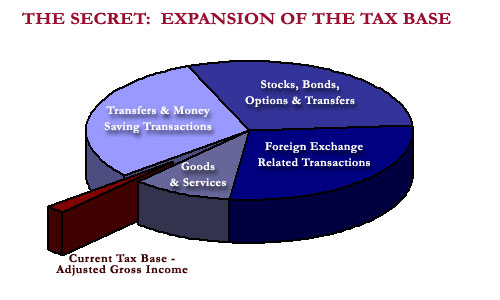
Dummy Version: Generates $4 trillion a year without borrowing and allowing the elimination of ALL other taxes beginning with personal income taxes. Allows for the recapitalization of our labor pool, our domestic infrastructure, and our Department of Defense (450-ship Navy, long-haul Air Force, air-liftable Army, Marines back on the boats).
Contents:
Insights from the crisis of science and belief
Questionably exclusive framing of multiverse by science
Imaginative engagement with multiverse through poetry
Poetic insights into becoming a poem and being one
Transcending both scientific and poetic comprehension of multiverse
Explanation vs. Inplanation: multiversal embodiment through the Ouroboros
It has an annex which develops the arguments of Rupert Sheldrake's presentation in the form of: