US Loses Face & Standing with China & Pakistan

02 China, 02 Diplomacy, 05 Iran, 06 Russia, 08 Wild Cards, 10 Security, Advanced Cyber/IO, Cultural Intelligence, Government, InfoOps (IO), Intelligence (government), Methods & Process, Military, Officers Call, Policy, Strategy, Threats

NIGHTWATCH Extract China-US: Special comment. International news services broadcast video and translations of Chinese Minister of Defense Liang insulting and hectoring the US, represented by the Secretary of Defense. The Chinese tasked Secretary Gates to defend and to explain to the Chinese why the US sells weapons to Taiwan and conducts naval training in the Yellow Sea. China demanded they stop. Instead of rejecting the Chinese demands and leaving, Gates tried to defend what needs not defense in Asia – US national policy.

A couple of points are worth noting. The tongue lashing Gates endured at a Singapore conference last year by a Chinese general clearly was no accident. That insult focused on the same issues as the latest.  Gates should have walked out of the Singapore meeting last year and should have walked out of today's session. It remains unclear what the US hoped to gain that merited humiliation.

China is not ready to be a cooperative partner in international security affairs as some analysts contend; resents and resists the tutelage or guidance that some analysts think the US must offer; and has no intention of becoming more open in response to US requests if only because the US wants it so badly.

NIGHTWATCH KGS Home

Phi Beta Iota: See our Memorandum on Chinese Irregular Warfare.  The US Government has hit bottom in terms of lacking legitimacy at home and credibility abroad.  Ideology is not a substitute for intelligence, and civility is not a substitute for cultural understanding.

US bends to Pakistan's wish

By M K Bhadrakumar Asia Times Online

The unscheduled visit by United States Vice President Joe Biden to Islamabad this week underscores Washington's embarrassment and anxiety that it stands excluded from a regional initiative on Afghan peace process that could be about to take off. The rapid sequence of events over the past fortnight has taken Washington by surprise.

Read entire analysis of role played by Turkey, Russia, and Iran…

DefDog Comment: Most insurgencies last past 10 years it almost always requires a political settlement….thus we are seeing what could have been accomplished at the beginning by understanding the Pashtun and sitting down, Jirga style, and asking for UBL, who was granted sanctuary under the Pasthun Honor Code, Pasthunwali…..no cultural understanding has resulted in a 10 year waste…

Phi Beta Iota: The US Government is suffering from multiple disconnects–from its public, from reality, from strategic analytics, from cultural intelligence–from ANY intelligence relevant to all challenges at all levels–and finally, from integrity.  Integrity is what allows well-intentioned people to cope with ambiguity.  When they give up their integrity, they yield the field to those with political, ideological, and financial ambitions, and the public interest suffers–as does the welfare of our Armed Forces in harm's way.

See Also:

Journal: Politics & Intelligence–Partners Only When Integrity is Central to Both

Reference: Statistical Abstract of the United States: 2011(fed gov’s best-selling reference book)

04 Education, 11 Society, Civil Society, Fact Sheets, Geospatial, Government, References, Research resources
go directly to the publication

Did you know that Raleigh, N.C. had the highest rate of population growth in the last decade of any large metropolitan area?

Metropolitan population growth is just one of more than a thousand topics addressed in the U.S. Census Bureau's Statistical Abstract of the United States: 2011. The Abstract is perennially the federal government's best-selling reference book. When it was first published in 1878, the nation had only 38 states, people usually got around using a horse and buggy, Miami and Las Vegas did not yet exist, and Franklin D. Roosevelt had yet to be born. The Abstract has been published nearly every year since then.

Contained in the 130th edition are 1,407 tables of social, political and economic facts that collectively describe the state of our nation and the world. Included this year are 65 new tables, covering topics such as insufficient rest or sleep, nursing home occupancy, homeschooling, earthquakes, U.S. Border Patrol apprehensions, organic farmland, honey bee colonies, crashes involving distracted drivers and cities with the highest transit savings.

The statistics come not only from the Census Bureau but also from other governmental agencies and private organizations. The data generally represent the most recent year or period available by summer 2010. Most are national-level data, but some tables present state- and even city- and metropolitan-level data as well.

Source:  U.S. Census Bureau

+ Thanks to those posting to the ResourceShelf Twitter feed

More Bank Equity Is Needed and Not Socially Costly

03 Economy, Money, Banks & Concentrated Wealth, Policy

Much More Bank Equity Is Needed
and Is Not Socially Costly

Text of Letter Published in Financial Times

November 9, 2010

The Basel III bank-regulation proposals that G20 leaders will discuss fail to eliminate key structural flaws in the current system. Banks’ high leverage, and the resulting fragility and systemic risk, contributed to the near collapse of the financial system. Basel III is far from sufficient to protect the system from recurring crises. If a much larger fraction, at least 15%, of banks’ total, non-risk-weighted, assets were funded by equity, the social benefits would be substantial. And the social costs would be minimal, if any.

Some claim that requiring more equity lowers the banks’ return on equity and increases their overall funding costs. This claim reflects a basic fallacy. Using more equity changes how risk and reward are divided between equity holders and debt holders, but does not by itself affect funding costs.

Tax codes that provide advantages to debt financing over equity encourage banks to borrow too much. It is paradoxical to subsidize debt that generates systemic risk and then regulate to try to limit debt. Debt and equity should at least compete on even terms.

Proposals to impose a bank tax to pay for guarantees are problematic. High leverage encourages excessive risk taking and any guarantees exacerbate this problem. If banks use significantly more equity funding, there will be less risk taking at the expense of creditors or governments.

Debt that converts to equity, so-called “contingent capital,” is complex to design and tricky to implement. Increasing equity requirements is simpler and more effective.

Continue reading “More Bank Equity Is Needed and Not Socially Costly”

US$2 Trillion debt crisis threatens 100 US cities

01 Poverty, Budgets & Funding, Civil Society, Commerce, Government, Money, Banks & Concentrated Wealth, Waste (materials, food, etc)
article

Phi Beta Iota: The existence of double sets of books is now coming to light.  As best we can tell from various public discussions, the operating budgets are deliberately in the red and used to borrow money, at the same time that out-sourced services and “asset rents” are in the black.  We honestly do not know what the true situation is, but we do know that the amount of falsehood and fraud in the “system” is deep.

– – – – – – –

Overdrawn American cities could face financial collapse in 2011, defaulting on hundreds of billions of dollars of borrowings and derailing the US economic recovery. Nor are European cities safe – Florence, Barcelona, Madrid, Venice: all are in trouble

Elena Moya, guardian.co.uk, Monday 20 December 2010

More than 100 American cities could go bust next year as the debt crisis that has taken down banks and countries threatens next to spark a municipal meltdown, a leading analyst has warned.

Continue reading “US$2 Trillion debt crisis threatens 100 US cities”

Secrecy News Extract: CIA Open Source on Pakistan

Corruption, Government, Methods & Process

CIA “OPEN SOURCE WORKS” ON PAKISTANI LEADERSHIP

“A review of the Pakistani media during October 2010 indicates that there is less talk of imminent political change.”  That is the rather pedestrian conclusion of a brief report (pdf) that was prepared last November by “Open Source Works,” a previously unknown initiative of the CIA Directorate of Intelligence.

Open Source Works “was charged by the Director for Intelligence with drawing on language-trained analysts to mine open-source information for new or alternative insights on intelligence issues.  Open Source Works' products, based only on open source information, do not represent the coordinated views of the Central Intelligence Agency.”

The recent report on Pakistan seems to be the first Open Source Works document to have reached public hands, though it is more of a digest of recent news and opinion than what would properly be termed an intelligence product.  A copy was obtained by Secrecy News.  See “Pakistan Leadership Watch: October 2010,” CIA Directorate of Intelligence, November 8, 2010.

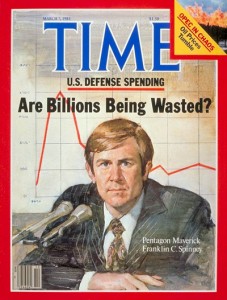
Phi Beta Iota: In light of Chuck Spinney's many posts on Pakistan and Afghanistan (using only English-language sources), and the reality that Pakistan is about to explode, the abyssmal limitations of this report merit gloomy note.  It's been 18 years since Joe Markowitz first got a DCID on OSINT–and this is what we have to show for it?

Journal: Banks Own Obama, His Mind, His Time

03 Economy, 07 Other Atrocities, 11 Society, Advanced Cyber/IO, Commerce, Commercial Intelligence, Corporations, Corruption, Cultural Intelligence, Government, InfoOps (IO), Intelligence (government), Misinformation & Propaganda, Money, Banks & Concentrated Wealth, Power Behind-the-Scenes/Special Interests
Chuck Spinney Recommends...

The author is a former chief economist of the IMF and is now a professor at MIT.  Chuck

The Bill Daley Problem

By Simon Johnson, co-author of 13 Bankers (out in paperback on Monday)

Baseline Scenario, 9 January 2011

Highlighted extracts:

The Bill Daley Problem is completely bipartisan – it shows us the White House fails to understand that, at the heart of our economy, we have a huge time bomb.

…largest U.S. banks – have far too little equity and far too much debt relative to that thin level of equity…

Today’s most dangerous government sponsored enterprises are the largest six bank holding companies: JP Morgan Chase, Bank of America, Citigroup, Wells Fargo, Goldman Sachs, and Morgan Stanley.

No one can show significant social benefits from the increase in bank size, leverage, and overall riskiness over the past 15 years.  The social costs of these banks – and their complete capture of the regulatory apparatus – are apparent in the worst recession and slowest recovery since the 1930s.

Paul Volcker gets it; no wonder he has resigned.  Mervyn King, governor of the Bank of England, gets it.  Tom Hoenig, president of the Kansas City Fed, gets it.  Elizabeth Warren, the tireless champion of consumer rights, gets it.   Gene Fama, father of the efficient financial markets view, gets it better than anyone.

This is not a left-right issue – again, look at the list of people who co-signed Professor Admati’s recent letter to the Financial Times.  This is a question of technical competence.  Do the people running the country – including both the executive branch and the legislature – understand economics and finance or not?

Top bankers, including Bill Daley, have pulled off a complete snow job – including since the crisis broke in fall 2008.  They have put forward their special interests while claiming to represent the general interest.

Bill Daley now controls how information is presented to and decisions are made by the president. Daley’s former boss, Jamie Dimon, is the most dangerous banker in America – presumably he now gets even greater access to the Oval Office.  Daley is on the record as opposing strong consumer protection for financial products;… [Emphasis added.]

Read the full posting….

Phi Beta Iota: Our generous and well-intentioned philanthropists appear to be unaware that the Federal Reserve, Morgan Chase, and Citi-Bank have pulled a Bernie Maddoff on them–they think they are being “taken care of” at the very moment when everything they have worked so hard for is most vulnerable to a massive melt-down.  The control of the President's mind and time is the ultimate victory for anyone seeking to control the White House.  It is “checkmate” against We the People.  None of the bureaucracies in the Executive–and certainly not the so-called “intelligence community”– are capable of rescuing the President–he is a happy captive.

Reference: Harvard Discovers “Shared Value”

03 Economy, 04 Education, 11 Society, Advanced Cyber/IO, Civil Society, Commerce, Commercial Intelligence, Cultural Intelligence, Strategy

First they ignore you, then they laugh at you,
then they fight you, then it appears in the Harvard Business Review,
and then you win while Harvard claims it was their idea…

Mohandas Karamchand Gandhi (apocryphal)

The Big Idea: Creating Shared Value


How to reinvent capitalism—and unleash a wave of innovation and growth.

The capitalist system is under siege. In recent years business increasingly has been viewed as a major cause of social, environmental, and economic problems. Companies are widely perceived to be prospering at the expense of the broader community.

Even worse, the more business has begun to embrace corporate responsibility, the more it has been blamed for society’s failures. The legitimacy of business has fallen to levels not seen in recent history. This diminished trust in business leads political leaders to set policies that undermine competitiveness and sap economic growth. Business is caught in a vicious circle. [Emphasis added.]

Read entire article…

Phi Beta Iota: Legitimacy is the foundation of good order and commerce.  That Harvard is beginning to get this is a very good sign.  The authors also skirt the most interesting point, which is that “who does what” is changing, and we (this they do not address) are moving toward HYBRID networks that accomplish things together, on the basis of SHARED INFORMATION and consensus sense-making.  When Alvin Toffler introduced in detail the concept of PowerShift, the most powerful concept he brought forward was that of information being a substitute for time, space, capital, and labor–and violence over the same–he was setting the stage for moving beyond the age of date or information, and into the age of cyber-collaboration to create shared value–what one author calls Non-Zero.  NOW we are finally starting to get somewhere…toward what Tom Altee calls Evolutionary Activism driven by advanced cyber-information operations: creating shared value begins with creating shared information.

See Also:

Continue reading “Reference: Harvard Discovers “Shared Value””

noble gold