These days, it's rare to pick up a newspaper and not see a story related to intelligence. From the investigations of the 9/11 commission, to accusations of illegal wiretapping, to debates on whether it's acceptable to torture prisoners for information, intelligence—both accurate and not—is driving domestic and foreign policy. And yet, in part because of its inherently secretive nature, intelligence has received very little scholarly study. Into this void comes Reforming Intelligence, a timely collection of case studies written by intelligence experts, and sponsored by the Center for Civil-Military Relations (CCMR) at the Naval Postgraduate School, that collectively outline the best practices for intelligence services in the United States and other democratic states.
5.0 out of 5 starsModern Bible for Covert Operations — Joins Dulles, Helms, Colby as a Classic, June 3, 2014
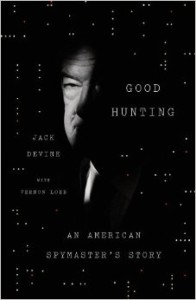
I strongly recommend this book! I happily disclose that I received the book from the publisher at my request and that I have worked for Jack directly. I have also reviewed hundreds of books on Intelligence. This is easily the most insightful and sophisticated look at the important covert action aspect of the intelligence business. This critical tool of statecraft was established in the charter that created the CIA during the Truman administration. It gave CIA the mandate to carry out “special activities as directed by the President.” Over his 32-year career, Jack was uniquely involved in a wide range of these covert activities, including the ousting of Allende in Chile, the Iran Contra affair, the successful defeat of the Russians in Afghanistan, the hunt for drug Kingpin Pablo Escobar and the reinstatement of Aristide in Haiti.
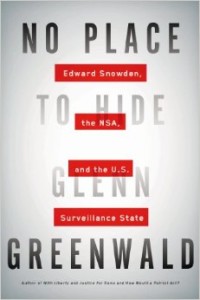
No Place to Hide is a groundbreaking look at the NSA surveillance scandal, from the reporter who broke the story
Investigative reporter for The Guardian and bestselling author Glenn Greenwald, provides an in-depth look into the NSA scandal that has triggered a national debate over national security and information privacy. With further revelations from documents entrusted to Glenn Greenwald by Edward Snowden himself, this book explores the extraordinary cooperation between private industry and the NSA, and the far-reaching consequences of the government’s surveillance program, both domestically and abroad.
Philip H. J. Davies and Kristian C. Gustafson (eds.)
4.0 out of 5 starsLong Overdue, A Very Fine Start, More Can Be Done, December 23, 2013
I am noticing this book primarily to recommend it at Phi Beta Iota, the Public Intelligence Blog. I strongly recommend the overview chapter that is provided free within Amazon's Look Inside the Book feature.
The focus of the book, on intelligence services outside Five Eyes (AU, CA, UK, US, NZ) and the major powers, is long overdue. This book is a very fine start, but it falls short on three fronts:
WARNING NOTICE: This is not a current book. It is a reprint of the 2010 publication that was out of date across many chapters when it was originally printed. The Routledge book, Routledge Companion to Intelligence Studies is the far better book if you want something that is both current and moderately innovative.
Final Review:
I've given up on this book. I got through the first fifteen entries, and had a paragraph on each, but finally concluded that on the one hand, the book consists largely of old contributions that have been recycled into a new (2010) collection, and on the other hand, the publisher and editor tried to cram so many contributions into one book that they are all shallow. The average grade across the first fifteen is a C, with two A's and one D. On balance I am increasingly dismayed by the incestuous circle of self-citing “scholars” and a handful of practitioner-authors who are all on the same party line and largely ignorant of everyone else. There are too many errors of omission of both fact and of alternative authoritative references from outside the incest circle.
If you have an interest in my many other summary reviews of books on the craft of intelligence (decision-support), seek out free online Worth a Look: Book Reviews on Intelligence (Most). All of my reviews always lead back to their respective Amazon pages.
4.0 out of 5 starsUtterly Brilliant, Eye-Glazing, 505 Pages of Straight Text, 10 Micro-Slides, December 2, 2013
You could read this book a hundred times and learn something new every time. I have taken off one star because the book is too dense by far, with a tiny handful of graphics (no more than 10) all eye glazers that should have been simplified and printed to a full page — 550 pages, pure text. What needs to happen, plain and simple, is a complete do-over — this book needs to go to 620 pages at least, with 60 added graphics, tables, or lists.
01: Among all the books I have read on intelligence, these two books are among the most detailed, structured, critical, and relevant I have read. Both books share the same flaws, flaws that superior editing and a graphics team could easily fix for a second edition, which I would strongly recommend. BEFORE the books go to paperback, they need to be redone. As they are now, the books are too overwhelming for 98% of those who might otherwise benefit.
02 Buried within each chapter are absolute gems of blood-letting romping stomping criticism of the US Intelligence Community at every level (tactical to strategic) across every mission area. This book is startling in its depth and breadth of understanding. The authors are articulate but dense, and I dearly hope they will redo both books to make them more accessible to the vastly larger audience that needs this level of detail, but served up as a quiver of “open” chapters instead of one really dense baseball bat that clubs you to death with compounded words.
Although I am troubled by the book's emphasis on unilateral and largely military-oriented collection (as opposed to making full use of full-spectrum human and open source intelligence (fifteen slices) across the eight tribes and mulitnationally, I whole-heartedly recommend this book for every library on intelligence (decision-support), and I sincerely hope the authors will re-do both books to open them up — more graphics, more white space.
Below, for this particular book, I list the collection contradictions from chapter 4:
4.0 out of 5 starsUtterly Brilliant, Mind-Glazing, 440 Pages of Straight Text, December 2, 2013
You could read this book a hundred times and learn something new every time. I have taken off one star because the book is too dense by far, with not a single graphic, table, or highlighted anything. 441 pages, pure text. What needs to happen, plain and simple, is a complete do-over — this book needs to go to 500 pages at least, with 60 added graphics, tables, or lists.
01: Among all the books I have read on intelligence, these two books are among the most detailed, structured, critical, and relevant I have read. Both books share the same flaws, flaws that superior editing and a graphics team could easily fix for a second edition, which I would strongly recommend. BEFORE the books go to paperback, they need to be redone. As they are now, the books are too overwhelming for 98% of those who might otherwise benefit.
02 Buried within each chapter are absolute gems of blood-letting romping stomping criticism of the US Intelligence Community at every level (tactical to strategic) across every mission area. This book is startling in its depth and breadth of understanding. The authors are articulate but dense, and I dearly hope they will redo both books to make them more accessible to the vastly larger audience that needs this level of detail, but served up as a quiver of “open” chapters instead of one really dense baseball bat that clubs you to death with compounded words.
Although I am troubled by the book's lack of a holistic analytic model, its lack of any reference to true cost economics, and its general avoidance of any discussion of the complexity of the customers for intelligence in the aggregate (the focuses on individual commanders and their needs, not on Whole of Government or Multinational or Eight Tribe collection and analytics), I whole-heartedly recommend this book for every library on intelligence (decision-support), and I sincerely hope the authors will re-do both books to open them up — more graphics, more white space.
Below, for this particular book, I list the chapter headings that are a Master's course in advanced analytics: