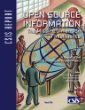
Review: Open Source Information–The Missing Dimension of Intelligence

3 Star, Intelligence (Government/Secret), Intelligence (Public)

CSIS OSINT 2Marginal Across the Board–26 pages of pablum, July 5, 2008

Arnaud De Borchgrave

I went to the meeting at which this was handed out, and left when I realized that most of those in attendance were retirees or students, and this book managed to discuss a topic I and 749 others have been pioneering since 1988, without ever once mentioning anyone else's effort.

I am not easily outraged, but this “immaculate conception” is on the one hand, encouraging (it only took CSIS 20 years to catch up with the rest of us) and on the other, infuriating because the arrogance and myopia of those who put this booklet (note the page count–26 pages) forward is unbounded on the one hand and so narrow on the other as to be clinically blind.

NewsFlash: Singapore is the only country that listened to me when I did my world tour in 1994, and they are well on their way to being the first “smart nation” but they are making the common mistake of believing in technology as a substitute for creating the world brain with real humans. The Nordic countries are close behind, and have pioneered Multinational Multiagency Multidisciplinary Multidomain Information Sharing (M4IS) and public sense-making (24 of us are pioneering public intelligence in the public interest)

CSIS has enormous potential that is failing to contribute to the public dialog because they lack the discipline and humility to reach out to multi-cultural pioneers. Hubris is fatal.

In the comment I provide URLs to material superior to this lightweight endeavor, all free. Below I list a handful of books from true experts:
Early Warning: Using Competitive Intelligence to Anticipate Market Shifts, Control Risk, and Create Powerful Strategies
The New Competitor Intelligence: The Complete Resource for Finding, Analyzing, and Using Information about Your Competitors
The Secret Language of Competitive Intelligence: How to See Through and Stay Ahead of Business Disruptions, Distortions, Rumors, and Smoke Screens
Strategic and Competitive Analysis
Super Searchers Do Business: The Online Secrets of Top Business Researchers (Super Searchers, V. 1)
The New Craft of Intelligence: Personal, Public, & Political–Citizen's Action Handbook for Fighting Terrorism, Genocide, Disease, Toxic Bombs, & Corruption

Review DVD: Secondhand Lions

5 Star, Culture, DVD - Light, Reviews (DVD Only)

DVD Second Hand LionsUtterly Brilliant, Subtle Detail, Heartwarming, July 4, 2008

Haley Joel Osment, Robert Duvall, Michael Caine

I have watched this DVD several times, and each time I find new details that enthrall.

This is a truly heartwarming movie that I used to push back against the crushing weight of reality, a reality I do not control.

The two super-actors are at their best, but the young man who stars as the son of the gad-about lady is the real star. His smile, his behavior, are Oscar material.

Don't miss the dogs, the pig, and the lion. This is a “top ten” movie.

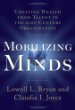
Review: Mobilizing Minds–Creating Wealth From Talent in the 21st Century Organization

5 Star, Best Practices in Management, Intelligence (Wealth of Networks)

Mobilizing MindsWeak Five for HR Wonks, Distill to One Page for CEOs, July 2, 2008

Lowell L. Bryan

I was tempted to give this book three to four stars for lack of context and for lack of a solid literature review (the entire book is a McKinsey love fest and somewhat albino in its incestuousness) but because I read a Harvard Business Review article today on how HR is the new new thing for Harvard MBAs, and the book speaks very well to HR folks I rate it a weak five for HR, four for all others. The smart HR person will find a way to distill the book to one page for the CEO. The basic premises are not new, but they are valid.

My annoyance first (minus one star):
– Neither ethics nor the environment appear in this book.
– True costs and the triple bottom line do not appear in this book.
– Customer minds do not appear in this book [see BW “The Power of Us”]
– The authors make facile assumptions, e.g. Exxon and GlaxoSmithKline are top “performers” by their account, but the authors are–with all due respect–clueless about the fact that Exxon did not make $40 billion in profit, it externalized $12 per gallon and stole that money from the public commonwealth now and into the future; similarly, GSK is profitable because the US Government is not allowed to negotiate, 50% of the health system is waste (see PWC report), and they are allowed to charge 100 times what the same medications cost in any given Third World country (different lowest cost country for each of the top 75 medications).
+ The bibliography is marginal, a form of McKinsey pablum.
+ The authors make facile reference to “complex adaptive systems” and to Wikipedia as well as blogs, but fail to provide a proper bridge to the “wealth of networks” or to Generation 2.0/Digital Native mindsets and methods.
+ They significantly exaggerate and misrepresent the relative value of “distinctive” and proprietary knowledge in relation to giving employees access to public knowledge in the external environment as well as internal knowledge that is not secret (see images under book cover).
+ The publisher puts the lead author's Harvard MBA right after his name, while relegating the second author's degree to the last line of her bio. As an admirer of the book What They Don't Teach You At Harvard Business School: Notes From A Street-Smart Executive I found this substantially OFFENSIVE. I hate feminazis, but in this instance, if the second author would like the publisher fire-bombed, I'm there for her [metaphorically speaking].

My irritation aside, this is a good book and I recommend it. Let me start with a few quotes that captured my respect:

p 13 “The plagues of the modern company are hard-to-manage workforce structures, thick silo walls, confusing matrix structures, e-mail overload, and ‘undoable jobs.'”

p 24 “Surveys confirm the symptoms of the disease, which include e-mail and voice-mail overload, task forces hat go nowhere, pointless meetings, delays in making decisions because of scheduling conflicts, too much raw data and not enough information [or sense-making aka decision-support], and challenges in getting the knowledge one needs because of organizational silos.

p 26 “Interaction costs involve searching for information and knowledge, coordinating activities and exchanges, and monitoring and controlling the performance of others within the same firm.” [credit by the authors to Ron Course, 1937]

p 239 “Today, the most valuable capital that companies can use in the 21st century is not financial capital but ‘intangible capital.'”

Duh. Okay, a bit more of my irritation, but the book stays at four to five stars. Here are the books the authors did not read in reinventing the wheel:
Organizational Intelligence (Knowledge and Policy in Government and Industry)
The exemplar: The exemplary performer in the age of productivity
The Knowledge Executive
The Wealth of Knowledge: Intellectual Capital and the Twenty-first Century Organization
Information Payoff: The Transformation of Work in the Electronic Age

There are others, but I need to save four links for the close of this review. Now on to what I did find worthwhile, which is to say, at least 75% of the book (the negative reviewers dismiss this work too quickly).

+ Minds of virtually all employees are grossly under-utilized
+ In emphasizing human brains, authors run counter to the machine learning fad that permeates the meta-web crowd, and that is good
+ “Unproductive complexity is the common enemy”
+ Profit per employee is a useful measure [but I would emphasize, not in isolation, see my damnation of Exxon and GKS above]
+ Existing financial reports *block* internal collaboration
+ Economies of scale and scope undermined by complexity, HR and IT can help regain momentum
+ It's not enough to pick good people, have to change corporate context, capability, and the culture (collaboration instead of competition)
+ Informal networks cannot be *managed* [authors' emphasis, heavens!]
+ Decisions on not making numbers versus future-oriented investment need to be pushed to the top of the corporation
+ Few CEOs understand the legacy front line, need to interview and listen
+ Valuable pages for the HR wonk emergent on alternative performance measures and alternative economic incentive plans

9 ideas fully discussed in this book:
+ backbone line structure (3 layers instead of 7)
+ one company governance and culture
+ dynamic management (portfolio of risks)
+ formal networks
+ talent marketplace (HR as broker)
+ knowledge marketplace (internal wikis, blogs)
+ internal motivating economic incentives
+ role-specific performance management
+ organizational design as strategy: who you hire *is* your future

I put the book down satisfied that it was worth the time it took to read; that the points above are important; and that the CEO of the future needs to elevate HR to the high table.

By the same token, neither of these authors is at a CEO level of strategic holistic perception–everything about the world has changed, to include the establishment of the World Index of Social and Environmental Responsibility (WISER), and the emergence of global social networks capable of breaking the backs of companies that continue to export jobs, leverage sweatshops, import toxins, and generally steal from the commonwealth. The book reflects zero understanding of, to use my remaining four links:

No Logo: No Space, No Choice, No Jobs
Here Comes Everybody: The Power of Organizing Without Organizations
Blessed Unrest: How the Largest Social Movement in History Is Restoring Grace, Justice, and Beauty to the World
Collective Intelligence: Creating a Prosperous World at Peace

Bottom line: within their niche, worth listening to. They don't know what they don't know, and that is why CEOs have a job (in theory–most CEOs and flag officers receive biased, incomplete, late information, and could really use help thinking about trransformation in a transformative environment–this book is a fraction of the total, perhaps 20%).

Review: Deer Hunting with Jesus–Dispatches from America’s Class War

5 Star, Corruption, Crime (Government), Culture, Research, Democracy, Politics
Amazon Page

Serious Book Highly Recommended, July 1, 2008

Joe Bageant

Senator Obama may or may not have read this book. It's author does open with the observation that life is so hard among the white poor and working poor that they seek solace in beer, overeating, Jesus, and guns. This is, however, a very serious book, a first-hand deep look into the hearts and minds of the 60% of the country that cannot control its lifestyle, environment, pay check, or future.

Early on I note that the author appears to combine both education and common sense. There are magnificent turns of phrase throughout.

My fly-leaf notes:

+ Parallel world to that of the educated urban liberals
+ Life runs from complete insecurity to looming job insecurity
+ Just over half the poor in the US are white and this is the only group that is growing in number
+ For someone earning $8 an hour, if nothing goes wrong, they have $55 a week for groceries, gas, and incidentals
+ Insurance can cost as much as rent or mortgage
+ One third of working Americans make less than $9 an hour
+ They are inherently anti-union, facts are irrelevant, Christian radio is their primary source of information and viewpoint
+ This is a permanent underclass, two out of five have no high school diploma while all over 50 have major health issues, and low to no credit
+ The leftist middle class does not realize that this group votes right in part out of a feeling of revenge
+ Right owns the bars, the non-Internet real world
+ Left lost the middle when they demonized guns and gun owners–70 million gun owners, 200 million guns, guns are used to protect 60 times more often than they are used to attack
+ Superb multi-page discussion of whitetrashonomics and the trailer mortgage scams
+ Fundamentalists are superbly organized, home schooling leads to select colleges where political indoctrination is part of the deal
+ Sense of Rapture and Left Behind is very real within this group
+ Excellent discussion of how health “non-profits” are a real-estate valuation scam that serve only the well-off and not the poor
+ Television and petroleum have defined us

The author makes it a point to quote and point to a dirty dozen books that he drew on, but overall this is an essay from the heart with a great deal of intellect and a great deal of discipline in the presentation.

I highly recommend this book to both moderate Republicans wondering where their Party went off the rails, and to moderate leftists and to libertarians wondering how best to reconnect to what appears to be a very angry, down-trodden, unheard and unseen majority.

The most compelling insight for me from the author centered on his description of small towns across America, but especially in the South including Virginia, where a network of “elites” controlled the bank, newspaper, city hall, zoning board, and so on. As the author describes it, these fiefdoms and their masters are all too eager to cut deals with corporations and make money off the resulting land transactions, while not spending money on education, localized health care, or anything that might elevate the “local poor” to a point where they might understand the value of unions or tenant boards.

I experienced one major personal insight in reading this: the author takes great care to point out that most members of this group do not read, period. No books, no newspapers, barely use the Internet (except for NASCAR) and–this is the insight–have great disdain for those of us who have the “luxury” of sitting around and reading (not real work, that). This book and this author really communicated to me how little value my education and reading has in this context–what is needed is a long-term hands-on strategy for educating all the people all the time, and that is something neither the Democrats nor the Republicans appear willing to fight for, which is sad, since Thomas Jefferson said so clearly that a Nation's best defense is an educated citizenry.

Other books I recommend (and have reviewed):
The Global Class War: How America's Bipartisan Elite Lost Our Future – and What It Will Take to Win It Back

The Battle for the Soul of Capitalism
The Working Poor: Invisible in America
Nickel and Dimed: On (Not) Getting By in America
Off the Books: The Underground Economy of the Urban Poor
Left Hand of God, The: Healing America's Political and Spiritual Crisis
Breach of Trust: How Washington Turns Outsiders Into Insiders
Running on Empty: How the Democratic and Republican Parties Are Bankrupting Our Future and What Americans Can Do About It
The Manufacture Of Evil: Ethics, Evolution, and the Industrial System

DVD (links poverty and military recruitment):
Why We Fight

Vote and/or Comment on Review

Review DVD: The Bucket List

5 Star, Culture, DVD - Light, Reviews (DVD Only)

DVD Bucket ListWhite, Black, Death, Life, Perfect, June 30, 2008

Jack Nicholson, Morgan Freeman

Jack Nicholson is as good as it gets for crazy in love with life, and Morgan Freeman is as good as it gets for smart, thoughtful, and good to the core.

This movie is one that I got, skimmed through, dismissed, and then sat down and watched all the way through.

It is NOT a depressing movie, nor is it a “joy” movie. It is a lovely mix of suffering, love, fulfillment, discovery, and reconciliation.

BRAVO.

See also:
Joyeux Noel (Widescreen)
Bonhoeffer
Sabrina
One Flew Over the Cuckoo's Nest

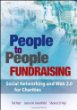
Review: People to People Fundraising–Social Networking and Web 2.0 for Charities

4 Star, Associations & Foundations, Information Technology

P2P FundWeb 1.0 Mindset Waving Web 2.0 Methods, June 29, 2008

Ted Hart

I've given this book four stars because if you want to leverage Web 2.0 methods to garner more money for your Web 1.0 “what we think best” programs, then this is the book for you.

In terms of actually creating empowered social networks where the non-profit is a facilitatator, connecting real people with micro-cash to real people with micro-needs, this book is so far back in time as to be next to useless.

Argh! This is the last gasp of the United Way/Red Cross “rip off as many as possible” so we can have our first class tickets and lifestyle and practice trickle down tax-free programs that “we the elite” decide.

There are web sites devoted to micro-connecting and micro-giving, I recommend that individuals avoid giving to any organization that does not offer open books and a complete menu of opportunities to earmark your gift for a specific need from a specific person or household. The animal and child chartities are a bit ahead of the game here, but even this can be disintermediated eventually.

I am reminded of two famous views:

“Criticize by Creating” from Machiavelo, adopted by the Flow Project.

Instead of trying to fix old systems, create new ones that displace them (paraphrase) from Buckminster Fuller.

I must disclose that recently Earth Intelligence Network sent 65 copies of its first book (the last one listed below, also free online) along with a letter of inquiry to the top foundations puporting to be addressing the ten high-level threats to humanity. We received back exactly two serious responses, six postcards blowing us off, and nothing at all from all the others. This has persuaded me that most so-called national foundations are nothing more than tax dodges and golden parachutes for a select few, and it is time we subject them to the same “open books” scrutiny that we plan for corporations and for government at all levels.

For more innovative thinking, see, among many others:
The Tao of Democracy: Using Co-Intelligence to Create a World That Works for All
Society's Breakthrough!: Releasing Essential Wisdom and Virtue in All the People
How to Change the World: Social Entrepreneurs and the Power of New Ideas, Updated Edition
The Change Handbook: The Definitive Resource on Today's Best Methods for Engaging Whole Systems
The World Cafe: Shaping Our Futures Through Conversations That Matter
One from Many: VISA and the Rise of Chaordic Organization
Leadership and the New Science: Discovering Order in a Chaotic World
The Cultural Creatives: How 50 Million People Are Changing the World
Integral Consciousness and the Future of Evolution
Collective Intelligence: Creating a Prosperous World at Peace

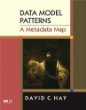
Review: Data Model Patterns–A Metadata Map

4 Star, Information Technology

data model4 stars for the legacy, June 29, 2008

David C. Hay

I've given this book four stars because it represents the very best thinking among those who believe it is possible to create integrative comprehensive relational databases in advance of receiving the data.

I served on the Information Handling Committee of the US Intelligence Community, and was a founding member of the Advanced Information Processing and Analysis Steering Group. I have spent the last twenty years thinking about all information in all languages all the time.

I have this book in my library (but just acquired it despite its 2006 publication date) and I have flipped through this book methodically, but cannot claim to have read it. I read the entire index word for word. It is excellent on terms and does not recognize humans.

Although XML is in the index, OWL and SOAP are not. Doug Englebart's Open Hypertextdocument system (OHS) and Pierre Levy's Information Economy Meta Language (IEML) do not appear in this book.

Following are the semantic entries in the index:
+ Semantic Class, 99, 100
+ Semantic Community, 40, 41, 45, 47, 210
+ semantic web, 47
+ semantics, 10, 38

Geospatial and Map (anything) do not appear in the index.

Neither foreign language variations nor multi-media geospatially-related data (the author is correct early on, data is the plural of datum) nor early warning of unanticipated data forms appear to be in this book.

Social networks, collaborative meaning determination, and human in the loop do not appear to be in this book.

I put it down with two thoughts:

1. This is a great book for anyone devoted to Oracle who wants to see Oracle at its very best in a bounded environment, and the author should be consulted by those going beyond such environments; and

2. This book has little to offer to those of us who want to create massive scale and infinitely scalable systems of systems that can cope with all information in all languages all the time, none of it defined in advance.

In the comment, I provide a URL for the best concise definition of the Zachman Framework, the equivalent of the ultra-accurate near-distance arrow just before gunpowder was invented.

Up above I provide my own four quadrants of the knowledge environment–the difference between Nova Spivak, whom I admire immensely, and myself, is that I place much more emphasis on the human factor as well as the sociology and psychology of cultures, tribes, organizations, and nations.

My own books are not technical, but since I have noticed a first negative vote, I will go ahead and link to them for grins. Technology is NOT a substitute for thinking humans. I cannot compare to the author of this book, he is at the top of his relational database game, but I do believe that metadata ultimately boils down to human concepts communicated P2P.

On Intelligence: Spies and Secrecy in an Open World
The New Craft of Intelligence: Personal, Public, & Political–Citizen's Action Handbook for Fighting Terrorism, Genocide, Disease, Toxic Bombs, & Corruption
Information Operations: All Information, All Languages, All the Time
THE SMART NATION ACT: Public Intelligence in the Public Interest
Peacekeeping Intelligence: Emerging Concepts for the Future
Collective Intelligence: Creating a Prosperous World at Peace

See also:
Everything Is Miscellaneous: The Power of the New Digital Disorder
Group Genius: The Creative Power of Collaboration
Revolutionary Wealth: How it will be created and how it will change our lives
The Wealth of Networks: How Social Production Transforms Markets and Freedom

noble gold