Brilliant, Tedious, Needs a Study Guide or Booklet, April 20, 2008
Elizabeth Vargas
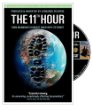
The intelligence that went into creating this movie, and the artistic creabtivity and sheer industry in amassing visual depictions of what goes into making and using things, is absolutely top of the line world class.
Unfortunately, viewed in one sitting this movie becomes tedius and also suffers from throwing out so many numbers that none of them are memorable. I suspect the following terms were uttered sometime during the movie, but the fact that I cannot remember for sure is troubling:
Virtual Water
Carbon Footprint
True Cost
This DVD, if used in a classroom, should be broken up into at least five sessions, no more than three chapters at a time.
I actually think this would be better as a book, the movie aspect is too fleeting for the best possible absorbtion and retention.
Chapters cover:
Human Presence
Diapers and Milk
Meat, Eggs, and Carbs
Sweets, Fruits, and Vegetables
Plastics and Metals
Cleansing and Beauty Products
Water and Solid Waste
Clothing and Textiles
ASlcohol
Housing, Furnishing, and Apppliances
Entertainment Consumption
Transportation
Consumption of Natural Resources
Cell Phones
Shrinking Wildlife
National Geographic: Six Degrees Could Change the World is the better of two, all things considered. This movie I would like to see National Geographic re-issue with a little booklet of facts for each chapter, and also a website in which the complete true costs for all items discussed are presented, and volunteers shown how to do the research to post “true costs” for any given product or service.
I see real value in National Geographic becoming the hub for “true cost” information, something they could easily do in partnership with the World Index of Social and Environmental Responsibility (WISER).
Only one big negative: the DVD pupports to be about the average person but is actually about the average within the billion rich that have an aggregate annual income of one trillion. It teaches us nothing at all about the five billion at the base of the pyramid who have an aggregate income of four trillion. I'd like to see National Geographic rethink its plans, and ultimately come out with short videos on each of the ten high-level threats to Humanity, each of the twelve core policy areas, and each of the eight demographic definers of the future. Somewhere in there they could teach citizens to demand responsible transpartisan policies and balanced transparent budgets.
Very Best Combination of Brains, Images, and Words, April 20, 2008
Leonardo DiCaprio
Unlike National Geographic: Six Degrees Could Change the World and National Geographic: Human Footprint, both of which I recommend, this DVD is a very elegant narrative that blends top ecological activists including Stephen Hawking and Paul Hawkins, speaking for a minute or two each, with historical audio-visuals that have been selected with enormous intelligence and integrity.
If you buy only one film, this is the one, but the issue is so very important I would recommend that each of three families buy one of these, and then start passing them around the neighborhood.
The movie opens with a theme of the planet being sick–two complex systems, one human, one all else, are interacting in pathological ways. Man, in being able to think about the future, while also ignoring the limits to growth and maintaining the fiction of being separate from nature, is committing species suicide.
I have a note to myself, this is stark elegant poetry.
The oceans are discussed in terms of our taking out too much (e.g. over-fishing) and putting in too much (toxins and non-biodegradable matter), and at the same time, toxins get concentrated in the food chain and come right back to us. See Blue Frontier : Saving America's Living Seas
Toward the end we get to the cruz of the matter, that corporate greed and control has gone global, and the legal systems, the political systems, are hostage to that greed. The Earth–nature–has been commoditized, as have humans (never mind the corruption that allows corporations to loot foreign commonwealths at the same time that Exxon externalizes $12 in “true costs” to future generations for each gallon of gas it sells).
One speaker is very capable in pointing out that this is neither a technology crisis nor even an ecological crisis, but rather a crisis of political policy and a process that has broken down completely. The government “bridge” between the commonwealth and the people, and the economy, has falled down. In the next sentence the problem is defined as our CULTURE, with everything else being a symptom. This was for me a defining moment within this DVD. It's not about evil–Exxon does what we let them–it's about what we choose to do or not do as a culture.
Probably citing E. O. Wilson, but without reference to him (he should have appeared in this movie, see his book The Future of Life, one speaker notes that the value of what nature does for us (e.g. bee pollination of crops) has been estimated at 35 trillion dollars a year–vastly more than the 18 trillion that comprises the global economy.
The DVD concludes with an excellent combination of individual statements on how this IS the ecological era, we can reimagine our lives, if we just retrofit all buildings to make them energy efficient it would create 3 million jobs in the US and free us from dependence on foreign oil. We can live with one tenth of the resources we consume now.
[Coincidentally, this was the week that TIME Magazine went green, and while I was watching the movie I was also finishing up Jesse Ventur's book Don't Start the Revolution Without Me! in which he recounts his realization that simply unplugging all the TVs in America when not in use would end US energy shortages.]
Di Caprio closes, and I write in my notes: eloquent, inspriing, statesmanlike, learned. He–and all those associated with this project–have it it out of the park. This is a deeply impressive contribution to the public dialog on our future as a species and as a planet.
See also my varied lists. There are a number of books in the cradle to cradle, sustainable design, green to gold, natural capitalism genre, the one that captures the spirit of this DVD and complements it is, in my view, Paul Hawkin's Blessed Unrest: How the Largest Social Movement in History Is Restoring Grace, Justice, and Beau, which he describes as the Earth's immune system kicking in.
The Real Deal–He Should Campaign on Substance in 2008, April 20, 2008
Jesse Ventura
This is my first Jesse Ventura book and I am deeply impressed. This man is the real deal, honest, straight-up, with plenty of common sense. His ideal running mate is not John McCain or Robert Kennedy Jr. but rather the star of The Average American: The Extraordinary Search for the Nation's Most Ordinary Citizen. I would gladly serve these solid citizens in a staff capacity.
+ Reform Party was bogus, Perot let his ego run away with his brain
+ Buchanan hijacked the Reform Party and looted its treasury to pay off his old campaign debts
+ Both political parties are gangs
+ Organized religion is a business milking people like cows for their milk (money)
+ Down on NAFTA
+ Bush-Cheney passing federal laws that prevent states from protecting their own citizens properly from corporate predation
+ 9/11 Commission a cover-up, just as the Warren Commission was–government lies to the people (e.g. Gulf of Tonkin incident, simply cannot be trusted
+ CIA has embedded case officers within state and local governments
+ Positive on Ralph Nader as an honest person bringing up issues the two criminal parties will not raise
+ Properly faults Bush-Cheney for ignoring intelligence and privatizing war while bankrupting the Nation—if not impeachable, should at least be commitable to an insane asylum (see my lists on impeachment and holding Dick Cheney accountable, at least take a look at Vice: Dick Cheney and the Hijacking of the American Presidency
+ There IS a ruling class, not sure of its composition, we have to take the country back from them
+ Electoral college is long overdue for termination.
+ O'Reilly, all of those talking heads are scripted, media is about generating cash through entertainment, not about informing the citizenry
+ FCC fines broadcasters and others but they are appointed, not elected, and not accountable for their subjective definition of what is obscene
+ “Revisionist history troubles me deeply.” page 265. This is the point where I decide this guy is a serious and qualified candidate to be our president.
+ 27 years of Bushes and Clintons, time for an independent party nominee to win and lead
+ National Guard should stay home.
+ Citing Mussolini, fascism is the marriage of corporations and religion. We have that here, now.
+ Need term limits on reporters, not just politicians. Reflects a profound disdain for Minnesota reporters.
It's a real shame Ralph Nader does not play well with others. I'm going to get in touch with Jesse Ventura and urge him to form a Transpartisan Sunshine Cabinet that can create a balanced budget by the 4th of July 2008. He does not have to run for President, all he has to do is set the standard by which we can judge the fradulence of “the system” candidates. For those enchanted by Barack Obama, as I was until I saw his dishonest advisors, see Obama – The Postmodern Coup: Making of a Manchurian Candidate.
I considered this book, and found the reviews so very informative, as well as negative on what the “next steps” should be, that I enter this contribution not as a review of the book, but as a pointer to other books that go beyond this book. Epoch B Swarm B Leadership, Transpartisanship, and bottom-up Citizen Wisdom Councils is what comes after civilization deconstructs and the nation-state model is finally devolved to tighter regional alliances and the end of predatory immoral capitalism (in favor of moral green capitalism).
My thanks again to the reviewers. I buy and read a great many books, and the reviews help me make tough choices within my limit of five books a week. I hope the links above are considered helpful.
5.0 out of 5.0 Stars Utterly brilliant on the half the author's understand best, April 12, 2008
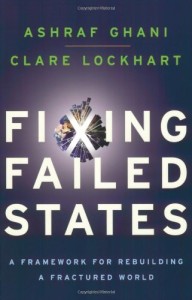
This is an utterly brilliant book that has held my attention all morning. Although the authors do not integrate the thinking in the ten books below, I am totally, deeply, impressed by their intelligence, knowledge, and good intention.
They set out to develop understanding in five areas:
1. What State needs to do
2. How international community can help
3. How timelines and interdependencies should define sequencing
4. Why one size does NOT fit all
5. Why we must accept our shared responsibility and recognize the need for both proactive intervention, and coproduction (and sharing) of wealth.
I started with the endnotes and index, which is where I begin the most intelligent books in my reading program. I immediately detected the gaps that I address with the ten annotated links, but I was also immediately won over in seeing their appreciation for the report of the High Level Threat Panel of the UN, for Singapore under Lee Kwan Yew, for the balanced score card approach (some call for a triple bottom line), for Paul Collier's focus on the bottom billion, for Paul Hawkin's et al on natural capitalism.
Within the notes, I was shocked to learn that it has been reported that the United Nations deprived Afghanistan of the first two and a half years of all donor contribution, “by agreement” with US Government and World Bank. Since one of the author's has served as Finance Minister in Afghanistan, not only do I believe this–it must never happen again.
I find in this book one of the most original, refreshing, relevant, and therefore essential reviews on the matter of the State. Although the author's do not cite McIver, the original master on the origins and functions of the state, I consider them to be the new thought leaders and essential to any discussion of how to improve the inter-relationships among the eight tribes of governance: states, militaries, law enforcement authorities, academics, businesses, media, non-governmental organizations, and civil society including labor unions and religions. They are wrong-headed in thinking that “only sovereign states…will allow human progress to continue,” and that “illegitimate networks will not be conquered except through hierarchical organizations,” but in no way does this diminish the extreme importance of their deep thinking on the role of the state and the need to change both our concepts of sovereignty and our rules of the road for international organizations.
A useful early idea is that of the “double compact” between the country leadership and the international community on the one hand, and with the citizens on the other. It becomes obvious very quickly that corruption in government service is the single cancer that must be removed before states can achieve legitimacy and efficacy.
The authors have many gifted turns of phrase to include “harnessing our collective energies and readjusting to emerging patterns.”
The authors recognize early on that legitimacy comes from below, from citizens, and must be earned.
I am not going to summarize each chapter, but I want to point readers toward the Army War College Strategy Conference, just concluded, on “Rebalancing the Instruments of National Power.” I have posted both 29 pages of notes and an 8-page draft article for the Joint Forces Quarterly. Singapore got it early and is the world's first “smart nation.” They understood early on that education powers economics, economics powers security, and so on.
Today, the authors document ably, stewardship of the environment, respect for social entrepreneurship, fair trade, and innovation in applying information technology to create wealth are all coming to the fore with honest leaders.
They identify five aspects of the networked world that are of note:
1. Framework for balancing activities of diverse stakeholders
2. Rule of law at a strategic level, with freedom of action at a tactical level (not quite true in the USA where the corrupt federal Congress establishes federal CEILINGS for regulatory action).
3. Massive investment–one reads repeatedly of the glut of money available for emerging markets (and I would add, the absence of both commercial intelligence and co-investment planning with charitable foundations)
4. World is evolving according to open systems (super point, see my keytone briefing to Gnomedex 2008, “Open Everything.”
5. World is finally starting to evolve past rote memorization and toward recognizing patterns (the adaptive complex system and panarchy literature covers this well).
In the middle of the book they have six themes, each developed in a manner that makes this book quite valuable for any library, personal or organizational.
1. Conflict causes polarization of identities *and* ungovernability of aid subject to black market rules.
2. Peacemaking has been geared to compromise rather than strategic planning for a long-term outcome
3. This means that state dysfunctionality is highest immediately after the peace accord.
4. Even if civil war does not break out, cost of failed politics and poor policies is immense.
5. Lack of money is not the driver for poverty, but rather corrupt politics that enrich the few at the expense of the many.
6. Dysfunctional states spawn the rise and spread of networks of criminality and wealth confiscation instead of networks of social wealth creation and sharing.
The book concludes with “A New Agenda for State Building”
1. International compacts
2. Sovereignty strategy
3. Shared rules of the game
4. Mobilization of resources (this would be better titled harmonization of resources–we need Global Range of Gifts Tables for every country down to the village hut level, online, updated by national call centers
4. New leadership styles–this is a superb overview of what it takes to migrate from industrial era pyramidal leadership to Epoch B swarm leadership (see the image I am loading above).
5. Reflexive monitoring at every step of the implementation process
6. Double compact in practice
The final two chapters focus on national programs, and in conclusion, on “Collective Power.”
I put the book down feeling GREAT. This book is a seminal reference.
Spectacular. Professional. Visually Powerful. Life Changing., April 12, 2008
Alec Baldwin
This is a spectacular piece of professional work and so compelling as to be inspirational.
I watched this with my wife with no lights, and decided to take no notes. Here are the highlights from my memory.
1) Brilliant, utterly brilliant, history, photography, personalities (such as the Indian guru that has photographed the source of the Ganges for 50 years) and sequencing. I don't want to overdo it, but this may well be the single most important DVD of the century, and so worthy of both buying, showing to groups, and giving as a gift to others.
2) We are well on our way to 2-3 degrees rise, and if we do not begin to act sensibly now, toward six degrees. I absolutely loved the way this film developed, showing the changes one degree at a time. My wife had to point out the computer simulations, the producers and editors of this film are world class–they should share the Nobel with Herman Daly, Lester Brown, Paul Hawkin, and Anthony Lovin, Gore's Nobel was an ill-advised politicized award, he is in the fourth grade compared to this film and the serious people it focused upon.
3) Oceans as the critical carbon absorbing element, and coral as the “canary in the coal mine” really grabbed me The overall screenplay, photography, voice overs, everything about this is spectacularly professional and rivieting.
4) Amazon as the next most critical element, with riveting views of the Amazon river drying up in 2005, and the potential scenarios of drought, fires, more drought.
5) Increasing destructiveness of weather. Katrina as the first of what could become every month storms, instead of 100 year storms. In passing, the film shows the world-class levies built by the Europeans, and they do not show the downright retarded cement levees of the US Army Corps of Engineers, levees that are the laughing stock of the rest of the (sophisticated) world.
A highlight of the film was its focus on the one man that has figured out the total carbon footprint of the cheeseburger, to include the methane farts of the cows. I am not making this up. This film is AMAZING, it is spectacular, it is professional, it is precisely the kind of well-crafted material that We the People need to begin self-governing rather than entrusting war criminals and and cronies (both parties) who sell us out.
Here are ten links that augment the deep insight and value that this DVD provides to anyone able to see it.

 Brilliant, Tedious, Needs a Study Guide or Booklet, April 20, 2008