You will remember the piece I ran a few days ago showing that the repair of our water infrastructure would produce far more jobs and income than than an oil pipeline. Here is further information on this. Look at the wastage that is going on, and the systems that are close to collapse. The nation's infrastructure is literally breaking down. I hope! this will become a restoration trend in this country. Without it we are going to be in serious trouble.
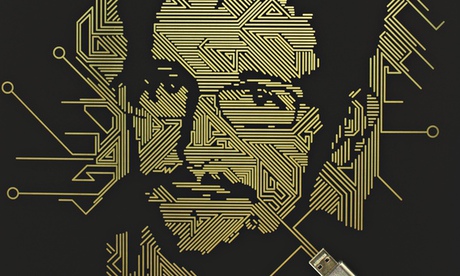
He was politically conservative, a gun owner, a geek – and the man behind the biggest intelligence leak in history. In this exclusive extract from his new book, Luke Harding looks at Edward Snowden's journey from patriot to America's most wanted
Phi Beta Iota: This is quite an extraordinary account — the detail is compelling. The extract from the new book has been very well chosen, this may become one of the most read Guardian articles in relation to the Snowden matter.
Corruption is by far not the main factor behind persisting poverty in the Global South
John Hickel
Al Jazeera, 1 February 2014
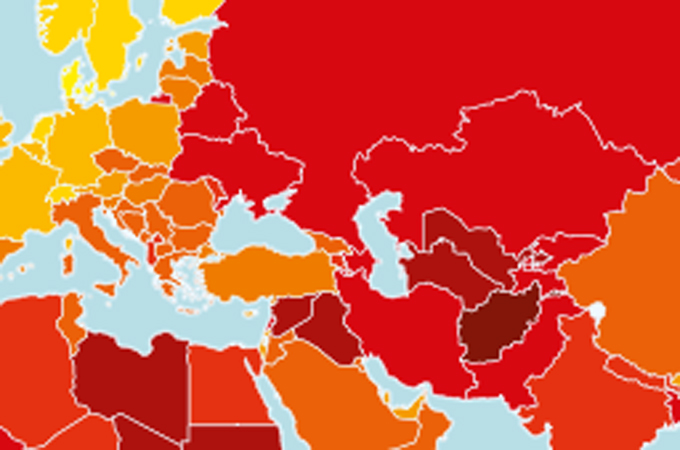
Transparency International recently published their latest annual Corruption Perceptions Index (CPI), laid out in an eye-catching map of the world with the least corrupt nations coded in happy yellow and the most corrupt nations smeared in stigmatising red. The CPI defines corruption as “the misuse of public power for private benefit”, and draws its data from 12 different institutions including the World Bank, Freedom House, and the World Economic Forum.
Click on Image to Enlarge
When I first saw this map I was struck by the fact that most of the yellow areas happen to be rich Western countries, including the United States and the United Kingdom, whereas red covers almost the entirety of the global South, with countries like South Sudan, Afghanistan, and Somalia daubed especially dark.
This geographical division fits squarely with mainstream views, which see corruption as the scourge of the developing world (cue cliche images of dictators in Africa and bribery in India). But is this storyline accurate?
Many international development organisations hold that persistent poverty in the Global South is caused largely by corruption among local public officials. In 2003 these concerns led to the United Nations Convention against Corruption, which asserts that, while corruption exists in all countries, this “evil phenomenon” is “most destructive” in the global South, where it is a “key element in economic underperformance and a major obstacle to poverty alleviation and development”.
There's only one problem with this theory: It's just not true.
R.K.: And welcome to the Rob Kall Bottom Up Radio Show WNJC 1360 AM out of Washington Township reaching Metro Philadelphia and South New Jersey, sponsored by opednews.com. Tonight my guest is an American Hero. He is a Whistleblower His name is William Binney, Bill Binney. He was technical director of the World Geopolitical and Military Analysis and Reporting Group at NSA. It's a high level position at NSA. He left to become a Whistleblower, basically, to report problems. In exchange for reporting problems he had his home raided, he was charged with crimes and his life was destroyed in so many ways because that's what the Federal Government does to Whistleblowers. Welcome to the show, Bill.
Closing Argument presented on Janurary 31, 2014, by Judith Bello on trial as of those who protested at Hancock Air Base in New York State on October 25, 2012
Ed Kinane, CLOSING STATEMENT, Charges: trespass & disorderly conduct, Trial of the “Hancock 17,” Judge David S. Gideon presiding, De Witt, NY Town Court, 31 January 2014
Although these alliances will primarily be closer to home, most of Latin America is a naturally ally not only because of its increasing trade and commercial relations with China, but because of its common interest in an international political order that favors respect for national sovereignty and independence over unilateral intervention and military force.
In the last week or so much of the international business press has been focused on the problems of financial stability in developing countries, some of whom have recently become more vulnerable to capital outflows.
The main cause is that investors are trying to get the jump on possible moves by the U.S. Federal Reserve to allow U.S. interest rates to rise, which will draw capital from developing countries and cause their borrowing costs to rise.
Argentina has gotten some of this attention, as it allowed the peso to fall by 15 percent in one day and increased some access for Argentines to dollars on the official market.
Venezuela is not so much affected by these market developments, but is always negatively portrayed in the international media, and more so in the last year since its exchange rate system problems have caused its inflation to rise to an annual rate of 56 percent over the past year.
The two countries face different sets of problems, but they will both likely have to stabilize their exchange rates in order to resolve them.
This is where international help can make a big difference, and there is one country that has both the ability to help and a compelling interest in doing so: China.
China has already helped Venezuela with tens of billions of dollars of loans – much of which has already been repaid – as well as investment.
It has also provided significant lending and investment in Ecuador, Cuba, Brazil, and other countries. But there is more that they could do at this moment.