Berto Jongman: The Year the USA (Courts, NSA, Google) Broke the Internet

#OSE Open Source Everything, Advanced Cyber/IO, Commerce, Corruption, Government, Idiocy, IO Impotency
0Shares
Berto Jongman
Berto Jongman

2014: The Year America Broke The Internet

A recent decision by a US Appeals court ended the regulation of the internet as we know it. The Federal Communications Commission (FCC) was deemed to have created a framework for ensuring the concept of “net neutrality” out-with the remit for the organisation it created itself. Now, a former FCC chairman has called for a “nuclear option” to reclassify Internet Service Providers (ISPs) as common carriers.

Click on Image to Enlarge

Doing so would force ISPs to be treated more like public utilities and subject them to FCC regulations over issues such as rate setting and universal service obligations. There has already been a lot of commentary and speculation about what the ruling means for the average user, and I don't want to add to the hyperbole all ready out there, but I think it is important to clarify a few things.

Net neutrality, or the end of it, has the potential to bring about the end of the internet as we know it. In a practical sense, it opens the doors for companies to manage the traffic across the network as they see most profitable, which means these companies can take measures that not only affect content creators, but end users. The ruling overturns the 20 years of treating the internet as a ‘dumb' network that processed packets of information without prioritising them.

Read full article.

Continue reading “Berto Jongman: The Year the USA (Courts, NSA, Google) Broke the Internet”

4th Media: Predatory Capitalism Today

03 Economy, Academia, Commerce, Commercial Intelligence, Corruption, Earth Intelligence, Government
0Shares

4th media cropped1,400 Sue General Electric, Toshiba and Hitachi for Fukushima Disaster

We’ve previously noted that General Electric should be held partially responsible for the Fukushima reactor because General Electric knew that its reactors were unsafe: 5 of the 6 nuclear reactors at Fukushima are General Electric Mark 1 reactors. GE knew decades ago that the design was faulty.

Amazon Page
Amazon Page

Economics of the 1%: How Mainstream Economics Serves the Rich, Obscures Reality and Distorts Policy

This book exposes the myths of mainstream economics behind the public discourse and explains why current policies fail to serve the vast majority.

How much do economists really know? In most cases, they claim to have profound knowledge but in fact understand little and obscure almost everything. Most people are convinced that economics should be left to the ‘experts’, when they themselves are perfectly capable of understanding it. This book explains that mainstream economics serves the interests of the rich through its logical inconsistency and unabashedly reactionary conclusions. John F. Weeks exposes the myths of mainstream economics and explains in straightforward language why current policies fail to serve the vast majority of people in the United States, Europe and elsewhere. Their failure to serve the interests of the many results from their devoted service to the few.

Robin Good: 10 Content Curation Best Practices

Advanced Cyber/IO, Civil Society, Ethics
0Shares
Robin Good
Robin Good

If you are new to content curation here the ten, key fundamental steps you need to take to out yourself on the right course. Content curation is not about saving time. It is about selecting, organizing, adding value and context, and finally about effectively presenting information on a specific topic to a selected group of people. Here the ten key steps to take to effetively curate content, visualized by the great team at Scoop.it. Slideshare presentation: http://www.slideshare.net/Scoopit/10-tips-to-curate-like-a-rockstar

Content Curation Ten Fundamentals

1. Choose a topic that you care deeply about.

2. Be specific with your topic choice.

Continue reading “Robin Good: 10 Content Curation Best Practices”

Jean Lievens: BITCOIN – How It Works And Why It Could Threaten Legacy Payment Tools (e.g. Credit Cards)

Money
0Shares
Jean Lievens
Jean Lievens

BITCOIN: How It Works, And Why It Could One Day Threaten Legacy Payments Tools Like Credit Cards

Bitcoin is most often discussed as a volatile digital currency, beloved by some, derided by others. But where Bitcoin's real value lies is as a payments technology that has the potential to revolutionize the legacy payments industry.

Bitcoin offers merchant and individuals an extremely low-cost, virtually frictionless payments system. Value can easily be transferred around the world without transmitting sensitive information that could be used for fraud, and without forcing merchants to pay extortionate transaction fees.

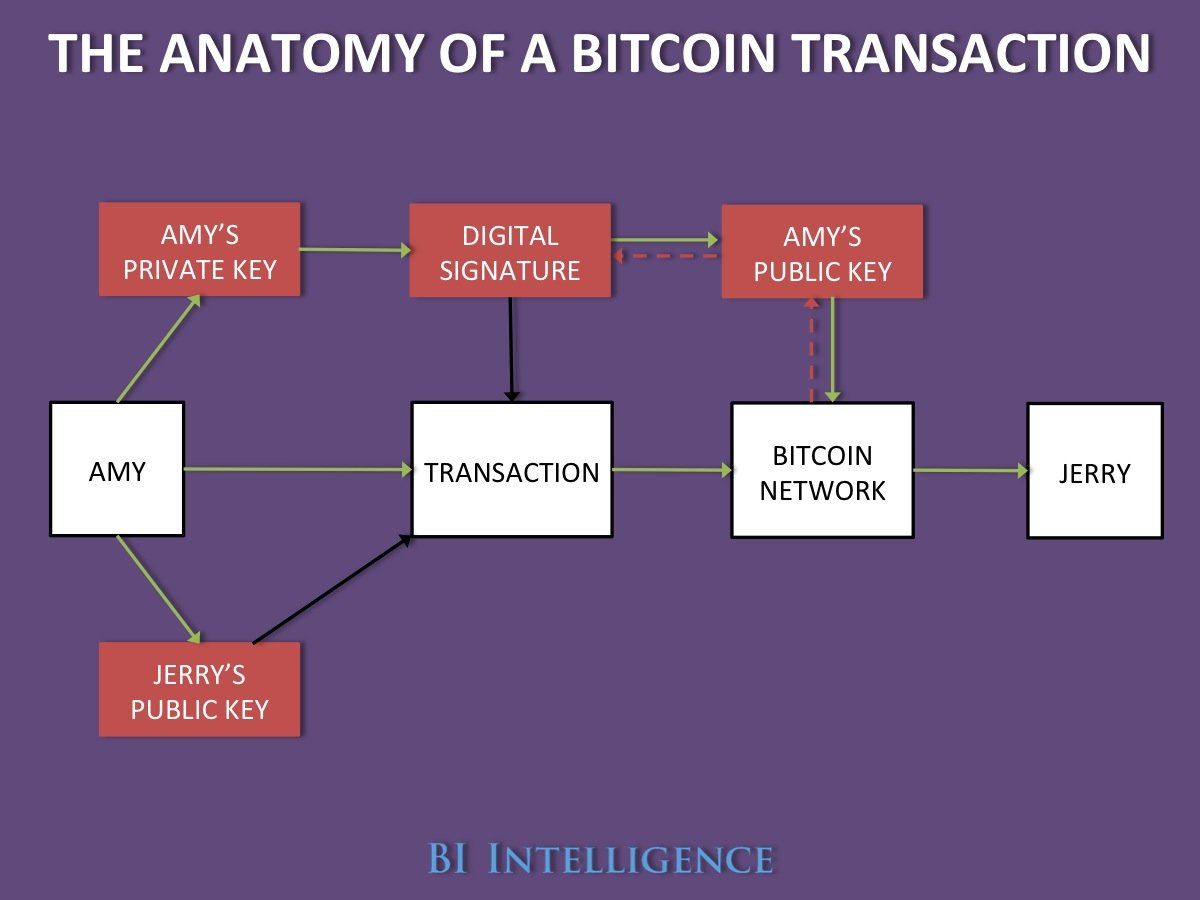
Click on Image to Enlarge

But, while the emergence of Bitcoin brings with it numerous advantages, it also faces incredible hurdles.

In  a new report from BI Intelligence, we explain how Bitcoin works, from the moment when local currency is exchanged for bitcoins, to the moment when it reaches the electronic wallet of a receiving party. We look at the key advantages of Bitcoin compared to the legacy players in the payments industry and examine the challenges that Bitcoin faces as a payment network.

Access the Full Report By Signing Up For A Free Trial Today >>

Here are some of the key elements from the report:

Read full article.

Sepp Hasslberger: Hemp Replaces Plastic

Innovation, Materials
0Shares
Sepp Hasslberger
Sepp Hasslberger

Great renewable material that is also biodegradable…

Australia: New Plastic Means Almost Anything Can Be Made From Hemp

Today's plastics are made from petroleum, which means we are polluting the atmosphere and putting products that cannot biodegrade into our environment. But Zeoform, a new company based in Australia has created a new kind of plastic made only from water and cellulose taken from hemp plants — meaning the plastic is not only eco-friendly but biodegradable.

The company's patented process converts the cellulose fibers found in hemp into a super-strong, high tech molding material capable of being formed into 100 percent nontoxic and biodegradable products, reports Joe Martino at Collective Evolution.

The company hopes to expand its patented technology and start offering manufacturing licenses to larger facilities around the world. Switching over from non-sustainable and toxic forms of plastic to Zeoform plastic can be done with existing infrastructure, according to the company.

The company says their product relies only upon the natural process of hydrogen bonding that takes place when cellulose fibers are mixed with water. No glue or other bonding material is necessary, because the bond already created is so strong.

The final material can be turned into almost anything, and can be cut, routed, machined, drilled, screwed, nailed and glued in the same way wood can be. It can also be colored and finished however product manufacturers would like.

Zeoform plastic is water- and fire-resistant naturally, and can be enforced further in both categories with added ingredients. It can be made into anything from car bumpers to paper, furniture, and even musical instruments.

Learn more.

Danielle Villegas: First Carbon Fiber 3D Printer

Manufacturing, Materials
0Shares
Danielle Villegas
Danielle Villegas

Check out this next step in 3D printing! First there were plastics, then food, now carbon fiber! What will be next?

The Mark One Is World's First Carbon Fiber 3D Printer

A new 3D printer can print carbon fiber and other composite materials.

Created by Boston-based startup MarkForged, it's called the Mark One.

Company founder Gregory Mark showed off the printer at the SolidWorks World design conference in San Diego, Calif. this week.

“We took the idea of 3D printing, that process of laying things down strand by strand, and we used it as a manufacturing process to make composite parts,” Mark said in an interview with Popular Mechanics. “We say it's like regular 3D printers do the form. We do form and function.”

In addition to carbon fiber, the Mark One can print other composite materials, including nylon, fiberglass and PLA (a thermoplastic made from renewable materials).

Learn more.

Stephen E. Arnold: Google Books Ruling — Just Wait…

Commerce, Corruption, IO Models
0Shares
Stephen E. Arnold
Stephen E. Arnold

Google Books Ruling Appealed

It’s not over until it’s over. The long process of determining whether Google’s giant Books project counts as “fair use” continues, we learn from “Authors Guild Appeals Ruling in Google Books Case” at Phys.org. The Authors Guild would like to see limits on the herculean digitization project, which has scanned more than 20 million books to date.

The brief write-up reveals:

Continue reading “Stephen E. Arnold: Google Books Ruling — Just Wait…”