In the new global economy, innovation happens in diverse sectors.
More than an event, The Global Summit is a Catalyst for Collaboration throughout the Year.
The Global Summit series is a citizen-driven solution-making forum crowd-sourcing the most effective social and technological innovations for a sustainable future – an opportunity to create rippling social and economic impact.
Facilitated by US 501c3 tax-exempt organization, Empowerment WORKS (EW) since 2007, The Global Summit (TGS) was launched in San Francisco, CA in 2008. Uniting people hands-on, and online in shaping solutions to the issues that most affect them, The Global Summit advances a whole system approach to social, economic and environmental change.
That was the unexpected question that my World Bank colleague Johannes Kiess asked me the other day. I was immediately intrigued. So I did some preliminary research and offered to write up a blog post on the idea to solicit some early feedback. According to recent statistics, international tourist arrivals numbered over 1 billion in 2012 alone. Of this population, the demographic that Johannes is interested in comprises those intrepid and socially-conscious backpackers who travel beyond the capitals of developing countries. Perhaps the time is ripe for a new form of tourism: Tourism for Social Good.
There may be a real opportunity to engage a large crowd because travelers—and in particular the backpacker type—are smartphone savvy, have time on their hands, want to do something meaningful, are eager to get off the beaten track and explore new spaces where others do not typically trek. Johannes believes this approach could be used to map critical social infrastructure and/or to monitor development projects. Consider a simple smartphone app, perhaps integrated with existing travel guide apps or Tripadvisor. The app would ask travelers to record the quality of the roads they take (with the GPS of their smartphone) and provide feedback on the condition, e.g., bumpy, even, etc., every 50 miles or so.
They could be asked to find the nearest hospital and take a geotagged picture—a scavenger hunt for development (as Johannes calls it); Geocaching for Good? Note that governments often do not know exactly where schools, hospitals and roads are located. The app could automatically alert travelers of a nearby development project or road financed by the World Bank or other international donor. Travelers could be prompted to take (automatically geo-tagged) pictures that would then be forwarded to development organizations for subsequent visual analysis (which could easily be carried out using microtasking). Perhaps a very simple, 30-second, multiple-choice survey could even be presented to travelers who pass by certain donor-funded development projects. For quality control purposes, these pictures and surveys could easily be triangulated. Simple gamification features could also be added to the app; travelers could gain points for social good tourism—collect 100 points and get your next Lonely Planet guide for free? Perhaps if you’re the first person to record a road within the app, then it could be named after you (of course with a notation of the official name). Even Photosynth could be used to create panoramas of visual evidence.
It’s called satire. That’s when you take a metaphor and stretch it beyond the breaking point of exaggeration. In that case, I was commenting on current immigration/welfare policy.
Metaphor isn’t fact.
The metaphor of “mind as computer” isn’t a fact, no matter how hard technocrats wish it were true.
Behind the moronic and childish presumptions of technocracy, there are indeed people who want to treat the mind as a computer for a very simple reason: they want to control it.
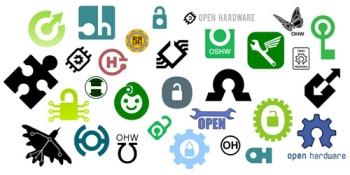
This specific moment, that moment when you start working on the refinements of a product to create the second version, could be a great moment to document your invention.
In fact, when you start again the production process, you already know how to do things, and also, you know what are the most complicated moments in the building process and you could leverage on this information to create compelling guidelines for folks interested in replication.
I cannot express how strongly I agree with this. My only critique: He does not properly place this in the context of the transition into the Age of the Non-geographical corporate states. If our democracy were functioning properly the lunatic Right Congresspersons would not be elected. Click through to see the interview. It is worth your time.
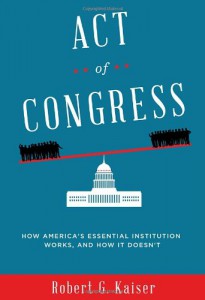
For his new book, journalist Robert Kaiser intensely researched the political maneuvering surrounding the Dodd–Frank Wall Street Reform and Consumer Protection Act. His conclusion? Most members of Congress don’t understand what they’re arguing about.
Speaking on PBS, Kaiser said Wall Street reform only occurred in the wake of the 2008 financial collapse thanks to the unique talents of former Rep. Barney Frank (D-MA) and former Sen. Chris Dodd (D-CT). Unlike the rest of Congress, Frank and Dodds had an actual grasp on the financial situation and understood the need to act. Frank provided the brainpower, while Dodds’ political skill was necessary for financial reform to pass.
‘But it was upsetting to me as a citizen to realize how few members understood the issues they were dealing with,” Kaiser remarked. ‘These are, of course, extremely complicated financial matters, how banks work, how they’re regulated, so on.” ‘Not everybody can know this, but at the end, I concluded that you could fit the number of experts in Congress on financial issues easily onto the roster of a Major League Baseball team,” he added. ‘That’s 25 people. I think that is the max.”
Kaiser also said the lack of expertise was resulting in a deadlocked Congress. Rather than trying to craft meaningful legislation to aid the country, most lawmakers were more interested in scoring partisan political points. ‘You don’t really engage on issues in this Congress,” he explained. ‘What you engage in is political warfare, partisan bashing, one or the other. And the result is that serious policy issues, as we have seen again and again, get very short shrift.”

 In the new global economy, innovation happens in diverse sectors.