Multinational companies are — at their own peril — ignoring a major market, according to Paul Polak. They're missing out on more than two billion customers who wouldn't just increase their profits, but could ensure their long-term survival.
I just had the pleasure of speaking with my new colleague Jakob Rogstadius from Madeira Interactive Technologies Institute (Madeira-TTI). Jakob is working on CrisisTracker, a very interesting platform designed to facilitate collaborative social media analysis for disaster response. The rationale for CrisisTracker is the same one behind Ushahidi's SwiftRiver project and could be hugely helpful for crisis mapping projects carried out by the Standby Volunteer Task Force (SBTF).
One of the principal Research and Development (R&D) projects I'm spearheading with colleagues at the Qatar Computing Research Institute (QCRI) has been getting a great response from several key contacts at the UN's Office for the Coordination of Humanitarian Affairs (OCHA). In fact, their input has been instrumental in laying the foundations for our early R&D efforts. I therefore highlighted the initiative during my recent talk at the UN's ECOSOC panel in New York, which was moderated by OCHA Under-Secretary General Valerie Amos. The response there was also very positive. So what's the idea? To develop the foundations for a Twitter Dashboard for the Humanitarian Cluster System.
For years I've known people who gave away their professional services as a gift, explicitly encouraging (though not requiring) gifts in return to allow them to continue their work. I've also loved the idea of “paying it forward” – enjoying as a gift what one has received from others and still giving them money so that people in the future can receive such gifts.
I've also known that the “gift economy” is already a gigantic (though seldom acknowledged) part of the overall economy of the world. When children come of age they do not receive a bill from their parents for “services rendered”. Countless home cooked meals, mowed lawns, and love are neither traded nor paid for. Neighbors and strangers regularly “lend a hand” to each other, donate to causes and volunteer in their communities. Invisible in the midst of all this, plants pump out oxygen for us, and we exhale carbon dioxide for them, without any dollars moving from hand to leaf or leaf to hand.
For hundreds of thousands of years gift economies have formed the foundation of families, friendships, tribes and communities. Generosity, kindness, love and gratitude have been the fabric of belonging and the sources of untold abundance. Reputation and power equity have been guardians of the web of interdependence – relational feedback loops that minimize freeloading and hoarding that can be toxic to community. As gifts move through the community, its true wealth grows – not only the common wealth of shared resources and mutuality but also the individual wealth of reputation, appreciation and richness of life.
Laid over this profusion of gifting is the logic of exchange – you give me this and I give you that of equal value – and the abstraction we call money that enables us to expand beyond tit-for-tat barter and relationship-bound exchanges. The less intimacy we have with the people and life around us, the more we need money to ensure proper balance of giving and receiving. But a shadow of this great gift is that the more we use money, the less intimacy we need with the people and life around us.
Many Links and Posting by Charles Eisenstein on Gift Circles Below the Line.
Introduction to Strategic Intelligence Warning. DIA has announced that reconstitution of Indications and Warning is a key component of its five year plan. Warning failures associated with the Arab Spring were cited as prompting this rediscovery of old truths.
Bravo to DIA for remembering that warning is the foundation of US intelligence. Being smart is less important than being safe, as a government activity.
The Mission
Strategic intelligence warning is the one of the two primary missions of US intelligence, according to the National Security Act of 1947. The first is to use intelligence to help keep the country prosperous and safe under all circumstances. Warning is the second mission. Discussion and debate about these missions may be found in the Congressional debates and legislative history of the National Security Act.
The intent of Congress in 1947, as documented in the legislative history of the National Security Act, was that Pearl Harbor attacks should never occur again. Their prevention was the reason Congress and a very reluctant President Truman approved the US intelligence organizations in the Department of Defense and in the then-new CIA.
Every intelligence analyst who has not read the National Security Act of 1947 and National Security Council Intelligence Directive -1 (NSCID-1) is deficient.
DIA, to its great credit, is trying to get back to the foundations of US intelligence: helping keep the Republic safe by providing intelligence warning.
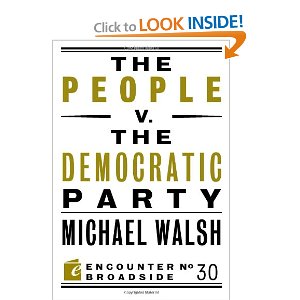
5.0 out of 5 stars 48 Pages – A Masterpiece of Brevity: Now Do the Same for the Republicans,July 29, 2012
At 48 pages, one can only marvel how we have advanced to where a “book” can be a long article. Perhaps the price is right, perhaps not. What we can clearly see is that the author has a gift for incision, a gift we hope he will apply to the other half of the two-party tyranny.
30% of the eligible voters elected Obama, and a major reason he won so narrowly, despite breaking his promise to run on public funding, despite getting $750 million, $300 million of which is still not accounted for, was the treason within John McCain's own camp. Staffed by Bushies, the McCain campaign was largely clueless, and not attentive to the correct gut feeling of the House Republicans — no bailout, insure from the bottom up with no evictions and no foreclosures.
What the author does not address is the FACT that on every charge that he makes against the Democrats, the Republicans [I was a Reagan Republican] having easily taken the lead under Newt Gingrich, who single-handedly overturned Article 1 of the Constitution and converted the Senate and the House into “foot-soldiers” for the President (when he was a Republican) and subversive obstructionists when not.
We in the USA live in a two-party tyranny, a criminal tyranny that excludes from both ballot access and vote relevance six other parties: Constitution, Green, Libertarian, Reform (active), and Natural Law and Socialist (inactive).
“Twenty five months have passed since this piece was written. We republish it today to see how it has weathered? Were we on the right track then or do we now look like fools? We write ‘em, you decide ‘em. But remember, Fox News missed all of this. Why?”
– o –
“If those papers have to be produced over the nukes that later got lost in Oman, and on the watch of Dr. David Kelly, then it could be disastrous for David Cameron. This, particularly as one of the three atomic bombs lost back at the time of the first Gulf War, was exploded by North Korea on 25th May 2009.”
In 2006, North Korea exploded a plutonium based nuclear weapon, an unsuccessful test of a “found” nuke in poor repair, or something poorly designed.
America had predicted that they were at least five years from this capability, we always hear the same story, everyone is five years from having nuclear weapons.
On May 25th, 2009, North Korea exploded its second bomb, its first clearly identifiable nuclear weapon, a “Hiroshima sized” bomb, tiny by US standards.
What we didn’t say is that the signature of this bomb had been seen before.
An identical nuclear weapon, manufactured at the same facility, same design, same impurities, had been exploded in September 22, 1979, in a test in the Indian Ocean conducted jointly by Israel and South Africa.