Review: Twilight of the Elites – America After Meritocracy

4 Star, America (Founders, Current Situation), Banks, Fed, Money, & Concentrated Wealth, Capitalism (Good & Bad), Civil Society, Congress (Failure, Reform), Culture, Research, Executive (Partisan Failure, Reform)
0Shares
Amazon Page

Christopher Hayes

4.0 out of 5 stars Strongest on Collapse Part, Very Weak on What Next…,July 1, 2012

This is one of two books I read on the plane back to DC from Seattle, the other was Van Jones' Rebuild the Dream

This is a light book with a poor bibliography, more of an essay turned into a book than a book proper. The author focuses on the “near total collapse of every pillar institution of our society.” Yes, this is not news. Many of us have been saying this for some time, my own 2008 version is easily found by looking for < Paradigms of Failure >, free online.

The author loses one star for being so oblivious to the reality of 9/11 such as any informed citizen can determine (see the 30+ Amazon reviews easily found as a group at Phi Beta Iota the Public Intelligence Blog).

He touches on three themes generally, in a useful juxtaposition:

1) The ignorance of the elites

2) The end of upward mobility in the US economy

3) The evaporation of trust, the collapse of trust

While I find his essay interesting, I am continuously disappointed by the narrowness of his reading. Matt Taibbi's brilliant Griftopia: A Story of Bankers, Politicians, and the Most Audacious Power Grab in American History, a work I consider seminal and of lasting value to future generations, is not noticed by this author.

Continue reading “Review: Twilight of the Elites – America After Meritocracy”
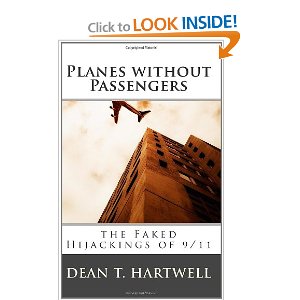
Review (Guest): Planes without Passengers: the Faked Hijackings of 9/11

4 Star, 9-11 Truth Books & DVDs
0Shares
Amazon Page

Dean T. Hartwell

Close to the truth January 8, 2012

By RennMax

This is an interesting book. As an Airline pilot who was scheduled to fly SFO-JFK on the morning of 911 I have been critical of the “official story” from the very beginning. The stand down of NORAD and virtually everything that happened with ATC that day was without precedent and totally out of protocol. None of it made sense let alone the supposed “hijackers” navagating and flying aircraft with sophisticated “glass cockpits” I just don't buy it.

For a non-avaition type the author, I believe, gets really close to the truth. He leaves a lot of loose ends but overall his premise is probably very close to what actually happened. The layman may think that such a story is implausible but the set up of confusion, decoy aircraft, merging radar targets, and “live hijack exercises” provided the near perfect cover for such an operation as well as the plane strikes providing the cover for the controlled demolition of the towers except of course for Bldg.#7 which went virtually unnoticed by the masses.

You need to be able to think critically and outside of the box which the Corporate Mainstream Media constructs. Be assured, the perpetrators count on you not thinking and staying inside the mental box they construct for you.

My hope is that some day soon we will have the truth about 911 and its implications.

Vote and/or Comment on Review

See Also:

9-11 Truth Books & DVDs (38)

Review (Guest): Where Did the Towers Go? Evidence of Directed Free-energy Technology on 9/11

5 Star, 9-11 Truth Books & DVDs
0Shares
Amazon Page

Judy Wood

How the Towers turned to dust April 1, 2011

By Alan S. Glassman

I am delighted to finally see Dr. Judy Wood's book about the disintegration of New York's World Trade Center Twin Towers on September 11, 2001, appear in print. It has been a long time coming but well worth the wait.

Based in large part on her website and on the research she's been doing for over eight years, “Where Did the Towers Go?” is an exhaustive study of what happened to those two, quarter mile high, 110-storey skyscrapers on that horrible day and how they literally disappeared to dust. A structural engineering firm involved in building the Trade Center estimated there should have been almost 1.2 million tons of rubble. But, because we see mostly dust and unburned paper on the ground and a minimum of debris in the basements, Dr. Wood asks, “Where did it all go?”

With over 500 excellent color photographs, many charts and graphs, and solid calculations from an expert in mechanical and materials engineering, Professor Wood challenges the official story of 9/11 with compelling evidence that cannot be denied. Her study should convince anyone still skeptical of any alternative explanation as to what happened to the Towers that day that the generally accepted media and government explanation is utter nonsense.

Continue reading “Review (Guest): Where Did the Towers Go? Evidence of Directed Free-energy Technology on 9/11”

Richard Stallman: Free Software Newsletter Issue 31 June 2012

IO Newsletter Free Software
0Shares
Richard Stallman

Free Software Supporter

Issue 51, June 2012

TABLE OF CONTENTS

  • URGENT: Kill ACTA
  • Stop software patents in Europe
  • Two job openings on the FSF campaigns team
  • FSF recommendations for free operating system distributions considering Secure Boot
  • GNU GPLv3 turns 5
  • Dear Microsoft: fsf.org is not a “gambling site”
  • FSF's new operations assistant
  • Emacs Reference mugs are back!
  • I have some big shoes to fill
  • Introducing our new copyright and licensing associate
  • World IPv6 Day
  • April 2012 Trip to Tunisia: Photos from Tunis and Monastir
  • Why games matter to free software and free culture
  • LibrePlanet featured resource: Defective by Design
  • GNU spotlight with Karl Berry
  • Richard Stallman's speaking schedule and other FSF events
  • Thank GNUs!
  • Take action with the FSF!

Welcome to the Free Software Supporter, the Free Software Foundation's monthly news digest and action update — being read by you and 58,193 other activists. That's 805 more than last month!

Encourage your friends to subscribe and help us build an audience by adding our subscriber widget to your web site.

Miss an issue? You can catch up on back issues at http://www.fsf.org/free-software-supporter.

Multilingual? Send translations of the Supporter to campaigns@fsf.org.

Complete newsletter below the line.

Continue reading “Richard Stallman: Free Software Newsletter Issue 31 June 2012”

DefDog: Can Crowd-Sourcing Save the US Economy?

Collective Intelligence, Commercial Intelligence
0Shares
DefDog

Infographic – Can Crowdfunding Save The U.S. Economy?

About Rock The Post.Ā Rock The PostĀ is aĀ crowdfundingĀ website designed to fund small businesses, entrepreneurs, and nonprofits. It is the ideal tool for entrepreneurs to leverage networks, reach out to new contacts, and fill in the missing pieces of their projects. Rock the Post provides budding businesses with the means necessary to amass resources and flourish.

Click on Image to Enlarge


Tom Atlee: Derivatives as Fatal Cancer Discussion and Links

03 Economy, Commerce, Corruption, Government
0Shares
Tom Atlee

http://tom-atlee.posterous.com/derivatives-challenge-citizenship-and-economi
Short URL: http://post.ly/83Ojt

Dear friends,

I'm interested in derivatives as a symbol of an economic system that's NOT based on productivity that satisfies real human needs. Ā Derivatives are contracts that shift risk from players who are risk averse (and want insurance against loss) to players who have an appetite for risk (and want a big gambling win).* Ā While originally intended to serve much like an insurance policy, they have turned into a tool for high-stakes gambling that puts everyone else at risk.

The speculative market in financial derivatives is – depending on whose estimate you read – THREE to TWENTY (or more) times bigger than the whole global economy – way bigger than the GDP of the entire world. Ā Derivatives are a very big part of what is called “the casino economy”. Ā Financial speculation is basically gambling that the value of something – commodities, stocks, currency, whatever – will go up or down. Ā The casino economy is not about producing or financing real goods or services.* Ā It is about making lots of money for the successful gamblers.

The rest of us could let them go ahead and gamble except for two things. Ā First, many of them use the money they get to buy more influence and power, making a mockery of “the free market” and “democratic self-governance”. Ā Secondly, the wrong sequence of bad guesses, responses and glitches in this highly computerized money-making game could wipe out the global economy that the rest of us depend on. Ā We are still stumbling from the last global financial crash in 2008 – in which derivatives played a major role. Ā But far bigger crashes are possible.

Continue reading “Tom Atlee: Derivatives as Fatal Cancer Discussion and Links”