Joichi Ito: Internet is an Open-Source Philosophy

Advanced Cyber/IO, Civil Society, Collective Intelligence, Cultural Intelligence, Ethics, Hacking, Methods & Process
0Shares

In an Open-Source Society, Innovating by the Seat of Our Pants

JOICHI ITO

New York Times, December 5, 2011

The Internet isn’t really a technology. It’s a belief system, a philosophy about the effectiveness of decentralized, bottom-up innovation. And it’s a philosophy that has begun to change how we think about creativity itself.

. . . . . .

The ethos of the Internet is that everyone should have the freedom to connect, to innovate, to program, without asking permission. No one can know the whole of the network, and by design it cannot be centrally controlled. This network was intended to be decentralized, its assets widely distributed. Today most innovation springs from small groups at its “edges.”

. . . . . . .

I don’t think education is about centralized instruction anymore; rather, it is the process establishing oneself as a node in a broad network of distributed creativity.


Read full article.

David Brin: Three-Quarters Climate Change Man-Made

Earth Intelligence
0Shares
David Brin

Three-Quarters of Climate Change Is Man-Made

An independent study quantifies the human and natural contributions, with solar radiation contributing only minimally

Quinn Schiermeier and Nature Magazine

Scientific American, 5 december 2011

Natural climate variability is extremely unlikely to have contributed more than about one-quarter of the temperature rise observed in the past 60 years, reports a pair of Swiss climate modelers in a paper published online December 4. Most of the observed warming—at least 74 percent—is almost certainly due to human activity, they write in Nature Geoscience.

Read full article.

Phi Beta Iota:  Yes BUT!  First off, Environmental Degradation, high-level threat number three, includes Climate Change, which is less than 10% of Environmental Degradation (and within Climate Change, carbon is vastly less important than mercury or sulpher).  Secondly, the real looming catastrophes are man-made increases in the frequency and severity of weather.  We have destroyed the earth's natural feedback loops and self-correcting mechanisms.

See Also:

Worth a Look: Book Reviews on Climate Change

Worth a Look: Book Reviews on Disease

Worth a Look: Book Reviews on Environmental Degradation (Other than Emissions)

Worth a Look: Book Reviews on Peak Oil

Worth a Look: Book Reviews on Water

Mini-Me: US Gasoline Exports–Reason for Tar Sands Fraud

03 Economy, 03 Environmental Degradation, 05 Energy, 07 Other Atrocities, 11 Society, Civil Society, Commerce, Corruption, Earth Intelligence, Government, Power Behind-the-Scenes/Special Interests
0Shares
Who? Mini-Me?

Gasoline: The new big U.S. export

Steve Hargreaves

CNN Money, 5 December 2011

NEW YORK (CNNMoney) — The United States is awash in gasoline. So much so, in fact, that the country is exporting a record amount of it.

The country exported 430,000 more barrels of gasoline a day than it imported in September, according to the U.S. Energy Information Administration. That is about twice the amount at the start of the year, and experts and industry insiders say the trend is here to stay.

The United States began exporting gas in late 2008. For decades prior, starting in 1960, the country used all the gas it produced here plus had to import gas from places in Europe.

But demand for gas has dropped nearly 10% in recent years. It went from a peak of 9.6 million barrels a day in 2007 to 8.8 million barrels today, according to the EIA.

Read full article.

Phi Beta Iota:  The entire Tar Sands scheme is a scam on the US public, and atrocity against the Canadian public.  In Canada, they are proposing to use precious water they do not have to spare, to flush tar we do not need out of the sands; in the US, there is no need for the tar sands as the sleazy campaigns suggest, the oil companies want the tar sands so they can externalize the costs to the US public and privatize the profits of exporting the gasoline.

Josh Kilbourn: 46 Million Americans on Foodstamps

01 Poverty, 03 Economy, 09 Justice, 11 Society, Civil Society, Commerce, Corruption, Government
0Shares
Joshua Kilbourn

Over 46 Million Americans On Foodstamps For The First Time Ever

Tyler Durden

Zerohedge.com, 12/05/2011

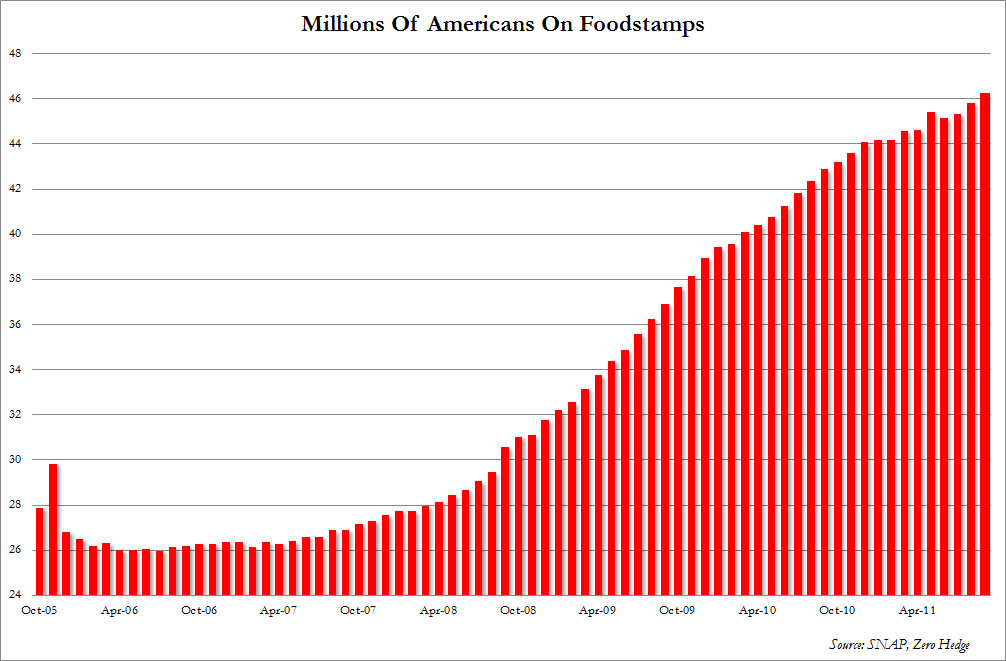
While the capital markets may be cheering that in the past month 120,000 people supposedly found jobs, even if these were largely temporary or part-time just in time for the year end shopping sprees, we wonder how they will react when learning that according to the latest update from the Supplemental Nutrition

Click on Image

Assistance Program (SNAP), some 423,000 Americans found their way to minimum way subsistence, courtesy of Food Stamp handouts from Uncle Sam. Since the start of the Second Great Depression, food stamp participation has increased by 18.7 million, and is now at an all time higher 46.3 million. All Bush's fault, or something. At least the chart below appears to be plateauing… Actually, sorry, no isn't.

See Also:

Food Stamp Use Surges By Most In Years As Alabama Foodstamp Recipients Double In May

US Food Stamp Usage Hits New Record

6M young U.S. adults live with their parents

Cost of federal unemployment benefits so far: $434 billion

Koko: Mammoth find raises hopes of successful cloning

Earth Intelligence
0Shares
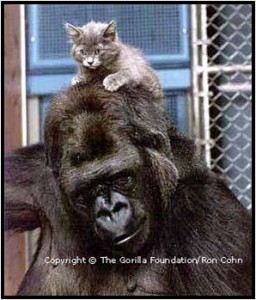
Koko

Koko Sign:  Like diversity.

Mammoth find raises hopes of successful cloning

Emma Woollacott

TG Daily,  December 5, 2011

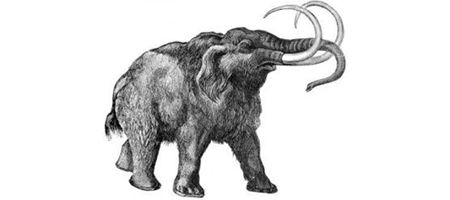
A Japanese team which has been hoping to clone a mammoth says that a specimen discovered this summer looks likely to yield up the necessary DNA.

The team, from Japan's Kinki University and the Sakha Republic's mammoth museum, announced its plans last January before setting off for Siberia in search of frozen mammoth tissue.

And they've now announced that one of their finds – a thigh bone discovered in northern Sakha – contains well-preserved bone marrow with intact cell nuclei.


Click on Image to Enlarge

Global warming has decreased the proportion of the Siberian tundra that's covered with permafrost, meaning that new mammoth carcases have increasingly been coming to light. However, past efforts to recreate the mammoth – which have been going on since the 1990s – have failed as cell nuclei have been in too poor a condition.

This latest specimen, though, is reported to be in very good condition, and scientific techniques for extracting viable DNA have improved. As a result, according to Japan's Kyodo News, the Japanese team is now confident that it can replace the nuclei of egg cells from an African elephant with nuclei taken from the mammoth bone marrow.

This would create create embryos which can be implanted into elephants' wombs for gestation.

Any resulting baby mammoth would be the first to walk the earth for thousands of years. The species is believed to have largely died out at the end of the Pleistocene, 10,000 years ago, with a dwarf species hanging on for another 5,000 years.

Review: L’Avenir De L’Eau (The future of water)

5 Star, Water, Energy, Oil, Scarcity
0Shares
Amazon Page

Erik Orsenna

5.0 out of 5 stars SERIOUS BOOK – Best in French on Water Issue,December 4, 2011

This book was brought to my attention by some high thinkers in Spain when we were having a discussion about the urgency of focusing on water as a matter of national security and sustainable prosperity.

The author is a former State Counsellor to President Mitterand, and a member of the French Academy, in other words, among the very best and brightest that France has to offer.

The author has also written Voyage au pays du cotton but it does not appear to be listed within Amazon US link stack.

The books I have received for UNESCO on their water project can be found in one spot by searching for:

Reference: WATER-Soul of the Earth, Mirror of Our Collective Souls

In the above, links back to the Amazon page for each book are provided.

Patrick Meier: Crowd-Sourcing Making Putin Nervous

Advanced Cyber/IO, Civil Society, Ethics, Government, Hacking
0Shares
Patrick Meier

Crowdsourcing vs Putin: “Mapping Dots is a Disease on the Map of Russia”

4 December 2011

I chose to focus my dissertation research on the impact of information and communication technologies (ICTs) during elections in repressive states. Why? Because the contentious relationship between state and society during elections is accentuated and the stakes are generally higher than periods in-between elections. To be sure, elections provide momentary opportunities for democratic change. Moreover, the impact of ICTs on competitive events such as contentious elections may be more observable than the impact on state-society relations during the regular calendar year.  In other words, the use of ICTs during election periods may shed some light on whether said technologies empower coercive regimes at the expense of civil society or vice versa.

Full Blog with Three Major Graphics Below the Line

Continue reading “Patrick Meier: Crowd-Sourcing Making Putin Nervous”