Event: 14-21 Sep 2010 Global Peace Week

Worth A Look
0Shares
Peace Week 2010

Peace One Day, a DVD we reviewed when it came out, has now graduated to Peace Week, but not really.

Click on the logo (from 2003, still the best we have seen) to see the “personalities” that are being offered free in a global summit.

See also a collage of Peace Week images.

The good of this is that the circle is gradually widening.

The bad is that this is still kum-ba-ya on steroids, all about hand-holding and soul searching with little attention to multinational information-sharing and sense-making, or to creating actionable public intelligence.

Too many of these people are merely on the talk circuit, while others are doing righteous work at the micro-level that is not scalable or migratable without a global concept of operations and doctrine for transforming from the culture of war to the culture of peace through Information Operations (IO).

Ohmmmmm.

See Also:

Worth a Look: Book (and DVD) Reviews on Peace

Who's Who in Peace Intelligence (34)

Worth a Look: Crane on Islam–Concise & Coherent

Worth A Look
0Shares

Human Responsibilities and Rights in the Shari’ah: An Advanced Primer

Dr. Robert D. Crane

Ibn Qayyim wrote:  “The Islamic law is all about wisdom and achieving people’s welfare in this life and the afterlife.  It is all about justice, mercy, wisdom, and good.  Thus any ruling that replaces justice with injustice, mercy with its opposite, common good with mischief, or wisdom with nonsense, is a ruling that does not belong to the Islamic law.”

This introductory essay defines the highest level framework, akin to constitutional principles, and introduces various schools of fiqh or schools of thought (madhahib) that have been established by leading Islamic scholars or Imams, namely, Hanafi, Maliki, Shafi’i, Hanbali, Ja’fari, and Zaidi.  Regardless of the school(s) of thought one may follow, the discussion of the universal human responsibilities and rights culminates in what is the essence of Islam, i.e., truth, love, and justice.

EXTRACT:

The classical five maqasid (al dururiyat al khamsah) or huquq (sing. haqq) of Al Ghazali in the 4th Islamic century were the protection of din (faith and religion), haya (life), mal (private property), karama (dignity and honor), and ‘ilm (mind and knowledge).  Later scholars, especially Al Shatibi, added nasl or nasab (family and community) and hurriyah (self-determination or political freedom).  Some twenty-first century scholars have added an eighth maqsad, known as haqq al mahid or respect for the physical environment.

Worth a Look: Cryptome on Sensitive Sources

Worth A Look
0Shares

Phi Beta Iota: We love Cryptome, it renders a public service.  We appreciate being listed there as a public service ourselves.  We do NOT, however, under any circumstances, violate our lifetime secrecy  oath or ever reveal anything that is remotely classified or sensitive.  We derive intelligence (decision support) exclusively from open sources and methods.  When we write about traditional intelligence sources and methods (e.g. on Human Intelligence) our work is reviewed by both DoD and CIA in advance of publication.  Our mission is to help create public intelligence in the public interest.  That said, we point with respect to Cryptome, where the following statement appears, and then a long list of existing web sites full of sensitive sources and methods information….including, erroneously, our own.

From Cryptome DOI 4 September 2010

Sensitive Information Security Sources and Breaches

In response to Wikileaks background inquiries Cryptome offers that there are hundreds of online and offline sources of sensitive information security breaches which preceded Wikileaks beginning about 120 years ago. This outline traces the conflict between technological capabilities for sensitive information breaches and control by law enforcement when technical countermeasures are insufficient — a few examples among many others worldwide:

See the full list.

Journal: From Waste to Want to Weak

Corruption
0Shares
Marcus Aurelius Recommends

Two articles, one each from Wash Post and NYT follow.  Both focus on finance as it relates to national security.  IMHO, both are probably more true than not.  Also IMHO, the two parties principally responsible are Donald Rumsfeld and L. Paul Bremer.  Had those two, particularly Rumsfeld, not filled the Coalition Provisional Authority with ideologues, particularly Bremer, certain key actions like de-Baathification and dissolution of Iraqi institutions might have not been taken and Iraq might have come in at far lower cost.  I think Friedman (NYT, second article) is spot-on with respect to effect.  We have been down that road before.  As high intensity military operations wind down, the public guns/butter debate inevitably shifts to butter and the nation disarms.  It happened after WWI, WWII, Korea, Vietnam, and DESERT SHIELD/STORM.  I predict that it will happen again and that we will have another Task Force SMITH incident where vital or survival national interests compel us to rush inadequately trained, structured, and resourced forces to some emergent conflict where they will get needlessly slaughtered.)

Washington Post  September 5, 2010  Pg. B4 By Joseph E. Stiglitz and Linda J. Bilmes

A War More Costly Than We Thought

New York Times  September 5, 2010   Pg. WK8 By Thomas L. Friedman

Superbroke, Superfrugal, Superpower?

Below the line is a strong comment sent to the Contributing Editor of this post.

Continue reading “Journal: From Waste to Want to Weak”

Journal: Free Cell Phones, Monetize the Knowledge

01 Poverty, 03 Economy, 04 Education, Autonomous Internet, Collaboration Zones, Key Players, Mobile
0Shares

Huawei Ideos Cell $50

Huawei Android Smartphone ‘Ideos' Going To T-Mobile: Report

A few weeks into the future and an ad in the newspaper may look like this– looking for a Google powered smart phone? just spend $50- Amazed? Well that is what is the target of HUAWEI TECHNOLOGIES and T-MOBILE US inclusive. The former a Chinese telecom equipment provider and the latter the fourth largest US mobile carrier.

The Ideos was unveiled on Thursday in Berlin. Ideos is an Android 2.2, the latest version of Google Inc.'s free mobile operating system; ensembles a 2.8-inch touch screen; and can be a Wi-Fi hotspot, allowing other devices to connect to the Internet. Ideos is better option to all these who aren't willing to pay exorbitant for devices such as Apple Inc.'s iPhone or Verizon Wireless's Droid lineup. Such brands typically retail for more than $500 without a contract, or $200 with a two-year contract.

Phi Beta Iota: Free cell phones to the poor, and call centers that educate them free “one cell call at a time,” are the foundation for creating infinite new wealth.  What most do not appear to understand is that just as with the genius of Gillette (sell the shave, not the shaver), in the 21st Century the cell phone and connectivity should be free, and it is the transmitted knowledge that is monetized (not sold, but monetized, e.g. early warning from farmers on disease strains, Twitters on earthquakes, etcetera.)

Journal: Femicide, Educating Women, Saving Earth

04 Education, 07 Other Atrocities, 11 Society, Civil Society, Collective Intelligence, Cultural Intelligence
0Shares

CNN Story on TED Story

Tens of millions of ‘missing' girls

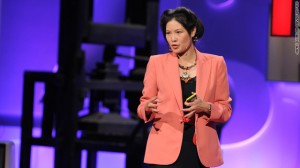
(CNN) — Discrimination against women and girls takes a staggering toll around the world, says author Sheryl WuDunn. It leads to as many as 100 million fewer females than males in the world.

Ending the oppression of women is the great moral challenge of the 21st Century, a cause she compares to fighting slavery in the 19th century and totalitarianism in the 20th Century.

The solutions, she says, are education and economic opportunity. Overpopulation is one of the larger contributors to poverty, WuDunn said. “When you educate a girl, she has significantly fewer kids.” Girls who go to school get married later in life and educate their children “in a more enlightened way.”

“So let us be clear about this up front: We hope to recruit you to join an incipient movement to emancipate women and fight global poverty by unlocking women's power as economic catalysts.

WATCH THE TED SHORT STORY

Phi Beta Iota: It merits comment that micro-lending was a success because its founder recognized that women, not men, would be the more reliable and productive catalyst.  It also merits comment that the best aid investment, dollar for dollar, is in the education of women.  What is missing is the “giant leap forward” that would come from distributing free telephones and creating multi-lingual call centers that educate women–and men–one cell call at a time, while serving as catalysts for harnessing the distributed intelligence of the Whole Earth, creating smart neighborhoods to smart nations to a smart planet.

Search: multiple variations around OSINT Handbook [new sort of all handbooks]

Searches
0Shares

The searches are of enormous value to us in identifying what folks are looking for and when they don't find it, how we can improve.  Based on a number of searches that appear to originate from law enforcement on one side and NATO/multinational on the other, we have restructured the Handbook index and now offer: