Journal: Multinational Transformation

About the Idea, Collaboration Zones, Communities of Practice, Key Players, Policies, Threats, Topics (All Other)
0Shares

A few thoughts:

1)  Information-sharing and sense-making is “root” for multinational operations.

2)  Education, intelligence, and research must all be open and multinational in nature.

3)  Peaceful preventive measures rooted in open education and intelligence are the foundation.

4)  Precision covert and clandestine multinational operations are the intermediate capability.

5)  Hybrid operations by all eight tribes of intelligence, with the military as the “core force” for communications, intelligence-sharing and sense-making, logistics, and mobility, will be the norm.

6)  Gandhi had it right–cannot kill swarms with machine guns, the only winning move is peace for all.

7)  Yanus, Scowcroft, et al have it right–POVERTY is the #1 threat to humanity, eliminate poverty and everything else heals itself.

Core Link with Other Links (See Especially Those in Bold):

Search: The Future of OSINT [is M4IS2-Multinational]

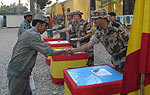
20100905 Multinational Postings at Phi Beta Iota is organized into the following topics but only covers the last year instead of all five years.  It just became too demanding a task.

Acquisition (Multinational)
Analytics for Multinational/Whole Earth (Concepts & Methods)
Brain-Power/Human Intelligence
Bottom-Up
C4I Fundamentals (Needs, Tools)
Citizen-Centered Information & Intelligence
Civil-Military
Concepts for Civilization
Corruption
Education
French-Language Items
Hacking Earth
Handbooks
Information & Intelligence
Operations
Peace Through Innovation
Strategy (or Not)

See Also:
2010 INTELLIGENCE FOR EARTH: Clarity, Diversity, Integrity, & Sustainability
2008 COLLECTIVE INTELLIGENCE: Creating a Prosperous World at Peace
2006 INFORMATION OPERATIONS: All Information, All Languages, All the Time
2003 PEACEKEEPING INTELLIGENCE: Emerging Concepts for the Future
2002 THE NEW CRAFT OF INTELLIGENCE: Personal, Public, & Political
Worth a Look: Book Review Lists (Positive)
Worth a Look: Book Review Lists (Negative)

Journal: TIME (Joe Klein) on Collective Intelligence

Civil Society, Collective Intelligence, Cultural Intelligence
0Shares
Tom Atlee Recommends
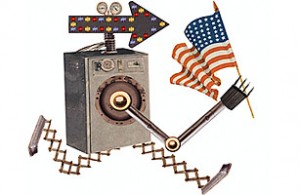
Illustration by Stephen Kroninger for TIME

How Can a Democracy Solve Tough Problems?

Joe Klein

Thursday, 2 September 2010

TIME Magazine

But what if there were a machine, a magical contraption that could take the process of making tough decisions in a democracy, shake it up, dramatize it and make it both credible and conclusive? As it happens, the ancient Athenians had one. It was called the kleroterion, and it worked something like a bingo-ball selector. Each citizen — free males only, of course — had an identity token; several hundred were picked randomly every day and delegated to make major decisions for the polis.

Actually, the Chinese coastal district of Zeguo (pop. 120,000) has its very own kleroterion, which makes all its budget decisions. The technology has been updated: the kleroterion is a team led by Stanford professor James Fishkin. Each year, 175 people are scientifically selected to reflect the general population.

Tom Atlee Comments:

I'm not yet up to diving in re this fascinating TIME article on participatory budgeting based on Deliberative Polling methodology  but some of you might want to.  Interesting that they don't cover Participatory Budgeting, which is becoming widespread in South America, or the experiments using Citizens Juries for budgeting in Canada… It is, of course, amazing that less-wise forms of deliberative democracy — like Fishkin's Deliberative Polls and AmericaSpeaks' 21st Century Town Meetings — are preferred by power-holders over more potent forms like Citizens Juries, Citizens Assemblies, Consensus Conferences, etc., to say nothing of Wisdom Councils (which aren't strictly deliberative).  On second thought, it is not surprising.. 🙂  But Fishkin and Lukensmeyer have the political savvy to clear the way for more advanced forms of wise democracy to emerge into public awareness and use.  It's up to us to use that space.

Coheartedly,
Tom

Journal: End Poverty to End Population Growth

01 Poverty, 03 Economy, 06 Family, 09 Justice, 10 Security, Earth Intelligence
0Shares
Berto Jongman Recommends...

Visualizing Global Population Growth

Hans Rosling

Posted: Sep 4, 2010

The world’s population will grow to 9 billion over the next 50 years — and only by raising the living standards of the poorest can we check population growth.

This is the paradoxical answer that Hans Rosling unveils at TED@Cannes using colorful new data display technology (you’ll see).

Watch the 10 Minute Video from TED:  Hans Rosling on global population growth

Phi Beta Iota: This is consistent with the report of the UN High-Level Threat Panel on Threats, Challenges, and Change, which identified POVERTY as the top threat to humanity, in part because it spawns everything else including Infectious Disease (#2), Environmental Degradation (#3, the poor doing more damage than all the corporations on the planet), and so on. See also:

Review: A More Secure World–Our Shared Responsibility–Report of the Secretary-General’s High-level Panel on Threats, Challenges and Change
Review: Out of Poverty: What Works When Traditional Approaches Fail
Design for the Other 90% Exhibit + “Micro-Giving” Global Needs Index to Connect Rich to Poor/Fullfill Global-to-Local Requests
Review: Building Social Business–The New Kind of Capitalism that Serves Humanity’s Most Pressing Needs
Review: The Fortune at the Bottom of the Pyramid–Eradicating Poverty Through Profits (Hardcover)
Review: Revolutionary Wealth (Hardcover)
Review: State of the World 2010–Transforming Cultures–From Consumerism to Sustainability
Review: Corruption and Anti-Corruption–An Applied Philosophical Approach
Reference: World Brain Institute & Global Game
Search: Strategic Analytic Model

Worth a Look: Transformation Through Education & Training–NATO’s Emergent Approach

Worth A Look
0Shares

Transformation Training

Education and training

NATO conducts education and training to ensure its forces are effective and interoperable, as part of its cooperation with non-member countries, and as part of NATO-led operations.

Historically, NATO education and training has been focused on ensuring that military forces from member countries can work together effectively in operations and missions. Today, NATO education and training functions have expanded significantly. NATO has a network of training schools and institutions, conducts regular exercises and runs training programmes as far away as Afghanistan, Iraq and Africa.

The three main purposes are to enhance the interoperability and effectiveness of NATO-led multinational forces, assist Partner countries in their reform efforts, and help bring peace and stability to crisis-hit areas.

Journal: CIA Loves Blackwater; Arizona Ungovernable in South; Coast Guard Learns and Morphs from Katrina; Israeli Black Propaganda?

Cultural Intelligence
0Shares

Marcus Aurelius Recommends

Blackwater Won Contracts Through A Web Of Companies. CIA mafia, illegal arms, 31 companies to deceive US Government, owner moves family to Abu Dhabi.

Signs in Arizona warn of smuggler dangers. Feds post 15, south Arizona now “ungovernable zone.”

For Coast Guard, Katrina's lessons are carried on. Overview in human interest context of how Katrina changed Coast Guard, relevant to BP Gulf disaster.

Israeli Black Propaganda?

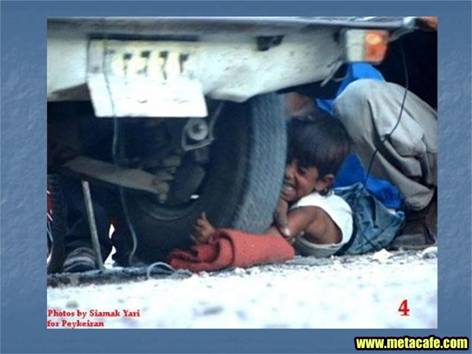
Child Stealing Bread in Iran Gets Arm Crushed.

Phi Beta Iota: photo part of a collage, not properly sourced and possibly Israeli black propaganda. Normally the hand is cut off, no padding is needed, and we're not sure a child would receive this kind of punishment under these circumstances. Provided as indicator of what is being circulated across US military emails.  There is probably a half-pipe cradling the arm and hidden by the towel.  Cars do not mangle or even completely crush.  The absence of the after photo showing real damage is significant to us.