Review: Weapons of Mass Instruction

6 Star Top 10%, Corruption, Democracy, Education (General), Education (Universities), Misinformation & Propaganda
0Shares
Amazon Page
Amazon Page
5.0 out of 5 stars Beyond Six Stars–a Manifesto for Liberty
September 5, 2009

John Taylor Gatto

This book shocked me, and while I am not easily shocked, in shocking me made me realize how even my own radical outlook (as Howard Zinn notes, a radical is someone who no longer believes government is part of the solution) has come to accommodate, to accept, the most obvious tool of subordination, the public school system.

First, my fly-leaf notes, and then a couple of conclusions.

Constructive quote up front (xiv):

“We could encourage the best qualities of youthfulness–curiosity, adventure, resilience, the capacity for surprising insight–simply by being more flexible about time, texts, and tests, by introducing kids to truly competent adults, and by giving each student the autonomy he or she needs in order to take a risk every now and then.”

The author's bottom line: public schooling is a deliberate transplant from Germany that Carnegie and Rockefeller and Ford and other foundations designed as a deliberate means of dumbing down the mass population and segregating elite learning from mass “functional” learning devoid of political or philosophical reflection.
Continue reading “Review: Weapons of Mass Instruction”

Review: A Vision for 2012: Planning for Extraordinary Change

3 Star, Future
0Shares
Amazon Page
Amazon Page
3.0 out of 5 stars Annoying
September 4, 2009
John L. Petersen

John Petersen's earlier work was vastly more interesting and more structured than this little 4.5 inch by 7 inch 100 page double-spaced blowing in the ears of Gary Hart and Leon Fuerth, among others. See my reviews of his earlier work:
Out of the blue: Wild cards and other big future surprises : how to anticipate and respond to profound change
The Road to 2015: Profiles of the Future

This book lacks a strategic analytic model and fluffs around the edges of important literatures without ever striking the right note.

The author is a dedicated, intelligent practitioner, but he is neither a scholar nor an analyst in the classic sense of the word–I found this book, in the larger context in which I read and think, annoying. A form of classic comic book for busy people in Washington who will nod and confirm the author's sagacity without ever recognizing that there is really nothing here.

There is not a word in this book about corruption, integrity, information asymmetries, data pathologies, or the out and out rape of America by the two political parties.

The author is flat out wrong when he states on page 52 that “Humans don't deal well with discontinuites and rapid change.” That alone dropped this book to three stars, and the rest of the fluffy-face stuff kept it there, including the intelligent but recycled and truncated material from earlier books.

Continue reading “Review: A Vision for 2012: Planning for Extraordinary Change”

Event: 9-11 Nov 09 Vancouver CA, Thriving on Diversity: Information Opportunities in a Pluralistic World (American Society for Information Science and Technology–ASIS)

Uncategorized
0Shares
ASIS 2009 Conference

We've done all these conferences for 20 years.Ā  While most organizations tend to repeat the same themes and one also tends to see the same faces as speakers, this particular conference appears to have been especially well-developed and we therefore recommend it.Ā  Pre-Conference Workshops are offered on 6 Nov 09.

CENTCOM Week in Review Ending 3 September 2009

Uncategorized
0Shares

Hot Topics

AA: Ā Al-Qaeda launchpad in Yemen gives Saudis new headache 09/02/09

AF: Ā Warlord's Defection Shows Afghan Risk 09/02/09

AF: Ā What's Right With Afghanistan 09/02/09

IQ: Ā Iraq al Qaeda militant says Syria trained him 08/31/09

KG: US troops ordered out of Kyrgyzstan after Russia deal 08/30/09

PK: Ā Pakistan's most-wanted: look at who isn't listed 09/01/09

PK: Ā Zawahiri urges support in Pak tribal areas: SITE 08/28/09

PS: Ā Once-legendary Fatah figure makes a comeback 09/01/09

Continue reading “CENTCOM Week in Review Ending 3 September 2009”

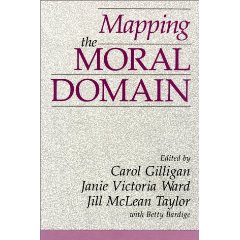
Review: Mapping the Moral Domain: A Contribution of Women’s Thinking to Psychological Theory and Education

5 Star, Leadership, Values, Ethics, Sustainable Evolution, Voices Lost (Indigenous, Gender, Poor, Marginalized)
0Shares
Amazon Page
Amazon Page
5.0 out of 5 stars 1988 Precious Gem–Richly Deserves Appreciation Today
September 3, 2009

Carol Gilligan

Amazon appears to be depriving customers of top reviews from the past–part of a concerted effort they have been making to ease the path for new reviewers, never mind the cost in lost wisdom. I am personally appalled that this incredibly important book, obviously in a new edition, has no reviews carried forward.

1988 is when this book was published, which for me means that in very personal terms, I have been “out of touch” and “unknowing” of the deep social relevance of this work and its focus on the caring voice of women (as opposed to the “justice” voice of men) in both psychology and sociology.

In a nut-shell, this book is a collection of edited works ably integrated by the contributing editors, which pioneered the “voices” discussion from the female point of view. While there have been many books about the voices of the oppressed, the indigenous, and other marginalized groups, this book focuses on the voices of women in their dialectic with men–women as “caring” men as focused on rational “justice.” I am reminded of Voltaire's Bastards: The Dictatorship of Reason in the West and E. O. Wilson's book,Consilience: The Unity of Knowledge.

Underlying the female focus on caring is the female focus on intangibles such as community and good will…..so much so that I have a note, women may be the archetype of what it means to be human. The book opens very ably with observations about how detachment and dispassion are in fact moral choices with tangible outcomes and consequences.

Continue reading “Review: Mapping the Moral Domain: A Contribution of Women's Thinking to Psychological Theory and Education”

Review: Wave Rider: Leadership for High Performance in a Self-Organizing World

6 Star Top 10%, Complexity & Resilience, Decision-Making & Decision-Support, Democracy, Leadership, Voices Lost (Indigenous, Gender, Poor, Marginalized)
0Shares
Amazon Page
Amazon Page

4.0 out of 5 stars Some Warts But If You Buy Only One Book, Try This One….

September 3, 2009

Harrison Owen

The author (developer of the modern Open Space Technology) that revives the Native American open circle)Ā  tells us the book will inevitably be a repetition of his past books in different form, but I do not deduct for that because for me this is the first and only book, and may therefore prove his point: you have to keep telling the story in different forms to reach different segments of the public. I put the book down feeling it was an excellent overview, and feeling no need to acquire and read the other books.

I identify with the author when he notes (without complaint) that his insights that are so mainstream today (at least among the avant guarde) caused him to be labeled as totally lacking in credibility. Been there, done that–called a lunatic by CIA in 1992 for pointing out the urgency of getting a grip on open sources of information.

The author, the founder of the “Open Space” protocol that elicits boundless creativity in very short times by NOT seeking to structure, lead, or control, spends a lot of time on the concept of self-organization, concluding at the very end of the book that EVERYTHING is self-organizing, and all systems that seek to command & control are, by and large, part of the problem, not part of the solution.

Continue reading “Review: Wave Rider: Leadership for High Performance in a Self-Organizing World”

Review: Conscious Globalism: What’s Wrong with the World and How to Fix It

4 Star, Capitalism (Good & Bad)
0Shares
Amazon Page
Amazon Page

4.0 out of 5 stars Righteous, Not as Deep As Some, Great Overview
September 3, 2009

David Schwerin

This book is a logical follow-on to the author's earlier book, Conscious Capitalism: Principles for Prosperity, a book that is doing very very well in Chinese translations. Early on he points out that we need to achieve a global change in consciousness, and I am reminded of Barbara Ehrenreich's book, Conscious Evolution: Awakening Our Social Potential as well as Steve MacIntosh's Integral Consciousness and the Future of Evolution. Everything I am reading is converging, and it is not because of what I am choosing as much as it is about what there is to choose from–this is a tsunami.

The author observes that the Internet is both a people unifier, allowing for information sharing across all traditional barriers and boundaries, and it is also a source of competitive information, something I take to mean that smaller players are now competitive with larger players because of their increased access to information.

The author points out that “the rules” were made of, by, and for those with wealth, and that our challenge today is to find investment capital with a conscience. I think that is happening as Natural Capitalism: Creating the Next Industrial Revolution and Blessed Unrest: How the Largest Social Movement in History Is Restoring Grace, Justice, and Beauty to the World combine with Cradle to Cradle: Remaking the Way We Make Things and The Philosophy of Sustainable Design thinking. Further on he talks about how respecting the environment encourages innovation and reduces waste, but I am struck by the absence of references to any of the greats in this entire line of reflection.

The author follows the spiritual principles adopted by Phi Beta Iota, the Honour Society for Public Intelligence, and focuses constantly on moving us all, one individual at a time, from “Me” to “Us.”

Continue reading “Review: Conscious Globalism: What's Wrong with the World and How to Fix It”