Review: Why Do People Hate America?

5 Star, America (Anti-America), Diplomacy, Empire, Sorrows, Hubris, Blowback
0Shares

Amazon Page
Amazon Page

5.0 out of 5 stars Ben Franklin & James Madison Would Have Praised This Book,

May 26, 2003
Ziauddin Sardar
The heart of this book is not why people hate America, but rather on how Americans have lost touch with reality.This book joins three others books I have reviewed and recommend separately, as the “quartet for revolution” in how Americans must demand access to reliable information about the real world. They are Bill McKibben on “The Age of Missing Information” (a day in the woods contrasted with a year reviewing a day's worth of non-information on broadcast television); Anne Branscomb's “Who Owns Information” (not the citizen); and Roger Shattuck, “Forbidden Knowledge.” These are the higher level books–there are many others, both on the disgrace of the media and the abuse of secrecy by government, as well as on such excellent topics as “Who Will Tell the People: The Betrayal of American Democracy” by William Greider, and “The Closing of the American Mind” by Allan Bloom.

Here are a few points made by this book that every American needs to understand if we are to restore true democracy, true freedom of the press, and true American values to our foreign policy, which has been hijacked by neo-conservative corporate interests:

1) “Patriotism is the last refuge of the scoundrel.” Dr. Samuel Johnson said this in 1775, on the eve of US revolution from British tyranny. When patriotism is used to suppress dissent, to demand blind obedience, and to commit war crimes “in our name,” then patriotism has lost its meaning.

2) According to the authors, Robert Kaplan and Thomas Friedman are flat out *wrong* when they suggest that “they” hate us for our freedoms, the success of our economy, for our rich cultural heritage. Most good-hearted Americans simply have no idea how big the gap is between our perception of our goodness and the rest of the world's perception of our badness (in terms set forth below).

3) According to the authors, a language dies every two weeks. Although there are differing figures on how many languages are still active today (between 3,000 and 5,500), the point is vital. If language is the ultimate representation of a distinct and unique culture that is ideally suited to the environment in which it has flourished over the past millenium, then the triple strikes of English displacing the language, the American “hamburger virus” and city planning displacing all else, and American policy instruments–inclusive of the World Trade Organization and the International Monetary Fund–eliminating any choices before the Third World or even the European policy makers, then America can be said to have been invasive, predatory, and repressive. At multiple levels, from “hate” by Islamic fundamentalists, to “fear and disdain” by French purists, to “annoyance” by Asians to “infatuation” by teenagers, the Americans are seen as way too big for their britches–Americans are the proverbial bull in the china shop, and their leaders lack morals–the failure of America to ratify treaties that honor the right of children to food and health, the failure of America to respect international conventions-the average of two military interventions a year since the Cold War (not to mention two countries invaded but not rescued), all add up to “blowback.”

4) According to the authors, America is “out of control” largely because the people who vote and pay taxes are uninformed. The authors of this book are most articulate. Consider the following quote: “And the power of the American media, as we repeatedly argue, works to keep American people closed to experience and ideas from the rest of the world and thereby increases the insularity, self-absorption, and ignorance that is the overriding problem the rest of the world has with American.”

5) According to the authors, the impact of America overseas can be best summed up as a “hamburger virus” that comes as a complete package, and is especially pathological. McDonalds “serves” rather than “feeds”. The “hamburger culture” is eradicating indigenous cultures everywhere, and often this is leading, decades later, to the realization that those cultures had thrived because they were well suited to the environment–the “hamburger culture” assumes that electricity will provide for air conditioning, that everyone can afford a car once the cities have been paved over, etcetera. When this turns out to not be the case, the losses that have occurred over decades cannot be turned back, and poverty, as well as ethnic strife, are the result.

6) Finally–and the authors have many other points to make in this excellent book, but this is the last one for this “summative” evaluation of their work–according to the authors the USA is what could be considered the ultimate manifestation of the “eighth crusade”, with Christopher Columbus and the destruction of the native American Indians (both North and South) having been the seventh crusade. The authors are most interesting as they define the predominantly Catholic edicts from the Pope and from Kings and Queens, that declared that anyone not speaking their language (and therefore not able to understand their edicts) was a savage, an animal, and therefore suitable for enslavement. In the eyes of much of the world, America is a culturally-oppressive force that is enslaving local governments and local economies for the benefit of a select wealthy elite that live in gated compounds, while demeaning, demoting, and destroying the balance of power and the balance with nature and the balance among tribes, that existed prior to the arrival of American “gunboat diplomacy” and “banana capitalism.”

There you have it. According to the authors:
1) Americans are uninformed about the real world
2) Americans are not in charge of their own foreign policy
3) What is done in the name of all Americans is severely detrimental to the rest of the world, and Americans will pay a heavy price if they allow this “hamburger/gunboat imperialism” to continue.

May God have mercy on our souls, for we know not what we do.

Vote on Review
Vote on Review

Review: The Work of the University

3 Star, Education (Universities)
0Shares

Amazon Page
Amazon Page

3.0 out of 5 stars Well-Intentioned, Dangerously Narrow,

May 26, 2003
Richard C. Levin
I read this book at the same time that I read the book by Ziauddin Sardar and Merryl Wyn Davies, “WHY DO PEOPLE HATE AMERICA” because the central thesis of this other book is that Americans are uniformed about the real world, have no control over their own foreign policy, and what is being done in America's name overseas is severely detrimental to both the security and prosperity of the rest of the world, and thus, somewhat directly these days, to that of America.Somewhat to my surprise, for I expect more from a Yale person (a lesser person would have received four stars–I hold university presidents, and Yale over Harvard or Stanford, to a higher standard) this book was not only disappointing, it confirmed the basic thesis of the Sardar-Davies volume.

The author of the book, “The Work of the University”, is clearly educated, articulate, and well-intentioned. The book shows, throughout, that he is a committed and talented advocate for education as a process that evolves values and the capacity for critical thinking; that he understands the relationship of the University to its alumni, its host city, and the nation at large; and–in an antiseptic sort of way–that China, to take the one example prominent in his book–merits attention, both as a source of students and a host for joint educational ventures.

Early in the book, I thought I was in for a treat when the author, in one of his welcoming speeches to a new class (this is a book of past speeches, not an integrated work) says: “You have the most to learn from those who are least like you; they will challenge you by asking questions you should ask yourself.” The rest of the book helped me understand that these “others” consisted of the Yale faculty and the Yale students, the latter predominantly American but with a full leaving of homogenized wealthy international students all dressed alike in Abercombie & Fitch ensembles.

The book went downhill from there. Although the author makes passing references to overseas problems including genocides, it did not offer me the compelling mission statement I was expecting, of the university as the soul of a nation, the custodian of intellectual values and global awareness, the one place where tenure as well as enlightenment might combine to shed the light of truth on all manner of domestic and foreign policy.

Yale can and should be a “Citizen's Intelligence Network” that trains students to think critically, in the context of very strong moral values, such that a Yale student is by any standard a global thinker and actor. That kind of compelling “pragmatic missionary” perspective is not reflected in this book.

George Will, “Statecraft as Soulcraft,”, Yale Business School Dean Garten on “The Politics of Fortune,” these come closer to “the work of the university” than does this book.

Vote on Review
Vote on Review

Review: Leap of Faith–Memoirs of an Unexpected Life

5 Star, Biography & Memoirs, Country/Regional, Culture, Research, Diplomacy, Intelligence (Public)
0Shares

Amazon Page
Amazon Page

5.0 out of 5 stars Credible, Touching, Eye-Opener,

May 25, 2003
Queen Noor
… I hope that my review will provide a more balanced appreciation of this extraordinary book by an extraordinary former American of Jordanian extraction who, as a Princeton-educated professional, married to the King of Jordan, is able to summarize her life's work of building better bridges between the Arab world and the west.I note as a preface that I am aware of the Jordanian hospital for terrorists recovering from combat wounds, that there are many things still running against the people in Jordan. However, what I find in this double-spaced book–by no means a work of scholarship–is a personal story that is rich with wisdom, integrity, and insights into differing perspectives.

The true beginning of the book comes on page 32, when the author, then a student at Princeton, learned of the death of four students and injury of nine students at Kent State University at the hands of an undisciplined Ohio National Guard armed with real bullets. Most Americans over 40 will never forget the photo of the young woman kreening over one of the dead. That shooting leads to the following sentence in the book: “It was a seminal moment in shaping my view of American society. While I loved my country, I found my trust in its institutions badly shaken.”

The value of the book for me is in the author's credible discussion of what she calls “a fundamental lack of understanding in the West, especially in the United States, of Middle Eastern culture and the Muslim faith.” I took the entire book on faith myself–while rabid Jews may not agree, I am prepared to believe that Queen Noor has not been brainwashed, and that she is offering all readers a personal perspective on Arabs, Muslims, Israel, the Gulf War, the impact of US policies in creating millions of refugees and tens of thousands of dead, and so on. If anything, the book, one of hundreds I have read in the past several years, confirms my growing sense of ignorance. Every additional book I read in this area seems to confirm how little any one person can know, and how duplicitious and misleading most official accounts, or media stories, are. We have a long way to go in truly understanding one another, and we can all start by a) reading and b) discussing. Attacking this book, and this Queen, is not helpful.

Although I was was somewhat aware of the fact that Israel is in violation of United Nations resolutions calling for a separate and equal Palestine state, as well as compensation to the Palestinians driven from their lands and also are of the somewhat rocky start in the area from British mandates and Israeli terrorism utilized to drive the British from the area, I was unaware of Mahatma Ghandi's statement, “Palestine belongs to the Arabs in the same sense that England belongs to the English or France to the French. What is going on in Palestine today cannot be justified by any moral code of conduct.”

The bulk of the book is less about affairs of state than it is about the loneliness of a Queen whose husband is public property and who never has any privacy. It is, none-the-less, an absorbing personal account of many specific people and their ethics–one comes away dismayed that Barbara Bush would send word to Queen Noor that she was a traitor to America, and pleasantly surprised to find that Prince Charles proved to be the only balanced courteous English leader at a critical time.

At the end of the book, and this no doubt explains the hysterical Jewish attacks against this Queen, mother, and author, I was persuaded of three things: 1) the US public and the US government does not have a good grip on Arab politics, culture, or needs; 2) the combination of Jewish power within US policy; Arab inattention to playing US politics from within; and the Zionist “myths” that take on a life of their own, are a major reason why US policy is ineffective and unsustainable in the long run within this vital area; and 3) Queen Noor was as good a queen as the Jordanian people could have hoped for, given the circumstances. This book was well worth my time, and I recommend it to every citizen who wishes to reduce conflict, increase understanding, and obtain a better return on how the U.S. taxpayer dollar is spent.

Vote on Review
Vote on Review

Review: A New Kind of Science

4 Star, Complexity & Resilience, Science & Politics of Science
0Shares

Amazon Page
Amazon Page

4.0 out of 5 stars Challenging–A Collector's Item,

May 25, 2003
Stephen Wolfram
Generally I read two-thirds of the books I buy, and review two-thirds of the ones I read. Stephen Wolfram's book proved to be too much for me. Although I was not planning to review it because I cannot claim to have read it properly, I decided to post a recommendation: buy this book even if you might not read it all. The author has subsidized the work, and the book is far more valuable than its price.
Vote on Review
Vote on Review

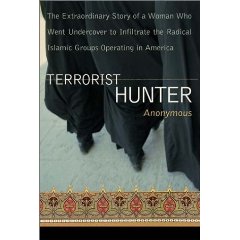
Review: Terrorist Hunter–The Extraordinary Story of a Woman Who Went Undercover to Infiltrate the Radical Islamic Groups Operating in America

5 Star, Intelligence (Government/Secret), Intelligence (Public), Religion & Politics of Religion, Terrorism & Jihad
0Shares

Amazon Page
Amazon Page

5.0 out of 5 stars US Terrorism, Open Sources, and Federal Ineptitude,

May 24, 2003
Anonymous
WARNING NOTICE: Reliable sources in the counter-terrorism world inform me that this book is partly fiction in that the author is systematically integrating the accomplishments of others into her story as if they were her own. I have, however, decided to leave my review intact because she tells a very good story and its key points are right on target. I recommend the book for purchase by all–on balance it is a fine contribution.—-

Although there are no endorsements or other means of validating the truth of this book, and “woman with four-children” may be a cover for a hyper-active Israeli man in his mid-20's who is of Arab descent, it reads with enormous credibility, it is loaded with correct references, and its many anecdotes about both the value of public records (open sources) and U.S. federal government ineptitude (especially the FBI but also including State, AID, INS, and the CIA) are in my opinion spot on.

This book is an excellent companion to Steven Emerson's book, AMERICAN JIHAD: The Terrorists Living Among Us. Indeed, it has occurred to me that the anonymous author of this book is, if not working directly for Emerson, then possibly in one of the Jewish-funded research elements that he relies upon for research assistance.

Among the many compelling points that I found to recommend the purchase and reading of this book are:

1) Israeli McCarthyism against any Jew willing to express need for a Palestinian state as part of regional stabilization
2) The Rabin assassination as the Israeli equivalent of the US Kennedy assassination–everyone remembers where they were
3) The vital importance of reading all Islamic charity information in Arabic, where the messages are violent and subversive–English for the fund-raising, Arabic for the incitement to terrorism
4) The catastrophic cost of American naivete pre-9-11 in putting all religious and charitable organizations off limits to US counterintelligence, however inept it might have been
5) The extraordinary utility of public records, not just within the US but from Israel and the Arab states, in nailing down relationships among charitable organizations, Saudi financiers, and specific individual terrorists
6) The extraordinary utility of historical (back ten years) Arabic newsletters and newspapers in nailing threatening statements and jihad intentions of people applying for US citizenship or already US citizens, because the federal government has no clue how to do proper open source research
7) The accuracy of the 1990 predictions of American proponents of jihad who claimed that the US's ultimate intent was to “occupy the Arab and Islamic oil sources”
8) The degree to which African Americans have been pulled into the jihad-aspects of Muslim extremism as practiced and preached in the US
9) The ineptitude of the FBI's “knock knock” neighborhood canvassing approach to basic information, completelely eschewing proper open source research and proper undercover collection
10) The ineptitude of the FBI in particular, but the US government in general, in sharing information about terrorists and their organizations (we are amused to note that Aqil Collins, in My Jihad, is virulent on this topic–evidently one thing both mujahids and Israeli counter-terrorism researchers can agree upon is that the FBI was and remains inept)
11) The suspect loyalties and competence of the FBI liaison to Saudi Arabia, who is of Muslim faith and refused to do proper undercover work against other Muslims while posted in the US
12) The pervasive and deep Saudi financial links to all aspects of US Muslim extremism, to include funding for mosques intended to be centers for radicalization over the long term
13) The early open source literature on how Bin Laden decided to apply his construction expertise to solving both smuggling and storage and protection issues in Afghanistan (we have in other reviews noted the importance of the book on Vietnamese tunnels, titled “The Tunnels of Cu Chi”)

As I finished the book, I agreed completely with the author's basic premise, to the effect that open source information about US terrorist and charity ties, properly validated, should be posted to the Internet for all to see. This appears to be the only proper response to continuing federal ineptitude. The author is compelling in stating that in the years since 9-11, very little has improved. The FBI continues to refuse to share, the State Department continues to be incompetent at screening terrorists out (and in one instance, allowed the Agency for International Development to offer funding to a known terrorist organization), the list goes on.

This is a very impressive personal account. The author's proven accomplishments, well-documented in the book, lend credence to the value of open sources and methods in the war on terrorism–and lend credence to the legitimate concerns of citizens who are overly trusting in their federal government, which appears to still be, 2 years after 9-11, massively inept.

Vote on Review
Vote on Review

Review: Free Flight–Inventing the Future of Travel

5 Star, Best Practices in Management, Biography & Memoirs, Future
0Shares

Amazon Page
Amazon Page

5.0 out of 5 stars Opens the Sky to Non-Pilots, Great Overview,

May 24, 2003
James Fallows
I bought this book for a very practical reason. In the aftermath of 9-11 I was thinking about moving to Smith Mountain Lake, four hours drive to the South of Washington, D.C., and I wanted a sense of whether “general aviation” might provide me with a once a week “commuter solution” for getting back up to the National Capitol Area.The book is fully satisfactory. While some might complain that it tells a personal story, I found this perfectly useful as a means of understanding both the pros and cons of airline travel through “hubs” that impose time loss on the passengers for the convenience of the commercial airline companies, versus “general aviation” which allows point to point travel.

Most interesting to me was learning that with the hubs and the problems inherent in airline travel today, the average speed for any trip by air can be just about the same as the average speed if going by car–60 miles per hour.

I ended this book with three understandings that more than warranted its purchase:

1) I, a non-pilot, could easily learn to fly and it would not only be worth my while, but great fun as well.

2) General aviation, while not as robust as it could be, is alive and well in America, and new solutions (including an airplane that comes with its own parachute, lowering the entire plane, with passengers, in the event of an engine failure) are there.

3) NASA (National Aeronautics and Space Agency) does a lot more than space flight–I was quite astonished to find that they are heavily engaged in thinking about general aviation solutions, and generally optemistic that in an era when time is the most precious commodity, and general aviation may be a solution for many businessmen as well as traveling families that shy away from the nightmare of getting kids through airports.

Bottom line: a great read, a great buy, and a vision into the future that is practical and fun.

Vote on Review
Vote on Review

Review: Environmental Security and Global Stability–Problems and Responses

5 Star, Best Practices in Management, Complexity & Resilience, Environment (Problems), Environment (Solutions), Security (Including Immigration), Strategy
0Shares

Amazon Page
Amazon Page

5.0 out of 5 stars

May be “Ref A” for New National Security Focus,

May 24, 2003
Dr. Col Max Manwaring
Vice Admiral Paul G. Gaffney II
This book is very original and very helpful in exploring an area of national security conceptualization and doctrine that has been long neglected–that of the relationship between environmental security and stability, and all the bad things that happen when this is lost–ultimately causing poverty, mass migrations, disease, crime, and war.The contributing editor, Dr. Max Manwaring (Col USA Ret) uses an interview with General Anthony Zinni, then Commander-in-Chief of the Central Command, to examine key issues such as the desperate need for inter-agency coordination and information sharing, the looming catastrophic problems with rain forests, seabed resources, and inland water scarcity, ending with the urgent need for a national security “game plan” for dealing with this non-traditional threat over time and across all nations including the 32 failed states where many of the problems will not be addressed without outside intervention.

All eight of the chapters, the last being a conclusion by the contributing editor, make provocative, documented cases for the urgency of this non-traditional threat. Throughout the book it is clear that the US Department of Defense has some extremely bright uniformed and retired (teaching) officers who are thinking great thoughts, and it is equally clear that they are not being listened to. This book is probably ten years ahead of its time, and it will be ten years before this book is read and understood by a Secretary of Defense (or ten years before someone reading the book today will be eligible for that position).

I recommend this book be read together with Andrew Price-Smith's book on “The Health of Nations” (on re-emerging infectuous diseases), Laurie Garrett's book “Betrayal of Trust: The Collapse of Global Public Health”, Marq de Villiers' book “WATER: The Fate of Our Most Precious Resource”, David Helvarg's “BLUE FRONTIER: Saving America's Living Seas,” and Brian Czech's “Shoveling Fuel for a Runaway Train” (on errant economists and shameful spenders).

Vote on Review
Vote on Review