Babette Bensoussan: Have You Tried Failure?

Commercial Intelligence, Cultural Intelligence
Babette Bensoussan

Have you heard……. failure is one of the biggest indicators of future success in an entrepreneur. Many venture capitalists won't invest in a new enterprise if the founder has never undergone failure – why?

From failed efforts it is proven that we have our best learning experiences, we grow, and we gain the experiences necessary for future significant successes. The fact is that businesses will not assume the risks necessary for innovation and developments if they're not ok with the idea of failing on some level.

There are those who are so afraid of failing they will do anything to avoid it. The problem with fearing failure is that you ultimately avoid risk, and this can stunt your richest experiences. Apparently those who have never faced a failure in a product, division or business don't have the experience that is valued in business. However, no-one wants to fail!
The key is to manage for failures. Be prepared to share what went wrong and dissect it. Another strategy is to create a “disengagement process” for getting out of a project that is showing triggering signs of failure.
It could be assumed that it is simply less disappointing and easier to not work that hard and not reach success. The excuse is built in to the equation already. What would happen if you tried your hardest and it didn't work out? The real question is – what if you didn't? What could you be losing out on by never trying at all?

What are you doing to minimise the risk of failure? We might be able to help.

Best regards
Babette Bensoussan

Source: Venture Capitalists Are Looking for Failures“, News from WomenOnBusiness.com, 30 March 2011,
Event: Free Online Download Why Stone-Age Instincts Run Your Life & How Science Can Change That

04 Education, 11 Society, Advanced Cyber/IO, Communities of Practice, Cultural Intelligence, Earth Intelligence, Ethics, Methods & Process, Strategy, Threats
Tom Atlee

Dear friends,

I’m excited to let you know about an upcoming free teleseminar by colleagues of mine, Michael Dowd and Connie Barlow. This couple is well known for their work in translating the various evolutionary sciences into practical wisdom for meeting the challenges of everyday life.

The focus of their hour-long audio seminar will be, as they summarize it: “Why the Stone-Age instincts we’ve all inherited can so often challenge us in our modern-day settings—and how new discoveries in the evolutionary and human sciences offer perspectives that are both practical and profound.”

Michael and Connie were the ones who launched me into my own evolutionary perspective, which expanded and deepened into the vision in my book REFLECTIONS ON EVOLUTIONARY ACTIVISM.

I'm beginning to see an emerging whole-life curriculum to bring actionable evolutionary understandings into virtually every aspect of life, just as feminist and ecological understandings have spread into every niche.  The first rough outline of such an “evolutionizing” curriculum might look something like this:

*  Evolutionize yourself and your relationships:
Connie and Michael's class
*  Evolutionize your groups, organizations and communities:
Peggy Holman's ENGAGING EMERGENCE
*  Evolutionize your society and social systems:
Tom Atlee's REFLECTIONS ON EVOLUTIONARY ACTIVISM
Robert Wright's NON-ZERO
John Stewart's EVOLUTION'S ARROW
Paul Ehrlich and Robert Ornstein's NEW WORLD, NEW MIND
*  Evolutionize your worldview
Elisabet Sahtouris' EARTHDANCE
Thomas Berry and Brian Swimme's THE UNIVERSE STORY
Michael Dowd's THANK GOD FOR EVOLUTION
David Sloan Wilson's EVOLUTION FOR EVERYONE

There are many other dimensions that could be included in such a curriculum — evolutionizing technology, education, heatlh care, you name it — and dozens of other really fine books and other resources that could be used — but the general idea in this outline intrigues me and, I hope, others who might act on it.

I invite you get a good whiff of how this perspective could play out in your own life.  Check out Connie and Michael's free evening teleclass this Wednesday (May 18th) — “Evolutionize Your Life: The Science of How to Decode Human Behavior, Eliminate Self-Judgment, and Create a Big-Hearted Life of Purpose and Joyful Integrity”.   You can read more about it and register at http://bit.ly/EvolutionizeLifeClass .

Enjoy!

Coheartedly,
Tom

Australia to Microsoft: You’re Fired

04 Education, Academia, Advanced Cyber/IO, Collaboration Zones, InfoOps (IO), Methods & Process, Strategy, Technologies
Marc Bailey

Marc bails out Macquarie Uni on business intelligence

HTML5 business intelligence developed by Australians

James Hutchinson

ComputerWorld, 16 May 2011

Marc Bailey wants to kill the spreadsheet.

At least, that’s what the research fellows at Macquarie University asked for when he first stepped on board as CIO in late 2009. The proliferation of Microsoft Excel documents, changed countless times and shared between any number of siloed departments at the institution, had created “islands of data” that made one of his first challenges a seemingly insurmountable one.

Nearly 18 months later, and with nine months of development under the belt, the first release of the solution — Datamart — was pushed out to university staff in April this year. The offering, built upon Web-based software offered by Melbourne outfit Yellowfin, replaced multiple business intelligence systems and, of course, the spreadsheet.

. . . . . .

Bailey says the second year is all about leveraging the data often hidden under illusions of protection by university staff, and leveraging the infrastructure the IT team worked hard to replace in his first year at the institution.

. . . . . .

Bailey’s first year has been characterised by his challenge to form what is now known as the Informatics team and pursue technology goals centred around students and staff, rather than controlling the technology. The department has been split into nine groups, with Bailey heading the federation of those groups under his overarching strategy.

Read full article….

Phi Beta Iota: Emphasis added.  This is a tremendously important initiative.

See Also:

Graphic: Business Intelligence Hits the Wall

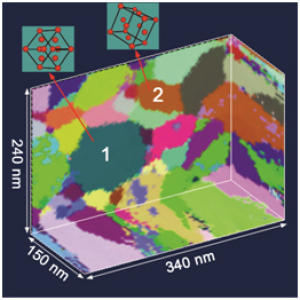
3D Images of the Structure Inside Material

03 Environmental Degradation, Academia, Analysis, Commerce, Commercial Intelligence, Earth Intelligence, Methods & Process, Policies

Three-Dimensional Orientation Mapping in the Transmission Electron. This image shows the arrangement of crystals in a 150nm thick nanometal aluminium film. The crystals have identical lattice structure (arrangement of atoms) but they are orientated in different ways in the 3-D sample as illustrated by the labels 1 and 2.

The colours represent the orientations of the crystals and each crystal is defined by volumes of the same colour. The individual crystals of various sizes (from a few nm to about 100 nm) and shapes (from elongated to spherical) are clearly seen and mapped with a resolution of 1 nanometer.

(Credit: Image courtesy of Risø National Laboratory for Sustainable Energy)

ScienceDaily (May 16, 2011) — Scientists from Denmark, China and USA have developed a new method for revealing 3-D images of the structure inside a material.

Read complete article….

Secrecy News: Executive Privilege–Thomas Drake, Whistleblower, as a Political Prisoner in the USA…

07 Other Atrocities, 09 Justice, 10 Security, 11 Society, Corruption, Counter-Oppression/Counter-Dictatorship Practices, Cultural Intelligence, Ethics, Government, Officers Call, Power Behind-the-Scenes/Special Interests, Secrecy & Politics of Secrecy
Click on Image to Enlarge

A CLOSE LOOK AT THE THOMAS DRAKE CASE

An insightful account of the pending prosecution under the Espionage Act of former National Security Agency official Thomas A. Drake appears this week in The New Yorker.  Author Jane Mayer delves deeply into the origins of the case stemming from Drake's critical view of NSA management and surveillance practices. She explores the unfolding consequences of the case and its larger significance.

Among the article's many striking observations on the Drake case is the concluding quote from Mark Klein, a former AT&T employee who exposed warrantless surveillance activity by the Bush Administration. “I think it’s outrageous,” he says. “The Bush people have been let off. The telecom companies got immunity. The only people Obama has prosecuted are the whistle-blowers.”

See “The Secret Sharer” by Jane Mayer, The New Yorker, May 23, 2011.

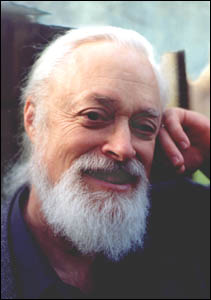
Photo Caption:  Drake, a former senior executive at the National Security Agency, faces some of the gravest charges that can be brought against an American citizen. Photograph by Martin Schoeller.

Future of the Library versus Future of the Librarian

Advanced Cyber/IO, Communities of Practice, Cultural Intelligence, info-graphics/data-visualization, IO Mapping, IO Multinational, IO Sense-Making, Methods & Process, Policies, Threats
Seth Godin Home

The future of the library

What is a public library for?

First, how we got here:

Before Gutenberg, a book cost about as much as a small house. As a result, only kings and bishops could afford to own a book of their own.

This naturally led to the creation of shared books, of libraries where scholars (everyone else was too busy not starving) could come to read books that they didn't have to own. The library as warehouse for books worth sharing.

Only after that did we invent the librarian.

The librarian isn't a clerk who happens to work at a library. A librarian is a data hound, a guide, a sherpa and a teacher. The librarian is the interface between reams of data and the untrained but motivated user.

After Gutenberg, books  got a lot cheaper. More individuals built their own collections. At the same time, though, the number of titles exploded, and the demand for libraries did as well. We definitely needed a warehouse to store all this bounty, and more than ever we needed a librarian to help us find what we needed. The library is a house for the librarian.

Continue reading “Future of the Library versus Future of the Librarian”

Economic Complexity Visualized–A New Mind Tool

03 Economy, Academia, Commerce, Commercial Intelligence, IO Sense-Making, Key Players
Michael Ostrolenk

The Art of Economic Complexity

A new way to visualize a country’s development.

By TIM HARFORD

Graphic by CÉSAR A. HIDALGO and ALEX SIMOES

New York Times, 11 May 2011

EXTRACT: Strip away the mathematical language of economists, and conventional theories of economic growth are rather crude. Economies produce “stuff,” and if you want more stuff to come out of the process, put more stuff in (like human capital, say). Yet economies do not produce stuff so much as billions of distinct types of goods — perhaps 10 billion, according to Eric Beinhocker of the McKinsey Global Institute — ranging from size 34 dark stonewash bootcut jeans to beauty therapies involving avocado. The difference between China's economy and that of the United States is not simply that China's is smaller; it has a different structure entirely.

Read article, see graphs

Visit the MIT Economic Complexity Observatory

Phi Beta Iota: This is a very promising line of inquiry.  It does not include the vital but poorly understood interactions among political-legal (integrity), socio-economic (fairness), ideo-cultural (education), and techno-demographic (balance), and natural-geographic (true cost, sustainability).  As with most intellectual work these days, it is a thin slice across one dimension of very complex sphere–the world is NOT flat.

noble gold