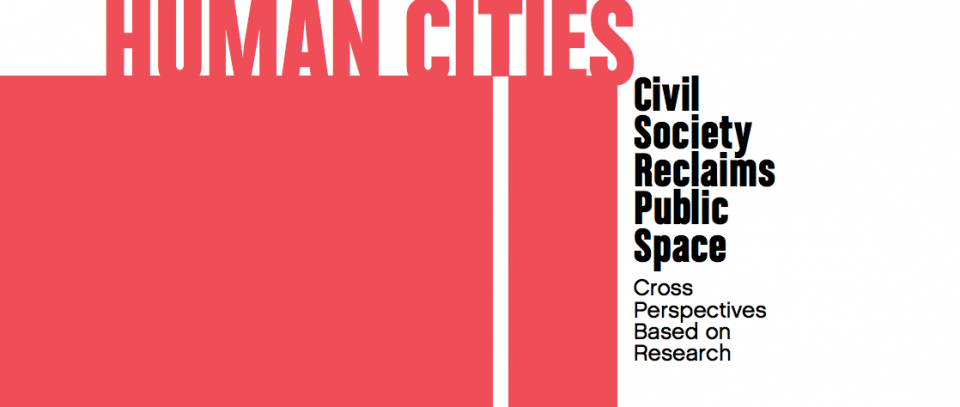
Human Cities Symposium in Bruxelles.
The proceedings for the conference have just been published.
You can also click below to download them.

The truth at any cost lowers all other costs — curated by former US spy Robert David Steele.
Human Cities Symposium in Bruxelles.
The proceedings for the conference have just been published.
You can also click below to download them.
Towards a Match.com for Economic Resilience in a Crisis-Stricken World
So that’s what he’s been up to! My good friend and mentor Ken Banks of Kiwanja fame has just launched a very interesting initiative entitled “Means of Exchange“. Ken wants to democratize opportunities for radical economic self-sufficiency and thus render local communities more resilient to exogenous shocks. “I’ve been taking an increasing interest in economic resilience,” writes Ken, “particularly how technology might help buffer local communities from global economic down-turns. Ironically, since I started my research the world has entered a period of growing economic uncertainty. The causes–although fascinating–don’t so much interest me, more the response at local, grassroots level.”
To say that Ken’s ideas directly resonate with my ideals would be a huge understatement. My iRevolution blog is currently in its fifth year of production and as the About page explains, “This blog features short thought pieces on how innovation and technology are revolutionizing the power of the individual through radical self-sufficiency, self-determination, independence, survival and resilience.” I’m incredibly excited by Ken’s new initiative. He quotes this excellent comment by Calvin Coolidge, which really hits home:
“We pay too little attention to the reserve power of the people to take care of themselves. We are too solicitous for government intervention, on the theory, first, that the people themselves are helpless, and second, that the government has superior capacity for action. Often times both of these conclusions are wrong.”
I have written many a blog post on this very people-centered notion as applied to crisis early warning and humanitarian response. Hence my pitch two years ago for a Match.com applied to humanitarian relief. Take this blog post, for example: “The Crowd is Always There: A Marketplace for Crowdsourcing Crisis Response.” But Ken is not just advocating for a “Match.com for Economic Resilience,” he is also building the infrastructure to make it happen: “A number of apps to support this work are planned for rollout during the year, with the first due for release in summer 2012.”

Despite appearances, Indignados are (not so) silently gaining strength
The 15-M movement has gone beyond protest: it has succeeded in altering the collective imagination and the political atmosphere at its very roots. It has generated a process of re-politicization of society. The agenda of actions has expanded and been radicalized: now we do not only occupy the squares, but we are taking back the public spaces in our own neighborhoods. We stop evictions. We crowd-fund our initiatives. We bring legal actions against bankers. We build our own parallel networks of social support. Does this show a weakened movement, running out of strength? Or does it rather show a dynamic movement, working in the underground on a silent revolution?
Far from losing strength, decentralization has allowed 15-M to become ever more dynamic, writes Martha Sanchez:
“Is the 15-M movement going invisible? Or is it rather gaining strength in the ‘underground’? The mainstream media keep claiming that the indignados have lost support since last year, that its only success is its ability to bring people together on special dates. Spanish newspaper El País concluded in May 2012 that, one year after the birth of the movement, popular support and sympathy for the indignados had decreased around 13% among the Spanish population, despite the massive mobilizations that took place from the 12th until the 15th of May, commemorating the anniversary of the movement. ABC opened its edition of May 15 stating that “the indignados movement shows less strength on their anniversary.” But the media misses the point. In reality, rather than losing strength, the movement has become stronger, more organized, better coordinated, and supported by the commitment of hundreds of people.
The decentralization of the movement
Continue reading “Michel Bauwens: Indignados are (not so) silently gaining strength”
by John Robb on June 25, 2012
Writing from: Aspen, CO. I’m speaking/attending the National Geographic Environmental Conference (focus of the conference: adapting to climate change).
I had the good fortune of sitting on a conference panel with Mayor Fetterman of Braddock, PA.
He’s a great bear of a guy (he makes me, at 6′ 1″ and well built, look small in comparison), but despite his size, he looked like he was slowly being crushed by the weight of the world when he showed up at the panel.
His story explained why. He’s spent the last decade trying to save a storied American town, crushed by global economic and financial forces. Forces that gutted a prosperous steel town of 18,000 with some historical treasures (e.g. the first Carnegie Library) and a thriving retail sector.
When Fetterman arrived in Braddock, the town was already in shambles. The population had fallen to below 3,000 and gang crime was rampant. In fact, the landscape of the town was so bleak, the town was used as a setting for the darkest apocalypse movie I’ve ever seen, “The Road“

Wealthy Americans Jumping Obama’s Ship
NewsMax, Sunday, 24 Jun 2012 12:46 PM
Wealthy Americans aren’t just leaving tax-heavy states like New York and California, they’re leaving the country.
U.S. citizens are defecting at record levels in order to escape high taxes, the New York Post reported. About 8,000 U.S. citizens are projected to renounce their citizenship in 2012, or about 154 a week — versus 3,805 in 2011, or about 73 per week, according to immigration officials, the Post reported.
They want to avoid tax bills resulting from the proposed 55-percent hike on the wealthy and the anticipated expiration of the Bush-era tax cuts at the end of the year, the Post reported.
“High-net-worth individuals are making decisions that having a US passport just isn’t worth the cost anymore,” Jim Duggan, a lawyer at Duggan Bertsch, which specializes in protecting assets of the wealthy, told the Post.
“They’re able to do what they do from any place in the world, and they’re choosing to do it from places with much lower tax rates,” he said. “Some are philosophically disgusted at the course our country is taking in all kinds of ways. They’re making a strong protest of, ‘Enough is enough.’ But largely it’s an economic decision.”
But to leave means finding a new country and obtaining citizenship and there are many that are eager to welcome wealthy Americans, such as Australia, Norway, Singapore, Cayman Islands, Costa Rica, and Antigua, according to the Post.
These countries tend to offer a fast track to citizenship and protections from the Justice Department and IRS.
Crisis Mapping the End of Sudan’s Dictatorship?
Anyone following the twitter hashtag #SudanRevolts in recent days must be stunned by the shocking lack of coverage in the mainstream media. The protests have been escalating since June 17 when female students at the University of Khartoum began demonstrating against the regime's austerity measures, which are increasing the prices of basic commodities and removing fuel subsidies. The dissent has quickly spread to other universities and communities.
There's no doubt that Sudan's dictator is in trouble. He faces international economic sanctions and a mounting US$2.5 billion budget deficit following the secession of South Sudan last year. What's more, he is also “fighting expensive, devastating, and unpopular wars in Darfur (in the west), Blue Nile, Southern Kordofan, and the Nuba Mountains (on the border with South Sudan)” (UN Dispatch). So what next?
Enter Sudan Change Now, a Sudanese political movement with a clear mandate: peaceful but total democratic change. They seek to “defeat the present power of darkness using all necessary tools of peace resistance to achieve political stability and social peace.” The movement is thus “working on creating a common front that incorporates all victims of the current regime to ensure a unified and effective course of action to overthrow it.”
According to GlobalVoices, “The Sudanese online community believe that media coverage was an integral part of the revolutions in Egypt and Tunisia, and are therefore demanding the same for Sudan.” The political movement Sudan Change Now is thus turning to crisis mapping to cast more light on the civil resistance efforts in the Sudan:
By Laura Wilson on
 Got a birthday, anniversary, or wedding coming up?Let your friends know how important this election is to you—register with Obama 2012, and ask for a donation in lieu of a gift. It’s a great way to support the President on your big day. Plus, it’s a gift that we can all appreciate—and goes a lot further than a gravy bowl.
Setting up and sharing your registry page is easy—so get started today.
The actual URL:
http://www.barackobama.com/news/entry/the-obama-event-registry
Phi Beta Iota: We do not make this stuff up.
