Cases of the MERS Coronavirus have significantly increased in the last few months, and in recent weeks there have been reports of the virus in new countries including Egypt, Malaysia, the Philippines, and Indonesia, leaving officials struggling to figure out why infections have increased.
The sad reality is that international finance has largely become a criminal enterprise. This is part of the growing Inequity Trend and, I think, it is going to lead to another worldwide economic collapse sometime in the near future. Click through to see the video.
Did climate change play an indirect role in the political upheavals that rocked Egypt in 2011? Absolutely, says Troy Sternberg. As he sees it, a once-in-a-century drought in China dramatically reduced global wheat supplies and sent prices skyrocketing in the world’s largest wheat importer.
By Troy Sternberg for Henry L Stimson Center
This article was originally published in The Arab Spring and Climate Change, which can also be accessed here.
Click on Image to Enlarge
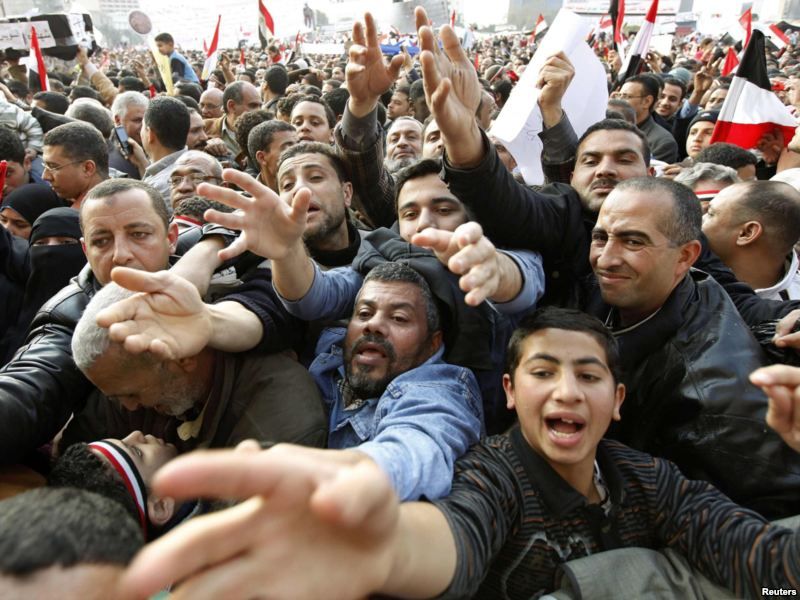
Chinese drought, global wheat prices, and revolution in Egypt may all appear to be unrelated, but they became linked by a series of events in the 2010–2011 winter.[1] As the world’s attention focused on protests in Egypt’s Tahrir Square, political and socioeconomic motives behind the protests were discussed abundantly, while significant indirect causes of the Arab Spring received little mention. In what could be called “hazard globalization,” a once-in-a-century winter drought in China reduced global wheat supply and contributed to global wheat shortages and skyrocketing bread prices in Egypt, the world’s largest wheat importer.[2] Government legitimacy and civil society in Egypt were upset by protests that focused on poverty, bread, and political discontent.
A tale of climate disaster, market forces, and authoritarian regimes helps to unravel the complexity surrounding public revolt in the Middle East. This essay examines the link between natural hazards, food security, and political stability in two developing countries—China and Egypt—and reflects on the links between climate events and social processes.
KBR and Halliburton – two major U.S. military contractors – can be sued for the health impacts of trash incineration on U.S. soldiers who served in the war in Iraq, according to a new court decision that allows a series of 57 lawsuits against the companies to go forward.
When financial crimes go unpunished, the root problem of fraud never gets fixed — and these are the consequences
Joseph and Mary Romero of Chimayo, N.M., found that their mortgage note was assigned to the Bank of New York three months after the same bank filed a foreclosure complaint against them; in other words, Bank of New York didn’t own the loan when they tried to foreclose on it.
Glenn and Ann Holden of Akron, Ohio, faced foreclosure from Deutsche Bank, but the company filed two different versions of the note at court, each bearing a stamp affirming it as the “true and accurate copy.”
Mary McCulley of Bozeman, Mont., had her loan changed by U.S. Bank without her knowledge, from a $300,000 30-year loan to a $200,000 loan due in 18 months, and in documents submitted to the court, U.S. Bank included four separate loan applications with different terms.
The following interview with David Isenberg [1] was carried out in Washington D.C., on January 15, 2014 by Patrick Renz and Frauke Heidemann. The main focus of the interview was on the definition of Private Military Companies (PMC), governmental oversight, the cases of Afghanistan and Iraq, the role of small arms in unstable states and the impacts of private contractors. All footnotes are remarks by Patrick Renz and Frauke Heidemann, aimed at giving some additional background knowledge and especially giving the links to the cited documents so that the reader can follow up on these issues easily.
QUESTIONS ONLY:
What type of PMC would you see as most important right now and in the future?
When you talk about the PMC operating in those situations, where do you see the challenges for governmental oversight? Will governments continue to employ PMC?
In Afghanistan, with the discussion about a ban of PMC, many local implementers or mining companies said they would leave Afghanistan if they felt no longer protected. Do you think one could argue that PMC are enabling investment and aid projects in unstable states or is that a false assumption?
From your experience with SIGIR, how did the protection of the oil pipelines and facilities in Iraq work in the post-conflict situation?
How do you see the link between PMC and the proliferation of small arms and light weapons, especially when looking at local PMCs?
What are the prime reasons for unstable states to allow for PMC to operate?
If PMCs hire locals, do you see a risk of taking away qualified people from the local police force or military?
What do you see as the biggest risk from having PMC operate in unstable areas?
PewOur now infamous one percent own more than 35 percent of the nation’s wealth. Meanwhile, the bottom 40 percent of the country is in debt. Just this past Tuesday, the 15th of April – Tax Day – the AFL-CIO reported that last year the chief executive officers of 350 top American corporations were paid 331 times more money than the average US worker. Those executives made an average of $11.7 million dollars compared to the average worker who earned $35,239 dollars.
As that analysis circulated on Tax Day, the economic analyst Robert Reich reminded us that in addition to getting the largest percent of total national income in nearly a century, many in the one percent are paying a lower federal tax rate than a lot of people in the middle class. You may remember that an obliging Congress, of both parties, allows high rollers of finance the privilege of ‘carried interest,” a tax rate below that of their secretaries and clerks.
And at state and local levels, while the poorest fifth of Americans pay an average tax rate of over 11 percent, the richest one percent of the country pay – are you ready for this? – half that rate. Now, neither Nature nor Nature’s God drew up our tax codes; that’s the work of legislators – politicians – and it’s one way they have, as Chief Justice John Roberts might put it, of expressing gratitude to their donors: ‘Oh, Mr. Adelson, we so appreciate your generosity that we cut your estate taxes so you can give $8 billion as a tax-free payment to your heirs, even though down the road the public will have to put up $2.8 billion to compensate for the loss in tax revenue.”