Here is some thinking that you might find interesting. Remember, history rhymes but doesn't repeat.
Here's a simplification of the historical pattern of Reformation. Think of it in terms of the global Capitalist system:
Universal system.
Compliance and participation enforced by violence.
Bureaucratic and lethargic. Corrupt and unfair. Hardship and misery.
Loss of legitimacy.
Challenged by reformers. Corruption exposed.
New technology unleashes a cacophony of criticism.
Reforms are rejected by the existing bureaucracy.
New, competitive systems are launched.
An exodus begins. People leave the old system to join the new.
The old system fights back. It reforms itself.
A fight ensues between the old and the new.
Eventually a peace is achieved and a new era begins.
Note that a Reformation doesn't mean complete rejection of the current system. It means a rejection of the existing implementation/hierarchy/rules due to corruption, failure, and injustice.
This grim reality is in part the impetus for the Occupy Wall Street movement, which, now in its fourth week, will take to the streets of Manhattan's Upper East Side Tuesday in what it is calling the “Millionaire's March.” Demonstrators will rally outside the homes of some of the city's wealthiest, including News Corp. (NWS) head Rupert Murdoch and JPMorgan Chase (JPM) CEO Jamie Dimon, to protest New York state's 2% millionaire tax set to expire at the end of the year.
October 3, 2011
Contact: Glenn Turner, 917-817-3396
glenn@ripplestrategies.com
Corn vs. Sugar Industries Legal Battle Heats Up Over “High Fructose Corn Syrup” Name Change
New Website FoodIdentityTheft.com Provides Background for Reporters and Consumers
Expert Legal Spokesperson Available For Interviews
WASHINGTON, October 3, 2011 High-Fructose Corn Syrup (HFCS) is a man-made sweetener used in thousands of grocery store products and it has a serious image problem. Consumers are avoiding it. Food companies are taking it out of the products they make. Some supermarkets have banned it. Demand for this highly-processed ingredient is falling fast.
The Corn Refiners Association comprised of corporations that make HFCS -decided that changing the name was a way to fix this problem. They are petitioning the FDA so that HFCS can legally be called “corn sugar” and ultimately just “sugar². An official decision hasn¹t yet been made, but in 2008 the Corn Refiners Association began a $50 million dollar marketing campaign labeling HFCS as ³corn sugar². They are now being sued by a group of sugar farmers and refiners who believe the name change will confuse consumers and harm the sugar industry.
How Real is Versailles on the Potomac?
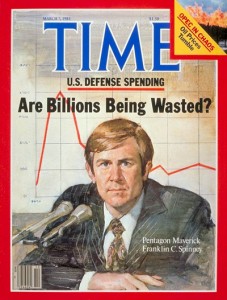
Chuck Spinney, 11 October 2011
Barcelona, Catalunya
I began using the phrase Versailles on the Potomac in the late 1990s as a metaphor for the ‘let-them-eat-cake’ politics of the Military – Industrial – Congressional Complex or MICC. The MICC’s pervasive practices of front loading and political engineering evolved insensibly during the Cold War to create a dysfunctional majority faction in the Congress that undermined the checks and balances of the Constitution by gradually transferring Congress’s power of the purse to the President. By 1990, it was clear the insatiable greed of MICC would prevent a sensible adaptation to the end of the Cold War.1 In my view, which I think has been borne out by events, the MICC’s greed not only undermined our nation’s adaptation to the collapse of the Soviet Union, but drove the United States into a reckless policy of adventurism and war warmongering, a policy that benefitted a few at the expense of the many. I summed up this viewpoint last January in my essay, The Domestic Roots of Perpetual War, which is also the first chapter in the Defense Labyrinth, a short handbook written by insiders to help interested citizens understand how the Pentagon really operates.2
Fast forward to the fall of 2011: The economic crash that began in 2007, the government's response to it, and the moral collapse of a one of the most promising presidents in American history make it clear that the metaphor Versailles on the Potomac should not have been limited to the MICC, because the MICC is but one thread in a larger fabric of degenerate political mutation. Since the late 1970s, democratic governance in the United States has been mutating into what can now be characterized as an intolerant neo-fascist oligarchy, where an increasingly unequal distribution of wealth is destroying the American middle class by enriching a tiny minority with unprecedented wealth. It is also clear that this super-rich minority is using its wealth to entrench and perpetuate its power by destroying our traditional institutions.
Think my statement is a little too wild?
Read the essay Debt and Dumb, published by the current issue of Vanity Fair. The authors, Simon Johnson and James Kwak, are hardly radicals,3 but they end their essay on in the same place: on the larger question of the ongoing political mutation of the United States into a Versailles on the Potomac.
Are the current demonstrations triggered by the Occupy Wall Street movement, and more importantly, the Oligarchy's hysterical reaction to them, in any way indicative of pre-revolutionary instabilities similar to those that emerged spontaneously in France during the late 18th Century?
Only time will tell, but massive forces may be afoot, and if they are afoot, they may well spin out of control.
1 James Madison explained the dangers of a majority faction in Federalist #10, where he laid out the logic of the system of checks and balances in the design of the Constitution. My pamphlet, Defense Power Games (1990), explained how the gaming strategies evolved by the MICC during the Cold War undermined these checks and balances and explained why the end of the Cold War would not result in a real peace dividend.
2 Defense Labyrinth was written by 10 pentagon insiders, retired military officers and specialists with over 400 years of defense experience and is available free of charge in pdf format, downloaded here or here.
3 They are editors of the influential financial blog, The Baseline Scenario. Johnson is a professor at MIT and a former Chief Economist of the International Monetary Fund.<
Phi Beta Iota: A tough read, getting through it twice confirms that the US Government and its ability to borrow are of concern to the 1% only in relation to their selfish interests. There is a chasm between those that pay taxes and those that steal their tax funds so great as to warrant a revolution.See Also:
It remains to be seen whether the Occupy Wall Street protests will change America’s direction. Yet the protests have already elicited a remarkably hysterical reaction from Wall Street, the super-rich in general, and politicians and pundits who reliably serve the interests of the wealthiest hundredth of a percent.
And this reaction tells you something important — namely, that the extremists threatening American values are what F.D.R. called “economic royalists,” not the people camping in Zuccotti Park.
Consider first how Republican politicians have portrayed the modest-sized if growing demonstrations, which have involved some confrontations with the police — confrontations that seem to have involved a lot of police overreaction — but nothing one could call a riot. And there has in fact been nothing so far to match the behavior of Tea Party crowds in the summer of 2009.
Nonetheless, Eric Cantor, the House majority leader, has denounced “mobs” and “the pitting of Americans against Americans.” The G.O.P. presidential candidates have weighed in, with Mitt Romney accusing the protesters of waging “class warfare,” while Herman Cain calls them “anti-American.” My favorite, however, is Senator Rand Paul, who for some reason worries that the protesters will start seizing iPads, because they believe rich people don’t deserve to have them.
A Bitcoin wallet ID for me: 18YYkAMVyZVt6gzpZvBEF5RgsJ7aT7a8Yh
Bitcoin, the digital currency system, is starting to mature. As is always the case, maturity isn't based on age (weak correlation) or success level. It's based on experience. More specifically, maturity is based on how many difficulties the system overcomes. The greater or more fiendish the difficulties successfully navigated, the more maturation gained.
Few systems have been through meat grinder of experience as much as bitcoin. From the media to pundits/experts to (the) government to hackers to criminals. Even a bubble! Everyone has taken a shot at it. Despite all of this, it is still trading at around ~ $4. The software is getting better (there is encryption built into the desktop wallet now). The core system remains intact and unbroken despite a huge number of attacks.
Most importantly, people are starting to learn how to handle real/tangible digital cash. Handling digital cash, particularly lots of it, is serious business. It needs to be protected and you can't leave it in the care of anybody you don't trust.
Essentially, bitcoin has repeatedly proven that digital currencies can work in the wild.
NOTE: The most interesting us of bitcoin to me? If it was used as a PLATFORM for private currencies or publicly traded securities rather than as simply as a currency.