Chuck Spinney: The Shadow World of the Global Arms Trade

04 Inter-State Conflict, 07 Other Atrocities, Commerce, Corruption, DoD, Government, Military, Money, Banks & Concentrated Wealth, Peace Intelligence, Power Behind-the-Scenes/Special Interests
Chuck Spinney

In my opinion, one of the most important books written in recent years on the subject of the global arms trade and its corrupting effects is Andrew Feinstein's, The Shadow World, Inside the Global Arms Trade. This voluminous book is mind numbing in its detail, but it is thoroughly sourced and, I believe, it will become a standard reference over time.  Anyone trying to understand the dark and dangerous corner of the global economy and its politics must read this book. (To be sure, I am biased because I was a minor source in this book and I consider Andrew a good friend.)

Naturally, the arms makers are not too happy with the Shadow World and want to keep it hidden in the musty stacks of your local library.  I am attaching two recent essays to help you determine if this book should be forgotten.  They were published on the Lexington Institute' Early Warning Blog.  Lexington is funded in large part by defense contractors and is hardly impartial on all matters regarding defense spending, so the first essay is quite expected; the second, however, comes as a surprise, to Lexington's credit.

The first essay is a predictable critique of Andrew's book by Robert Trice, a retired Senior Vice President of Lockheed Martin.  Think of his effort as an attempt to move Andrew's book to a forgotten corner in the back room.

To understand the saliency of Trice's effort, consider his career.  Robert Trice is a case study in  the quintessential pattern of gorging oneself on cash flow pumped out by the Military – Industrial – Congressional Complex's big green spending machine. Holding a PhD in political science, he began his defense career in the Office of the Secretary of Defense in the Pentagon, where he eventually became Director for Technology and Arms Transfer Policy — or in plain english, a resident shill in the Pentagon for promoting international arms sales — the subject painted in not so flattering terms by Feinstein.  Trice then moved to Capital Hill and worked as the defense Legislative Assistant to Senator Dale Bumpers (D-AR) for about three years. I met him in this position because Bumpers was interested in the military reform work my colleagues (Pierre Sprey and John Boyd) and I were doing in the Pentagon.  But Trice, as Bumpers' advisor, was clearly a reluctant reformer. (Although Bumpers showed initial and enthusiastic interest in our work, nothing came of it.)  In the essay below Trice now slings a little mud, saying the three of us are not just wrong but wrongly motivated, because we are “anti-defense.”  Soon thereafter, the presumably pro-defense Trice cashed out of Bumpers office to work in the Defense industry, serving first as a Vice President for Business Development at McDonnel Douglas (in plain english this is a marketing job and in the MICC, marketing, or business development, means greasing the skids in Congress and the Pentagon for your firm's tinker toys — which is a good position for a poly sci type, because he couldn't design airplanes at McAir or Lockheed).  Trice then moved to Lockheed Martin where his business development portfolio including shaping L-M's new business strategies and operations for the global market, which of course is the subject of Andrew's book.  Obviously a person with his background of bottom feeding so successfully in the MICC's money machine, especially in the international arms trade arena, comes to the reviewing table with … shall we say … a certain amount of bias.

The second essay is Andrew Feinstein's polite repost to Trice's bucket of grease.  Andrew's background could not be more different than that of Trice. Whereas Trice gorged himself and became a wealthy ‘pillar of the establishment' by slopping in America's defense trough, Andrew put his ass on the line trying to rein in the excesses of that trough's South African equivalent.  In the late 1980s, Andrew, a young white South African, joined Nelson Mandella's African National Congress (ANC), because he opposed Apartheid.  In 1994, after the fall of Apartheid, he was elected in South Africa's first democratic election to be an ANC member of parliament.  But Andrew took his parliamentary oversight responsibilities seriously, and while in parliament, he set up a kind of one man Truman Committee to investigate allegations of ANC corruption in some international weapons deals.  And he hit pay dirt, but rather than shutting up when he was pressured by party elders to close down his investigation into a £5bn arms deal that was tainted by allegations of high-level corruption, he resigned in protest from Parliament. His political memoir, After the Party: A Personal and Political Journey Inside the ANC, was published in 2007 and became a bestseller in South Africa.

With the backgrounds of these two protagonists in mind, I urge you to read Trice's critique of Andrew's latest book first (Attachment 1 below) and then Andrew's repost (Attachment 2 below) and judge for yourself who is closer to being a straight shooter — and read The Shadow World.

Whole Enchilada (Both Articles) Below the Line

Continue reading “Chuck Spinney: The Shadow World of the Global Arms Trade”

Marcus Aurelius: Special Forces Bypass Department of State?

02 Diplomacy, 10 Security, Ethics, Government, Military, Peace Intelligence
Marcus Aurelius

Do Special Ops Forces Have Too Much Autonomy?

By ANDREW ROSENTHAL

New York Times, 15 February 2012

Special Operations forces have long enjoyed an elite position in the United States military, and achieved something like folk-hero status when Navy Seals killed Osama bin Laden in Pakistan last May. The admiration is well-deserved, but an article in Monday’s Times drew attention to the power they’ve accrued of late, and raised questions about just how much independence they should have.

Carol Giacomo, who covers foreign affairs for the editorial board, says that the Obama administration has increasingly made Special Operations Forces its military tool of choice to handle threats overseas. It plans to rely on them even more widely as it draws down conventional troops from Afghanistan.

Eventually, Special Ops Forces will make up the bulk of any residual force left in Afghanistan, hunting down militants and helping train Afghan security forces. Administration and military officials are also talking about using them in regions where they have not operated in large numbers for the past decade, including Asia (the Philippines, specifically), Africa and Latin America.

The article on the front page of Monday’s Times reported that the top Special Operations officer, Adm. William H. McRaven, is now seeking authority to move his forces faster and outside of normal Pentagon deployment channels. The proposal has not been fully explained publicly but The Times reported that it would give him more autonomy to position his forces and their equipment where intelligence and global events indicate they are most needed.

Among congressional, staff—who have not yet been briefed on the proposal—there are questions about how such new authority might affect operations. “What problem are they trying to solve?” one aide asked. A Pentagon official, who spoke on background, insisted that Admiral McRaven “is not trying to fix something that’s broken. The proposal is anticipating what the future will be for these guys and getting ahead of it.”

The Pentagon official stressed that Admiral McRaven “is not looking for complete autonomy unanswerable to anybody” and that Special Operations Forces would still be ordered on specific missions by the regional four-star commander. But one concern is that the new plan would cut out the State Department. In the past, some ambassadors in crisis zones have opposed increased deployments of Special Operations teams, and they have demanded assurances that diplomatic chiefs of missions will be fully involved in their plans and missions.

The “global war on terror” has been used to justify a lot of things. But not everything changed on Sept. 11, 2001. Civilian control of the military is one thing that did not change. I can’t imagine a circumstance under which it should.

DefDog: Cyberwar is the New Yellow Cake

Computer/online security, Corruption, Government, IO Impotency, Law Enforcement, Military, Politics of Science & Science of Politics, Power Behind-the-Scenes/Special Interests, Secrecy & Politics of Secrecy
DefDog

The same has been said about the War on Drugs, the War on Terrorism, et al…..and nothing seems to back up the dire rhetoric, but the spending of tax dollars rolls on just the same.

Wired Opinion: Cyberwar Is the New Yellowcake

By

WIRED, 14 February 2012

In last month’s State of the Union address, President Obama called on Congress to pass “legislation that will secure our country from the growing dangers of cyber threats.” The Hill was way ahead of him, with over 50 cybersecurity bills introduced this Congress. This week, both the House and Senate are moving on their versions of consolidated, comprehensive legislation.

The reason cybersecurity legislation is so pressing, proponents say, is that we face an immediate risk of national disaster.

“Today’s cyber criminals have the ability to interrupt life-sustaining services, cause catastrophic economic damage, or severely degrade the networks our defense and intelligence agencies rely on,” Senate Commerce Committee Chairman Jay Rockefeller (D-W.Va.) said at a hearing last week. “Congress needs to act on comprehensive cybersecurity legislation immediately.”

Yet evidence to sustain such dire warnings is conspicuously absent. In many respects, rhetoric about cyber catastrophe resembles threat inflation we saw in the run-up to the Iraq War. And while Congress’ passing of comprehensive cybersecurity legislation wouldn’t lead to war, it could saddle us with an expensive and overreaching cyber-industrial complex.

Continue reading “DefDog: Cyberwar is the New Yellow Cake”

Penguin: “Or Your Lying Eyes…” Truth and Fiction in the News Business – Conspiracy of Lies While US Networks Prepare & Rehearse for Israeli Attack on Iran

Corruption, Government, IO Deeds of War, Media, Military
Who, Me?

“Or Your Lying Eyes…” Truth and Fiction in the News Business

Alex Cockburn

Counterpunch, Weekend Edition February 10-12, 2012

If you want a sense of what could well lie in store for Syria, go no further than Anthony Shadid’s report from Libya in the New York Times for February 9. Shadid, a good reporter, describes a dismembered country, rent by banditry.

EXTRACT:

As Byrne reported,

“Of the three main sources for all data on numbers of protesters killed and numbers of people attending demonstrations – the pillars of the narrative – all are part of the ‘regime change’ alliance.
The Syrian Observatory of Human Rights, in particular, is reportedly funded through a Dubai-based fund with pooled (and therefore deniable) Western-Gulf money (Saudi Arabia alone has, according to Elliot Abrams allocated US$130 billion to ‘palliate the masses’ of the Arab Spring).

What appears to be a nondescript British-based organization, the Observatory has been pivotal in sustaining the narrative of the mass killing of thousands of peaceful protesters using inflated figures, ‘facts’, and often exaggerated claims of ‘massacres’ and even recently ‘genocide’.”

And from the Arab League Report:

Continue reading “Penguin: “Or Your Lying Eyes…” Truth and Fiction in the News Business – Conspiracy of Lies While US Networks Prepare & Rehearse for Israeli Attack on Iran”

Owl: Shyness, Grieving Classified as Mental Illness Treatable by Drugs, Incarceration of Sane Next?

07 Health, 07 Other Atrocities, Civil Society, Collective Intelligence, Commerce, Commercial Intelligence, Corruption, Earth Intelligence, Government, Politics of Science & Science of Politics, Power Behind-the-Scenes/Special Interests, Uncategorized
Who? Who?

An article like this poses the question – who is really insane, psychiatrists or the people they treat?  When readers finish this article, they may vote for the former.

“In a damning analysis of an upcoming revision of the influential Diagnostic and Statistical Manual of Mental Disorders (DSM), psychologists, psychiatrists and mental health experts said its new categories and “tick-box” diagnosis systems were at best “silly” and at worst “worrying and dangerous.” Some diagnoses – for conditions like “oppositional defiant disorder” and “apathy syndrome” – risk devaluing the seriousness of mental illness and medicalising behaviors most people would consider normal or just mildly eccentric, the experts said. At the other end of the spectrum, the new DSM, due out next year, could give medical diagnoses for serial rapists and sex abusers – under labels like “paraphilic coercive disorder” – and may allow offenders to escape prison by providing what could be seen as an excuse for their behavior, they added.

Continue reading “Owl: Shyness, Grieving Classified as Mental Illness Treatable by Drugs, Incarceration of Sane Next?”

Berto Jongman: Anonymous Takes Down CIA Website + RECAP

Commerce, Corruption, Government, IO Impotency, Law Enforcement, Military
Berto Jongman

This refers to the external publicity site, not to any analytic or operational system.

Anonymous Takes Down CIA Website

Hacker group Anonymous on Friday took down the website of the Central Intelligence Agency (CIA), online publication PC Magazine reported.

The website is still offline.

“CIA TANGO DOWN: https://www.cia.gov/ #Anonymous,” the @YourAnonNews feed tweeted.

Anonymous did not make public the attack’s details, but the group’s hackers normally use distributed denial of service (DDoS) attacks to knock their targets offline.

“We are aware of the problems accessing our website, and are working to resolve them,” CIA spokeswoman Jennifer Youngblood said Friday night as quoted by the CNN.

Last month, Anonymous briefly took down the websites of the Department of Justice and the FBI in retaliation for the Megaupload file sharing site’s shutdown.

Phi Beta Iota:  The solution was clearly stated in 1994 and again in 2010.  Until the US Government gets a grip on “Smart Nation” and “Whole Earth” concepts of security at the code level, migrating to open source software across the board, and reinforcing all the shared nodes, it will continue to be easy to take down individual capabilities.  And if all else fails, most systems can be taken down by cutting their obvious external big wires and/or their satellite downlinks, most easily reachable from outside the wire with various means.

See Also:

Continue reading “Berto Jongman: Anonymous Takes Down CIA Website + RECAP”

Eagle: 300 Million Citizens – 100 Million Qualify for Poverty Phone?

Advanced Cyber/IO, Civil Society, Government, IO Deeds of Peace
300 Million Talons...

Mixed feelings. Great idea — one that has been recommended for the five billion poor everywhere else in the world.

Troubling:  out of 300 million citizens, 100 million qualify for this specific form of poverty assistance?

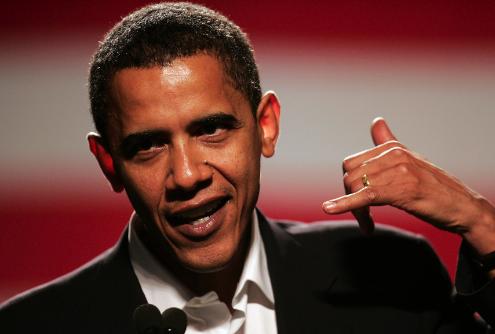
Obama Phone: Gov to Spend $2.4 Billion On Millions of Free Phones In 2012

Mac Slavo

SHTFplan.com, February 9th, 2012

One of the complaints about the U.S. Constitution recently, being as outdated as it is, is that it fails to guarantee certain unalienable rights such as free medical care, housing , food, and of course, the right to bear cell phones. And, although the founders failed to specifically cite social programs as a necessary element for promoting the general welfare, the living nature of our founding document has been interpreted by political and legal scholars alike to allow for the seizure of assets by force from one group of people in order to redistribute those assets in a fair and responsible manner to those less fortunate.

As such, if you’re one of the 100 million Americans living below or at the edge of the poverty line, you’ll be happy to know that you more than likely qualify for a free cellular phone, also known as the Obama Phone, from the US government:

Continue reading “Eagle: 300 Million Citizens – 100 Million Qualify for Poverty Phone?”

noble gold