Reference: Open Society on Afghan Views

08 Wild Cards, 11 Society, Cultural Intelligence, IO Sense-Making, Non-Governmental, Peace Intelligence, White Papers
Chuck Spinney Recommends

The below report by the Open Society Foundations (a Soros project) is extremely important and should get the widest distribution.  It documents the cumulative blowback caused by our narcissistic ideas about how to win the hearts and minds of the Afghans.  It does this by systematically examining the views of a wide variety of Afghans in an effort to construct an Afghan narrative of how the intervention is affecting their lives. That this narrative is often at variance with our views (which makes it easy to dismiss by western military leaders), the report shows why this is really quite beside the point.  Of particular interest (at least to me) is the Afghan narrative of the psychological effects of collateral damage cause by our all-seeing, all-knowing precision strike systems. It is a classic on how the ongoing self-referencing BS about the performance of these weapons is blowing back on itself to magnify the atmosphere of mistrust and alienation that is playing directly into the success of the insurgent's guerrilla strategy.

Of course, this report might be easily dismissed by those patriotic Amurikans, drunk on High Tea, as the subversive product of the lefty Hungarian-emigre George Soros, who is, after all, just another ‘other.'
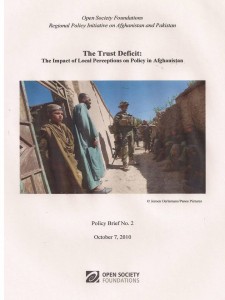
Downloadable PDF

Phi Beta Iota: A properly managed intelligence campaign would have anticipated and then closely monitored this kind of situational awareness.  It is called “Intelligence Preparation of the Battlefield.”  Neither CIA nor DIA know how to do this.

See Also:

Reference: Fixing Intel–A Blueprint for Making Intelligence Relevant in Afghanistan

Review: Operation Dark Heart–Spycraft and Special Ops on the Frontlines of Afghanistan — and the Path to Victory

Review: Surrender to Kindness (One Man’s Epic Journey for Love and Peace)

2010 INTELLIGENCE FOR EARTH: Clarity, Diversity, Integrity, & Sustainability

Journal: Oregon First “Smart State?” Learn More…

Civil Society, Collective Intelligence, Cultural Intelligence, Methods & Process, Non-Governmental
Tom Atlee

Dear friends,

Do you live in Oregon?  Do you have friends, associations, networks in Oregon?  If you do, I'm urging you to spread the word on one of the most important developments toward a wiser democracy in the US.

Although most Oregonians don't know it — and you and I are going to change that — Oregon just held the first citizen deliberative councils ever to be officially authorized by a government in the US.  Oregonians live in the first state to officially bring the “voice of the whole” — a legitimate, deliberative voice of We the People, above and beyond partisan debate — into public discourse, into the homes of voters, and into the official business of government.

Here's what happened:  Two “Citizen Initiative Reviews” — panels of randomly selected ordinary Oregonian voters — have passed “informed public judgment” on two ballot initiatives Oregonians will be voting on this November.  Authorized by the state legislature and the governor, their thorough study, expert interviews, and deliberations have clarified the issues and facts so Oregon's voters can more intelligently decide how to vote, to reflect their highest values.  These ordinary citizens have cut right through the partisan noise and TV ads that muddy up the initiative process.

More Photos of Oregon

This innovation could revolutionize elections.  The initiative form of direct democracy could once again become a tool of the popular will.  Broader use of the Citizen Initiative Review process could overcome special interests bent on turning popular will against the common good.

The only thing needed now to turn this budding breakthrough into a full-fledged transformation is for Oregonians to read, think about, and talk about the Citizen Initiative Review statements in Oregon's Voter Information Booklets (see the links below).   So we need to tell all our friends and associates in Oregon to do that.  If enough people see these statements — and realize how incredibly valuable they are compared to the repetitive, manipulative partisan spin and mudslinging that usually fill the airwaves and Voter Information Booklets — they will demand more of this kind of We the People voice in more aspects of our political life and governance.

I want to stress how important this is:  This initiative goes beyond surveys, because it is deliberative and it reveals common understandings, not just individual opinions.  If this spreads, we'll find ourselves on a really different political playing field, with new rules of play.  This is a potential game changer.  We have a chance to make a difference with it RIGHT NOW, during this one month before elections.

Please do what you can.

Below is a message I received from Healthy Democracy Oregon who spearheaded this remarkable innovation:

Continue reading “Journal: Oregon First “Smart State?” Learn More…”

Journal: Leveraging Local Entrepreneurs

Commerce, Commercial Intelligence, Methods & Process, Non-Governmental
Hisham Wyne

Hisham Wyne

Writer, columnist and armchair sociologist

Posted: October 1, 2010 12:35 PM

Social Entrepreneurs and Change in Dubai

An event revolving around the UN Millennium Goals, TEDx Change Dubai, recently gathered three hundred participants at the creek side Dubai Chamber of Commerce. Melinda Gates, wife of billionaire philanthropist and once Microsoft overlord Bill Gates, asked a pertinent question while streaming live from New York.

How is it that Coke can sell 1.5 billion servings daily and dispense to far flung areas that NGOs, Quangos and aid agencies have difficulty reaching with aid or vaccines? It's simple. Coke's distribution takes advantage of local entrepreneurs. NGOs often don't. Entrepreneurs are by nature both disruptive and generative. They distress the fabric of large business through hyper-local knowledge. They nimbly pounce on small market opportunities, or even build them from scratch. They catalyze economic spurts and the birth of cultures and sub-cultures as microcosms of activity appear around them. Their knowledge and drive can often be a powerful catalyst for social improvement.

Read balance of article…

How the “Entrepreneurial Design for Extreme Affordability” class launched several internationally known start-ups

01 Poverty, 03 Economy, 07 Health, 12 Water, Civil Society, Commerce, Cultural Intelligence, Gift Intelligence, International Aid, Methods & Process, Non-Governmental, Peace Intelligence, Strategy, Technologies
Source article

Working through partners, getting to market faster

The Entrepreneurial Design for Extreme Affordability class has launched several internationally known start-ups (including Embrace, Driptech and D.Light.) But main route for student teams to get their life-changing products into the hands of people in the developing world is by working with NGO partner organizations.

Working with partners is the quickest way to market: it eliminates the need to create a business model and distribution infrastructure, so that students can focus on getting the best possible product to people who need it.

Professor Jim Patel, who founded the class, and Erica Estrada, who teaches the class and directs our Social Entrepreneurship Lab, discuss why this is such a critical route-to-market for students in the class:

Continue reading “How the “Entrepreneurial Design for Extreme Affordability” class launched several internationally known start-ups”

Worth a Look: Old Guard Sums Up Strategic Situation

Government, Non-Governmental, Worth A Look
Conference Home Page

‘Global Security Governance and the Emerging Distribution of Power’

The 8th Annual IISS Global Strategic Review (GSR) has successfully concluded in Geneva. The GSR ran from 10-12 September 2010.

Phi Beta Iota: These are the same people that brought us the Global Governance 2025 report in partnership with the CIA.  All of the presentations are readily available at the conference website.

Journal: US Blows Off Haiti, No One Seems to Care…

08 Wild Cards, Civil Society, Gift Intelligence, Government, Non-Governmental, Peace Intelligence
AP Story Online

Haiti Still Waiting For Pledged U.S. Aid

The Huffington Post

JONATHAN M. KATZ and MARTHA MENDOZA | 09/29/10

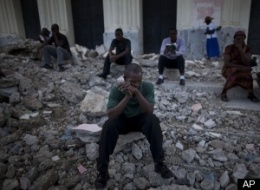
PORT-AU-PRINCE, Haiti — Nearly nine months after the earthquake, more than a million Haitians still live on the streets between piles of rubble. One reason: Not a cent of the $1.15 billion the U.S. promised for rebuilding has arrived.

The money was pledged by Secretary of State Hillary Rodham Clinton in March for use this year in rebuilding. The U.S. has already spent more than $1.1 billion on post-quake relief, but without long-term funds, the reconstruction of the wrecked capital cannot begin.

With just a week to go before fiscal 2010 ends, the money is still tied up in Washington. At fault: bureaucracy, disorganization and a lack of urgency, The Associated Press learned in interviews with officials in the State Department, the Senate Foreign Relations Committee, the White House and the U.N. Office of the Special Envoy. One senator has held up a key authorization bill because of a $5 million provision he says will be wasteful.

Meanwhile, deaths in Port-au-Prince are mounting, as quake survivors scramble to live without shelter or food.

Read rest of story…

Reference: Clinton Global Initiative Webcast Archives

01 Agriculture, 01 Poverty, 02 Infectious Disease, 03 Economy, 03 Environmental Degradation, 04 Education, 05 Energy, 07 Health, Civil Society, Commerce, Government, International Aid, Movies, Non-Governmental, Policy, Technologies
Permanent Archives

Enhancing Access to Modern Technology

Clean Technology and Smart Energy: Deploying the Green Economy

Democracy and Voice: Technology For Citizen Empowerment and Human Rights

Mobile Revolution: Transforming Access, Markets, and Development