Journal: UN–A Study in Contradictions

01 Poverty, 02 Infectious Disease, 03 Environmental Degradation, Government, Non-Governmental
Full Story Online

UN Summit Aims to Reduce Poverty, Hunger and Disease

U.N. members resolved a decade ago to reduce extreme poverty, ensure every child finishes primary school and stop the HIV/AIDS pandemic.  They also vowed to reduce child mortality, improve maternal health and reduce the number of people worldwide who do not have access to clean water and basic sanitation.

But a U.N. report earlier this year said several of the Millennium Development Goals are lagging and could fail without additional efforts.

Phi Beta Iota: The UN is an Industrial-Era government-centric organization, and is not making–or even recognizing the need to make–any adjustment to the Information-Era.  In the absence of public intelligence that enables all publics to see the fraud, waste, and abuse in their respective government's spending, and the relative return on investment of spending to achieve the Millenium Goals, the UN is severely handicapped and unlikely to be successful, especially in the midst of a global economic depression.


Y Combinator Hacker News Community’s Model for Info-Sharing & Potential for Collective Intelligence

03 Economy, 04 Education, 11 Society, Academia, Civil Society, Collective Intelligence, Commerce, Cultural Intelligence, Government, Hacking, Law Enforcement, Media, Military, Mobile, Non-Governmental, Peace Intelligence, Technologies

Hacker News” has a welcome page and guidelines page offering an overview of what the organizers expect from those planning on posting comments and why it's good overall for the community.  I (Jason Liszkiewicz) was impressed with this. Hacker News has a solid number of participants and provides a simple and mature format for exploring and contributing thoughtful feedback, insight and resources.

It has a jobs link (mainly for engineers and programmers) and the “Ask Hacker News” link which enables the community to share information and reply to what is shared. Such a model (deemed an “experiment”) that provides mature and thoughtful information-sharing is something we need more of. Communities inter-linking with communities (or at least over-lapping) to spill over each others insights can be invaluable and potentially priceless.

Example: Ask HN: What do you perceive as worth spending money on?

This simple and useful model is something I hoped would emerge + converge from the SMS/text messaging developers at ChaCha.com (humans online responding to text messaged questions) or somewhere else. Converging multi-community info-sharing online, offline, and through the mobile world on a global scale is an exciting possibility.

The next level to all of this exists in the form of ideas or fragmented applications but it seems not beyond that, yet.

Email earthintelnet|at|gmail.com or post something at this new forum to discuss these ideas. Or, provide some mature and thoughtful feedback at the Hacker News community.

Journal: DoD QDR–incomplete, incoherent, incredible…

Military, Non-Governmental, Peace Intelligence
Marcus Aurelius Recommends

In simple terms, the collection of links below centered on the latest Quadrennial Defense Review (QDR), come to the general conclusion that the Department of Defense (DoD) can no longer think, strategize, complete staff work, or acquire the right capabilities to do what DoD is supposed to do (which is also a topic lacking consensus).

SMALL WARS JOURNAL ROBERT HADDICK: Not trusting the Pentagon’s staff to prepare a Quadrennial Defense Review that would be useful, the Congress established an independent panel of “wise men” to critique the QDR after its release. Last Thursday, the QDR Independent Panel, led by William Perry and Stephen Hadley and supported by a praiseworthy list of commissioners and staff members, released its critique of the 2010 QDR. With the exception of one glaring clunker, the Independent Panel’s report is superb and is the strategic defense review the QDR should have been. Yet the very fact that the Independent Panel was needed (confirming Congress’s suspicions) shows that something is seriously wrong with the government’s ability to formulate and execute strategy.  Read more from Haddick.

INDEPENDENT CONGRESSIONAL PANEL OF EXPERTS: CORRECTED ADVANCE COPY The QDR in Perspective:
Meeting America’s National Security Needs In the 21st Century.
Read the Report

ORIGINAL QDR (February 2010)

Phi Beta Iota: Business profit center opportunities abound, the most notable being the provision of intelligence and shared computing and communications to multinational, multiagency, multifunctional forces that do not speak English.  The following two short lists are pulled from the Executive Summary of the Independent Report, which is the best “old” thinking (do the wrong things righter) and while utterly brilliant as far as it goes, lacking in “new” thinking (create a prosperous world at peace).  This report fails to point out the obvious, to wit, for one quarter of what we spend on war today ($1.3 trillion a year), we can eradicate all ten high level threats to humanity (the top three of which are not recognized by this report (poverty, infectious disease, and environmental degradation), in the process reinventing capitalism to go after the four trillion a year the five billion poor gross, which just happens to be four time what the one billion rich gross per year.

Continue reading “Journal: DoD QDR–incomplete, incoherent, incredible…”

Event: 10-12 Sept 2010, Berlin, Interdependence Day

02 Diplomacy, 10 Security, Academia, Civil Society, Collective Intelligence, Government, Non-Governmental, Peace Intelligence

Event page

Berlin, Germany 2010

In 2010 Interdependence Day will be celebrated in a dynamic global city and cultural melting pot at the heart of Europe.

> INTERDEPENDENCE DAY

In a world where global interdependence is not simply an aspiration of idealists, but a brute fact of the forces that bind us together— global warming, financial capital, AIDS, telecommunications, crime, migration, and terrorism—many people still think in narrow, insular terms.

Reality is global, but consciousness too often remains local — constrained by town and nation.

In the year 2000, a small group of scholars, civic and political leaders, and artists from a dozen nations met to design a program that might help raise consciousness around the realities and possibilities of interdependence. Their efforts were given impetus by the tragic events of September 11, 2001, and the group created a project that would:

> Make September 12, the day following the memorial of 9/11, an international celebration of interdependence “Interdependence Day”

> Draw up a “Declaration of Interdependence”, making clear that both liberty and security require cooperation among peoples and nations and can no longer be secured by sovereign nations working unilaterally;

> Develop a Civic Interdependence Curriculum that would make interdependence a central concept in Civics and Social Studies programs in middle and high schools in as many schools around the world as possible.

U.S. Blunder in Africa: PlayPumps Not Play

01 Poverty, 12 Water, Civil Society, Commerce, Government, Journalism/Free-Press/Censorship, Media, Misinformation & Propaganda, Non-Governmental
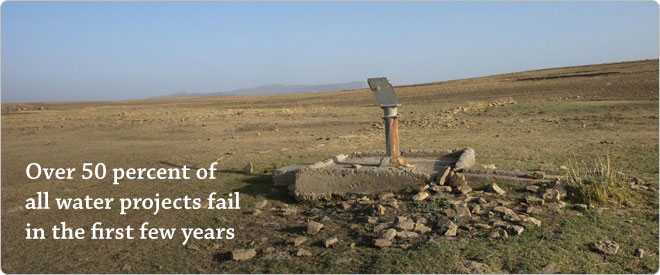
Play becomes work with playpump + eventually no water, no maintenance, and elder women can't use it. See synopsis and watch the Frontline video here

(clips from the synopsis about the Frontline video documentary)
Five years ago, Amy Costello reported a story for FRONTLINE/World. It was about the challenges of getting water in Africa, and a promising new technology called the PlayPump.

After years of covering “bad news” in Africa, she was happy to report a story that seemed to offer something to cheer about. Her story showed how simple it might be for children to pump fresh water just by playing. Behind it all, a South African entrepreneur named Trevor Field.

“A report commissioned by the Mozambique government on the PlayPump that was never released, cited problems with the pumps – women finding it difficult to operate; pumps out of commission for up to 17 months; children not playing as expected on the merry-go-rounds, and maintenance, “a real disaster,” the report said. “

Field had made his career in advertising, but when he heard about this new device, he formed a company and started making PlayPumps himself.

To cover maintenance costs, he proposed selling ads on the sides of the water tower. He said the PlayPump model would be a big improvement over the hand pumps that Africans have struggled with for years.

Continue reading “U.S. Blunder in Africa: PlayPumps Not Play”

Emergency response after the Haiti earthquake: Choices, obstacles and finance

01 Poverty, 02 Infectious Disease, 03 Environmental Degradation, 06 Family, 07 Health, AID, Civil Society, International Aid, Non-Governmental, References
Report link

Six months after the earthquake that devastated Haiti on 12th January 2010, this report describes the evolution of MSF’s work during what is the organisation’s largest ever rapid emergency response. It attempts to explain the scope of the medical and material aid provided to Haiti by MSF since the catastrophe, but also to set out the considerable challenges and dilemmas faced by the organisation. It acknowledges that whilst the overall relief effort has kept many people alive, it is still not easing some of their greatest suffering.

Report link

Related:
+ The sad math of U.S. aid in Haiti: 6 months, 2 percent (Washington Post, July 13)
+ Haiti Rolling Directory from 12 January 2010