Berto Jongman: Net Neutrality — Guide to and History of a Contested Idea

Corruption, Government, Idiocy, IO Impotency
Berto Jongman
Berto Jongman

Net Neutrality: A Guide to (and History of) a Contested Idea

If net neutrality is so important, why is it so controversial? It’s complicated.

Alexis C. Madrigal and Adrienne LaFrance Apr 25 2014

EXTRACT

But this debate isn't just about the specific wording of the possible FCC rules (though those are important). People have been talking about the principle of net neutrality, in one way or another, for more than 15 years, since Monica Lewinsky dominated the headlines.

This idea of net neutrality—this cherished idea, even, among Internet entrepreneurs and activists—has a long history, roughly as long as the commercial world wide web. It is, Harvard law professor Lawrence Lessig has argued, what makes the Internet special.

He used to call the principle e2e, for end to end: “e2e. Not b2b, or b2c, or c2b, or b2g, or g2b, but e2e. End to end. The core of the Internet, the core value that defined its power, the core truth that made innovation around it possible, is this e2e,” Lessig said in a 1999 talk. “The fact – a fact – that the network could not discriminate in the way that AT&T could.”

. . . . . . .

A decision by the FCC in 2002 to classify companies like Comcast as “information service providers” instead of “telecommunications carriers” ultimately undermined the agency's efforts to regulate those companies the way a telecommunication carrier would be regulated.

. . . . . . .

By common law, common carriers were 1) required to serve upon reasonable demand, any and all who sought out their services; 2) held to a high standard of care for the property entrusted to them; and 3) limited to incidental damages for breach of duty. The concept of common carriage crossed the Atlantic and became part of the American legal system. Common carriage was broadly applied to railroads and later other transportation as well as communications media. In 1901, following many state courts, the U.S. Supreme Court held that at common law– i.e., even without a specific statute– a telegraph company is a common carrier and owes a duty of non-discrimination. 

Read full article.

Continue reading “Berto Jongman: Net Neutrality — Guide to and History of a Contested Idea”

Berto Jongman: North Korea Flooding US Markets with Pure Crystal Meth

04 Inter-State Conflict, 07 Health, 07 Other Atrocities, 08 Wild Cards, 10 Transnational Crime, 11 Society, Government, IO Deeds of War, Officers Call
Berto Jongman
Berto Jongman

The ultimate asymmetric threat — and one that can be repurposed by others.

Brea-KIM bad! 99% pure crystal meth made in North Korea floods U.S. drug markets

  • U.S. police intercepted batch of highly addictive drug bound for New York
  • Tests revealed the ice-like crystals were 99 per cent pure
  • Communist state is said to be in the grip of a crystal meth epidemic
  • In some parts up to 50 per cent of the population are addicted
  • Parents said to offer the drug to their children ‘to help them concentrate'

Read full story.

Continue reading “Berto Jongman: North Korea Flooding US Markets with Pure Crystal Meth”

Rickard Falkvinge: Swedish Media Under Control, As Corrupt As US Media (Yes, That Is a Calculated Indictment)

Corruption, Media
Rickard Falkvinge
Rickard Falkvinge

One Month Before Elections, Swedish Oldmedia’s Pretend-Does-Not-Exist Attitude Toward Pirate Party Reaching Ridiculous Levels

Pirate Parties: In one month, on May 25 at 20:00, the voting stations close for the European Elections. You’re never entitled to complain when media doesn’t cover you, but for some reason, the fifth-largest party out of Sweden’s eight – the Pirate Party – is consistently omitted from listings, events, debates, and coverage ahead of European Elections. For a challenger, this would be acceptable, but not for a defender of title: the pretend-does-not-exist attitude is reaching ridiculous levels.

Sweden has eight parties in the European Parliament, all of which are up for re-election in exactly one month. Of these, the Pirate Party is the fifth largest with two seats out of Sweden’s 20; three political parties are measurably smaller with just one seat. In a reasonable election, these eight parties – defenders of their respective title – would be treated fairly equally, with credible challengers given a go at pointing out the shortcomings of the title defenders.

Yesterday, the Svenska Dagbladet (“Swedish Daily Paper”) – as the name implies, one of Sweden’s largest daily newspapers – published their election assistant with 25 questions to assist people in choosing which party to vote for. Launched on April 25, with the European Elections one month out, on May 25 – perfect timing. There’s only one strange catch: you can’t get a recommendation to vote for the Pirate Party. As in, the party is not even in there. The other seven title-defending parties are, as well as one challenger. The election assistant is effectively saying that the Pirate Party does not exist, but all the other seven do.

Read full article.

Continue reading “Rickard Falkvinge: Swedish Media Under Control, As Corrupt As US Media (Yes, That Is a Calculated Indictment)”

SchwartzReport: LIBOR Rigging a Known Crime Against Humanity – Federal Reserve & Treasury Known Co-Conspirators. Say What?

Commerce, Corruption, Government, Law Enforcement
Stephan A. Schwartz
Stephan A. Schwartz

The sad reality is that international finance has largely become a criminal enterprise. This is part of the growing Inequity Trend and, I think, it is going to lead to another worldwide economic collapse sometime in the near future. Click through to see the video.

Fed Knows LIBOR Rate Rigging is a Criminal Conspiracy-Ellen Brown
GREG HUNTER – USAWatchdog

Continue reading “SchwartzReport: LIBOR Rigging a Known Crime Against Humanity – Federal Reserve & Treasury Known Co-Conspirators. Say What?”

Berto Jongman: Jihadology – Pros and Cons and Outcomes of Imprisoning Muslims

Civil Society, Cultural Intelligence, Law Enforcement
Berto Jongman
Berto Jongman

GUEST POST: Damned if They Do, Damned if They Don’t: The Gordian Knot of Europe’s Jihadi Homecoming

By Zach Goldberg

Introduction

The homecoming of Europe’s jihadi volunteers (or émigrés) from Syria remains an enduring source of public disquiet. That battle-hardened and radicalized Muslim-European passport holders would return to leverage acquired “skills” at home is a specter haunting law enforcement across the continent. A recent discovery by French police of some 1000+ grams of explosives, nails and bolts in the apartment of a recently repatriated Jihadi émigré, did little to assuage such concerns.

Understandably, many European governments are throwing down the gauntlet on returning and hopeful émigrés, as well as their facilitators. Britain’s head of counter-terrorism at the Crown Prosecution Service, for instance, has threatened to deal “robustly” with any such individuals, threatening sentences of life-imprisonment and/or revoking their citizenships. Other countries have followed suit. In October, Holland established a legal precedent when it convicted and sentenced a would-be 22 year old émigré–publicly identified as ‘Omar H’–to a year in prison on charges of planning “arson or explosions” and adhering to “Jihadist ideas.” And most recently, in March, a French court slapped prison sentences ranging from 2-5 years on three Muslim citizens—previously arrested trying to board a plane for Turkey—for “criminal association with the intent to commit terrorist acts.”

On the face of it, the crackdown is common sense: better to take prospective ‘ticking time-bombs’ off the street than leave tragedy to chance. Unfortunately, the infusion of global jihadis into a European prison system teeming with Muslims may create medium to longer-term issues.

‘Prison Emirates’: Appraising the Problem

Prior to his 4-month jail sentence for car theft, an 18-year old French-Algerian Khalid Kelkal did not “know how to write and read Arabic.” Once behind bars, Khalid affirmed to himself: “I must not waste my time. There was a Muslim Brother with us…I learned Arabic fast.” Khalid quickly found his niche among the “tight-knit group” of Muslim cellmates. It was like he experienced a “great opening of the spirit.”

Continue reading “Berto Jongman: Jihadology – Pros and Cons and Outcomes of Imprisoning Muslims”

John Rappoport: Exclusive Interview with Sharyl Attkisson, Benghazi & Fast & Furious, CDC Swine Flu Fraud, on Corruption in Media Including Wikipedia

Corruption, Media
Jon Rappoport
Jon Rappoport

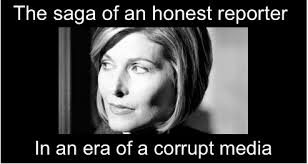
Exclusive: an interview with investigative reporter Sharyl Attkisson

Before her recent resignation from CBS, Sharyl Attkisson was a mainstream news star. Multiple Emmys. CNN anchor, CBS anchor on stories about space exploration. Host of CBS’ News Up to the Minute. PBS host for Health Week. Investigative reporter for CBS.

Attkisson dug deep into Fast&Furious, Benghazi, and the ill-effects of vaccines. Too deep. Her bosses shut her down and didn’t air key stories.

She now has her own website, sharylattkisson.com. She is writing a book, Stonewalled: My Fight for the Truth Against the Forces of Obstruction, Intimidation and Harassment in Obama’s Washington forthcoming 4 November 2014).

Click on Image to Enlarge

It’s not every day that a major mainstream journalist leaves the fold and then seeks to expose the corruption that impinged on her work.

She agreed to do an email interview. Some of the questions I sent went to the heart of her book-in-progress, so she declined to answer them. However, her answers to my other questions were revealing and explosive.

I know you’ve had problems with your Wikipedia page. What happened there?

Long story short: there is a concreted effort by special interests who exploit Wikipedia editing privileges to control my biographical page to disparage my reporting on certain topics and skew the information. Judging from the editing, the interest(s) involved relates to the pharmaceutical/vaccine industry. I am far from alone. There is an entire Wikipedia subculture that exists to control pages and topics, and another one that watchdogs all that’s gone wrong with Wikipedia (Wikipediocracy). It’s a fascinating subject.

All Questions and Answers Below the Fold

Continue reading “John Rappoport: Exclusive Interview with Sharyl Attkisson, Benghazi & Fast & Furious, CDC Swine Flu Fraud, on Corruption in Media Including Wikipedia”

Berto Jongman: Linking Climate, Food Prices, & Revolution

01 Agriculture, 03 Economy, 06 Family, 07 Health, 11 Society, Civil Society, Commerce, Commercial Intelligence, Corruption, Cultural Intelligence, Earth Intelligence, Government, Peace Intelligence
Berto Jongman
Berto Jongman

Chinese Drought, Wheat, and the Egyptian Uprising: How a Localized Hazard became Globalized

Did climate change play an indirect role in the political upheavals that rocked Egypt in 2011? Absolutely, says Troy Sternberg. As he sees it, a once-in-a-century drought in China dramatically reduced global wheat supplies and sent prices skyrocketing in the world’s largest wheat importer.

By Troy Sternberg for Henry L Stimson Center

This article was originally published in The Arab Spring and Climate Change, which can also be accessed here.

Click on Image to Enlarge

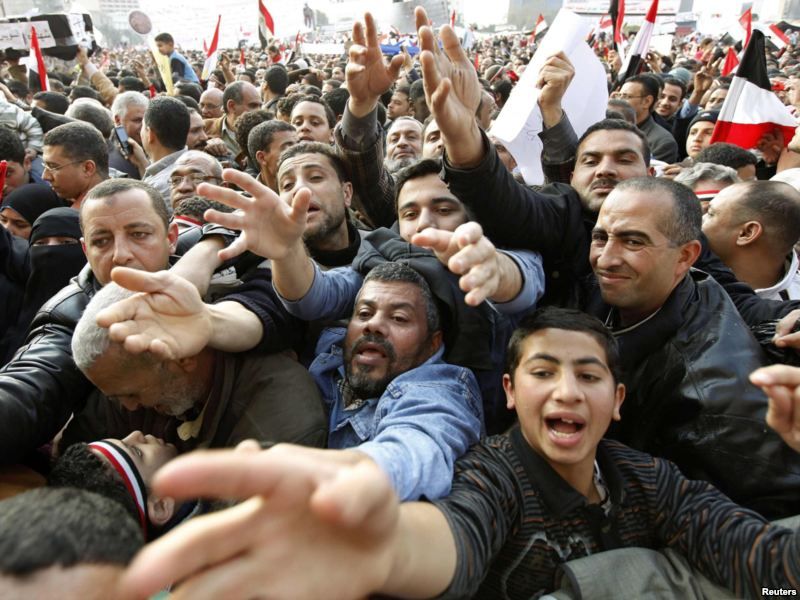
Chinese drought, global wheat prices, and revolution in Egypt may all appear to be unrelated, but they became linked by a series of events in the 2010–2011 winter.[1] As the world’s attention focused on protests in Egypt’s Tahrir Square, political and socioeconomic motives behind the protests were discussed abundantly, while significant indirect causes of the Arab Spring received little mention. In what could be called “hazard globalization,” a once-in-a-century winter drought in China reduced global wheat supply and contributed to global wheat shortages and skyrocketing bread prices in Egypt, the world’s largest wheat importer.[2] Government legitimacy and civil society in Egypt were upset by protests that focused on poverty, bread, and political discontent.

A tale of climate disaster, market forces, and authoritarian regimes helps to unravel the complexity surrounding public revolt in the Middle East. This essay examines the link between natural hazards, food security, and political stability in two developing countries—China and Egypt—and reflects on the links between climate events and social processes.

Continue reading “Berto Jongman: Linking Climate, Food Prices, & Revolution”

noble gold