Eagle: Food Costs Soar – Revolution in the Air

01 Agriculture, 03 Economy, 12 Water, Commerce, Corruption, Government, Ineptitude
300 Million Talons...
300 Million Talons…

Food Costs Soar Following Severe Worldwide Drought

Food prices are expected to see their biggest annual increase in the past three years thanks mostly to devastating drought conditions all over the world. Dry conditions mean poor crop production; poor crop production means fewer livestock; and fewer livestock means higher prices for meats and dairy at the grocery store. That plus a pinch on products like cocoa, sugar, wheat, rice and especially coffee have the Bureau of Labor Statistics predicting a big bump in food costs.

Higher meat and dairy prices are mostly the culprits in the United States, thanks in part to ongoing drought conditions in the Midwest and Great Plains that have forced ranchers to cull their herds rather than pay exorbitant prices to feed the animals. Inflation of corn and soybean products could be managed if farmers receive favorable conditions for their crops this summer, in turn driving down prices of animal feed as well as products for human consumption. Still, consumers could pay as much as $1 more per gallon for milk at the store to compensate for low supplies mixed with high demand.

Continue reading “Eagle: Food Costs Soar – Revolution in the Air”

Mini-Me: NSA Says Its Water Use is TOP SECRET – We Do Not Make This Stuff Up!

Corruption, Government, Idiocy, Military
Who?  Mini-Me?
Who? Mini-Me?

Huh?

The NSA Says its Water Bill Should be Top Secret

Robert McMillan

WIRED, 03.19.14

The National Security Agency has many secrets, but here’s a new one: the agency is refusing to say how much water its pumping into the brand new data center it operates in Bluffdale, Utah. According to the NSA, its water usage is a matter of national security.

The agency made the argument in a letter sent to officials in Utah, who are considering whether or not to release the data to the Salt Lake Tribune. Back in May, Tribune reporter Nate Carlisle asked for local records relating to the data center, but when he got his files a few months later, the water usage data was redacted.

. . . . . . .

“By computing the water usage rate, one could ultimately determine the computing power and capabilities of the Utah Data Center,” wrote the NSA’s associate director for policy and records, David Sherman in an undated letter filed with Bluffdale in response to the Tribune’s public records request. “Armed with this information, one could then deduce how much intelligence NSA is collecting and maintaining.”

Continue reading “Mini-Me: NSA Says Its Water Use is TOP SECRET – We Do Not Make This Stuff Up!”

Dave Warner: TED Prize of $1M to Anti-Corruption and Transparency Activist

Civil Society, Collective Intelligence, Commerce, Cultural Intelligence, Ethics
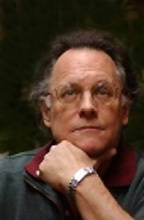
Dr. Dr. Dave Warner
Dr. Dr. Dave Warner

TED Winner Launches Campaign to Unmask Shell Companies

Anti-corruption activist Charmian Gooch launched a new global campaign on Tuesday night to unmask shell corporations and lobby for legislation requiring more transparency, using a newly awarded $1 million TED Prize.

The Global Witness co-founder won the prestigious award to expand on her organization’s work to unmask shell companies used by dictators, criminals and terrorists for money laundering and to hide assets around the world.

Click on Image to Enlarge

“My wish is for us to know who owns and controls companies, so that they can no longer be used anonymously against the public good,” Gooch said while accepting the award and unveiling her wish. “Together, let’s ignite world opinion, change the law, and together launch a new era of openness in business.”

“This isn’t just a dry policy issue,” Gooch added. “This is a human issue which affects us all. This is about being on the right side of history.”

Shell companies are widely used around the globe by people and entities that want to conceal financial transactions or the true ownership of corporations. Activists have argued that widespread use of shell corporations have made it easier for dictators and criminals to hide money, evade taxes, or illegally transfer assets.

Continue reading “Dave Warner: TED Prize of $1M to Anti-Corruption and Transparency Activist”

SchwartzReport: Media Self-Censors on Oil Spills & Real World

Corruption, Media
Stephan A. Schwartz
Stephan A. Schwartz

As far as I can tell although filed by The Associated Press, this didn't rate a mention on any news network. Further evidence of why we need to leave the carbon era. Instead we have spent a week talking about a story for which no one has a single certain explanatory fact. The NASA report on the collapse of civilization… yawn. Lets speculate instead on whether Martians have d! ematerialized the Malaysian 777 airliner. This and the Crimea, for which there is almost as little certain data. It is the most astonishing display of the complete absence of substance in the American media one can imagine. Literally a week spent on two stories one of which is almost entirely information free and the other which lacks most of the data that would give us insight.

Pipeline Leaks Thousands of Gallons of oil in Southwest Ohio
DAN SEWELL – The Columbus Dispatch

Joseph E. Stiglitz: Transpacific Partnership (TPP) Screws Everybody Except the 1%

01 Poverty, 03 Economy, 07 Other Atrocities, 10 Transnational Crime, 11 Society, Commerce, Corruption, Government
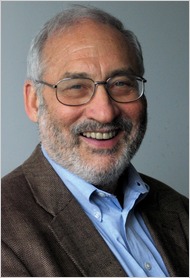
Joseph E. Stiglitz
Joseph E. Stiglitz

On the Wrong Side of Globalization

By JOSEPH E. STIGLITZ

New York Times, 15 March 2014

Trade agreements are a subject that can cause the eyes to glaze over, but we should all be paying attention. Right now, there are trade proposals in the works that threaten to put most Americans on the wrong side of globalization.

The conflicting views about the agreements are actually tearing at the fabric of the Democratic Party, though you wouldn’t know it from President Obama’s rhetoric. In his State of the Union address, for example, he blandly referred to “new trade partnerships” that would “create more jobs.” Most immediately at issue is the Trans-Pacific Partnership, or TPP, which would bring together 12 countries along the Pacific Rim in what would be the largest free trade area in the world.

Negotiations for the TPP began in 2010, for the purpose, according to the United States Trade Representative, of increasing trade and investment, through lowering tariffs and other trade barriers among participating countries. But the TPP negotiations have been taking place in secret, forcing us to rely on leaked drafts to guess at the proposed provisions. At the same time, Congress introduced a bill this year that would grant the White House filibuster-proof fast-track authority, under which Congress simply approves or rejects whatever trade agreement is put before it, without revisions or amendments.

Controversy has erupted, and justifiably so. Based on the leaks — and the history of arrangements in past trade pacts — it is easy to infer the shape of the whole TPP, and it doesn’t look good. There is a real risk that it will benefit the wealthiest sliver of the American and global elite at the expense of everyone else. The fact that such a plan is under consideration at all is testament to how deeply inequality reverberates through our economic policies.

Worse, agreements like the TPP are only one aspect of a larger problem: our gross mismanagement of globalization.

Read full article.

Continue reading “Joseph E. Stiglitz: Transpacific Partnership (TPP) Screws Everybody Except the 1%”

Richard Falk: Why Do I Persist?

Academia, Civil Society, Cultural Intelligence, Ethics, Officers Call
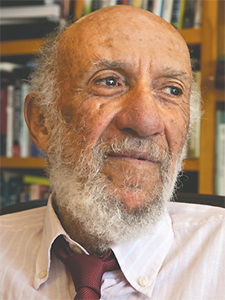
Richard Falk
Richard Falk

I have been asked recently why do I persist in working hard for the things that I believe in, knowing that I will die in the next several years, and am almost certain not to be around for the catastrophic future that seems to cast its dark shadow across the road ahead, and can only be removed by a major transnational movement of the peoples of the world.

. . . . . . .

My own reflections on why I persist in doing what I am doing are more simplistic, less sophisticated, and maybe no less trivializing, but also more satisfying to me as explanations that connect with my experience. In contrast to ScheffIer I would emphasize three distinct lines of explanation that are each experiential, and hopefully not sentimental: lifetime habit, being on the right side of history, and the inherent pleasures of intellectual life.

Full presentation below the line.

Continue reading “Richard Falk: Why Do I Persist?”

noble gold