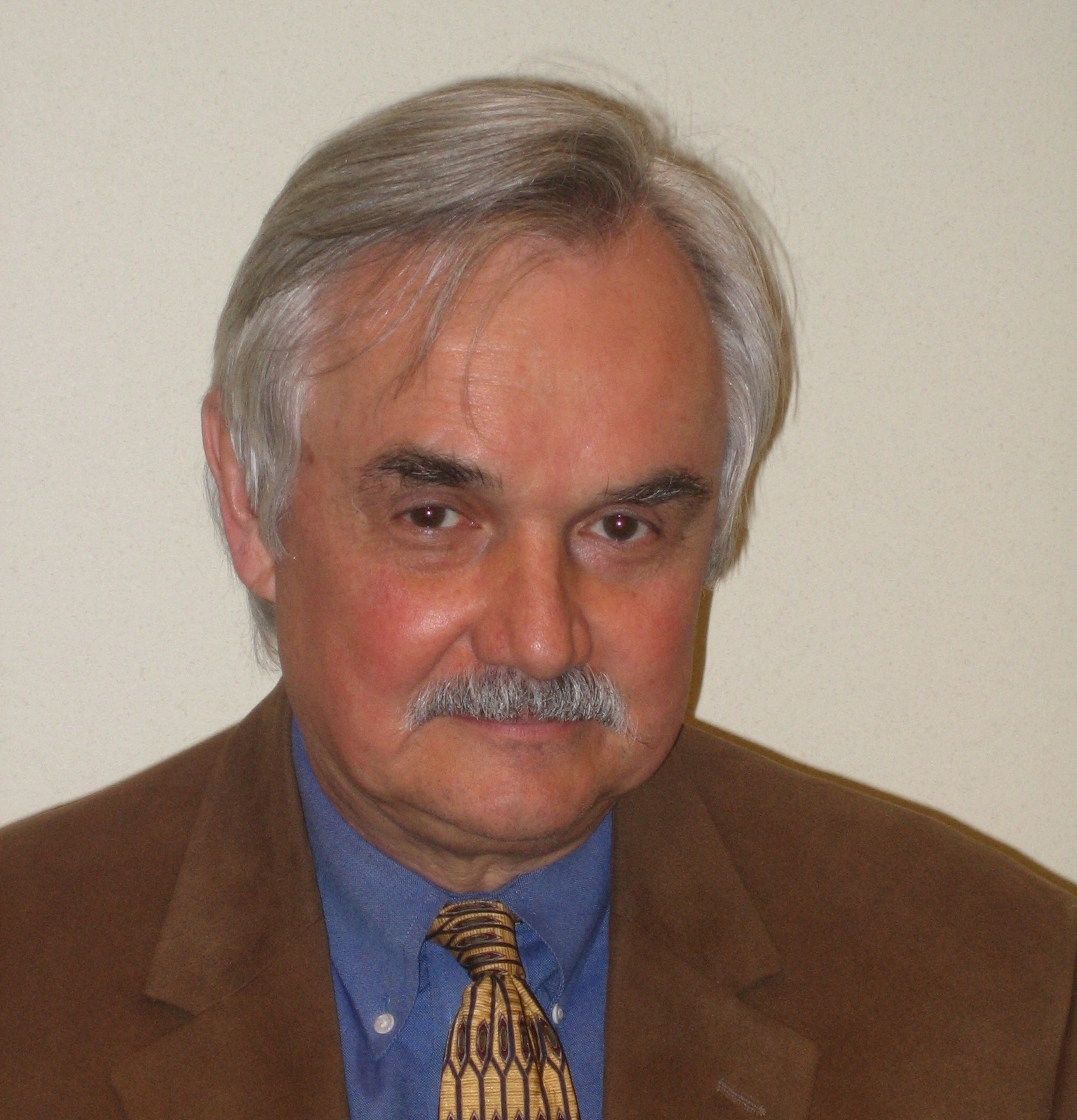
Lord James of Blackheath, House of Lords [VIDEO 11:10] from 2010, now circulating
Breaking news Lord James of Blackheath has spoken in the House of Lords holding evidence of three transactions of 5 Trillion each and a transaction of 750,000 metric tonnes of gold and has called for an investigation.
I think there are three possible conclusions that may come from it. I think there may have been a massive piece of money laundering committed by a major government which ought to know better and that it has effectively undermined the integrity of the British bank the Royal Bank of Scotland, in doing so. The second alternative is that a major American department has an agency that has gone rogue on it because it has been wound up and has created a structure out of which they are seeking to get at least 50 billion Euros as a payoff. And the third possibility is that this is an extraordinarily elaborate fraud which has not been carried out but which has been prepared in order to provide a threat to one government or more if they don't pay them off. So there are three possibilities and this all needs a very urgent review.
My Lords, it starts in April and May of 2009, with the alleged transfer to the United Kingdom, to HSBC of a sum of 5 trillion dollars and seven days later, in comes another 5 trillion dollars to HSBC, and then 3 weeks later another 5 trillion. 5 trillion in each case. Sorry. A total of 15 trillion dollars is alleged to have been passed into the hands of HSBC for onward transit to the Royal Bank of Scotland and we need to look at where this came from and what the history of this money is. And I have been trying to sort out the sequence by which this money has been created and from where it has come from for a long time.
Last Monday, after the Pentagon released its 2013 budget materials, just about every news article I read inaccurately reported the totals. These articles did not just miss some significant bits not in DOD's press release; they ignored another $380 billion in spending for US national security spending if you take the time to parse through OMB's far more complete and accurate budget materials.
How do I get to a $1 trillion US small “d” defense budget; real it below:
The Real “Base” Pentagon Budget and the Actual “Defense” Budget
Winslow T. Wheeler
When the Pentagon released its budget materials and press releases last Monday, the press dutifully reported the numbers. The Pentagon's “base” budget for 2013 is to be $525.4 billion, and with $88.5 billion for the war in Afghanistan and elsewhere added, the total comes to $613.9 billion. (See the two DOD press releases ONE and TWO).
Indeed, if you plowed through the hundreds of pages of additional materials the Pentagon released Monday, you would come up with little reason the doubt the accuracy of those numbers as the totality of what Secretary of Defense Leon Panetta was seeking for the Pentagon. It would also seem reasonable that those amounts constitute the vast majority of what America spends on “defense,” defined generically.
In my Foreign Policy column, I discuss whether Admiral William McRaven's request for greater operational freedom for Special Operations Command will extend to an unconventional warfare campaign in Syria.
This week, the New York Times reported on a draft proposal circulating inside the Pentagon that would permanently boost the global presence and operational autonomy of U.S. special operations forces. According to the article, Adm. William McRaven, the Navy SEAL who oversaw the raid that killed Osama bin Laden and who is now the commander of U.S. Special Operations Command (SOCOM), is requesting additional authority and independence outside of the normal, interagency decision-making process.
After the successful direct action strike against bin Laden and SOCOM's important role in training allied security forces in Afghanistan, the Philippines, and elsewhere, it is easy to understand how McRaven's command has become, as the New York Times put it, the Obama administration's “military tool of choice.” A larger forward presence around the world and more autonomy would provide McRaven's special operations soldiers with some of the same agility enjoyed by the irregular adversaries SOCOM is charged with hunting down.
I travel enough to have a solid view of the Transportation Security Agency (TSA). They are good people trapped in a bad system. The article below is completely wrong in pressing forward with the meme of TSA as molestors of children and old people. TSA has a good heart, it just lacks a brain. TSA is a classic — utterly classic — example of doing the wrong thing righter instead of doing the right thing. The Department of Homeland Security (DHS) may be — I dare to hope — the last primal scream of Industrial Era government in which the delusion persists that micro-management of chaos is possible, and that money can be substituted for intelligence and integrity. Not so.
Click on Image to Enlarge
I have NEVER had a bad experience or witnessed a bad experience with TSA, with the following three observations: losing my after shave, losing the last inch of a toothpaste tube, and having my thin wallet with license and three credit cards run back through the scanner. In all three cases, human brains on the scene were over-ridden by micro-regulation from above. Lack of a brain is the sucking chest wound in TSA, not lack of a heart. Good people, bad system — a terminally bad, unaffordable unsustainable bad system.
(NaturalNews) The Obama Administration has proposed significantly hiking air travel fees to cover the costs associated with the U.S. Transportation Security Administration's (TSA) molestation of air travelers. Under the new plan, which would garner a whopping $32 billion in ten years, ticket fees that cover the costs of TSA security screenings would more than double for passengers, costing them at least $5 per one-way trip.
As the TSA continues installing naked body scanners at U.S. airports and hiring hordes of new agents to grope travelers at airports, bus stations, trains stations, and even sports stadiums, the agency's more than $8 billion annual budget is rapidly ballooning. And rather than continue to siphon the cash to pay for this unconstitutional nightmare of tyranny directly from taxpayers, Obama and Co. wants to make airlines, airports, and air travelers foot the bill. Read more of this post
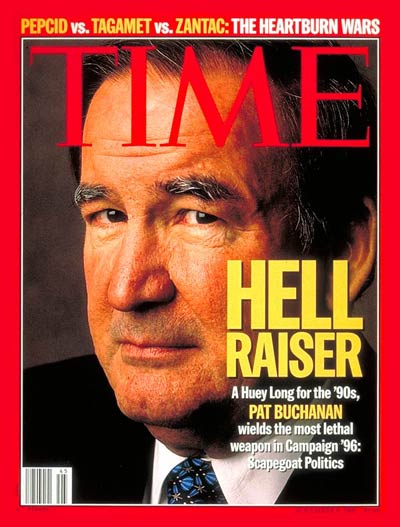
Documented in the 488 pages and 1,500 footnotes of Suicide of a Superpower is my thesis that America is Balkanizing, breaking down along the lines of religion, race, ethnicity, culture and ideology, and that Western peoples are facing demographic death by century's end.
. . . . . .
Let error be tolerated, said Thomas Jefferson, “so long as reason is left free to combat it.” What Foxman and ADL are about in demanding that my voice be silenced is, in the Jeffersonian sense, intrinsically un-American.
Phi Beta Iota: Below the line is the complete essay by Buchanan with points that we find compelling. He is articulate, and however much some may dislike delivery, he represents a point of view — and a demographic — whose silence spells death to the Republic as we know it. What is really at issue here is the legitimacy of the two-party bi-opoly and the various levels of government — they have substituted ideology for intelligence, corruption for integrity. Under such a system, the Constitution has been trashed and the Republic dismembered.
– – – – – – –
My days as a political analyst at MSNBC have come to an end.
After 10 enjoyable years, I am departing, after an incessant clamor from the left that to permit me continued access to the microphones of MSNBC would be an outrage against decency, and dangerous.
What was surely meant to be a clever display of media-friendly visuals to illustrate Syrian regime violence in Homs, has instead raised more questions than answers.
US State Department satellite images of the embattled city were posted on Facebook last Friday by US Ambassador to Syria Robert Ford, who complains: “A terrible and tragic development in Syria is the use of heavy weaponry by the Assad regime against residential neighborhoods.”
The “satellite photos,” says Ford, “have captured both the carnage and those causing it — the artillery is clearly there, it is clearly bombing entire neighborhoods…We are intent on exposing the regime’s brutal tactics for the world to see.”
But within 24 hours, the blog Moon of Alabama had taken a hammer to the ambassador’s claims. A detailed examination of satellite imagery by the bloggers revealed numerous discrepancies in Washington’s allegations. Mainly, their investigations point to the fact that Ford’s satellite images were “of guns training within military barracks or well known training areas and not in active deployment.”
Moon of Alabama posts its own satellite images, graphics and diagrams to bolster its argument – and these are well worth a look.
The US envoy’s questionable claims don’t stop at satellite images, however. In his Facebook post, Ford insists: “There is no evidence that the opposition — even those opposition members who have defected from the military — has access to or has employed such heavy weapons. “ By this, he means the “artillery” used “to pound civilian apartment buildings and homes from a distance.”
Then why is there satellite photo evidence of destruction in pro-regime Alawi areas?
Fast-forward to CNN’s very own Jonathan King, who broadcast satellite images of Homs on February 9, the day before the State Department loaded their photos on the web. King’s images of Homs are dated February 5, two days after violence erupted in the city, focusing heavily in the Baba Amr neighborhood where opposition gunmen are allegedly present:
In my opinion, one of the most important books written in recent years on the subject of the global arms trade and its corrupting effects is Andrew Feinstein's, The Shadow World, Inside the Global Arms Trade. This voluminous book is mind numbing in its detail, but it is thoroughly sourced and, I believe, it will become a standard reference over time. Anyone trying to understand the dark and dangerous corner of the global economy and its politics must read this book. (To be sure, I am biased because I was a minor source in this book and I consider Andrew a good friend.)
Naturally, the arms makers are not too happy with the Shadow World and want to keep it hidden in the musty stacks of your local library. I am attaching two recent essays to help you determine if this book should be forgotten. They were published on the Lexington Institute' Early Warning Blog. Lexington is funded in large part by defense contractors and is hardly impartial on all matters regarding defense spending, so the first essay is quite expected; the second, however, comes as a surprise, to Lexington's credit.
The first essay is a predictable critique of Andrew's book by Robert Trice, a retired Senior Vice President of Lockheed Martin. Think of his effort as an attempt to move Andrew's book to a forgotten corner in the back room.
To understand the saliency of Trice's effort, consider his career. Robert Trice is a case study in the quintessential pattern of gorging oneself on cash flow pumped out by the Military – Industrial – Congressional Complex's big green spending machine. Holding a PhD in political science, he began his defense career in the Office of the Secretary of Defense in the Pentagon, where he eventually became Director for Technology and Arms Transfer Policy — or in plain english, a resident shill in the Pentagon for promoting international arms sales — the subject painted in not so flattering terms by Feinstein. Trice then moved to Capital Hill and worked as the defense Legislative Assistant to Senator Dale Bumpers (D-AR) for about three years. I met him in this position because Bumpers was interested in the military reform work my colleagues (Pierre Sprey and John Boyd) and I were doing in the Pentagon. But Trice, as Bumpers' advisor, was clearly a reluctant reformer. (Although Bumpers showed initial and enthusiastic interest in our work, nothing came of it.) In the essay below Trice now slings a little mud, saying the three of us are not just wrong but wrongly motivated, because we are “anti-defense.” Soon thereafter, the presumably pro-defense Trice cashed out of Bumpers office to work in the Defense industry, serving first as a Vice President for Business Development at McDonnel Douglas (in plain english this is a marketing job and in the MICC, marketing, or business development, means greasing the skids in Congress and the Pentagon for your firm's tinker toys — which is a good position for a poly sci type, because he couldn't design airplanes at McAir or Lockheed). Trice then moved to Lockheed Martin where his business development portfolio including shaping L-M's new business strategies and operations for the global market, which of course is the subject of Andrew's book. Obviously a person with his background of bottom feeding so successfully in the MICC's money machine, especially in the international arms trade arena, comes to the reviewing table with … shall we say … a certain amount of bias.
The second essay is Andrew Feinstein's polite repost to Trice's bucket of grease. Andrew's background could not be more different than that of Trice. Whereas Trice gorged himself and became a wealthy ‘pillar of the establishment' by slopping in America's defense trough, Andrew put his ass on the line trying to rein in the excesses of that trough's South African equivalent. In the late 1980s, Andrew, a young white South African, joined Nelson Mandella's African National Congress (ANC), because he opposed Apartheid. In 1994, after the fall of Apartheid, he was elected in South Africa's first democratic election to be an ANC member of parliament. But Andrew took his parliamentary oversight responsibilities seriously, and while in parliament, he set up a kind of one man Truman Committee to investigate allegations of ANC corruption in some international weapons deals. And he hit pay dirt, but rather than shutting up when he was pressured by party elders to close down his investigation into a £5bn arms deal that was tainted by allegations of high-level corruption, he resigned in protest from Parliament. His political memoir, After the Party: A Personal and Political Journey Inside the ANC, was published in 2007 and became a bestseller in South Africa.
With the backgrounds of these two protagonists in mind, I urge you to read Trice's critique of Andrew's latest book first (Attachment 1 below) and then Andrew's repost (Attachment 2 below) and judge for yourself who is closer to being a straight shooter — and read The Shadow World.