I chose to focus my dissertation research on the impact of information and communication technologies (ICTs) during elections in repressive states. Why? Because the contentious relationship between state and society during elections is accentuated and the stakes are generally higher than periods in-between elections. To be sure, elections provide momentary opportunities for democratic change. Moreover, the impact of ICTs on competitive events such as contentious elections may be more observable than the impact on state-society relations during the regular calendar year. In other words, the use of ICTs during election periods may shed some light on whether said technologies empower coercive regimes at the expense of civil society or vice versa.
Full Blog with Three Major Graphics Below the Line
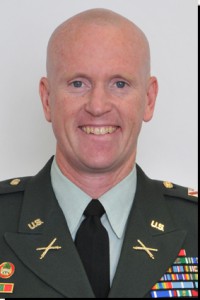
I've never met COL Yingling, but he is somewhat famous (infamous?) within the Army. He has survived his earlier article, provided second below, and even gotten promoted, apparently recently. So now he's sitting in a somewhat idyllic spot, specifically Garmisch, a couple of years short of qualifying to retire as a colonel. He's again frustrated and, as he explains first below, is punching out in a few months to teach social studies. I don't know where he's going to teach, but, having served as a high school teacher, I'm not sure it's going to be the attractive situation seems to be expecting. I wonder how he'd feel after some experience teaching in places like Washington, DC or Baltimore and dealing with genuinely irrational parents.
Phi Beta Iota: Another Marine Corps Colonel, Walter J. Breede III, USNA 1968, made the same choice. When you have integrity to the nth degree, you cannot live with the cognitive dissonance that comes with drinking the kool-aid. Below in complete full text online are both Col Yingling's new article, and his original article on “The Failure of Generalship.” Click on his photo for access to his biography and other publications.
Washington Post, December 4, 2011
Pg. B2
Why I'm Leaving The Military For A Social Studies Classroom
Army Col. Paul Yingling says he would rather teach kids than advise generals
I'm a colonel in the U.S. Army, and next summer I will retire to teach high school social studies. My friends think I'm crazy, and they may have a point.
Colonel is the last rank before general's stars, and it comes with significant perks. My pay is triple the national average teacher's teacher salary. Military budgets have doubled over the past last decade, while school districts have slashed funding, increased class sizes, cut programs and laid off teachers. The social status accorded to the military is wonderful, while teachers are routinely pilloried by politicians and pundits for student outcomes that are often driven by events and conditions far beyond the schoolhouse door.
I strongly recommend watching the whole program, it’s an excellent discussion: “How does the Occupy Wall Street movement move from “the outrage phase” to the “hope phase,” and imagine a new economic model?
WASHINGTON — Taking a broad swipe at the Securities and Exchange Commission’s practice of allowing companies to settle cases without admitting that they had done anything wrong, a federal judge on Monday rejected a $285 million settlement between Citigroup and the agency.
Naomi Wolf in The Guardian: we hear that Occupy Wall Street has no clear message, but is it precisely because the dis-organization has a clear message, set of goals, and growing force that we’re seeing efforts to shut the 24/7 demonstrations down?
The mainstream media was declaring continually “OWS has no message”. Frustrated, I simply asked them. I began soliciting online “What is it you want?” answers from Occupy. In the first 15 minutes, I received 100 answers. These were truly eye-opening.
The No 1 agenda item: get the money out of politics. Most often cited was legislation to blunt the effect of the Citizens United ruling, which lets boundless sums enter the campaign process.
Click on Image to Enlarge
No 2: reform the banking system to prevent fraud and manipulation, with the most frequent item being to restore the Glass-Steagall Act – the Depression-era law, done away with by President Clinton, that separates investment banks from commercial banks. This law would correct the conditions for the recent crisis, as investment banks could not take risks for profit that create kale derivatives out of thin air, and wipe out the commercial and savings banks.
No 3 was the most clarifying: draft laws against the little-known loophole that currently allows members of Congress to pass legislation affecting Delaware-based corporations in which they themselves are investors.
When I saw this list – and especially the last agenda item – the scales fell from my eyes. Of course, these unarmed people would be having the shit kicked out of them.
Update: Joshua Holland at AlterNet says Naomi Wolf’s piece “takes an enormous leap away from any known facts to suggest that Congress is ordering cities to smash the Occupy Movement in order to preserve their own economic privilege.”
Phi Beta Iota: It is not Congress that is ordering the leap; it is a combination of Wall Street/Goldman Sachs, Representative Peter King of New York/Michael Bloomberg, and the national security mafia using the Department of Homeland Security (DHS) as its stalking horse. Congress is corrupt, inept, and incoherent.
Do we really need to read the classics in the age of Wikipedia? Aren't these books just historical artifacts or a bunch of pretentious fodder for cocktail party conversation? According to Jeffrey Brenzel, Philosopher and Dean of Undergraduate Admissions at Yale University, the classics will not only enhance your education, but help you live better.
So how do we decide which books qualify? This is, after all, one of the most controversial subjects in academia. In his Floating University lecture Standing on the Shoulders of Giants: The Essential Value of a Classic Education, Brenzel presents five “rough and ready criteria” for identifying a classic of literature or philosophy or politics. While Brenzel notes that no one or two of these criteria are going to be decisive, he presents them all together as a useful tool. He lists the criteria as follows:
1. A classic addresses permanent concerns about the human condition.
“From a philosophical perspective it has something to say about the way we should live. From a literary perspective, it has something to say about imagining the possibilities for how we could live and from a historical perspective it tells us how we have lived.”
2. A classic has been a game-changer.
“It has created profound shifts in perspective and not only for its earliest readers, but for all the readers who came later as well.”
3. A classic has stimulated or influenced many other important works.
The work has impacted other important works, either directly or indirectly.
4. A classic has received critical acclaim.
Even if they violently disagreed with the work, “many generations of the best readers and the most expert critics have rated the work highly” and one of the best or most important of its kind.
5. A classic requires strenuous intellectual engagement.
Beach reading doesn't qualify. Brenzel says a classic usually requires “a strenuous effort to engage and understand, but it also rewards the hard work strongly and in multiple fashions.”
For those who know war only through television, criminalizing it sounds like proposing to criminalize government. But there was a time when the masses made war illegal.
Bruce E. Levine
Alternet, November 21, 2011
David Swanson’s recently released book, When the World Outlawed War, tells the story of how the highly energized peace movement in the 1920s, supported by an overwhelming majority of U.S. citizens from every level of society, was able to push politicians into something quite remarkable—the Kellogg-Briand Pact and the renunciation of war as an instrument of national policy. The 1920s “War Outlawry” movement in the United States was so popular that most politicians could not afford to oppose it.
Click on Image to Enlarge
David Swanson, since serving as press secretary in Dennis Kucinich’s 2004 presidential campaign, has emerged as one of the leading anti-war activists in the United States. While Swanson has fought against the U.S. wars in Iraq and Afghanistan and tried to alert Americans to the fact that U.S. military spending is the source of most of our economic problems, his anti-war activism goes much deeper. He wants to stigmatize militarist politicians as criminals. In his previous book War is a Lie, Swanson made the case for the abolition of war as an instrument of national policy, and When the World Outlawed War provides an historical example of just how powerful war abolitionism can be.
Bruce Levine: At a college lecture that you recently gave, you asked the students and professors if they believed war was illegal or if they had ever heard of the Kellogg-Briand Pact, and only about 2 or 3 percent of a large group raised their hands. But what really seems to have disturbed you is when you asked if war should be illegal, and only 5 percent thought that it should be.