Knights know that the arts–especially music–are essential to developing the creative and innovative impulses of entrepreneurs. Put more directly: no arts in education – fewer entrepreneurs.
Lesson Plans and Resources for Arts Integration
Dance in science, pop art in Spanish, or photography in math — there’s no end to the ways arts can be integrated into other curricula. Educators from Bates Middle School, in Annapolis, Maryland, share arts-integrated lessons and resources that you can use in your school.
The New York Times — aka America's Gray Lady of journalism — loves to refer to itself as the newspaper of record — but whose record? After the NYT's sorry exposure of being a activist conduit for government disinformation and propaganda hyping the WMD fears leading up to invasion of Iraq in 2003, a reasonable person might expect it would have cleaned up its act. Glenn Greenwald's withering expose below suggests the NYT's dreary gray covers pomposities cover a darker journalistic dna that is no longer prone to self correction, if it ever was.
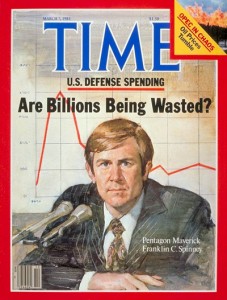
Chuck Spinney
Gaeta, Italia
EXTRACT:
From “All the news that's fit to print” to “please delete after you read” and cannot “go into detail because it is an intelligence matter”: that's the gap between the New York Times's marketed brand and its reality.
Published by ALNAP, the 2012 State of the Humanitarian System report is an important evaluation of the humanitarian community’s efforts over the past two years. “I commend this report to all those responsible for planning and delivering life saving aid around the world,” writes UN Under-Secretary General Valerie Amos in the Preface. “If we are going to improve international humanitarian response we all need to pay attention to the areas of action highlighted in the report.” Below are some of the highlighted areas from the 100+ page evaluation that are ripe for innovative interventions.
Accessing Those in Need
Operational access to populations in need has not improved. Access problems continue and are primarily political or security-related rather than logistical. Indeed, “UN security restrictions often place sever limits on the range of UN-led assessments,” which means that “coverage often can be compromised.” This means that “access constraints in some contexts continue to inhibit an accurate assessment of need. Up to 60% of South Sudan is inaccessible for parts of the year. As a result, critical data, including mortality and morbidity, remain unavailable. Data on nutrition, for example, exist in only 25 of 79 countries where humanitarian partners have conducted surveys.”
Could satellite and/or areal imagery be used to measure indirect proxies? This would certainly be rather imperfect but perhaps better than nothing? Could crowdseeding be used?
I read “Doubling SaaS Revenue by Changing the Pricing Model.” If you are involved in charging for online pricing, you will want to work through this write up by the founder of Kalzumeus Software. What makes the article valuable is its real world data. The article describes a “highly configurable pricing plan” with a low-cost option model which, based on the author’s analysis, is inefficient. The revenue friction is that low-ball customers cost more to support than informed customers. The “free” crowd will find the Kalzumeus analysis disturbing.
The path to pricing happiness according to the write up is via a hybrid approach. The trick is to use a tiered pricing plan with options. Listen to the Kalzumeus argument. Note: we tidied up the grammar for clarity.
The advice … was that Server Density switches to a SaaS pricing model with 3 or 4 tiers segmented loosely by usage, and break with the linear charging. The advantages [of this approach are]:
ROBERT STEELE: The IC, DoD, and oversight agencies such as OMB and GAO have not sought to audit government spending on OSINT and probably could not do so effectively with the combination of ignorance on the part of the auditors and recalcitrance on the part of those who should be audited. The closest anyone came to setting the stage for this was in 2000 when Sean O'Keefe, DD/OMB, established code M320 to tag all spending by the US Government on contractor provision of Open Source Intelligence (OSINT). When O'Keffe moved to NASA, the impetus for getting OSINT right died. More recently, Joe Markowitz and Robert Steele met with senior civil servants at OMB and got a second approval for the Open Source Agency (OSA) contingent on a Cabinet secretary asking for it. There was universal agreement the OSA should not be under secret community management but rather under diplomatic and/or commercial agency auspices. Joe Markowitz and Robert Steele continue to favor Markowitz's original idea, that the OSA be a sister-agency to the Broadcasting Board of Governors (BBG). It would of course provide near-real-time feed of all OSINT to the high side, the secret side, but all OSINT would remain outside the wire for liberal sharing with any other actor US or foreign.
Robert Steele
What is known is that DoD treats OSINT as a technical processing challenge (this is ineffective since 80% or more of OSINT is not published, not digital, and not online); that ABLE DANGER was a very expensive program that included both digital OSINT and the digitization of visa application; that Document Exploitation (DOCEX) has received a great deal of investment within DIA, to the point that seriously silly claims have been made to justify new SES/DISL positions, e.g. that DOCEX is its “own” discipline. The two largest contracts in OSINT, both hosed by the client with the contractors going along, are the L-3 provision of OSINT technical and subject matter support to the CIA's Open Source Center (the latter is NOT, by any stretch of the imagination, a national capability, just an over-hyped internal capability whose budget has been cut in half since the conversation from being the Foreign Broadcast Information Service) and the SOS International contract with USSTRATCOM to provide butts in seats that pretend to do IO/online OSINT monitoring (more idiocy).
Over-all, including classified projects, including DARPA and IARPA and hidden relationships with Google, Facebook, and Twitter, among others, and including non-secret non-national security element spending on open sources and what pass for methods, is no less than one billion a year, probably around three billion a year, and when counting all the buried pieces (e.g. contractors doing Mission X and creating their own OSINT support that is still not available for the CIA OSC), perhaps as much as five billion a year. All out of control, lacking any combination of intelligence and integrity, as much if not more of a waste than the $80 billion plus spent on technical collection that is not processed, with little regard for human intelligence and advanced analytics, all to provide “at best” 4% of what the President or a major commander requires to make good decisions.
So Google can be fooled. It’s not nice to fool Mother Google. The inverse, however, is not accurate. Mother Google can take some liberties. Any indexing system can. Objectivity is in the eye of the beholder or the person who pays for results.
You know a story is bit time when it is covered in a two page article in the Miami Herald. Miami, of course, is the capitol city of The Islands, as The Nine Nations of North America pointed out years ago.
Pakistan: A Pakistani military court convicted five military officers, including Brigadier Ali Khan, for maintaining links to a banned organization. The Brigadier is the most senior of the five and received a sentence of five years in prison. The others received sentences of 18 months to three years.
The army did not name the banned organization, but officials have in the past identified it as Hizb ut-Tahrir – a British-based Islamist group that is banned in Pakistan.