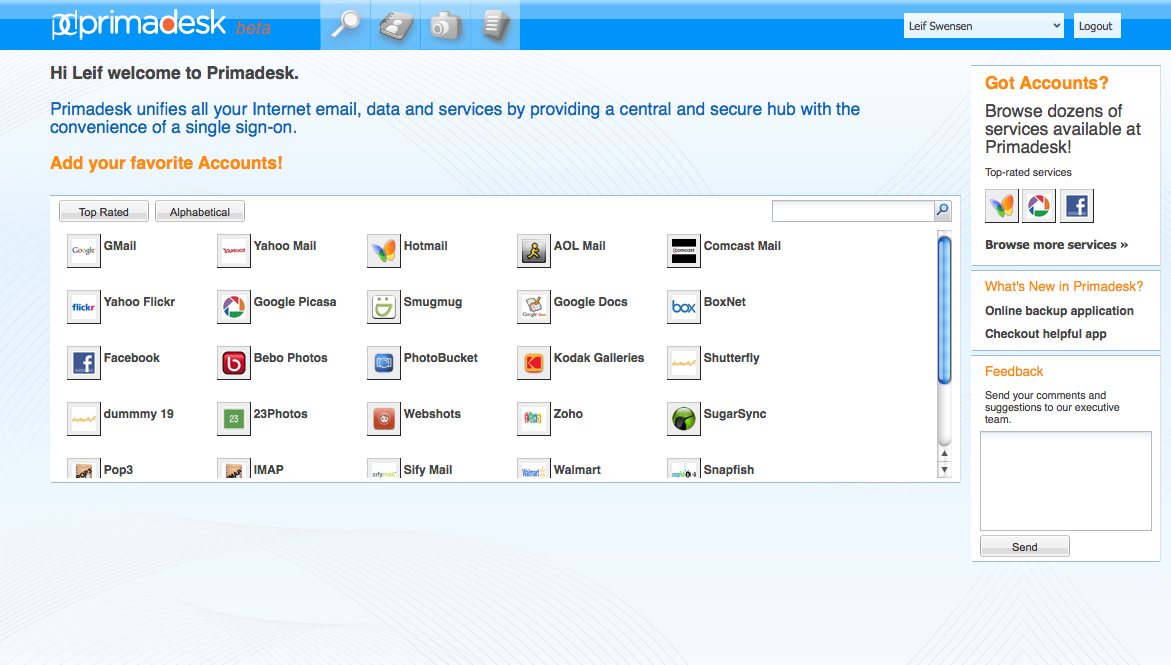
Phi Beta Iota: A member of our collective saw this at DEMO Spring 2011. What impressed us most was not the product but the fact that it was being led by the guy who created Gold Mine, in its time one of the best Contact Management offerings. This offering still appears to be in gestation, but what captured our attention was its potential as a foundation for autonomous communities of interest that could control their own data. It is offered FREE. Worth a look!
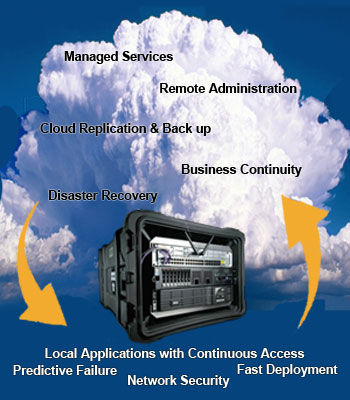
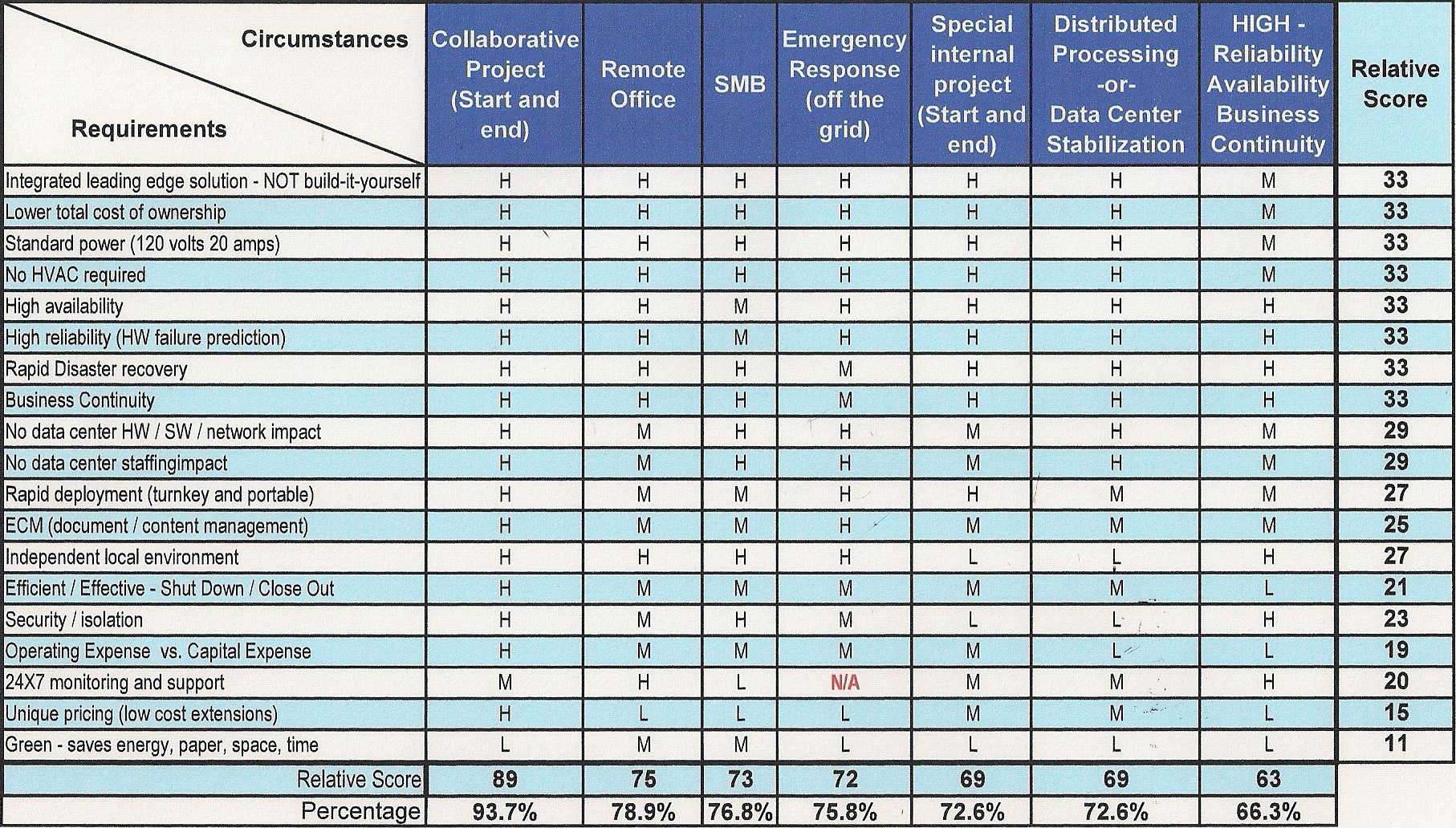
VECTOR Managed Service Platform is a rapidly deployable, cloud-managed technology innovation that can take you in new directions. VECTOR’s game changing combination of technologies, integrated on one plug and play platform provides the IT infrastructure necessary to set up your remote office or project office.
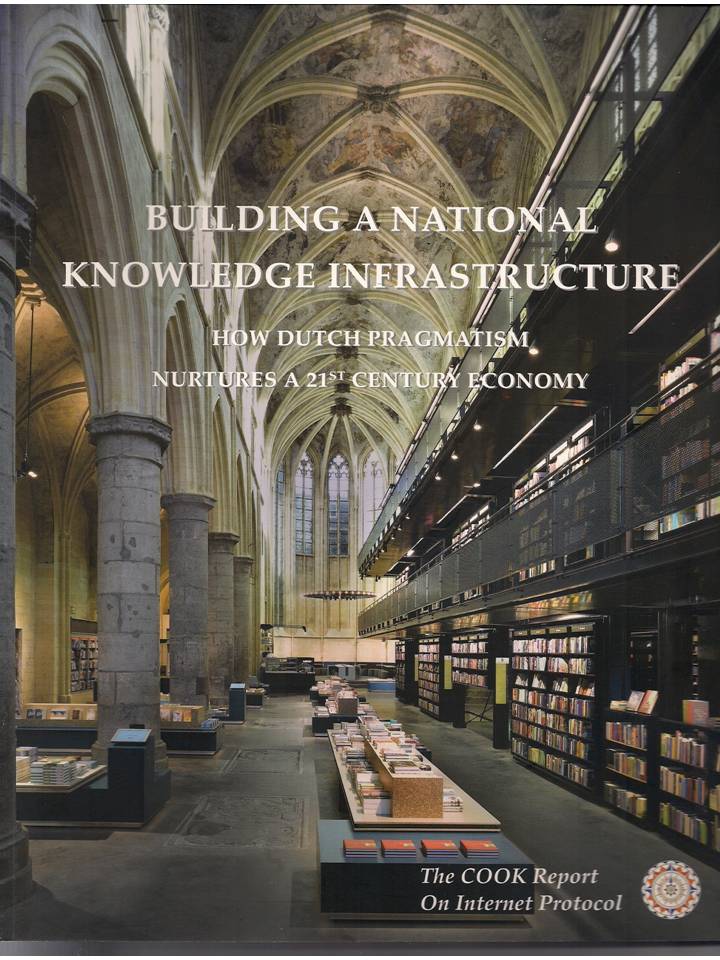
The COOK Report serves an international community of thought leaders focused on strategy affecting the Internet as a global utility that is critically important to the advancement of education, science, and the economy of every nation that it touches. The COOK Report sponsors an international community of interest limited to 200 industry visionaries. Subscribers gain access to the Economics and Architecture of IP Networks mail list [Arch-econ] now in its seventh year. Arch-econ is a private creation space offering a unique online discussion where industry leaders share knowledge and develop ideas.
Testimonial (one of many): “Gordon Cook is fiber in a world of dial-up. He asks timely and provocative questions, invites leading practitioners and experts on all sides to debate them online for several weeks, cuts to the heart of the debates, and publishes the results in language that serious lay readers can understand. No other online journal matches the Cook Report's combination of richness of content and accessibility.”
Phi Beta Iota: A member of our collective met for four hours with Gordon Cook, and came away deeply impressed. He is a very difficult man to interview, with so much knowledge of the Internet across the spectrum from governance to corruption, from technical to standards, from abuse to world-saving potential, that focusing in on any particulars is a time-consuming task. Having said that, when he does produce a product, it is brilliant, replete with detail not to be found anywhere else, and for those who care about an Autonomous Internet, priceless. We strongly recommend his private list which is by subscription (link immediately above).
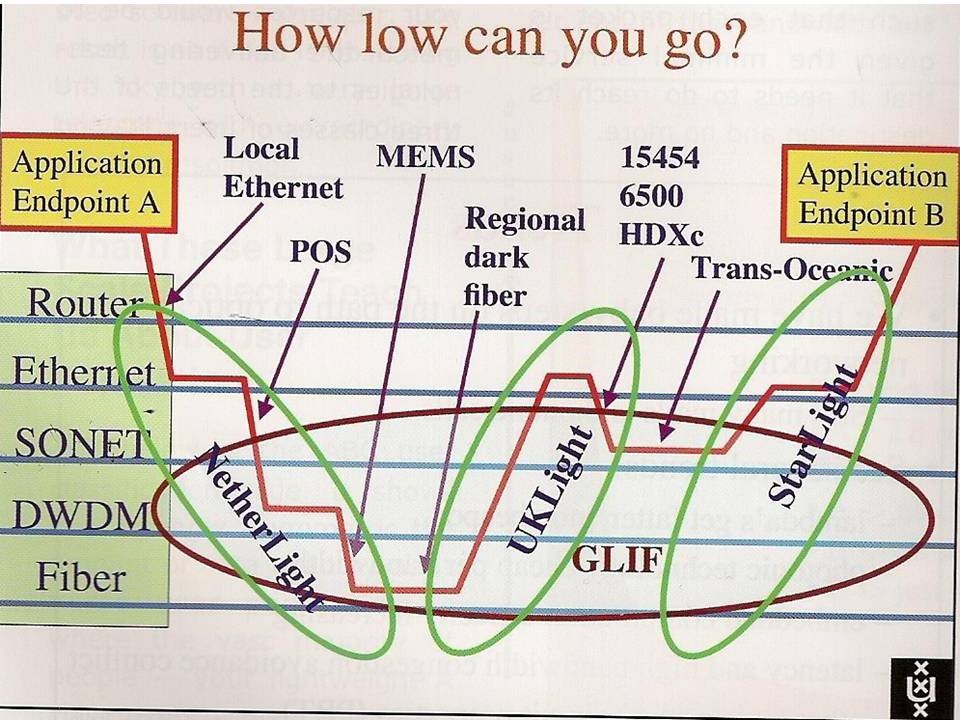
The Dutch, unaffected by the corruption that plagues the US government and its corporate patrons (aptly documented in Matt Tabbi's GRIFTOPIA), have done it right. They have built Roger Karraker's “Highways of the Mind, done so from the bottom-up, and recognized the massive efficiencies that come from a combination of optical paths and clever holistic architectures that allow data to move at lower levels when the fit is right. The Dutch are deep and holistic; the US is superficial and corrupt. That's the story.
My colleague Clay Shirky called it “Cognitive Surplus” in his recent book. Don Tapscott and Anthony Williams refer to it as “MacroWikinomics” in theirs.
What is cognitive surplus? The trillion hours of free time enjoyed by the world's educated population every year. Don and Tony describe MacroWikinomics as mass distributed collaboration on scales we've never seen before thanks to technology.
We're familiar with deficits and shortages, writes, Clay, but when it comes to surplus social capital, things quickly become unpredictable—especially when this capital scales thanks to the use of social networking platforms and Web 2.0 technologies. But then again, says Clay, “Many of the unexpected uses of communication tools are surprising because our old beliefs about human nature were so lousy.”
Phi Beta Iota: Over bagels and lox yesterday, Doug Rushkoff summarized his intention for ContactCon: “to take us back to 1992, but this time with 2012 technology and human understanding.” Here is what the US Government was told in 1992 about crowd-sourcing. 20 years and 1 trillion dollars later (20 years, average of 50 billion a year), we still have the world's most expensive ineffective wasteland pretending to “do” intelligence. The lunacy continues.
SUNNYVALE, Calif., March 8, 2011 /PRNewswire/ — Ruckus Wireless™, an innovator of advanced Smart Wi-Fi technology and one of the fastest growing suppliers of advanced wireless products, today announced that in 2010 it had shipped more Wi-Fi mesh access points to service providers around the world than any other supplier, according to the Dell'Oro Q4 2010 WLAN Report.
The new market research shows that in 2010 Ruckus garnered 41 percent of the worldwide market for unit shipments of Wi-Fi mesh nodes to service providers around the world.
My article, The Reinvention of Management” has just been published in a special issue of Strategy & Leadership on “outracing change: learning to foresee, adapt, re-invent and innovate faster.” (Strategy & Leadership, 2011, Vol. 39 Issue: #2, pp.9 – 17)
The article explains why business leaders and writers are increasingly exploring a fundamental rethinking of the basic tenets of management. It synthesizes a number of books including Umair Haque’s The New Capitalist Manifesto, The Power of Pullby John Hagel, John Seely Brown and Lang Davison and my own book, The Leader’s Guide to Radical Management. The article shows how management is being reinvented with five fundamental shifts:
the firm’s goal (a shift from inside-out to outside-in);
the role of managers (a shift from controller to enabler);
the mode of coordination (from command and control to dynamic linking);
the values practiced (a shift from value to values); and
the communications (a shift from command to conversation).
The raison d’être of the firm changes from a focus on reducing transaction costs to scalable collaboration, learning and innovation. The shifts are interdependent: if only some shifts are made, the firm will slide back into hierarchical bureaucracy.
By adopting a people-centered goal, a people-centered role for managers, a people-centered coordination mechanism, people-centered values and people-centered communication the leaders of a firm can focus on the people who are its customers.