
As Mini-Me likes to say, “Huh?”
Can anyone offer an explanation for this?
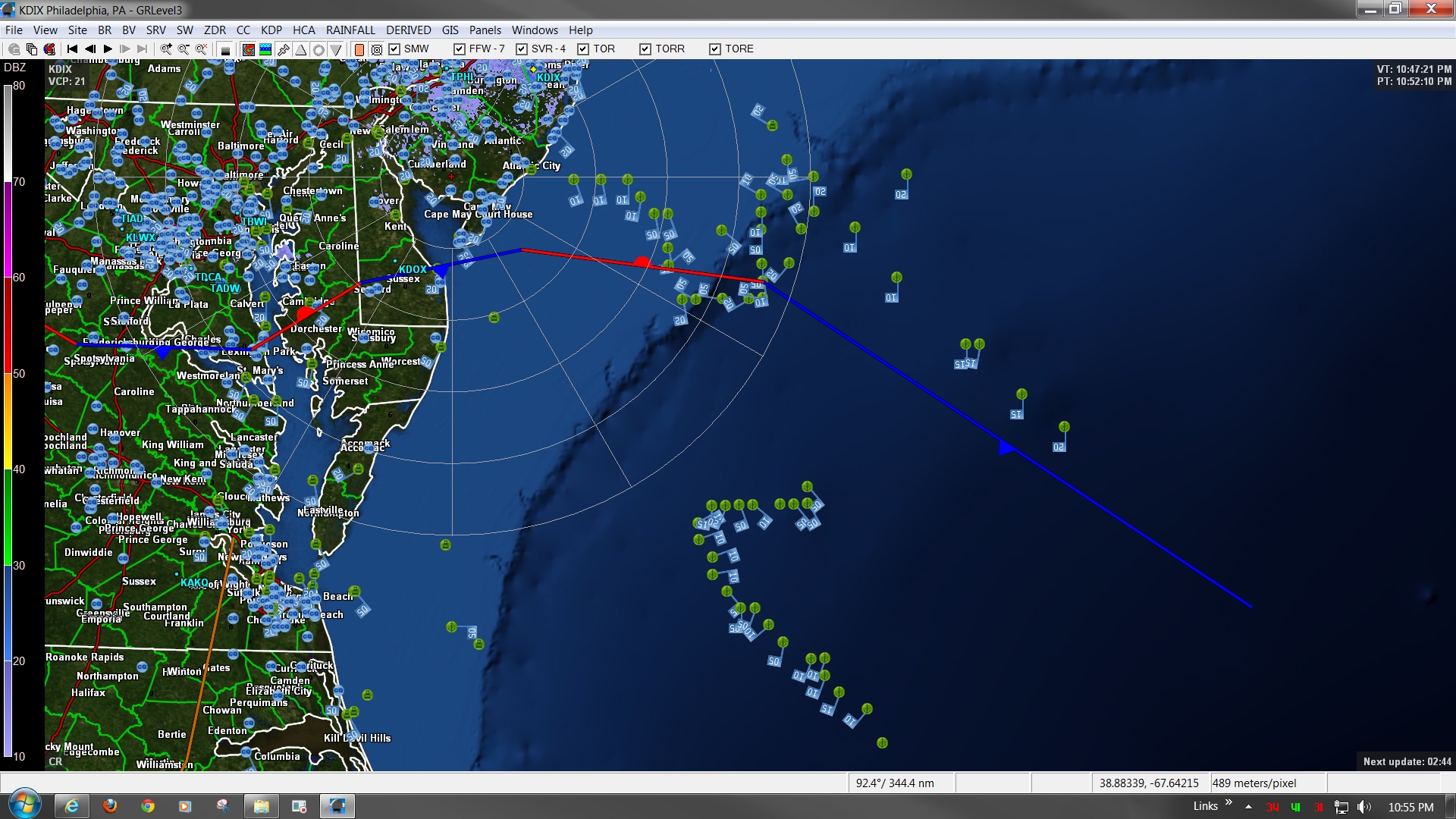
57 ships Anchored off shore of NJ, MD/VA

The truth at any cost lowers all other costs — curated by former US spy Robert David Steele.
As Mini-Me likes to say, “Huh?”
Can anyone offer an explanation for this?
57 ships Anchored off shore of NJ, MD/VA

Paul Root Wolpe: Kurzweil's Singularity Prediction is Wrong
Bioethicist Paul Root Wolpe argues that the Singularity envisioned by Ray Kurzweil isn't quite right.
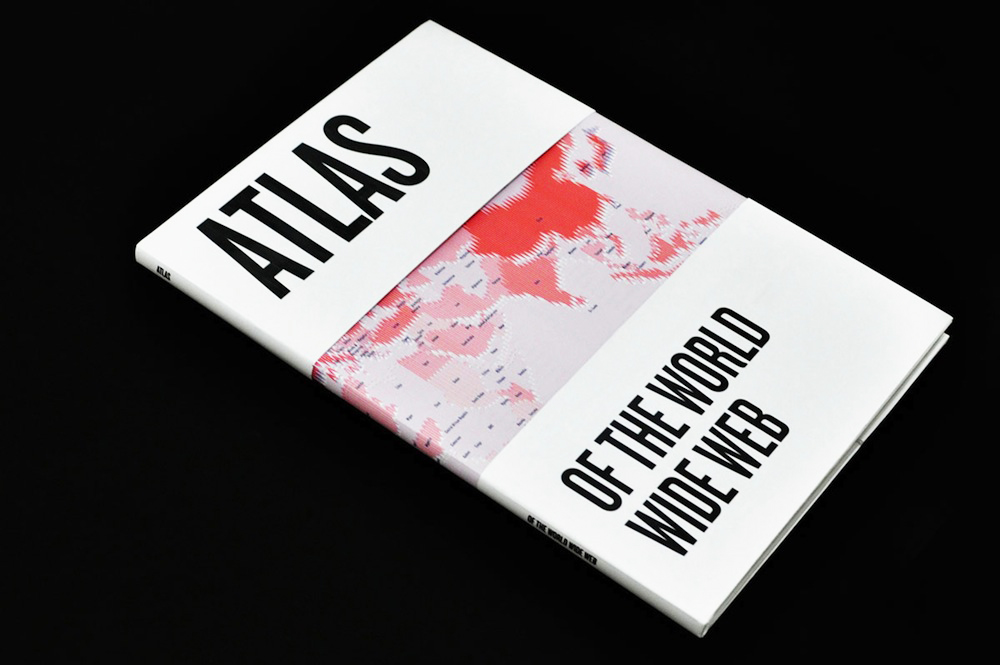
Dafna Aizenberg's Atlas of the World Wide Web visualizes data taken from the internet. Image: Dafna Aizenberg
A traditional atlas can tell you a lot about a place—its population, its religious affiliations, its geographical quirks—but it tends to ignore a major aspect of daily life in 2013: the internet. For the past 30 years, the our digital lives, or lack thereof, have increasingly become a defining factor in how countries are perceived. Accordingly, Israel-based designer Dafna Aizenberg felt that it was time for a 21st century update to classic atlas maps. “Recently I’ve found myself exploring the social implications of the internet on our lives,” she explains. “Both the positive and negative aspects that come with it.” Aizenberg created the Atlas of the World Wide Web, a 120-page visual guide to how the internet has blurred the traditional, physical borders around the world. The atlas’ six chapters, which span everything from IP addresses to internet infrastructure to e-commerce, feature striking visualizations that highlight often unnoticed trends brought on by the spread of the internet.
Though Aizenberg’s images are densely packed with information, the design is clean and clear. “Inspired from generative design, I used basic shapes that change according to the data,” she explains. “The challenge was to create a generative system without any computer-generated graphics, as I wanted to have full control over each map.” Each chapter looks and feels totally different from the next, which Aizenberg says was an important aspect of the project. “Although the entire Atlas needed to keep the same general aesthetics, it was clear that each chapter has to adapt itself to the subject at hand and be unique,” she says. For example, the cybercrime chapter uses darker colors, which aim to communicate the negative atmosphere, while the shapes used in the spread on email spam are meant to give a feeling of disorientation.
Aizenberg’s book reinforces some longstanding trends in global inequality. Her IP address distribution chart in particular illustrates how technological advancements sharply divided countries into the haves and have-nots. Using open source data, Aizenberg charted the number of addresses per country—as the number of IP addresses rise, the color of the country darkens. Places like the United States show up as a deep-hued red, while parts of Africa nearly disappear from the map altogether.
“Working on the atlas strengthened my feelings that the world is still very much apart and divided between regions and cultures which are technologically superior and others which are having a real hard time catching up in terms of internet availability and penetration levels,” she says. Still, the atlas reveals some surprising facts, like despite the United States being home to two of the most famous social media sites, its social connectivity pales in comparison to other countries around the world. “I was certain of the U.S. being the most socially occupied country, but it didn’t even make it into the top 10,” she says. “One explanation could be that the U.S. is not all about NYC and the Silicon Valley in California, but also about other regions, which are less tech savvy.” An astute observation, indeed.
Atlas of the World Wide Web isn’t currently for sale (interested publishers are welcome to get in touch), but you can check out more of her visualizations on Cargo Collective.
The NSA is Commandeering the Internet
It turns out that the NSA's domestic and world-wide surveillance apparatus is even more extensive than we thought. Bluntly: The government has commandeered the Internet. Most of the largest Internet companies provide information to the NSA, betraying their users. Some, as we've learned, fight and lose. Others cooperate, either out of patriotism or because they believe it's easier that way.
I have one message to the executives of those companies: fight.
Phi Beta Iota: Microsoft, Google, IBM, Oracle, CISCO, lesser others — all lacking in integrity.
See Also:
Screaming in Bradley Manning's Trial
I sat in the courtroom all day on Wednesday as Bradley Manning's trial wound its way to a tragic and demoralizing conclusion. I wanted to hear Eugene Debs, and instead I was trapped there, watching Socrates reach for the hemlock and gulp it down. Just a few minutes in and I wanted to scream or shout.
I don't blame Bradley Manning for apologizing for his actions and effectively begging for the court's mercy. He's on trial in a system rigged against him. The commander in chief declared him guilty long ago. He's been convicted. The judge has been offered a promotion. The prosecution has been given a playing field slanted steeply in its favor. Why should Manning not follow the only advice anyone's ever given him and seek to minimize his sentence? Maybe he actually believes that what he did was wrong. But — wow — does it make for some perverse palaver in the courtroom.
This was the sentencing phase of the trial, but there was no discussion of what good or harm might come of a greater or lesser sentence, in terms of deterrence or restitution or prevention or any other goal. That's one thing I wanted to scream at various points in the proceedings.
This was the trial of the most significant whistleblower in U.S. history, but there was no mention of anything he'd blown the whistle on, any of the crimes exposed or prevented, wars ended, nonviolent democratic movements catalyzed. Nothing on why he's a four-time Nobel Peace Prize nominee. Nothing. Every time that the wars went unmentioned, I wanted to scream. War was like air in this courtroom, everybody on all sides militarized — and it went unnoticed and unmentioned.

How Laura Poitras Helped Snowden Spill His Secrets
This past January, Laura Poitras received a curious e-mail from an anonymous stranger requesting her public encryption key. For almost two years, Poitras had been working on a documentary about surveillance, and she occasionally received queries from strangers. She replied to this one and sent her public key — allowing him or her to send an encrypted e-mail that only Poitras could open, with her private key — but she didn’t think much would come of it.
The stranger responded with instructions for creating an even more secure system to protect their exchanges. Promising sensitive information, the stranger told Poitras to select long pass phrases that could withstand a brute-force attack by networked computers. “Assume that your adversary is capable of a trillion guesses per second,” the stranger wrote.
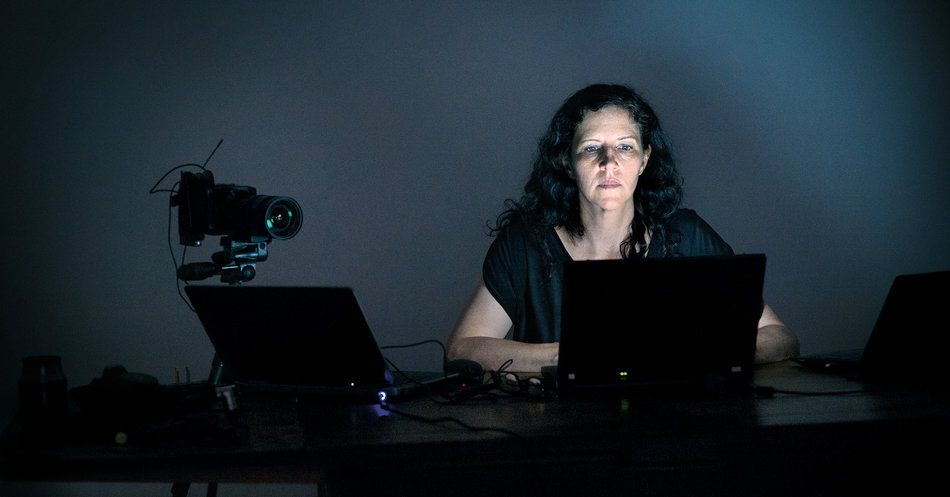
Before long, Poitras received an encrypted message that outlined a number of secret surveillance programs run by the government. She had heard of one of them but not the others. After describing each program, the stranger wrote some version of the phrase, “This I can prove.”
Seconds after she decrypted and read the e-mail, Poitras disconnected from the Internet and removed the message from her computer. “I thought, O.K., if this is true, my life just changed,” she told me last month. “It was staggering, what he claimed to know and be able to provide. I just knew that I had to change everything.”
 Recently Ronlyn and I moved our banking from Bank of America; it has been an incredibly time consuming process. Starting a banking relationship in the post 9/11 world we discovered, particularly if one receives money from non-US sources, as I do from foreign publishers of my books, and from lecture fees, took six hours of paperwork. Amazing experience. We did this for one reason: the incredibly unethical behavior of BoA. We felt that we could not ban! k with a corporation that behaved as BoA has. Here is an example of what I mean.
Your Mortgage Documents Are Fake!
DAVID DAYEN, Contributing Writer – Salon
The most pernicious effect of Fracking is its potential to poison underground aquifers. In spite of that the corporations that control this desperate technology, fully supported by their governmental vassals, are doing everything in their power to sell their right to make obscene profits to an ignorant and gullible public. Here is a good assessment of what is going on, and I urge you to click through a! nd look at the map that accompanies this story.
Govt, Energy Industry Accused of Suppressing Fracking Dangers
JARED METZKER – Inter Press Service
